Chloe marr, p.15
Chloe Marr,
p.15
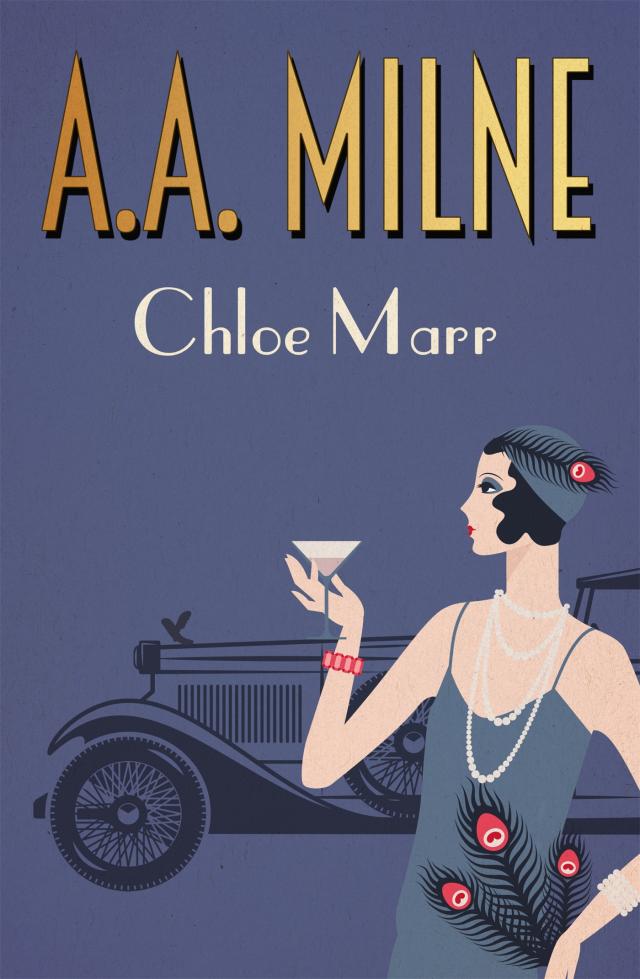


She was in bed. For the first time since he had known her he saw her face unadorned and thought that she had never looked so beautiful. It was a new beauty, gentler, more benignant than the beauty he had known. I wonder if her soul is like that too, he thought, beneath the worldly covering she shows. He dropped on his knees by the bed.
‘You aren’t ill, darling?’
‘I don’t think so. I didn’t sleep, but I don’t sometimes.’
‘May I kiss you?’
‘Put your arms round me and hold me tight.’
He held her close to him, and she said with a little sigh, ‘I could go to sleep in your arms.’
‘It’s not I who am fighting against it, darling.’
‘I know. You’re very sweet. You will love me always, won’t you?’
‘I expect so. I shan’t try, but I expect it will come like that.’
She said nothing for a little, and then, as if taking a great resolve, ‘I will marry you, if you like.’ There was just that emphasis on the ‘will’ which meant ‘I don’t want to, but I will’.
‘If you like, darling, and when you like.’
‘You do want to?’
‘Terribly. I can’t bear to think of it.’
‘You sweet. We’ll get married one day. Let’s go on as we are for a little longer, and see how we feel about it. It needn’t be just yet.’ She gave a contented little sigh, and closed her eyes. . . .
Barnaby realized suddenly his extreme physical discomfort. He realized too that this was the peak of Chloe’s love for him: that she could never love him more than this, and would never want to marry him more than this. She was asleep in his arms, she had promised to be his wife; he should have been surrendering to the moment; but he remained horribly detached, feeling the strain on his arms and the back of his neck, wondering what the time was and when Ellen came; wishing that he hadn’t left the outer door open. It’s all no good, he thought. Three years is too long. Two years ago, even a year ago, I should have believed her and been wildly happy. But one can’t go on loving a picture, a statue, a Princess in a fairy story, for three long years and expect it suddenly to come to life. This that is happening, this that she has said, isn’t real. It means nothing by the standards of real life. We are just where we were three years ago. Nothing that she has said means anything. We shall go on as before, and I shall be as far away from her as ever. I was nearer to Silvie last night than I shall ever be to Chloe.
He tried very gently to release his left hand so that he could look at his wrist-watch.
‘What is it, darling?’ she murmured.
‘This damned world. I must go. I’ve got to work.’
‘Thank you for coming, dearest. I think I can sleep now.’
‘Thank you for letting me see you like this. You look so lovely. Sleep, darling.’
Her eyes were still closed. He kissed them lightly. She turned over on her side, leaving his arms free. He stood up and stretched himself. ‘Shall I take the receiver off?’ he asked, but she did not answer. It seemed that she was asleep again.
He went out very quietly.
‘It’s an interlude,’ he thought. ‘It has no relation to anything which has happened or which is going to happen.’ He signalled to a taxi. ‘Prosser’s, at the end of Chancery Lane.’ As they jerked into movement, he thought, ‘It might have been any of the others’.
Chapter Ten
1
‘Culverhampton,’ wrote Mr Pope Ferrier, cigarette on lower lip, bottle in lap, ‘is not often privileged to see the première of an entirely original play by such a noted author-actor-manager as Wilson Kelly, supported by his full London cast.’ And he might have added that it would have had to forgo the privilege on this occasion if Kelly could have got an opening date at any more important town. But when the choice lies between Culverhampton and Peebles, and Culverhampton is chosen, one must make the best of it.
Mr Ferrier lacked personal attraction. He had the broad figure and shiny yellow face of a Japanese wrestler; his greased hair coalesced in dyed streaks which revealed an interstitial baldness; his fingers were rusty with nicotine, and he wore a black patch over one eye. But he was the best theatrical press-agent in the country—or so Wilson Kelly and Mr Ferrier believed. They had been together for nearly ten years, and had no respect for each other, but only professional admiration. They were together now. The cubby hole in which they sat was decorated with old posters, old properties, old programmes and old beer bottles; dusty pigeon-holes stuffed with old scripts; a large press which may have held ledgers once, but now dandled a forgotten pair of trousers; a packing case on which Mr Ferrier sat, his feet on the trousers, his back against the wall; and a table on which stood a half-empty bottle of cough mixture, a chipped saucer of drawing-pins, a bicycle lamp, a paper-covered novel marked, with a distending tooth-pick, at the place where the last reader had broken down, and the all-necessary telephone. Mr Wilson Kelly was seated by, rather than at, the table, his chair being turned aside to catch such daylight as came through a reluctant window. He was reading what Our Theatrical Correspondent had said about him in to-day’s issue of the Culverhampton Courier, knowing that Pope Ferrier had written it, but absorbing it with as much gratified surprise as if it had been an unsolicited tribute from an impartial and world-famous critic.
Offered to a distinguished member of any other profession or business, the hospitality of such an ‘office’ would have been rejected as an insult. Tucked away at the back of the Theatre Royal, Culverhampton, it was accepted by Kelly and Ferrier as a normal setting for their art.
‘But,’ wrote Ferrier, carrying on his opening sentence, ‘Wilson Kelly has long had a tender corner in his heart for Culverhampton. For it was actually here that he first met the beautiful and talented Helen Brightman, that great artist who joined her life to his, and whose recent sad death left such a blank, not only in the theatrical world, but in the hearts of all who knew her. Moreover he is descended on his mother’s side from a well-known Culverhampton family of the eighteenth century, and has in his possession an early and valuable print of the town which is not the least-prized rarity in his famous collection of objets d’art. It is not surprising, then, to hear that it had always been Mr Kelly’s intention to signalize his connexion with the town by the first presentation there of one of his London productions. But hitherto a malign Fate has stood in the way. Now at last . . .’
Ferrier tore the sheet off his pad and passed it to Kelly. ‘Just to make sure I’ve got the facts right,’ he said, and unscrewed the top of his bottle.
Appreciatively Kelly read and Ferrier drank.
‘Very good, John, very good. Puts the facts out well.’
Ferrier lowered the bottle and wiped his mouth with the back of his hand.
‘Ever see a print of that picture—First Meeting of Dante and Beatrice in Florence?’ he asked.
‘Yes, I suppose so. I know it. Why?’
‘Just thinking. If we had had a companion picture painted: First meeting of Wilson and Helen in Llandudno, we should have wanted nine of ’em.’
‘Oh, nonsense.’
‘Margate, Nottingham, Eastbourne, Hull,’ began Ferrier on his fingers, ‘Llandudno, Sheffield——’
‘I’m not responsible for all the silly stories you’ve put about,’ said Kelly with a shrug. ‘I could take you out now and show you the exact spot in King Street opposite the Post Office where I ran into her on my bicycle.’
‘Definitely no, old man. Not bicycle. Show me the historic spot, and that’s where your Rolls-Royce picked her up in the snow on that bloody cold night in Jan, and took her home to widowed mother. Clergyman’s widow,’ he announced, as he lifted the bottle to his lips, and, following up the picture in his mind, added, ‘Hopeless Dawn.’ He drank.
‘I forget,’ said Kelly impatiently. ‘It was a long time ago. You made a note about the Lancing girl?’
Ferrier turned his pad round the other way, and read in a bland, monotonous voice: ‘C.L.—recent discovery of K’s—sister of well-known black-and-white artist and boxing blue—cross in brackets.—S.R.—recent discovery of K’s—daughter of well-known consular official—question-mark. J.M.—recent discovery of K’s—well-known Hampshire family—tick, five stars and three exclamation marks. I got carried away.’ He looked up and said, ‘That’s Judy, the little girl with——’
‘Yes, yes, yes, I asked you about Miss Lancing.’
‘Well, now you know the answer. We keep all that, bar the private notes, till we open in London.’ He went on reading. ‘W.K. the well-known auth-act-man tells of an amusing adventure which befell him during his recent Empire tour black leopard query Singapore—now what the hell was that?’
‘Singapore? I don’t seem to remember——’
No bloody reason why you should, old man. Something I read somewhere, happened to a missionary, wasted on a missionary, point was could it have happened in Singapore, if not where?’
‘I don’t remember a black leopard in Singapore,’ murmured Kelly, making a serious effort to meet the story half-way.
‘You will as soon as it comes back to me,’ said Ferrier encouragingly. ‘It was a tame one which brought up the morning tea or something. You’d have liked it.’
The company was going through a last week of rehearsals at Culverhampton. The manager of the musical-comedy company which should have preceded Kelly’s had met his financial Waterloo among the fruit-machines of Blackpool; the Theatre Royal, unable to get a new booking in the time, was dark for a week; and Kelly gladly took advantage of this to bring his scenery in, and give his company an opportunity to get in the proper setting what he called its Culverhampton legs. The majority of the company did not much like this, preferring, not unnaturally, its own homes in London to lodgings in Culverhampton. But to Claudia theatrical lodgings in a provincial town, so familiar to her from all that she had imagined and read, were the beginning of romance.
From that moment at the Savoy Grill when Wilson Kelly had snapped his fingers and announced the birth of Zella a gypsy maid, life had become almost unbearably gratifying. Already she saw herself telling the younger generation the secret of success on the stage. Hard work, of course; that came above all. Luck? Yes, a little luck was necessary. She herself acknowledged that her very first engagement (Zella a gypsy maid) came to her through a chance meeting at a cocktail party. Mr Wilson Kelly, the famous author-actor-manager, had just completed his latest play, Fortune’s Wishbone, and was looking for a young actress to create the part of Zella. Almost as soon as he entered the room his eye had singled her out, and he had said to himself, ‘My gypsy maid!’ Eagerly he had asked for an introduction; within five minutes he was telling her of his new play (Fortune’s Wishbone); and at a little dinner at the Savoy that night, he formally asked her to join his company. Well, that was luck—good luck for her. But the point she wished to emphasize was this: that though luck might bring the opportunity, it was merit, and merit alone, which made the most of it. Don’t let them ever—(she was now giving away prizes at the Academy) —don’t let them ever think that a successful career owed itself to chance; and, still more important, don’t let them ever think that chance could be given the responsibility for failure. ‘Many of my colleagues on the stage,’ she ended, warming to her theme, ‘say that the profession is overcrowded, and they warn young aspirants to seek some other means of living. I do not share that view. Overcrowded, yes; but overcrowded with incompetence. There is room now, there will always be room, ample room, for genuine talent. Thank you all very much.’ There were loud cheers; she dropped them an old-fashioned curtsey, and the proceedings ended.
Claudia had to admit to herself that Zella was not an outstanding character in the play. This, described hopefully by the authors, Carol Higgs and Wilson Kelly, as a ‘new and original romantic comedy’, concerned the love-affairs of Betty Langton. Already engaged to a fresh-faced young man, she was about to elope with a sallower one, when Uncle Dudley was called in. Uncle Dudley was the black sheep of the family, having refused to go into the family business on no better excuse than that he wished to join a Concert Party in the Far East. Thanks to the accidental discovery of a ruby mine in the neighbourhood of Bangkok, he had returned to England to find a warm welcome waiting for him at his sister-in-law’s house. ‘Oh, Dudley,’ she implored, ‘can’t you do anything to bring Betty to her senses?’ He did all that was possible; he played the Barcarolle to her. As the music died away, Betty rose from her chair, as if drawn by an irresistible magnet. Dudley put down his violin, and held out his arms . . . At this point young Mr Higgs, whose play it was, called attention to the fact that one of the things the Lord Chamberlain didn’t much care about was incest. Annoyed, because he had forgotten about this, Kelly said that the right artistic ending to a play couldn’t be allowed to fall down on a small matter like that. ‘Uncle’ was obviously a courtesy title. He was simply an old friend of Betty’s mother, who had been in love with her at one time. Yes . . . yes . . . yes . . . they might have a little prologue, twenty years earlier, played well up-stage, perhaps through gauze . . . a tapestry hanging at the back of the Hall of Act I. Just a tender little love scene, at the end of which he hears that she loves another. Betty’s father. And so he takes his breaking heart to the Far East. Act I. Twenty years later. She is a widow now. He returns to England. Mary! Dudley! And then the daughter comes in. This is my little Betty. ‘Gradually we build up the suspense—will he marry the mother or the daughter? Which? You see the idea, Mr Higgs? Suspense.’ Gradually Mr Higgs came to see this—and a good many other things.
It was at the end of Act II, while they were having coffee after dinner, that Zella came to the French windows, played an introductory chord on her guitar, and began to sing ‘Santa Lucia’. ‘Zella!’ cried the sallow young man. ‘What are you doing here?’ This was what young Mr Higgs wanted to know. However, no explanation was offered to him. ‘Never explain, Mr Higgs,’ said Kelly, ‘unless absolutely necessary. The audience will see at once—wait a moment. How would it be if she came on with a baby in her arms?’ Young Mr Higgs said that it was almost impossible to play the guitar with a baby in the arms, you would be certain to drop one or other of them. Kelly covered his face with his hands. ‘No, no, Mr Higgs,’ came through his fingers, ‘you must try to keep up with me. She is now singing a lullaby, a Spanish cradle song, to her babe, rocking it in her arms. I fling open the windows. “Zella!” cries Eustace. The audience sees at once that he is the father. He who aspires to the hand of Betty Langton, has seduced this little gypsy girl. Can it be that Betty will marry him? Suspense again, you see. From the other angle.’ Kelly and Mr Higgs brooded over this for a little, and then Kelly said, ‘Or how would it be if she came in after dinner and told our fortunes? Suppose she read a dark man in Betty’s life—“You will link your life with a dark man”. Eustace and I are dark, the other man is fair. You see? We could still have Eustace coming in and crying “Zella!” It leaves more to the imagination.’
With Zella still in this fluid state, Claudia attended the opening rehearsals of Act I. In addition to studying her own part, she was understudying the maid, played by Five Star Judy, so that she had some excuse for being there, and every excuse for feeling that she was now a real actress. It was a great moment when at last her own cue came, and a disappointing one when Kelly said ‘Ah, yes. Yes. I’m afraid, my dear,’ and he put an arm round her shoulders and removed her from the chalk line and two forms which represented the French windows, ‘I’m afraid we shall have to leave this for the moment. Mr Higgs wants to make a little alteration. We feel that we want more from Zella. As Mr Higgs sees it now’—he turned down-stage and called to the empty spaces of the auditorium, ‘you will let me have that by to-morrow, Mr Higgs?’—and then to Claudia, ‘This is really one of the big moments of the play, and Mr Higgs feels that he hasn’t built it up properly. I think, my dear, you’ll like what he’s writing for you. It broadens the part in a wonderful way. Straight on to Act III, Mr Simmons.’
During the next week Claudia stood at the chalk line, holding an imaginary guitar, an imaginary pack of cards, an imaginary tambourine or an imaginary baby, and waiting while Wilson Kelly with closed eyes visualized the tremendous possibilities. Then he would open his eyes, call to the empty auditorium, ‘You see what I mean, Mr Higgs?’ and to Simmons, ‘We’ll leave that for the moment. Act III, please.’ It was not until their last day in London that Zella was finally stabilized. As follows:
(A girl’s voice is heard singing outside the French windows. Silence falls on the room, as they all listen to the first verse of ‘Santa Lucia’. Then Dudley strides to the window and flings them open.)
zella (a gypsy maid, carrying a guitar). You like my song, yes, no?
dudley. Charming, my dear. (To Mrs Langton.) A girl from the gypsy camp in the village. I passed by it the other morning.
mrs langton. How interesting! (To Zella.) Do sing us some more, dear.
betty }
john Oh, do!
zella (holding out her hand). You cross my palm first, yes? It bring you luck.
dudley (with an amused laugh). Art for art’s sake is no longer the fashion, I see. (Giving Zella half a crown.) Here you are, my dear.
zella. Thank you. Now I sing.
(She sings another verse. As she is in the middle of the third verse, Eustace re-enters the room.)
eustace (seeing Zella). Zella!
zella. Eustace!
(The guitar crashes to the ground, as they all stand transfixed.
SLOW CURTAIN
It was on this day that Claudia lunched with young Mr Higgs at the Moulin d’Or. It was the first time that she had had an opportunity of speaking to him, and she took advantage of it to tell him how much she loved his play.