Curtain poirots last cas.., p.18
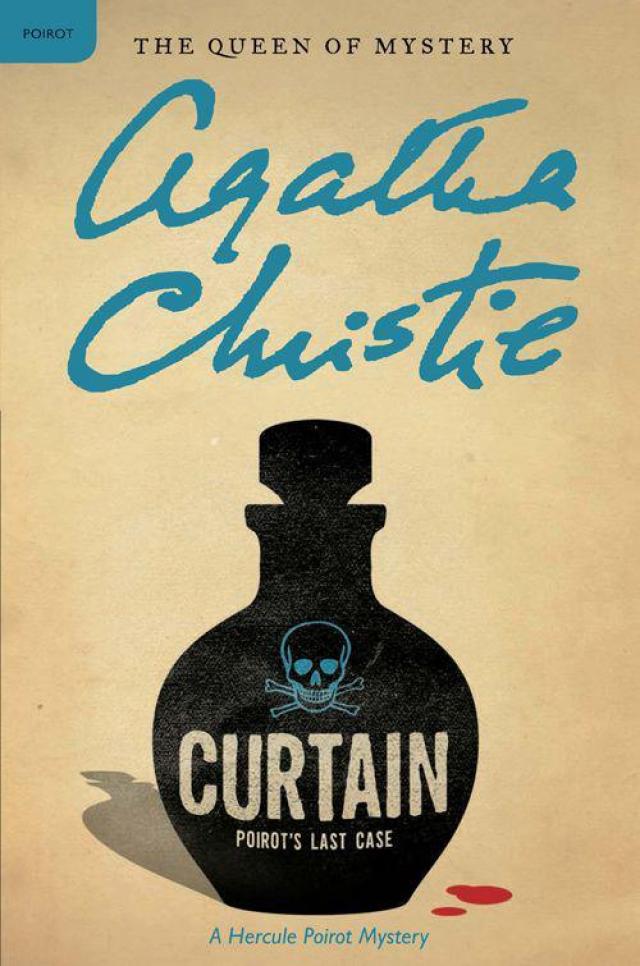
Curtain: Poirot's Last Case: Hercule Poirot Investigates,
p.18


“And now we come to the death of Barbara Franklin. Whatever your ideas may be on the subject, Hastings, I do not think you have once suspected the truth.
“For you see, Hastings, you killed Barbara Franklin.
“Mais oui, you did!
“There was, you see, yet another angle to the triangle. One that I did not fully take into account. As it happened, Norton’s tactics there were unseen and unheard by either of us. But I have no doubt that he employed them. . . .
“Did it ever enter your mind to wonder, Hastings, why Mrs. Franklin was willing to come to Styles? It is not, when you think of it, at all her line of country. She likes comfort, good food and above all social contacts. Styles is not gay; it is not well-run; it is in the dead country. And yet it was Mrs. Franklin who insisted on spending the summer there.
“Yes, there was a third angle. Boyd Carrington. Mrs. Franklin was a disappointed woman. That was at the root of her neurotic illness. She was ambitious both socially and financially. She married Franklin because she expected him to have a brilliant career.
“He was brilliant but not in her way. His brilliance would never bring him newspaper notoriety, or a Harley Street reputation. He would be known to half a dozen men of his own profession and would publish articles in learned journals. The outside world would not hear of him—and he would certainly not make money.
“And here is Boyd Carrington—home from the East—just come into a baronetcy and money, and Boyd Carrington has always felt tenderly sentimental towards the pretty seventeen-year-old girl he nearly asked to marry him. He is going to Styles, he suggests the Franklins come too—and Barbara comes.
“How maddening it is for her! Obviously she has lost none of her old charm for this rich attractive man, but he is old-fashioned—not the type of man to suggest divorce. And John Franklin, too, has no use for divorce. If John Franklin were to die, then she could be Lady Boyd Carrington—and oh what a wonderful life that would be!
“Norton, I think, found her only too ready a tool.
“It was all too obvious, Hastings, when you come to think of it. Those first few tentative attempts at establishing how fond she was of her husband. She overdid it a little—murmuring about ‘ending it all’ because she was a drag on him.
“And then an entirely new line. Her fears that Franklin might experiment upon himself.
“It ought to have been so obvious to us, Hastings! She was preparing us for John Franklin to die of physostigmine poisoning. No question, you see, of anyone trying to poison him—oh no—just pure scientific research. He takes the harmless alkaloid, and it turns out to be harmful after all.
“The only thing was it was a little too swift. You told me that she was not pleased to find Boyd Carrington having his fortune told by Nurse Craven. Nurse Craven was an attractive young woman with a keen eye for men. She had had a try at Dr. Franklin and had not met with success. (Hence her dislike for Judith.) She is carrying on with Allerton, but she knows quite well he is not serious. Inevitable that she should cast her eye on the rich and still attractive Sir William—and Sir William was, perhaps, only too ready to be attracted. He had already noticed Nurse Craven as a healthy, good-looking girl.
“Barbara Franklin has a fright and decides to act quickly. The sooner she is a pathetic, charming and not inconsolable widow the better.
“And so, after a morning of nerves, she sets the scene.
“Do you know, mon ami, I have some respect for the Calabar bean. This time, you see, it worked. It spared the innocent and slew the guilty.
“Mrs. Franklin asks you all up to her room. She makes coffee with much fuss and display. As you tell me, her own coffee is beside her, her husband’s on the other side of the bookcase-table.
“And then there are the shooting stars and everyone goes out and only you, my friend, are left, you and your crossword puzzle and your memories—and to hide emotion you swing round the bookcase to find a quotation in Shakespeare.
“And so they come back and Mrs. Franklin drinks the coffee full of the Calabar bean alkaloids that were meant for dear scientific John, and John Franklin drinks the nice plain cup of coffee that was meant for clever Mrs. Franklin.
“But you will see, Hastings, if you think a minute, that although I realized what had happened, I saw that there was only one thing to be done. I could not prove what had happened. And if Mrs. Franklin’s death was thought to be anything but suicide suspicion would inevitably fall on either Franklin or Judith. On two people who were utterly and completely innocent. So I did what I had a perfect right to do, laid stress on and put conviction into, my repetition of Mrs. Franklin’s extremely unconvincing remarks on the subject of putting an end to herself.
“I could do it—and I was probably the only person who could. For you see my statement carried weight. I am a man experienced in the matter of committing murder—if I am convinced it is suicide, well, then, it will be accepted as suicide.
“It puzzled you, I could see, and you were not pleased. But mercifully you did not suspect the true danger.
“But will you think of it after I am gone? Will it come into your mind, lying there like some dark serpent that now and then raises its head and says: ‘Suppose Judith . . . ?’
“It may do. And therefore I am writing this. You must know the truth.
“There was one person whom the verdict of suicide did not satisfy. Norton. He was balked, you see, of his pound of flesh. As I say, he is a sadist. He wants the whole gamut of emotion, suspicion, fear, the coils of the law. He was deprived of all that. The murder he had arranged had gone awry.
“But presently he saw what one may call a way of recouping himself. He began to throw out hints. Earlier on he had pretended to see something through his glasses. Actually he intended to convey the exact impression that he did convey—namely that he saw Allerton and Judith in some compromising attitude. But not having said anything definite, he could use that incident in a different way.
“Supposing, for instance, that he says he saw Franklin and Judith. That will open up an interesting new angle of the suicide case! It may, perhaps, throw doubts on whether it was suicide. . . .
“So, mon ami, I decided that what had to be done must be done at once. I arranged that you should bring him to my room that night. . . .
“I will tell you exactly what happened. Norton, no doubt, would have been delighted to tell me his arranged story. I gave him no time. I told him, clearly and definitely, all that I knew about him.
“He did not deny it. No, mon ami, he sat back in his chair and smirked. Mais oui, there is no other word for it, he smirked. He asked me what I thought I was going to do about this amusing idea of mine. I told him that I proposed to execute him.
“‘Ah,’ he said, ‘I see. The dagger or the cup of poison?’
“We were about to have chocolate together at the time. He has a sweet tooth, M. Norton.
“‘The simplest,’ I said, ‘would be the cup of poison.’
“And I handed him the cup of chocolate I had just poured out.
“‘In that case,’ he said, ‘would you mind my drinking from your cup instead of from mine?’
“I said, ‘Not at all.’ In effect, it was quite immaterial. As I have said, I, too, take the sleeping tablets. The only thing is that since I have been taking them every night for a considerable period, I have acquired a certain tolerance, and a dose that would send M. Norton to sleep would have very little effect upon me. The dose was in the chocolate itself. We both had the same. His portion took effect in due course, mine had little effect upon me, especially when counteracted with a dose of my strychnine tonic.
“And so to the last chapter. When Norton was asleep I got him into my wheeled chair—fairly easy, it has many types of mechanism—and wheeled him back in it to its usual place in the window embrasure behind the curtains.
“Curtiss then ‘put me to bed.’ When everything was quiet I wheeled Norton to his room. It remained, then, to avail myself of the eyes and ears of my excellent friend Hastings.
“You may not have realized it, but I wear a wig, Hastings. You will realize even less that I wear a false moustache. (Even George does not know that!) I pretended to burn it by accident soon after Curtiss came, and at once had my hairdresser make me a replica.
“I put on Norton’s dressing gown, ruffled up my grey hair on end, and came down the passage and rapped on your door. Presently you came and looked with sleepy eyes into the passage. You saw Norton leave the bathroom and limp across the passage into his own room. You heard him turn the key in the lock on the inside.
“I then replaced the dressing gown on Norton, laid him on his bed, and shot him with a small pistol that I acquired abroad and which I have kept carefully locked up except for two occasions when (nobody being about) I have put it ostentatiously on Norton’s dressing table, he himself being well away somewhere that morning.
“Then I left the room after putting the key in Norton’s pocket. I myself locked the door from the outside with the duplicate key which I have possessed for some time. I wheeled the chair back to my room.
“Since then I have been writing this explanation.
“I am very tired—and the exertions I have been through have strained me a good deal. It will not, I think, be long before. . . .
“There are one or two things I would like to stress.
“Norton’s were the perfect crimes.
“Mine was not. It was not intended to be.
“The easiest way and the best way for me to have killed him was to have done so quite openly—to have had, shall we say, an accident with my little pistol. I should have professed dismay, regret—a most unfortunate accident. They would have said, ‘Old ga ga, didn’t realize it was loaded—ce pauvre vieux.’
“I did not choose to do that.
“I will tell you why.
“It is because, Hastings, I chose to be ‘sporting.’
“Mais oui, sporting! I am doing all the things that so often you have reproached me with not doing. I am playing fair with you. I am giving you a run for your money. I am playing the game. You have every chance to discover the truth.
“In case you disbelieve me let me enumerate all the clues.
“The keys.
“You know, for I have told you so, that Norton arrived here after I did. You know, for you have been told, that I changed my room after I got here. You know, for again it has been told to you, that since I have been at Styles the key of my room disappeared and I had another made.
“Therefore when you ask yourself who could have killed Norton? Who could have shot and still have left the room (apparently) locked on the inside since the key is in Norton’s pocket?—
“The answer is ‘Hercule Poirot, who since he has been here has possessed duplicate keys of one of the rooms.’
“The man you saw in the passage.
“I myself asked you if you were sure the man you saw in the passage was Norton. You were startled. You asked me if I intended to suggest it was not Norton. I replied, truthfully, that I did not at all intend to suggest it was not Norton. (Naturally, since I had taken a good deal of trouble to suggest it was Norton.) I then brought up the question of height. All the men, I said, were much taller than Norton. But there was a man who was shorter than Norton—Hercule Poirot. And it is comparatively easy with raised heels or elevators in the shoes to add to one’s height.
“You were under the impression that I was a helpless invalid. But why? Only because I said so. And I had sent away George. That was my last indication to you, ‘Go and talk to George.’
“Othello and Clutie John show you that X was Norton.
“Then who could have killed Norton?
“Only Hercule Poirot.
“And once you suspected that, everything would have fallen into place, the things I had said and done, my inexplicable reticence. Evidence from the doctors in Egypt, from my own doctor in London, that I was not incapable of walking about. The evidence of George as to my wearing a wig. The fact which I was unable to disguise, and which you ought to have noticed, that I limp much more than Norton does.
“And last of all, the pistol shot. My one weakness. I should, I am aware, have shot him through the temple. I could not bring myself to produce an effect so lopsided, so haphazard. No, I shot him symmetrically, in the exact centre of the forehead. . . .
“Oh, Hastings, Hastings, that should have told you the truth.
“But perhaps, after all, you have suspected the truth? Perhaps when you read this, you already know.
“But somehow I do not think so. . . .
“No, you are too trusting. . . .
“You have too beautiful a nature. . . .
“What shall I say more to you? Both Franklin and Judith, I think you will find, knew the truth although they will not have told it to you. They will be happy together, those two. They will be poor and innumerable tropical insects will bite them and strange fevers will attack them—but we all have our own ideas of the perfect life, have we not?
“And you, my poor lonely Hastings? Ah, my heart bleeds for you, dear friend. Will you, for the last time, take the advice of your old Poirot?
“After you have read this, take a train or a car or a series of buses and go to find Elizabeth Cole who is also Elizabeth Litchfield. Let her read this, or tell her what is in it. Tell her that you, too, might have done what her sister Margaret did—only for Margaret Litchfield there was no watchful Poirot at hand. Take the nightmare away from her, show her that her father was killed, not by his daughter, but by that kind sympathetic family friend, that ‘honest Iago’ Stephen Norton.
“For it is not right, my friend, that a woman like that, still young, still attractive, should refuse life because she believes herself to be tainted. No, it is not right. Tell her so, you, my friend, who are yourself still not unattractive to women. . . .
“Eh bien, I have no more now to say. I do not know, Hastings, if what I have done is justified or not justified. No—I do not know. I do not believe that a man should take the law into his own hands. . . .
“But on the other hand, I am the law! As a young man in the Belgian police force I shot down a desperate criminal who sat on a roof and fired at people below. In a state of emergency martial law is proclaimed.
“By taking Norton’s life, I have saved other lives—innocent lives. But still I do not know . . . It is perhaps right that I should not know. I have always been so sure—too sure. . . .
“But now I am very humble and I say like a little child ‘I do not know . . .’
“Good-bye, cher ami. I have moved the amyl nitrate ampoules away from beside my bed. I prefer to leave myself in the hands of the bon Dieu. May his punishment, or his mercy, be swift!
“We shall not hunt together again, my friend. Our first hunt was here—and our last. . . .
“They were good days.
“Yes, they have been good days. . . .”
(End of Hercule Poirot’s manuscript.)
Final note by Captain Arthur Hastings: I have finished reading . . . cannot believe it all yet . . . But he is right. I should have known. I should have known when I saw the bullet hole so symmetrically in the middle of the forehead.
Queer—it’s just come to me—the thought in the back of my mind that morning.
The mark on Norton’s forehead—it was like the brand of Cain. . . .
About the Author
Agatha Christie is the most widely published author of all time and in any language, outsold only by the Bible and Shakespeare. Her books have sold more than a billion copies in English and another billion in a hundred foreign languages. She is the author of eighty crime novels and short-story collections, nineteen plays, two memoirs, and six novels written under the name Mary Westmacott.
She first tried her hand at detective fiction while working in a hospital dispensary during World War I, creating the now legendary Hercule Poirot with her debut novel The Mysterious Affair at Styles. With The Murder in the Vicarage, published in 1930, she introduced another beloved sleuth, Miss Jane Marple. Additional series characters include the husband-and-wife crime-fighting team of Tommy and Tuppence Beresford, private investigator Parker Pyne, and Scotland Yard detectives Superintendent Battle and Inspector Japp.
Many of Christie’s novels and short stories were adapted into plays, films, and television series. The Mousetrap, her most famous play of all, opened in 1952 and is the longest-running play in history. Among her best-known film adaptations are Murder on the Orient Express (1974) and Death on the Nile (1978), with Albert Finney and Peter Ustinov playing Hercule Poirot, respectively. On the small screen Poirot has been most memorably portrayed by David Suchet, and Miss Marple by Joan Hickson and subsequently Geraldine McEwan and Julia McKenzie.
Christie was first married to Archibald Christie and then to archaeologist Sir Max Mallowan, whom she accompanied on expeditions to countries that would also serve as the settings for many of her novels. In 1971 she achieved one of Britain’s highest honors when she was made a Dame of the British Empire. She died in 1976 at the age of eighty-five. Her one hundred and twentieth anniversary was celebrated around the world in 2010.
Visit www.AuthorTracker.com for exclusive information on your favorite HarperCollins authors.
www.AgathaChristie.com
THE AGATHA CHRISTIE COLLECTION
The Man in the Brown Suit
The Secret of Chimneys
The Seven Dials Mystery
The Mysterious Mr. Quin
The Sittaford Mystery
Parker Pyne Investigates
Why Didn’t They Ask Evans?
Murder Is Easy
The Regatta Mystery and Other Stories
And Then There Were None
Towards Zero
Death Comes as the End
Sparkling Cyanide
The Witness for the Prosecution and Other Stories
Crooked House
Three Blind Mice and Other Stories
They Came to Baghdad
Destination Unknown