Mission to Paris: A Novel

Mission to Paris: A Novel

Alan Furst

Mystery & Thrillers / Historical Fiction

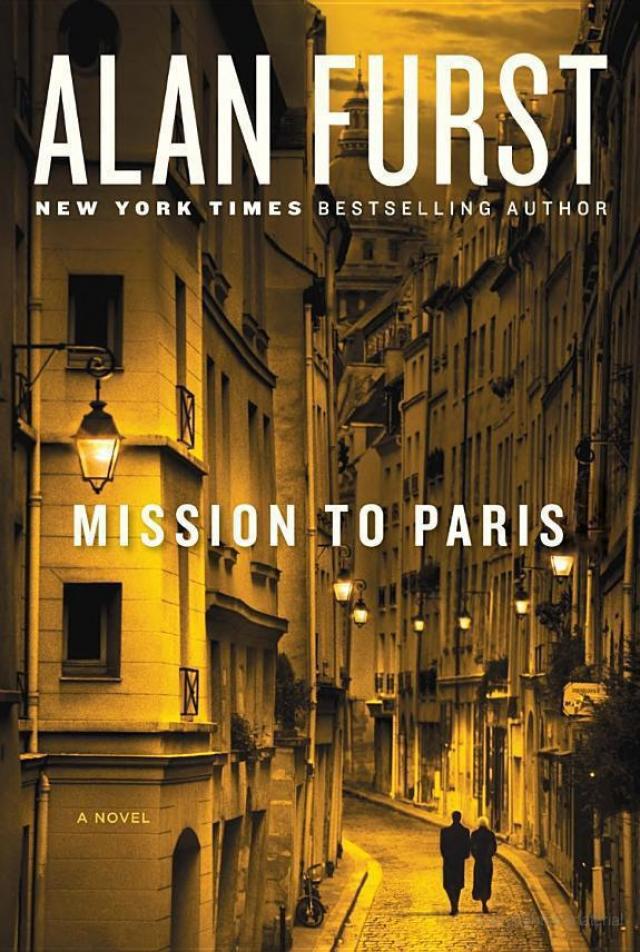
It is the late summer of 1938, Europe is about to explode, the Hollywood film star Fredric Stahl is on his way to Paris to make a movie for Paramount France. The Nazis know he’s coming—a secret bureau within the Reich Foreign Ministry has for years been waging political warfare against France, using bribery, intimidation, and corrupt newspapers to weaken French morale and degrade France’s will to defend herself.For their purposes, Fredric Stahl is a perfect agent of influence, and they attack him. What they don’t know is that Stahl, horrified by the Nazi war on Jews and intellectuals, has become part of an informal spy service being run out of the American embassy in Paris.From Alan Furst, the bestselling author, often praised as the best spy novelist ever, comes a novel that’s truly hard to put down. Mission to Paris includes beautifully drawn scenes of romance and intimacy, and the novel is alive with extraordinary characters: the German Baroness von Reschke, a famous hostess deeply involved in Nazi clandestine operations; the assassins Herbert and Lothar; the Russian film actress and spy Olga Orlova; the Hungarian diplomat and spy, Count Janos Polanyi; along with the French cast of Stahl’s movie, German film producers, and the magnetic women in Stahl’s life, the socialite Kiki de Saint-Ange and the émigré Renate Steiner.But always at the center of the novel is the city of Paris, the heart and soul of Europe—its alleys and bistros, hotels grand and anonymous, and the Parisians, living every night as though it was their last. As always, Alan Furst brings to life both a dark time in history and the passion of the human hearts that fought to survive it.Advance praise for *Mission to Paris “The writing in Mission to Paris, sentence after sentence, page after page, is dazzling. If you are a John le Carré fan, this is definitely a novel for you.”—James Patterson“I am a huge fan of Alan Furst. Furst is the best in the business—the most talented espionage novelist of our generation.”—Vince FlynnPraise for Alan Furst“Unfolds like a vivid dream . . . One couldn’t ask for a more engrossing novel.”—The Wall Street Journal, about Spies of the Balkans “Though set in a specific place and time, Furst’s books are like Chopin’s nocturnes: timeless, transcendent, universal. One does not so much read them as fall under their spell.”—Los Angeles Times, about The Spies of Warsaw“Alan Furst’s novels swing a beam into the shadows at the edges of the great events leading to World War II. Readers come knowing he’ll deliver effortless narrative.”—USA Today, about The Foreign Correspondent“Positively bristles with plot, characters and atmosphere . . . Dark Voyage has the ingredients of several genres—the mystery, the historical novel, the espionage thriller, the romance—but it rises above all of them.”—The Washington Post, about Dark Voyage“No other espionage writer touches [Furst’s] stylish forays into Budapest and Berlin, Moscow and Paris. No other writer today captures so well the terror and absurdity of the spy, the shabby tension and ennui of émigré communities at the time. His characters are hopeless, lethal, charming. His voice is, above all, knowing.”—Boston Sunday Globe, about Blood of Victory*Amazon.com ReviewGuest Reviewer: Justin Cronin on Mission to Paris by Alan Furst *Justin Cronin is the New York Times bestselling author of The Passage, Mary and O’Neil (which won the PEN/Hemingway Award and the Stephen Crane Prize), and The Summer Guest. Other honors for his writing include a fellowship from the National Endowment for the Arts and a Whiting Writers’ Award. A Distinguished Faculty Fellow at Rice University, he divides his time between Houston, Texas, and Cape Code, Massachusetts.*Fans of Alan Furst are a passionate lot, and I count myself among them. Put a group of Furst’s readers in a room, and before long they will be ardently advocating for their favorites (I always come out swinging for The World at Night), only to change their minds, and change them again, as they are reminded of an especially harrowing episode in The Polish Officer, or a perfect turn of phrase in Blood of Victory, or a sumptuous love scene in The Spies of Warsaw.So which of Furst’s novels is his best? In my opinion, it’s an eleven-way tie.Now, make that twelve.Furst’s elegant thrillers of World War II Europe are often grouped with the works Graham Greene and John le Carre for the literary quality of his prose. The comparison is apt, but Furst is really one of a kind: a novelist whose body of work has recast his genre, elevating it to the level of literature. He has a way of getting everything right, putting every sentence to flawless use with a compact, suggestive style. In just a few brush strokes, Furst can capture the essence of a character—man or woman, friend or foe, Gestapo officer or society doyenne—and his ability to evoke a setting makes me weep with envy. Furst’s foggy Paris streets and glittering salons aren’t just places we see; we actually seem to visit them, bathing in their rich atmospheres. When a Furst character steps into a café in the 16th Arrondissment, you can practically smell the Gauloises smoke wafting from the pages.But what truly sets Furst apart is his characters’ alignment with their circumstances. Like every great novelist, he understands that history is an overlay of private lives and public events, and therein lies the richest, most morally edifying human drama. Furst’s protagonists aren’t professional spies. Dashing, yes. Romantic, to be sure. Capable of the bon mot, without doubt. But in their hearts, they are men and women like the rest of us, adrift in the currents of their lives. It’s the exigencies of war, with all its political murk and unlikely gunpoint bedfellows, that ignite them to personal heroism. You can hear them saying, with existential fatalism, “Well, it’s been a marvelous life—wonderful food, sumptuous parties, and surprising nights of love—but I guess it’s over now. I’ll have to become something more. Count me in.”Mission to Paris is trademark Furst, a book not merely to read but to luxuriate in. Vienna-born Fredric Stahl, nee Franz Stalka, is a Hollywood actor of modest renown sent to Paris to star in a French movie named, ironically, “Apres la Guerre” (“After the War”). The year is 1938; Hitler has just taken Czechoslovakia and set his sights on Poland. With his American connections, high profile, and Germanic ancestry, Stahl attracts the interest of the political arm of the Reich’s Foreign Ministry; their goal is to manipulate him into making a public declaration against French rearmament. Initially, all Stahl wants to do is enjoy his time in Paris, where fond memories and sensual adventures await, and finish his film, for which he has high hopes. But he can’t stay on the sidelines for long; the next thing he knows, he’s flying to Berlin to judge a film festival of nakedly propagandist “mountain movies,” with stacks of Swiss francs stuffed inside his suit to purchase Nazi secrets. The night he meets his contact—the glamorous Russian actress Olga Orlova, who proves surprisingly adept with a silencer—Stahl awakens to the smell of smoke and the sound of shattering glass: beyond the windows of his hotel room, Kristallnacht is in full swing.What happens then? Please. I’ve said too much as it is.Suffice to say that for Furst’s legion of the obsessed, the novel is everything we crave and more. And for newcomers—why there should still be any, I simply don’t know—it’s certain to send them back into his rich body of work, hungry for more.Review“This is the romantic Paris to make a tourist weep ... The brilliant historical flourishes seem to create – or recreate – a world ... In Furst’s densely populated books, hundred of minor characters – clerks, chauffeurs, soldiers, whores – all whirl around his heroes in perfect focus for a page or two, then dot by dot, face by face, they vanish, leaving a heartbreaking sense of the vast Homeric epic that was World War II and the smallness of almost every life that was caught up in it.”—*The New York Times Book Review“Alan Furst again shows why he is a grandmaster of the historical espionage genre. Furst not only vividly re-creates the excitement and growing gloom of the City of Light in 1938-39, as war with Nazi Germany looms, but also demonstrates a profound knowledge of the political divisions and cultural sensibilities of that bygone era ... As summer or subway reading goes, it doesn't get more action-packed and grippingly atmospheric than this.”—*The Boston Globe“Between them, Fredric and Paris make this a book no reader will put down to the final page. Furst evokes the city and the prewar anxiety with exquisite tension that is only a bit relieved by Fredric’s encounters with several women, each a vivid and attractive character. Critics compare Furst to Graham Greene and John le Carré, but the time has come for this much-published author (this is his ninth World War II novel after Spies of the Balkans) to occupy his own pinnacle as a master of historical espionage.”*—Library Journal (starred)“Furst conveys a strong sense of the era, when responding to a knock might open the door to the end of one’s days. The novel recalls a time when black and white applied to both movies and moral choices. It’s a tale with wide appeal.”—*Kirkus (starred)“[Furst] is most at home in Paris, which is why legions of his fans, upon seeing only the title of his latest book, will immediately feel pulses quicken ... Furst has been doing this and doing it superbly for a long time now ... Long ago Furst made the jump from genre favorite to mainstream bestsellerdom; returning to his signature setting, Paris, he only stands to climb higher.”—Booklist (starred) “Alan Furst’s writing reminds me of a swim in perfect water on a perfect day, fluid and exquisite. One wants the feeling to go on forever, the book to never end ... Like Graham Greene, Furst creates believable characters caught up, with varying degrees of willingness, in the parade of political life. And because they care, the reader does, too ... Furst is one of the finest spy novelists working today, and, from boudoir to the beach, Mission to Paris is perfect summer reading.”—Publisher’s Weekly“The writing in Mission to Paris, sentence after sentence, page after page, is dazzling. If you are a John le Carré fan, this is definitely a novel for you.”–James Patterson"I am a huge fan of Alan Furst. Furst is the best in the business--the most talented espionage novelist of our generation."—Vince Flynn“Reading Mission to Paris is like sipping a fine Chateau Margaux: Sublime!”—Erik Larson
Read online
  • 47
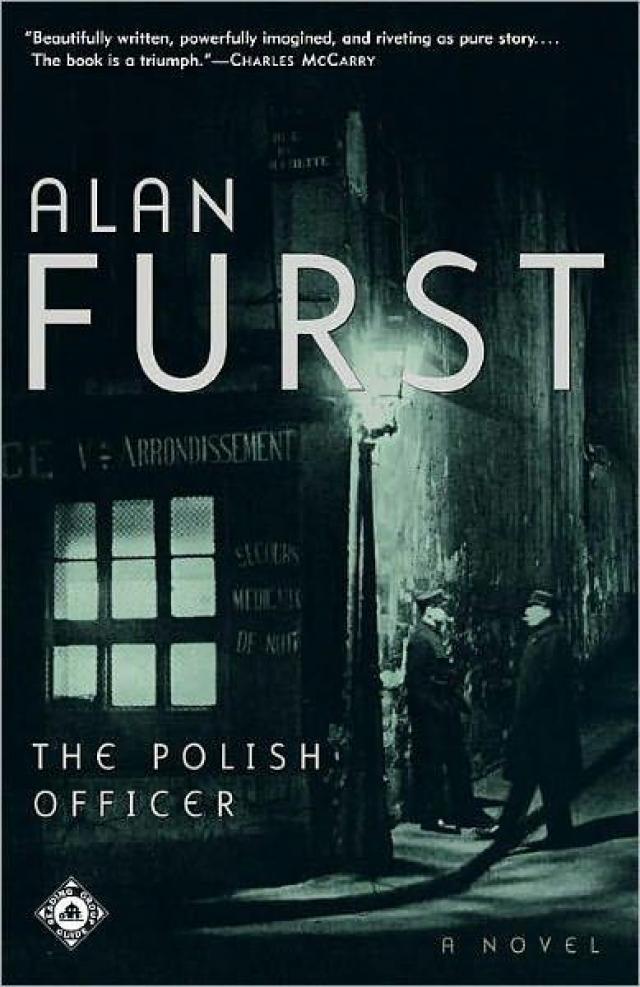
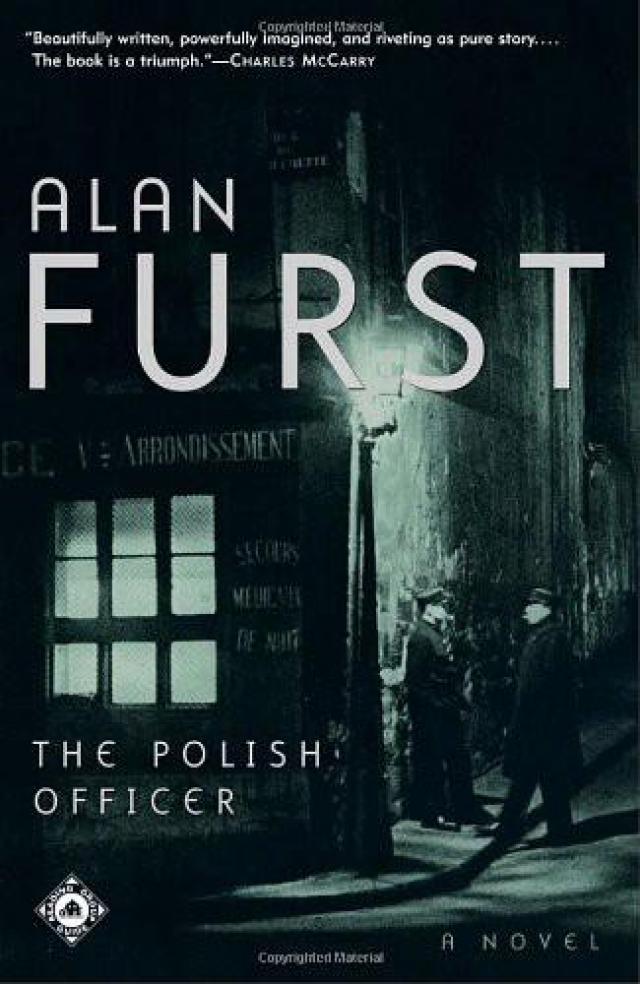
The Polish Officer ns-3

The Polish Officer ns-3

Alan Furst

Mystery & Thrillers / Historical Fiction

September 1939. As Warsaw falls to Hitler’s Wehrmacht, Captain Alexander de Milja is recruited by the intelligence service of the Polish underground. His mission: to transport the national gold reserve to safety, hidden on a refugee train to Bucharest. Then, in the back alleys and black-market bistros of Paris, in the tenements of Warsaw, with partizan guerrillas in the frozen forests of the Ukraine, and at Calais Harbor during an attack by British bombers, de Milja fights in the war of the shadows in a world without rules, a world of danger, treachery, and betrayal.
Read online
  • 42
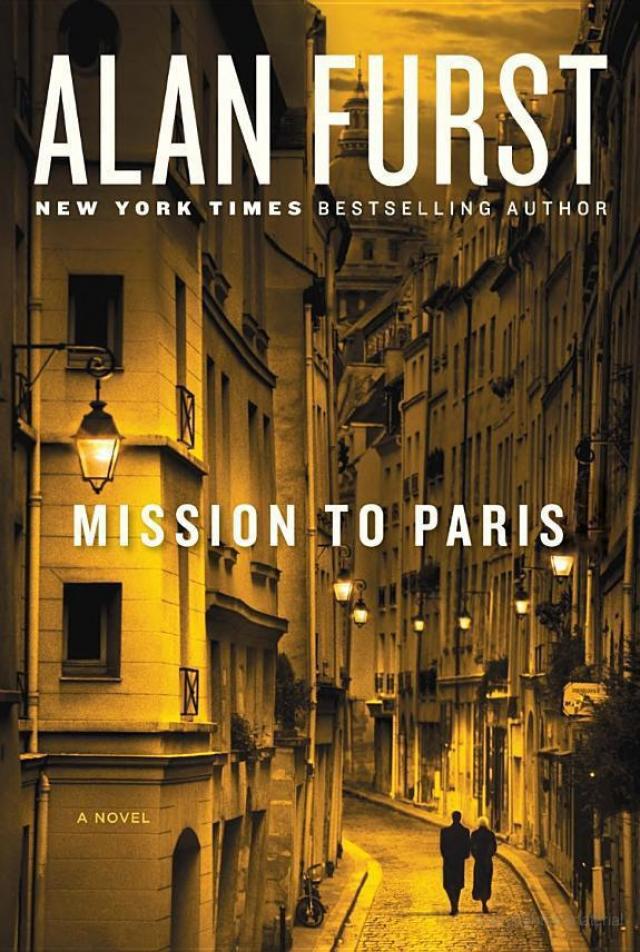
Mission to Paris

Mission to Paris

Alan Furst

Mystery & Thrillers / Historical Fiction

It is the late summer of 1938, Europe is about to explode, the Hollywood film star Fredric Stahl is on his way to Paris to make a movie for Paramount France. The Nazis know he’s coming—a secret bureau within the Reich Foreign Ministry has for years been waging political warfare against France, using bribery, intimidation, and corrupt newspapers to weaken French morale and degrade France’s will to defend herself.For their purposes, Fredric Stahl is a perfect agent of influence, and they attack him. What they don’t know is that Stahl, horrified by the Nazi war on Jews and intellectuals, has become part of an informal spy service being run out of the American embassy in Paris.From Alan Furst, the bestselling author, often praised as the best spy novelist ever, comes a novel that’s truly hard to put down. Mission to Paris includes beautifully drawn scenes of romance and intimacy, and the novel is alive with extraordinary characters: the German Baroness von Reschke, a famous hostess deeply involved in Nazi clandestine operations; the assassins Herbert and Lothar; the Russian film actress and spy Olga Orlova; the Hungarian diplomat and spy, Count Janos Polanyi; along with the French cast of Stahl’s movie, German film producers, and the magnetic women in Stahl’s life, the socialite Kiki de Saint-Ange and the émigré Renate Steiner.But always at the center of the novel is the city of Paris, the heart and soul of Europe—its alleys and bistros, hotels grand and anonymous, and the Parisians, living every night as though it was their last. As always, Alan Furst brings to life both a dark time in history and the passion of the human hearts that fought to survive it.Advance praise for *Mission to Paris “The writing in Mission to Paris, sentence after sentence, page after page, is dazzling. If you are a John le Carré fan, this is definitely a novel for you.”—James Patterson“I am a huge fan of Alan Furst. Furst is the best in the business—the most talented espionage novelist of our generation.”—Vince FlynnPraise for Alan Furst“Unfolds like a vivid dream . . . One couldn’t ask for a more engrossing novel.”—The Wall Street Journal, about Spies of the Balkans “Though set in a specific place and time, Furst’s books are like Chopin’s nocturnes: timeless, transcendent, universal. One does not so much read them as fall under their spell.”—Los Angeles Times, about The Spies of Warsaw“Alan Furst’s novels swing a beam into the shadows at the edges of the great events leading to World War II. Readers come knowing he’ll deliver effortless narrative.”—USA Today, about The Foreign Correspondent“Positively bristles with plot, characters and atmosphere . . . Dark Voyage has the ingredients of several genres—the mystery, the historical novel, the espionage thriller, the romance—but it rises above all of them.”—The Washington Post, about Dark Voyage“No other espionage writer touches [Furst’s] stylish forays into Budapest and Berlin, Moscow and Paris. No other writer today captures so well the terror and absurdity of the spy, the shabby tension and ennui of émigré communities at the time. His characters are hopeless, lethal, charming. His voice is, above all, knowing.”—Boston Sunday Globe, about Blood of Victory*Amazon.com ReviewGuest Reviewer: Justin Cronin on Mission to Paris by Alan Furst *Justin Cronin is the New York Times bestselling author of The Passage, Mary and O’Neil (which won the PEN/Hemingway Award and the Stephen Crane Prize), and The Summer Guest. Other honors for his writing include a fellowship from the National Endowment for the Arts and a Whiting Writers’ Award. A Distinguished Faculty Fellow at Rice University, he divides his time between Houston, Texas, and Cape Code, Massachusetts.*Fans of Alan Furst are a passionate lot, and I count myself among them. Put a group of Furst’s readers in a room, and before long they will be ardently advocating for their favorites (I always come out swinging for The World at Night), only to change their minds, and change them again, as they are reminded of an especially harrowing episode in The Polish Officer, or a perfect turn of phrase in Blood of Victory, or a sumptuous love scene in The Spies of Warsaw.So which of Furst’s novels is his best? In my opinion, it’s an eleven-way tie.Now, make that twelve.Furst’s elegant thrillers of World War II Europe are often grouped with the works Graham Greene and John le Carre for the literary quality of his prose. The comparison is apt, but Furst is really one of a kind: a novelist whose body of work has recast his genre, elevating it to the level of literature. He has a way of getting everything right, putting every sentence to flawless use with a compact, suggestive style. In just a few brush strokes, Furst can capture the essence of a character—man or woman, friend or foe, Gestapo officer or society doyenne—and his ability to evoke a setting makes me weep with envy. Furst’s foggy Paris streets and glittering salons aren’t just places we see; we actually seem to visit them, bathing in their rich atmospheres. When a Furst character steps into a café in the 16th Arrondissment, you can practically smell the Gauloises smoke wafting from the pages.But what truly sets Furst apart is his characters’ alignment with their circumstances. Like every great novelist, he understands that history is an overlay of private lives and public events, and therein lies the richest, most morally edifying human drama. Furst’s protagonists aren’t professional spies. Dashing, yes. Romantic, to be sure. Capable of the bon mot, without doubt. But in their hearts, they are men and women like the rest of us, adrift in the currents of their lives. It’s the exigencies of war, with all its political murk and unlikely gunpoint bedfellows, that ignite them to personal heroism. You can hear them saying, with existential fatalism, “Well, it’s been a marvelous life—wonderful food, sumptuous parties, and surprising nights of love—but I guess it’s over now. I’ll have to become something more. Count me in.”Mission to Paris is trademark Furst, a book not merely to read but to luxuriate in. Vienna-born Fredric Stahl, nee Franz Stalka, is a Hollywood actor of modest renown sent to Paris to star in a French movie named, ironically, “Apres la Guerre” (“After the War”). The year is 1938; Hitler has just taken Czechoslovakia and set his sights on Poland. With his American connections, high profile, and Germanic ancestry, Stahl attracts the interest of the political arm of the Reich’s Foreign Ministry; their goal is to manipulate him into making a public declaration against French rearmament. Initially, all Stahl wants to do is enjoy his time in Paris, where fond memories and sensual adventures await, and finish his film, for which he has high hopes. But he can’t stay on the sidelines for long; the next thing he knows, he’s flying to Berlin to judge a film festival of nakedly propagandist “mountain movies,” with stacks of Swiss francs stuffed inside his suit to purchase Nazi secrets. The night he meets his contact—the glamorous Russian actress Olga Orlova, who proves surprisingly adept with a silencer—Stahl awakens to the smell of smoke and the sound of shattering glass: beyond the windows of his hotel room, Kristallnacht is in full swing.What happens then? Please. I’ve said too much as it is.Suffice to say that for Furst’s legion of the obsessed, the novel is everything we crave and more. And for newcomers—why there should still be any, I simply don’t know—it’s certain to send them back into his rich body of work, hungry for more.Review“This is the romantic Paris to make a tourist weep ... The brilliant historical flourishes seem to create – or recreate – a world ... In Furst’s densely populated books, hundred of minor characters – clerks, chauffeurs, soldiers, whores – all whirl around his heroes in perfect focus for a page or two, then dot by dot, face by face, they vanish, leaving a heartbreaking sense of the vast Homeric epic that was World War II and the smallness of almost every life that was caught up in it.”—*The New York Times Book Review“Alan Furst again shows why he is a grandmaster of the historical espionage genre. Furst not only vividly re-creates the excitement and growing gloom of the City of Light in 1938-39, as war with Nazi Germany looms, but also demonstrates a profound knowledge of the political divisions and cultural sensibilities of that bygone era ... As summer or subway reading goes, it doesn't get more action-packed and grippingly atmospheric than this.”—*The Boston Globe“Between them, Fredric and Paris make this a book no reader will put down to the final page. Furst evokes the city and the prewar anxiety with exquisite tension that is only a bit relieved by Fredric’s encounters with several women, each a vivid and attractive character. Critics compare Furst to Graham Greene and John le Carré, but the time has come for this much-published author (this is his ninth World War II novel after Spies of the Balkans) to occupy his own pinnacle as a master of historical espionage.”*—Library Journal (starred)“Furst conveys a strong sense of the era, when responding to a knock might open the door to the end of one’s days. The novel recalls a time when black and white applied to both movies and moral choices. It’s a tale with wide appeal.”—*Kirkus (starred)“[Furst] is most at home in Paris, which is why legions of his fans, upon seeing only the title of his latest book, will immediately feel pulses quicken ... Furst has been doing this and doing it superbly for a long time now ... Long ago Furst made the jump from genre favorite to mainstream bestsellerdom; returning to his signature setting, Paris, he only stands to climb higher.”—Booklist (starred) “Alan Furst’s writing reminds me of a swim in perfect water on a perfect day, fluid and exquisite. One wants the feeling to go on forever, the book to never end ... Like Graham Greene, Furst creates believable characters caught up, with varying degrees of willingness, in the parade of political life. And because they care, the reader does, too ... Furst is one of the finest spy novelists working today, and, from boudoir to the beach, Mission to Paris is perfect summer reading.”—Publisher’s Weekly“The writing in Mission to Paris, sentence after sentence, page after page, is dazzling. If you are a John le Carré fan, this is definitely a novel for you.”–James Patterson"I am a huge fan of Alan Furst. Furst is the best in the business--the most talented espionage novelist of our generation."—Vince Flynn“Reading Mission to Paris is like sipping a fine Chateau Margaux: Sublime!”—Erik Larson
Read online
  • 40
The Polish Officer: A Novel

The Polish Officer: A Novel

Alan Furst

Mystery & Thrillers / Historical Fiction

September 1939. As Warsaw falls to Hitler’s Wehrmacht, Captain Alexander de Milja is recruited by the intelligence service of the Polish underground. His mission: to transport the national gold reserve to safety, hidden on a refugee train to Bucharest. Then, in the back alleys and black-market bistros of Paris, in the tenements of Warsaw, with partizan guerrillas in the frozen forests of the Ukraine, and at Calais Harbor during an attack by British bombers, de Milja fights in the war of the shadows in a world without rules, a world of danger, treachery, and betrayal.From the Trade Paperback edition.From Publishers WeeklyWith clear, reticent prose and his trademark mastery of historical detail, Furst (Shadow Trade; Night Soldiers) brings vividly to life this WWII-era tale of espionage and bravery, chronicling the work of the Polish underground in Poland, France and the Ukraine. As Warsaw is falling in 1939, Polish Captain Alexander de Milja embarks on a harrowing journey to smuggle the national gold reserves out of the country by rail-the first of many death-defying missions he will undertake for the nascent ZWZ, the Union for Armed Struggle. Under a series of false identities, mingling with the bon vivants of occupied Paris, he later becomes a prized intelligence resource in France, surviving by cunning and passing valuable strategic information to the British. In the novel's final section, de Milja is in even more danger, working as a saboteur based in a Ukrainian forest as the Germans march east. Throughout these dramatic events, Furst's understated narrative is insightful and convincing. The unassuming de Milja-who considers himself merely "unafraid to die, and lucky so far"-proves an engaging protagonist. His exploits and the courageous sacrifices of the ordinary patriots who help him are both thrilling and at times inspiring. Copyright 1994 Reed Business Information, Inc. From Library JournalCapt. Alexander de Milja is a chameleon. A cartographer by profession, de Milja works as an intelligence officer in the Polish underground at the outset of World War II. When the Germans discover de Milja's identity in Poland, he goes to France and later Russia to continue his work. De Milja's disguises are many-he passes as a Russian writer, a Czech coal merchant, and a Polish horse breeder-and he embraces each persona completely as he goes about the business of espionage and sabotage. De Milja comes across as a genuine individual who, in his weaker moments, grapples with his desire to give up the fight. This well-written, realistic novel by the author of A Distant War (LJ 10/1/94) paints a vivid picture of the grayness and despair of the German occupation. Recommended for larger public libraries.--Maria A. Perez-Stable, Western Michigan Univ. Libs., KalamazooCopyright 1995 Reed Business Information, Inc.
Read online
  • 39


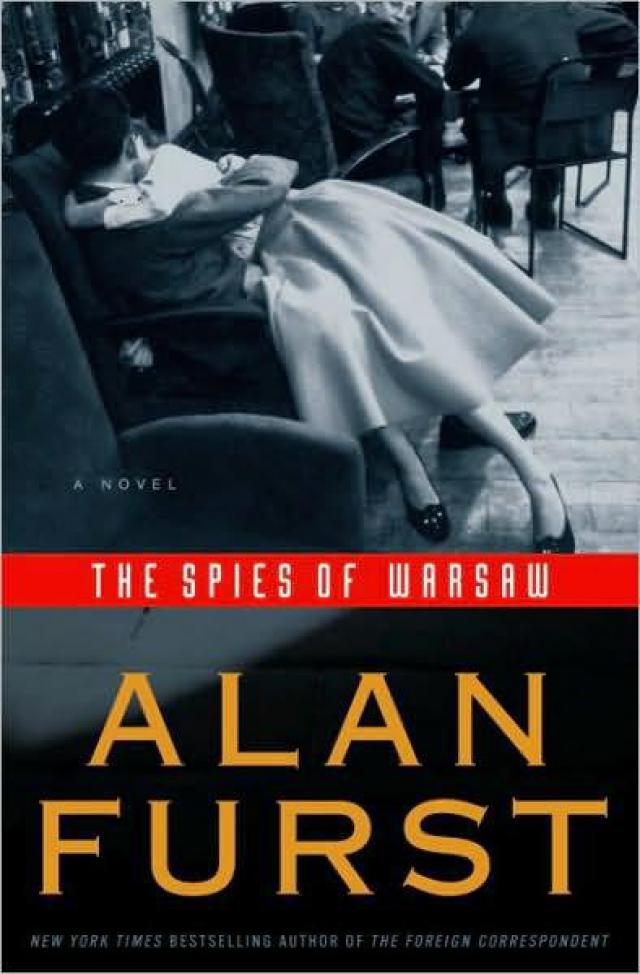
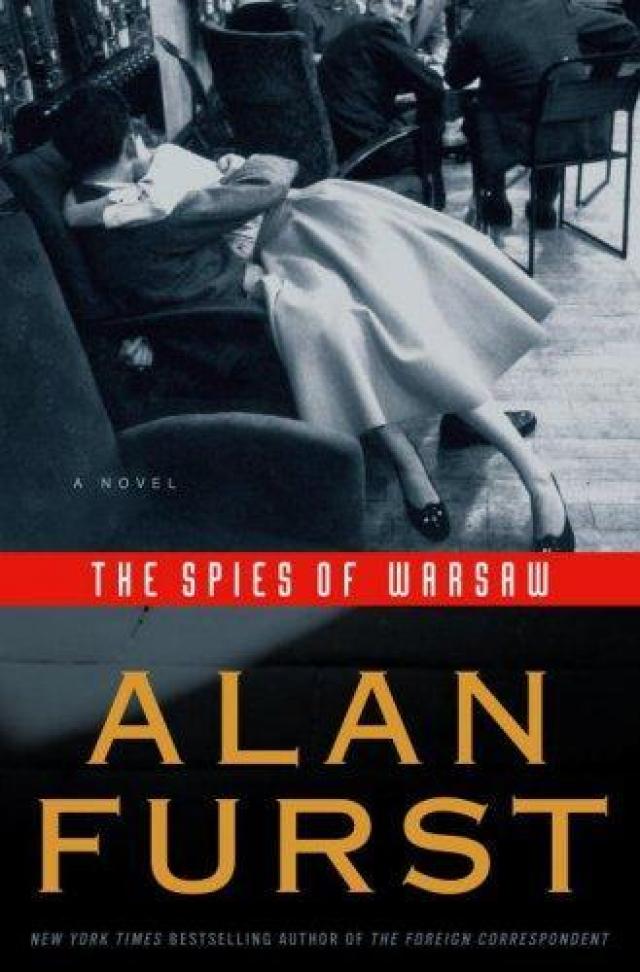
The Spies of Warsaw: A Novel

The Spies of Warsaw: A Novel

Alan Furst

Mystery & Thrillers / Historical Fiction

An autumn evening in 1937. A German engineer arrives at the Warsaw railway station. Tonight, he will be with his Polish mistress; tomorrow, at a workers’ bar in the city’s factory district, he will meet with the military attaché from the French embassy. Information will be exchanged for money. So begins The Spies of Warsaw, the brilliant new novel by Alan Furst, lauded by The New York Times as “America’s preeminent spy novelist.”War is coming to Europe. French and German intelligence operatives are locked in a life-and-death struggle on the espionage battlefield. At the French embassy, the new military attaché, Colonel Jean-Francois Mercier, a decorated hero of the 1914 war, is drawn into a world of abduction, betrayal, and intrigue in the diplomatic salons and back alleys of Warsaw. At the same time, the handsome aristocrat finds himself in a passionate love affair with a Parisian woman of Polish heritage, a lawyer for the League of Nations.Colonel Mercier must work in the shadows, amid an extraordinary cast of venal and dangerous characters–Colonel Anton Vyborg of Polish military intelligence; the mysterious and sophisticated Dr. Lapp, senior German Abwehr officer in Warsaw; Malka and Viktor Rozen, at work for the Russian secret service; and Mercier’s brutal and vindictive opponent, Major August Voss of SS counterintelligence. And there are many more, some known to Mercier as spies, some never to be revealed.The Houston Chronicle has described Furst as “the greatest living writer of espionage fiction.” The Spies of Warsaw is his finest novel to date–the history precise, the writing evocative and powerful, more a novel about spies than a spy novel, exciting, atmospheric, erotic, and impossible to put down.“As close to heaven as popular fiction can get.”–Los Angeles Times, about The Foreign Correspondent“What gleams on the surface in Furst’s books is his vivid, precise evocation of mood, time, place, a letter-perfect re-creation of the quotidian details of World War II Europe that wraps around us like the rich fug of a wartime railway station.”–Time“A rich, deeply moving novel of suspense that is equal parts espionage thriller, European history and love story.”–Herbert Mitgang, The New York Times, about Dark Star“Some books you read. Others you live. They seep into your dreams and haunt your waking hours until eventually they seem the stuff of memory and experience. Such are the novels of Alan Furst, who uses the shadowy world of espionage to illuminate history and politics with immediacy.”–Nancy Pate, Orlando SentinelFrom the Hardcover edition.
Read online
  • 27
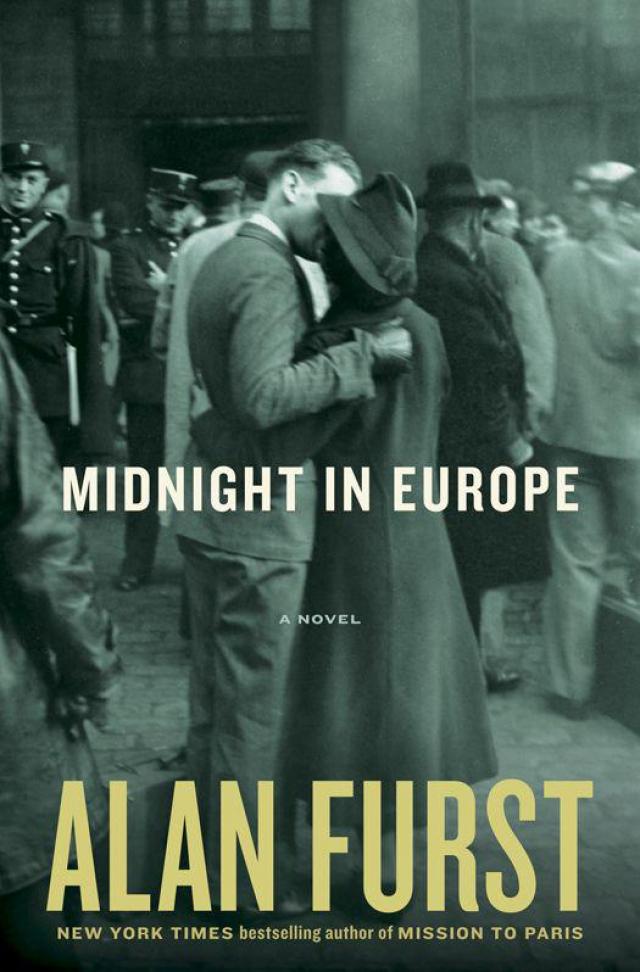
Midnight in Europe: A Novel

Midnight in Europe: A Novel

Alan Furst

Mystery & Thrillers / Historical Fiction

Paris, 1938. As the shadow of war darkens Europe, democratic forces on the Continent struggle against fascism and communism, while in Spain the war has already begun. Alan Furst, whom Vince Flynn has called “the most talented espionage novelist of our generation,” now gives us a taut, suspenseful, romantic, and richly rendered novel of spies and secret operatives in Paris and New York, in Warsaw and Odessa, on the eve of World War II.Cristián Ferrar, a brilliant and handsome Spanish émigré, is a lawyer in the Paris office of a prestigious international law firm. Ferrar is approached by the embassy of the Spanish Republic and asked to help a clandestine agency trying desperately to supply weapons to the Republic’s beleaguered army—an effort that puts his life at risk in the battle against fascism.Joining Ferrar in this mission is a group of unlikely men and women: idealists and gangsters, arms traders and aristocrats and spies. From shady Paris nightclubs to white-shoe New York law firms, from brothels in Istanbul to the dockyards of Poland, Ferrar and his allies battle the secret agents of Hitler and Franco. And what allies they are: there’s Max de Lyon, a former arms merchant now hunted by the Gestapo; the Marquesa Maria Cristina, a beautiful aristocrat with a taste for danger; and the Macedonian Stavros, who grew up “fighting Bulgarian bandits. After that, being a gangster was easy.” Then there is Eileen Moore, the American woman Ferrar could never forget.In Midnight in Europe, Alan Furst paints a spellbinding portrait of a continent marching into a nightmare—and the heroes and heroines who fought back against the darkness. Advance praise for *Midnight in Europe “A lovely book. With Midnight in Europe, Alan Furst delivers an observant, sexy, and thrilling tale set in the outskirts of World War II, when Europe grew dark and ordinary men and women found themselves compelled to fight for righteous principles. In Furst’s hands, Paris once again comes alive with intrigue. A dark time, yes, but also one that is endlessly compelling.”—Erik Larson “Through multiple novels, Furst has illuminated moments of reluctant courage and desperate love in a world teetering on the edge of destruction. He does so again here, and, as always, he does it exquisitely. . . . Furst is a master of mood, but, above all, he is able to show how the most personal of emotions—love, especially—drives the actions of men and women caught in a time of peril.”—Booklist (starred review)Praise for Alan Furst“Furst is the best in the business.”—Vince Flynn“Page after page is dazzling.”—James Patterson“Furst writes profoundly realistic books. The brilliant historical flourishes seem to create—or re-create—a world . . . a heartbreaking sense of the vast Homeric epic that was World War II and the smallness of almost every life that was caught up in it.”—The New York Times Book Review“Though set in a specific place and time, Furst’s books are like Chopin’s nocturnes: timeless, transcendent, universal. One does not so much read them as fall under their spell.”—Los Angeles Times “Alan Furst’s novels swing a beam into the shadows at the edges of the great events leading to World War II. Readers come knowing he’ll deliver effortless narrative.”—USA Today* From the Hardcover edition.ReviewAdvance praise for *Midnight in Europe “A lovely book. With Midnight in Europe,* Alan Furst delivers an observant, sexy, and thrilling tale set in the outskirts of World War II, when Europe grew dark and ordinary men and women found themselves compelled to fight for righteous principles. In Furst’s hands, Paris once again comes alive with intrigue. A dark time, yes, but also one that is endlessly compelling.”—Erik Larson “Through multiple novels, Furst has illuminated moments of reluctant courage and desperate love in a world teetering on the edge of destruction. He does so again here, and, as always, he does it exquisitely. . . . Furst is a master of mood, but, above all, he is able to show how the most personal of emotions—love, especially—drives the actions of men and women caught in a time of peril.”—Booklist (starred review) Praise for Alan Furst“Furst is the best in the business—the most talented espionage novelist of our generation.”—Vince Flynn“Page after page is dazzling.”—James Patterson“Furst writes profoundly realistic books. The brilliant historical flourishes seem to create—or re-create—a world . . . a heartbreaking sense of the vast Homeric epic that was World War II and the smallness of almost every life that was caught up in it.”—The New York Times Book Review“Though set in a specific place and time, Furst’s books are like Chopin’s nocturnes: timeless, transcendent, universal. One does not so much read them as fall under their spell.”—Los Angeles Times “Alan Furst’s novels swing a beam into the shadows at the edges of the great events leading to World War II. Readers come knowing he’ll deliver effortless narrative.”—USA Today “Mesmerizing . . . Mr. Furst is a master at conjuring European scenes and moods during World War II and the fraught years that preceded it.”—The Wall Street Journal “Alan Furst again shows why he is a grandmaster of the historical espionage genre. . . . It doesn’t get more action-packed and grippingly atmospheric than this.”—The Boston Globe About the AuthorAlan Furst is widely recognized as the master of the historical spy novel. Now translated into eighteen languages, he is the author of Night Soldiers, Dark Star, The Polish Officer, The World at Night, Red Gold, Kingdom of Shadows, Blood of Victory, Dark Voyage, The Foreign Correspondent, The Spies of Warsaw, Spies of the Balkans, Mission to Paris, and Midnight in Europe. Born in New York, he lived for many years in Paris, and now lives on Long Island.
Read online
  • 14
The spies of warsaw

The spies of warsaw

Alan Furst

Mystery & Thrillers / Historical Fiction

SUMMARY: In 1937 Warsaw, on the eve of World War II, intelligence operatives on both sides of the forthcoming struggle wage their own espionage battle in a world of betrayal, intrigue, and abduction, including Colonel Jean-Franois Mercier, a decorated hero drawn into a passionate love affair with a Parisian woman of Polish heritage, a lawyer for the League of Nations. 75,000 first printing.
Read online
  • 10