The mangos kiss, p.62
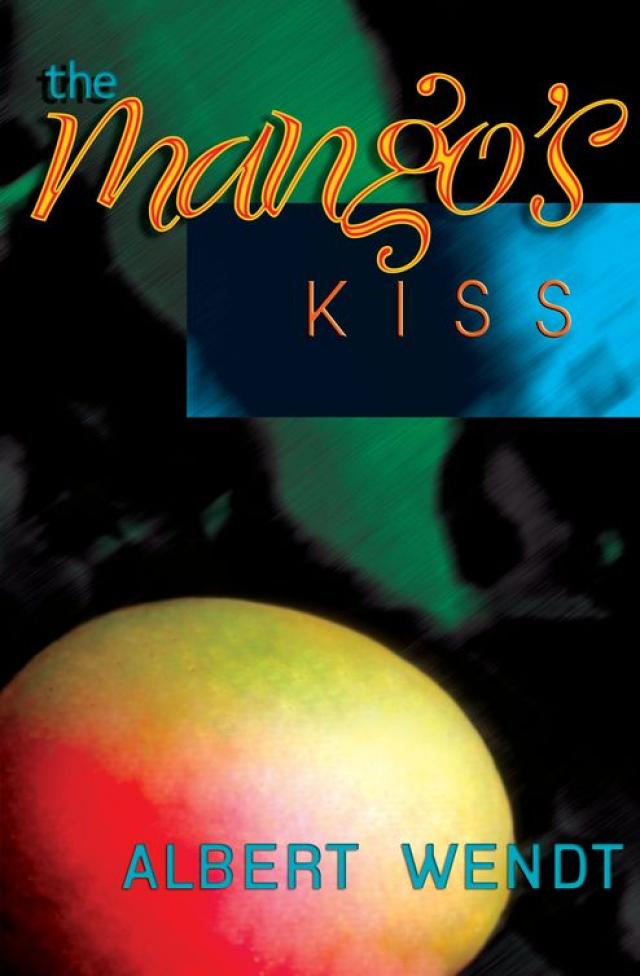
The Mango's Kiss,
p.62


Time stopped still, gasping in fright; it didn’t want either of them to make another move in this moment of truth, this threatened breach of the faith and alofa that had bound them together for so long. But the future was inevitable.
Desperately she wanted to take back her insult, her truth. She stepped towards him. He moved towards her but it wasn’t in forgiveness and alofa. He would later tell the elders of their aiga that he’d done it because she’d trampled on his mamalu, honour and mana as their ali’i and head of their aiga.
The incredible shock of his fist in the centre of her face reverberated beyond physical pain and forgiveness. It was the first time he’d ever hit her. The second blow punched into the core of her being and as she tumbled away from him into the darkness flooding her eyes, she cried, ‘Tavita, Tavita!’ knowing that when she surfaced from that dark they would be beyond trust and forgiveness and they’d not meant it to be that way, that future …
Epilogue
‘Let’s go, let’s go!’ Arona whispered urgently into her ear, and Peleiupu was awake and hitching on her ie lavalava and shaking Ruta awake, and they were rolling out of their mosquito net, with Naomi mumbling, ‘Wait for me, wait for me!’
Arona was already over the front paepae and jumping down onto the wet grass and rushing into the wet dawn towards the church when Naomi caught up with Peleiupu and Ruta. Peleiupu grabbed her hand and pulled her after them into the incoming tide of ripe mango scent …
The sky was overcast and wild with the promise of more heavy rain. Their skins started goose-pimpling in the sharp cold, and the water-soaked ground wrapped its wetness around their bare feet as they ran squishily through it. ‘Hurry! Or we’ll be late!’ Peleiupu urged her sisters as the hungry ripe mango smell continued weaving into her nostrils and down into her eager lungs.
The large stand of mango trees behind the church loomed up over it, and even in the dark she could see that the trees were still laden with ripe fruit. She imagined other children scurrying around under the trees collecting the fruit that had fallen during the night.
Dragging the empty basket, Arona disappeared into the darkness under the mangoes. No others yet! she thought gladly, then she saw two other children running into the mango stand from the opposite direction.
She dropped Naomi’s hand as Arona pushed the basket to her and started selecting the best mangoes from the ground and dropping them into the basket. ‘Quick, quick!’ he kept urging his sisters, who scrambled around picking up the fruit. Across the stand she recognised Tavita and his brother Mikaele — as usual they were trying to out-race them, their pale white skins red from the cold. From behind them other children were joining the scramble, the race, which, since the mangoes had started ripening a few weeks before, occurred every morning at dawn.
As she watched her brother she marvelled at his skill and speed; they all called him the Mango King because he out-raced even Tavita, his main rival and best friend. They couldn’t understand Arona’s mad enthusiasm to be the Mango King — he didn’t even like mangoes that much. After each race — and he’d always collected the most and the best — he simply took one or two bites out of one, gave it to Naomi or Ruta, and then talked to his friends while the others gorged themselves on the succulent fruit, with the thick golden juice dribbling-dribbling-dribbling out of the corners of their insatiable mouths. He always made sure there were enough mangoes left for the people at home, and picked out the fattest for their mother.
Because these trees had grown from mango stones an American sailor had given the then pastor years before, everyone referred to them as Mago Amelika, and they were special. Satoa had one rule about them: no one was allowed to climb them or throw sticks or stones up at them to knock down the fruit. No one.
So why did Arona do what he did next? Had some evil aitu entered him suddenly and driven him to it? Was it a mad daring that blinded him to the consequences of his actions? For years they would ponder that question. For now the only real thing was the mad act. He peered up into the dripping darkness of the mango foliage, seemed to catch sight of a hypnotically yellow fruit — a small brilliant sun, he’d later describe it — and before he or they knew it, he was jumping up and catching hold, with both hands, of a low branch. Before they could stop him — they were too afraid to think about it — he had swung his legs up over the branch and was standing on the junction of the branch and the trunk of the tree.
‘It’s not allowed!’ Tavita was the first to call.
‘Come down!’ Peleiupu called. ‘Has your head gone mad?’ But he didn’t seem to hear, not even when the other children called as a chorus. He appeared absolutely beyond their hearing and their fear of what the elders were going to do to him.
‘I’ll going to tell Mautu!’ Naomi threatened.
‘We’re going to tell, Arona!’ chorused Ruta.
Immediately, the other children started to scatter home and away from being caught and associated with Arona’s action. Mikaele was trying to pull Tavita away but he refused to move. ‘We’re all going to be beaten by Mautu!’ Mikaele cautioned.
‘Let’s go!’ Ruta said to Peleiupu, who was transfixed as she watched her brother climbing confidently from branch to branch.
‘Hurry, hurry!’ Peleiupu heard her frightened voice pleading.
They stood still, all of them, as if they were going to remain in that position and moment forever, witnessing, with fear and huge admiration, Arona’s mad act, his right arm reaching up cautiously, up through the dripping leaves, his hand opening to cup the glistening, golden fruit, his fingers closing around it until it was secure in his grip …
‘And he doesn’t even like mangoes,’ Tavita said. Peleiupu turned to him and caught him securely in the centre of her sight, as she was caught in his.
At that moment Arona’s familiar laughter started falling down from the mango tree, and they gazed up and saw him, face round and bright with joy, as he held up the golden fruit and showed it to them …Such daring, such beautiful madness.
About the Author
Albert Wendt is of the Aiga Sa-Tuaopepe of Lefaga, the Aiga Sa-Maualaivao of Malie and the Aiga Sa-Patu of Vaiala of Samoa. He first came to New Zealand in 1952, where he went to high school, teachers training college and university. Later he was Principal of Samoa College and Pro-Vice-Chancellor and Professor of Pacific Literature at the University of the South Pacific. At present he is Professor of English at the University of Auckland. He has published numerous novels and poems as well as short stories.
Copyright
National Library of New Zealand Cataloguing-in-Publication Data
Wendt, Albert, 1939-
The mango’s kiss / Albert Wendt.
I. Title.
ISBN 1-86941-580-9
NZ823.2—dc 21
A VINTAGE BOOK
published by
Random House New Zealand
18 Poland Road, Glenfield, Auckland, New Zealand
www.randomhouse.co.nz
First published 2003
© 2003 Albert Wendt
The moral rights of the author have been asserted
ISBN 978 1 86979 858 1
Design: Elin Termannsen
Cover design: Katy Yiakmis
Albert Wendt, The Mango's Kiss