

The fury, p.22
The Fury,
p.22


I stared at it, awestruck. For I understood what this was.
I knew, with utter certainty, this was Aura herself. This was the goddess, terrifying, vengeful, and full of rage. She was the wind.
And she had come for me.
As soon as I thought this, the wind rushed toward me. It entered my open mouth, ran down my throat, and filled up my body. It made me expand, grow, and swell. My lungs nearly burst with it. It coursed through my veins; it swirled around my heart.
The wind consumed me; and I became it.
I became the fury.
7
Lana walked into the kitchen. She was followed by the others. But she barely registered their presence.
She looked out the window at the brightening sky.
She was deep in thought—but with no confusion or distress. She felt strangely calm, as though she’d had a restful night and had just awoken from a deep sleep. She felt clear, in a way she hadn’t for a long time.
You might suppose her mind would be on me, but you’d be wrong. I had faded almost entirely from her thoughts, as if I had never existed.
With my departure, a new clarity appeared. Everything Lana had felt so scared of—all the loneliness, loss, remorse—meant nothing to her now. All the human relationships she had deemed so necessary for her happiness meant nothing. She saw the truth at last, that she was alone and always had been.
Why had that been so frightening? She didn’t need Kate, nor Jason. She would set them all free, all of them. She would release her hostages. She would buy Agathi some land in Greece, a house, and a life, instead of demanding she sacrifice herself to Lana’s fear. Lana was no longer afraid. She would let Leo live his own life, pursue his own dreams. Who was she to hold on to him, to cling to him?
And Jason? She would throw him onto the street. Let him go to jail, let him go to hell, he meant nothing to her now.
She couldn’t wait to leave. She wanted to get as far away from this island as possible. She never wanted to come back. She would leave London, too. She knew that.
But go where? Wander the world aimlessly, forever lost? No. She was no longer lost. The fog had lifted, the road was revealed. The journey ahead was clear.
She would go home.
Home. As she thought this, she felt a warm glow in her heart.
She would go back to California, back to Los Angeles. All these years, she had been running away—fleeing who she was, fleeing the only thing that gave her meaning. Now, finally, she would confront her destiny, embrace it. She’d go back to Hollywood, where she belonged. And go back to work.
Lana felt so powerful now, rising like a phoenix from the ashes. Strong and fearless. Alone, but not afraid. There was nothing to be afraid of. She felt … what—what was this feeling? Joyful? Yes, joy. She felt full of joy.
Lana didn’t hear me enter the kitchen. I had come into the house through the back door. Silently making my way along the passage, I heard them, in the kitchen, congratulating themselves on their successful production. There was laughter, and the sound of champagne corks popping.
As I walked in, Agathi was pouring champagne into a row of glasses. She didn’t see me at first—but then she noticed a couple of wasps on the counter. She looked up.
She saw me standing by the door. She gave me a strange look. It must have been the wasps on me that made her look at me like that.
“A water taxi will be here in twenty minutes,” Agathi said. “Go get your stuff.”
I didn’t reply. I stood there, staring at Lana.
Lana was standing apart from the others, by the window, looking out. I thought how beautiful she looked, in this early-morning light. The sun outside made the window glow behind her, creating a halo around her head. She looked like an angel.
“Lana?” I said, in a low voice.
I sounded calm. I looked calm on the surface. But in the padlocked cell in my mind, where I kept him prisoner, I could hear the kid, rising up like a golem, wailing, screaming—battering the cell door with his fists, howling with rage.
Once again, abused; once again, humiliated. And worse, much worse—all his darkest fears, all the terrible things that I’d promised him weren’t true, had just been confirmed; by the only person he ever loved. Lana had exposed the kid, finally, for what he was: unwanted, unloved, a fraud. A freak.
I could hear him breaking free, bursting out of his cell—howling like a demon. He wouldn’t stop screaming—it was a horrifying, terrifying scream.
I wished he would stop screaming.
And then I realized it wasn’t the kid screaming.
It was me.
Lana had turned around and was staring at me, alarmed. Her eyes widened as I took the shotgun out from behind my back.
I aimed it at her.
Before anyone could stop me, I pulled the trigger.
I fired three times.
* * *
And that, my friend, concludes the sad story of how I came to murder Lana Farrar.
Epilogue
I had a visitor the other day.
I don’t get many visitors, you know. So it was nice to see a familiar face.
It was my old therapist. Mariana.
She had come to visit a colleague here—but thought she’d kill two birds with one stone; and she popped in to see me, too. Which lessened the compliment somewhat—but there you go. These days, I must take what I can get.
Mariana looked well, considering. Her husband died a few years ago, and she was heartbroken. Apparently, she completely fell apart. I know how that feels.
“How are you?” I said.
“I’m okay.” Mariana smiled cautiously. “Surviving. And you? How are you finding it here?”
I shrugged and answered with the usual banalities about making the best of things, that nothing lasts forever. “Plenty of time to think. Too much, perhaps.”
Mariana nodded. “And how are you doing with it all?”
I smiled but didn’t reply. What could I possibly say? How could I begin to tell her the truth?
As if reading my thoughts, Mariana said, “Have you considered writing it down? Everything that happened on the island?”
“No. I can’t do that.”
“Why not? It might help. To tell the story.”
“I’ll think about it.”
“You don’t sound very enthusiastic.”
“Mariana”—I smiled—“I am a professional writer, you know.”
“Meaning?”
“Meaning I only write for an audience. There’s no point, otherwise.”
Mariana looked amused. “Do you really believe that, Elliot? There’s no point without an audience?” She smiled, as something occurred to her. “That reminds me of something Winnicott said—about the ‘true self.’ He said it is only accessed through play.”
I misunderstood what Mariana meant, and my ears pricked up.
“A play? Really?”
“Not a play.” Mariana shook her head. “To play. The verb.”
“Oh, I see,” I said, losing interest.
“He meant our true self only appears when there is no one to perform to—no audience, no applause. No expectation to be met. Playing serves no practical purpose, I suppose, and requires no reward. It is its own reward.”
“I see.”
“Don’t write your story for an audience, Elliot. Write it for yourself.” Mariana gave me an encouraging look. “Write it for the kid.”
I smiled politely. “I’ll think about it.”
Before she left, Mariana suggested I might find it helpful to talk to her colleague, whom she had come here to visit. “You should say hello to him, at least. You’ll like him, I’m sure. He’s very easy to talk to. It might help.”
“Perhaps I will.” I smiled. “I could certainly use someone to talk to.”
“Good.” She looked pleased. “His name’s Theo.”
“Theo. Is he a therapist here?”
“No.” Mariana hesitated. For a split second, she looked embarrassed. “He’s an inmate, like you.”
* * *
As a writer, I am habitually prone to fleeing reality. To making things up and telling stories.
Mariana once asked me about this, in a therapy session. She asked why I spent my life making things up. Why write? Why be creative?
I felt surprised she needed to ask. To me, the answer was painfully obvious. I was creative because, when I was a child, I was dissatisfied with the reality I was forced to endure. So, in my imagination, I created a new one.
That’s where all creativity is born, I believe—in the desire to escape.
Bearing that in mind, I took Mariana’s advice. If I wrote my story down, it might set me free. As she advised, I didn’t write it for publication—or performance. I wrote it for myself.
Well, perhaps that’s not quite true.
You see, when I first sat down, at the narrow desk in my cell, to write, I felt a strange, dissociated anxiety. Once, I would have ignored it—lit a cigarette or had another coffee or a drink to distract myself.
But now, I knew it was the kid who was anxious, not me. His mind was racing; he was terrified of this document. Who might read it and discover the truth about him, and what would the consequences be? I told him not to worry—I wouldn’t abandon him. We were in it together, he and I, to the bitter end.
I took the kid and placed him gently on the single bed beside me. I told him to settle down—and I told him a bedtime story.
This is a story for anyone who has ever loved, I said.
It was a rather unusual bedtime story, perhaps—but full of incident and adventure, with goodies and baddies, heroines, and wicked witches.
I must say, I’m rather proud of it. It’s one of the best things I’ve written. It’s certainly the most honest.
And in the spirit of that honesty, allow me, before we part, to tell you one final story. About me, and Barbara West, and the night she died.
I think you’ll find it illuminating.
* * *
After Barbara fell down the stairs, I hurried down after her.
I examined the body on the floor, at the foot of the staircase. Once I had made sure she was dead, I went into her study. Before I called the ambulance, I wanted to make sure she hadn’t left anything incriminating behind. Perhaps she had written or photographic evidence of all those things she had accused me of? I wouldn’t put it past Barbara to keep a secret diary, detailing my misdemeanors.
I methodically went through her desk drawers—until finally, at the back of the bottom drawer, I found something unexpected. Seven thin notebooks, bound together with elastic.
A diary, I thought, as I opened them up. But I quickly realized what I held in my hands wasn’t a diary.
It was a handwritten play—by Barbara West.
It was about me and her, and our life together. It was the meanest, most devastating, most brilliant thing I’d ever read in my life.
So what did I do?
I tore off the title page and made it my own.
I’m not really a writer, you see. I have no real talent for anything; except lying. I’m certainly no good at writing stories.
Let’s face it—I couldn’t even plot a murder.
I’ve only ever had one story to tell. And now that I’ve told it, I can’t bring myself to destroy it. Instead, I’ll lock it away until I am dead. Then, if everything goes according to plan, this can be published, posthumously. The intrigue surrounding it should make it a bestseller—which will give me a great deal of satisfaction; even from beyond the grave.
Joking aside—if you’re reading this, then these are the words of a dead man. That’s the final twist. I didn’t get out alive, either. No one does, in the end.
But let’s not dwell on that.
Let us end, instead, as we began—with Lana.
She’s still here, you know. I haven’t entirely lost her. She lives on in my mind.
When I’m lonely, or afraid, or I miss her—which is all the time—all I have to do is close my eyes.
Then, I’m right back there—a little boy in the movie theater, in the fifteenth row.
And I gaze at her, smiling, in the dark.
Acknowledgments
It’s impossible for anyone to write a book like this without standing on the shoulders of giants who did it first and did it much better, so I feel I must begin by acknowledging the debt of gratitude I owe writers like Agatha Christie, Anthony Shaffer, Patricia Highsmith, and Ford Madox Ford, for inspiring me and The Fury. They say it takes a village—which was never more true than for this book. So many people helped me along the way. I had a lot of fun writing this story and exploring this world, but I got seriously lost in the woods a few times. My brilliant editors, Ryan Doherty at Celadon and Joel Richardson at Michael Joseph, and agent extraordinaire Sam Copeland always helped me find the path again. Thank you, my friends—you went above and beyond the call of duty.
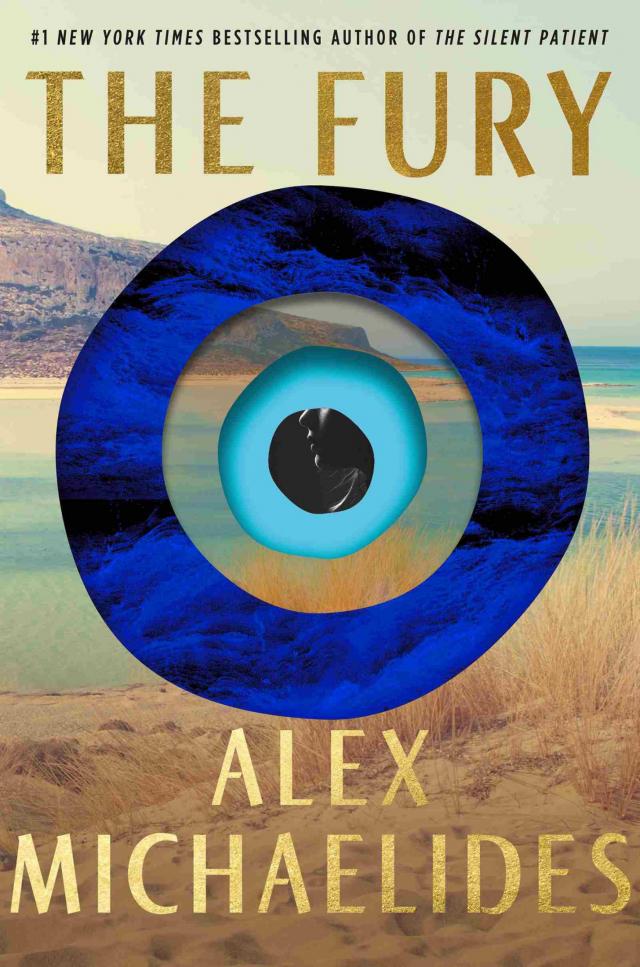
I’d like to thank my U.S. and U.K. publishers for doing such an amazing job. Your tireless dedication and sheer talent bowls me over. At Celadon, I owe a huge thanks to Deb Futter, Jamie Raab, Rachel Chou, Christine Mykityshyn, and Anne Twomey. I’d also like to thank Jennifer Jackson, Jaime Noven, Sandra Moore, Rebecca Ritchey, Cecily van Buren-Freedman, Liza Buell, Randi Kramer, and Julia Sikora. Thank you, Will Staehle and Erin Cahill, for the fab cover. And in Production, thank you, Jeremy Pink, Vincent Stanley, Emily Walters, and Steve Boldt. And a big thank-you to the Macmillan sales team.
At Michael Joseph, I’d like to give massive thanks to Louise Moore, Maxine Hitchcock, Grace Long, and Sarah Bance. Also, Ellie Hughes, Sriya Varadharajan, Vicky Photiou, Hattie Evans, and Lee Motley.
At Rogers, Coleridge & White, I owe a big thank-you to Peter Straus, Honor Spreckley, David Dunn, Nelka Bell, and Chris Bentley-Smith. And extra-special thanks to the foreign rights agents, who simply are the best in the business—Tristan Kendrick, Katharina Volckmer, Stephen Edwards, and Sam Coates.
I would also like to thank Nedie Antoniades, for kicking the story around with me in its embryonic form, and for suggesting the character of Nikos. And for your incredibly helpful notes, which elevated the final drafts considerably, thank you to Sophie Hannah, Hannah Beckerman, Hal Jensen, David Fraser, Emily Holt, and Uma Thurman.
Thank you, Ivan Fernandez Soto, for your help and sound advice. Thanks, Katie Haines, for being such a star and always making everything so much fun. Thank you, Olga Mavropoulou, for lending me your wonderful name.
And finally, thank you to my parents, George and Christine Michaelides, and my sisters, Emily Holt and Vicky Holt, for all your support.
Founded in 2017, Celadon Books, a division of
Macmillan Publishers, publishes a highly curated list
of twenty to twenty-five new titles a year. The list of
both fiction and nonfiction is eclectic and focuses
on publishing commercial and literary books and
discovering and nurturing talent.
ALSO BY ALEX MICHAELIDES
The Maidens
The Silent Patient
About the Author
Alex Michaelides was born and raised in Cyprus. He has an M.A. in English literature from Trinity College, Cambridge University, and an M.A. in screenwriting from the American Film Institute in Los Angeles. His first novel, The Silent Patient, debuted at #1 on the New York Times bestseller list and has sold more than 6.5 million copies worldwide. The rights have been sold in a record-breaking fifty-two countries, and the book has been optioned for film by Plan B. His second novel, The Maidens, was an instant New York Times bestseller and has been optioned for television by Miramax Television and Stone Village. You can sign up for ebook updates here.
Contents
Title Page
Copyright Notice
Dedication
Epigraph
Prologue
Act I
Chapter 1
Chapter 2
Chapter 3
Chapter 4
Chapter 5
Chapter 6
Chapter 7
Chapter 8
Chapter 9
Chapter 10
Chapter 11
Chapter 12
Chapter 13
Chapter 14
Chapter 15
Chapter 16
Chapter 17
Chapter 18
Chapter 19
Chapter 20
Chapter 21
Act II
Chapter 1
Chapter 2
Chapter 3
Chapter 4
Chapter 5
Chapter 6
Chapter 7
Chapter 8
Chapter 9
Chapter 10
Chapter 11
Chapter 12
Chapter 13
Chapter 14
Chapter 15
Chapter 16
Chapter 17
Chapter 18
Chapter 19
Chapter 20
Chapter 21
Chapter 22
Act III
Chapter 1
Chapter 2
Chapter 3
Chapter 4
Chapter 5
Chapter 6
Chapter 7
Chapter 8
Chapter 9
Chapter 10
Chapter 11
Chapter 12
Chapter 13
Chapter 14
Chapter 15
Act IV
Chapter 1
Chapter 2
Chapter 3
Chapter 4
Chapter 5
Chapter 6
Chapter 7
Chapter 8
Chapter 9
Chapter 10
Act V
Chapter 1
Chapter 2
Chapter 3
Chapter 4
Chapter 5
Chapter 6
Chapter 7
Epilogue
Acknowledgments
Also by Alex Michaelides
About the Author
Copyright
This is a work of fiction. All of the characters, organizations, and events portrayed in this novel are either products of the author’s imagination or used fictitiously.


