Robin hood the outlaw, p.1
ROBIN HOOD THE OUTLAW,
p.1


ROBIN HOOD THE OUTLAW
Translated by Alfred Allinson
First published in 1872, Dumas’ account of the life and adventures of the English outlaw was split into two volumes, due to its large size. They are somewhat adapted and slightly compressed versions of Pierce Egan the Younger’s Robin Hood and Little John. Robin the Outlaw is the second volume and concerns the later adventures of Robin Hood and his Merry Men, following his initial outlawing by the Baron of Nottingham.
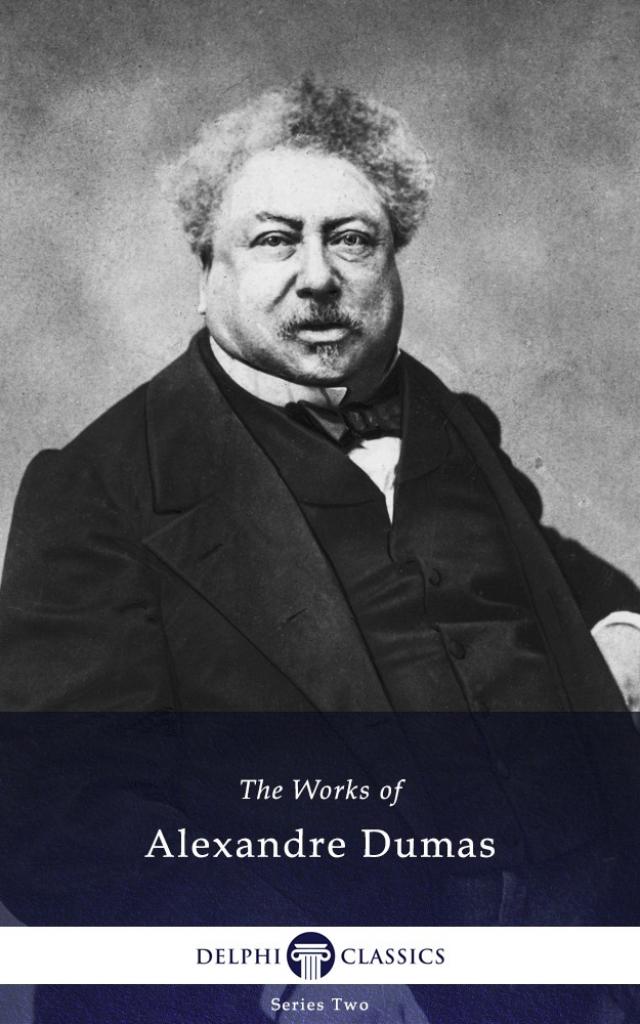
Dumas, close to the time of publication
CONTENTS
CHAPTER I
CHAPTER II
CHAPTER III
CHAPTER IV
CHAPTER V
CHAPTER VI
CHAPTER VII
CHAPTER VIII
CHAPTER IX
CHAPTER X
CHAPTER XI
CHAPTER XII
CHAPTER XIII
CHAPTER XIV
CHAPTER I
In the early hours of a beautiful day in the month of August, Robin Hood, with a light heart and a song on his lips, was strolling down a narrow glade in Sherwood Forest. Suddenly a strong voice, whose capricious tones evidenced a profound ignorance of the rules of music, took up the amorous ballad Robin Hood was singing.
“By’r Lady!” muttered the young man, listening attentively to the stranger’s song, “what an extraordinary thing. Those words are mine own composition, dating from my childhood, and I have never taught them to a soul.”
Reflecting thus, Robin glided behind the trunk of a tree, to wait until the traveller had passed. The latter soon appeared. As he came opposite the oak tree at the foot of which Robin was sitting, he stopped and gazed into the depths of the wood.
“Ha! ha!” he said, perceiving through the thicket a magnificent herd of deer, “there are some old acquaintances; let us see whether mine eye is still true and my hand sure. By St. Paul! I shall give myself the pleasure of sending an arrow into yonder lusty fellow pacing along so stately.”
Saying which, the stranger took an arrow from his quiver, and, adjusting it to his bow, aimed at the deer, wounding him mortally.
“Well done!” cried a laughing voice; “that was a right clever shot.”
The stranger, taken by surprise, turned abruptly.
“Think you so, master?” said he, looking Robin up and down.
“Yea, you are most dexterous.”
“Indeed!” added the other in a scornful tone.
“Never a doubt of it, and especially so for one little used to shoot at deer.”
“How know you that I am not practised in this exercise?”
“By your fashion of holding the bow. I would wager what you will, Sir Stranger, that you are better versed in overthrowing a man on the field of battle than in stretching out the deer in the green wood.”
“Excellently answered,” laughed the stranger. “Is it permissible to ask the name of one whose eye is so penetrating as to judge by a single shot the difference betwixt the action of a soldier and that of a forester?”
“My name boots little in the question before us, Sir Stranger, but I can tell you my qualifications. I am one of the chief keepers of this Forest, and I do not intend to allow my helpless deer to be exposed to the attacks of any who take it into their heads to kill them, merely to try their skill.”
“I care not much for your intentions, fair keeper,” rejoined the stranger in a deliberate tone, “and I defy you to prevent me from shooting mine arrows as best me seemeth. I will kill the deer, I will kill the fawns, I will kill what I please.”
“That will be easy, an if I do not oppose you, because you are a right good bowman,” Robin replied. “And now I will make you a proposition. Hear me! I am chief of a band of men, stout-hearted, clear-witted, and well skilled in all the exercises of their trade. You seem to me a good fellow: if your heart be honest, if you be of a calm and conciliatory spirit, I shall be happy to enroll you in my company. Once you are one of us, you may hunt the deer; but if you refuse to join our brotherhood, I must ask you to quit the Forest.”
“Truly, master keeper, you speak in a mighty overbearing tone. Come now, hear me in your turn. If you do not speedily show me your heels, I will give you such counsel as with no grand phrases will teach you to weigh your words; which counsel, pretty bird, will be a volley of blows from a cudgel plied pretty briskly.”
“You beat me!” cried Robin, scornfully.
“Yea, I!”
“My lad,” replied Robin, “I would fain not lose my temper, for thou wouldst, find it would go ill with thee then; but if thou dost not at once obey my order to quit the Forest, thou wilt be first vigorously chastised; thereafter we will e’en try the compass of thy neck and the strength of thy body on the highest branch of a tree in this Forest.”
The stranger began to laugh.
“Beat me and hang me,” said he, “that would be curious, if it were not impossible. Let us see, then. Get to work; I am waiting.”
“I do not trouble myself to cudgel with mine own hands all the rogues I encounter, my friend,” returned Robin. “I have those who fill that useful office in my name. I will summon them, and thou canst explain thyself to them.”
Robin raised a horn to his lips, and was about to sound a vigorous call, when the stranger, who had quickly fitted an arrow to his bow, shouted “Hold, or I kill you!”
Robin dropped his horn, seized his bow, and leaping towards the stranger with incredible nimbleness, cried “Madman! Dost not see with what a power thou wouldst strive? Before thou couldst strike me, I should have already smitten thee, and the death thou wouldst aim at me would have recoiled upon thyself. Be reasonable; we are strangers to each other, and for no good cause we treat each other as enemies. The bow is a murderous weapon: replace the arrow in thy quiver, and, since thou wilt play with the quarter-staff, so be it. I accept thy challenge.”
“The quarter-staff then!” repeated the stranger; “and let him who is able to knock the other on the head, be not only the victor, but also free to rule the fate of his adversary.”
“So be it,” Robin returned. “Take heed of the consequences of the compact thou proposest; if I make thee cry for mercy, I shall have the right of enrolling thee in my band.”
“Agreed!”
“Very well; and may the best man win the day.”
“Amen!” said the stranger.
The trial of strength commenced. The blows, liberally administered on both sides, soon overwhelmed the stranger, who did not succeed in hitting Robin once. Indignant and breathless, the poor youth flung down his weapon.
“Cease!” he cried. “I have had enough of this.”
“You own yourself beaten?” asked Robin.
“No; but I see you are much stronger than I am. You are accustomed to wield a cudgel, which gives you too great an advantage; the match should be as equal as possible. Can you use a sword?”
“Yea,” replied Robin.
“Will you continue the struggle with
that weapon?”
“Certainly.”
They drew their swords. Each was an expert swordsman, and when they had fought for a quarter of an hour, neither had succeeded in wounding the other.
“Stop!” cried Robin, suddenly.
“You are tired?” asked the stranger, with a smile of triumph.
“Yea,” Robin replied frankly; “since to me the sword is not a pleasant weapon. The quarter-staff is the thing; its blows are less dangerous and offer some sport; the sword hath something savage and cruel about it. My fatigue, though real,” Robin went on, scrutinising the face of the stranger, whose head was covered by a cap which partly concealed his forehead, “is not my sole reason for seeking a truce. Since I have stood facing thee, memories of my childhood have surged up within me; the look of thy large blue eyes is not unfamiliar to me. Thy voice recalls that of a friend, my heart is irresistibly attracted towards thee. Tell me thy name; if thou art he whom I love and long for with all the yearning of a tender friendship, thou art welcome a thousand times. I will love thee for thyself and for the dear memories thou dost recall.”
“You speak with a good nature which attracts me, Sir Forester,” replied the stranger, “but, to my great sorrow, I cannot grant your reasonable request. I am not at liberty to do so; my name is a secret which prudence counsels me to guard with care.”
“You have nothing to fear from me,” replied Robin; “I am one of those whom men call outlaws. Moreover, I am incapable of betraying the confidence of one who trusts me, and I despise the baseness of him who would reveal even a secret involuntarily surprised. Tell me your name?”
The stranger still hesitated.
“I will be your friend,” added Robin, with an air of frankness.
“Agreed,” replied the stranger. “I am called William Gamwell.”
Robin uttered a cry.
“Will, Will merry Will Scarlett?”
“Yea.”
“And I am Robin Hood!”
“Robin!” cried the young man, as he fell into the arms of his friend; “what joy!”
The two young men embraced each other heartily; then, with looks of unspeakable delight, they gazed at each other with an affecting wonder.
“And I threatened thee!” said Will.
“And I did not recognise thee!” added Robin.
“I wished to kill thee!” cried Will.
“And I cudgelled thee!” continued Robin, breaking into a laugh.
“Bah I think no more of that. Give
me news quick of... Maude.”
“Maude is well, very well.”
“Is she...?”
“Always a charming girl, who loves thee, Will, and only thee in all the world. She hath kept her heart for thee; she will give thee her hand. She hath mourned thy absence, the dear creature; thou hast suffered much, my poor Will, but thou wilt be happy, if thou dost still love the good and beautiful Maude.”
“I love her! How can you question it, Robin? Ah! yes, I love her, and God bless her for not having forgotten me! I have never ceased thinking of her for a single moment; her dear image was ever in my heart, and gave it strength. It was the courage of the soldier on the field of battle, and the consolation of the prisoner in the dark dungeon of the State prison. Maude, dear Robin, hath been my thought, my dream, my hope, my future. Through her I have been able to bear the most cruel privations, the most grievous hardships. God implanted in my heart an unshakeable confidence in the future. I felt sure of seeing Maude again, of becoming her husband, and of spending the last years of my life with her.”
“That patient hope is on the point of being fulfilled, dear Will,” said Robin.
“Yea, I trust so, or rather, I am certain of it. To prove to thee, friend Robin, how much I thought of the dear child, I will tell thee a dream I had in Normandy, a dream which lingers still in my thoughts, though it dates back nearly a month. I was in the depths of a prison, my arms bound, my body loaded with chains, and I saw Maude a few paces from me, pale as death and covered with blood. The poor girl held out supplicating hands toward me, and her mouth, with its blood-stained lips, murmured plaintive words, the sense of which I could not comprehend, but I saw that she suffered cruelly and was calling me to her aid. As I have just said, I was bound with chains. I rolled upon the ground, and in my helplessness I bit the iron bands which gripped my arms; in a word, I made superhuman efforts to drag myself to Maude. Suddenly the chains which entwined me slackened gently, then fell off. I leapt to my feet and ran to Maude. I took the poor bleeding girl to my heart; I covered with burning kisses her wan, white cheeks, and little by little the blood, arrested in its course, began to circulate, slowly at first, then regularly and naturally. Maude’s lips gained colour, she opened her great black eyes, and cast upon my face a look, at once so grateful and so tender that I was touched to the quick; my heart leapt within me, and a deep groan escaped my burning bosom. I suffered, but at the same time I was very happy. Awakening soon followed this deep emotion, and I leapt from my bed with the firm resolution of returning to England. I longed to see Maude again. Maude who must be unhappy. Maude who must be in need of me. I went at once to my Captain; he had been my father’s steward, and I thought I had some interest with him. To him I disclosed, not the reason of my desire to return to England, for he would have laughed at my fears, but the desire alone. He refused harshly to give me leave. This first rebuff did not deter me. I was like a man possessed, mad to see Maude once more. I besought this man to whom I had once given orders; I entreated him to grant my wish. You will pity me, Robin,” added Will, blushing; “no matter, I will tell you all. I threw myself on my knees before him; my weakness made him smile, and, with a brutal kick, he threw me on my back. Then, Robin, I rose. I was wearing my sword; I drew it from its scabbard, and, without hesitation or reflection, I slew the wretch. Ever since I have been pursued, but I hope my trail is lost. That is why, dear Robin, taking you for a stranger, I would not give you my name; but thank Heaven for leading me to you! Now tell me about Maude; does she still live at Gamwell Hall?”
“At Gamwell Hall, my dear Will?” repeated Robin. “Then thou dost not know what hath happened?”
“I know nothing. But what hath happened? Thou dost frighten me!”
“Nay! never be uneasy; the trouble which befell thy family hath been partly repaired. Time and resignation have effaced all traces of a painful deed; Gamwell village and Hall have both been destroyed.”
“Destroyed!” cried Will. “Holy Virgin! And my mother, Robin; my father and my poor sisters?”
“Are all safe and sound; do not be alarmed! Thy family are now living at Barnsdale. Later on I will tell thee the fatal story in detail; for the present let it suffice that this cruel destruction, which was the work of the Normans, hath cost them dear. We killed two-thirds of the troops sent by King Henry.”
“By King Henry!” exclaimed William. Then he added hesitatingly, “Thou art, thou sayest, Robin, chief keeper of the Forest, and naturally in the service of the King.”
“Not quite, fair cousin,” returned the young man, with a smile. “It is the Normans who pay me for my supervision at least, those who are rich, for I take naught from the poor. I am indeed keeper of the Forest, but on my own account and that of my jolly companions. In a word, William, I am lord of Sherwood Forest, and I will maintain my rights and privileges against all pretenders.”
“I do not understand thee, Robin,” said Will, in utter amazement.
“I will explain myself more clearly.” Saying which, Robin lifted his horn to his lips and blew three piercing blasts.
Scarce had the depths of the wood been stirred by the strident notes, ere William saw issue from brake and glade, to right and left, a hundred men all clad alike in a neat garb, whose green colour well became their martial forms.
These men, armed with bows and arrows, shields and short swords, ranged themselves silently around their leader. William stared in amaze, and looked at Robin with an air of stupefaction. The young man amused himself for a moment in watching the astonishment and surprise his cousin displayed at the respectful attitude of the men summoned by the blast of his horn, then, laying a muscular hand on Will’s shoulder, he said laughingly
“My lads, here is a man who made me cry mercy in an encounter with swords.”
“He!” cried the men, examining Will with marked curiosity.
“Yea, he beat me; and I am proud of his victory, for he hath a sure hand and a brave heart.”
Little John, who seemed less delighted by William’s prowess than Robin had been, advanced to the middle of the circle, and said to the young man
“Stranger, if thou hast made the valiant Robin Hood ask for quarter, thou must be of superlative strength; natheless, it shall not be said that thou hast had the glory of beating the chief of the merry foresters without having been thrashed by his lieutenant. I am a good hand with the quarter-staff wilt play me? If thou canst make me cry, ‘Hold, enough!’ I will proclaim thee the best blade in all the country side.”
“My good Little John,” said Robin, “I wager a quiver of arrows against a bow of yew that this brave lad will be victor once again.”
“I take the double stake, master,” replied John, “and if the stranger bears off the prize, he shall be known not only as the best blade, but as the most skilful cudgel-player in all merry England beside.”
On hearing Robin Hood address the tall swarthy young man before him as “Little John,” Will felt his heart beat quickly, though he showed no emotion. He composed his face, pulled down the cap which covered his head on to his brows, and, answering with a smile the signals Robin was making him, he saluted his adversary gravely, and, armed with his quarter-staff, awaited the first onslaught.
“What! Little John,” cried Will, as the young man was about to begin the contest, “wouldst fight with Will Scarlett with ‘merry William,’ as thou wast wont to call him?”
“Good Lord!” exclaimed Little John, as he let fall his quarter-staff. “That voice! That look!”
He took a few steps forward, and, staggering, leant on Robin’s shoulder for support.
“Well! that voice is mine, Cousin John,” cried Will, throwing his cap on the grass; “look at me!”
The long red locks of the young man clustered in silky curls around his cheeks, and Little John, after gazing in silent joy at the laughing face of his cousin, threw himself upon him, clipping him fairly in his arms, as he said, with an expression of unutterable tenderness “Welcome to merry England, Will, dear Will; welcome to the land of thy fathers, thou who, by thy return, bringest it happiness and content. To-morrow the inhabitants of Barnsdale will make merry; to-morrow their arms will be around him they believed lost for ever. The hour which brings thee back to us is an hour blessed of Heaven, beloved Will; and I am glad to... to... see thee again. Thou must not think that because thou seest tears on my face, that I am chicken-hearted, Will. No, no; I am not weeping. I am happy, very happy.”


__english_preview.jpg)