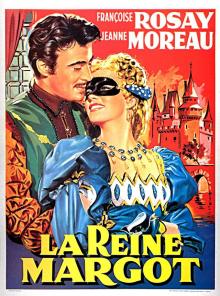
The comtesse de charny, p.44
THE COMTESSE DE CHARNY,
p.44


Every moment the number of National Guards increased at the corner of every street: they joined the cortege by companies. At the church-door Charny saw that he had six hundred men.
Places had been kept for the royal family beneath a kind of dais, and though but eight o’clock, the priests began high mass. Charny saw it. He feared nothing so much as delay, which might be fatal to his hopes. He sent word to the priest that mass must last but a quarter of an hour. “I understand,” said the minister, “and I shall pray God to grant his majesty a prosperous journey.”
The mass lasted just a quarter, and yet Charny more than twenty times looked at his watch. The king could not hide his impatience, whilst the queen leaned her head on the prie-Dieu. At length the priest turned and said, “Ite, missa est.”
As he left the altar, he turned and blessed the royal family, who bowed and answered, in response to the formula used by the priest, “ Amen.”
They went to the door; those who had come to hear mass knelt and moved their lips, though no audible sound was uttered. It was easy to guess the prayers that trembled on their mute lips.
At the door were ten or a dozen mounted guardsmen. The royal escort had begun to assume colossal proportions; yet it was evident that the peasants, with their rude will, with their arms, less mortal, perhaps, than those of the citizens, but more terrible in appearance — a third had guns, and the rest pikes and scythes — might be a dangerous enemy.
Not without something of fear did Charny lean towards the king, and ask his orders, saying, to encourage him: “Let us on, sire.”
The king was decided. He looked out of the window, and speaking to those who surrounded him, said:
“Gentlemen, yesterday, at Varennes, I was seized. I ordered them to take me to Montmedy, yet I was dragged towards a revolted capital. I was then amid rebels; to-day, faithful subjects surround me, and I order you to escort me to Montmedy.”
“To Montmedy!” said Charny.
“To Montmedy!” said the guardsmen of Villeroy.
“To Montmedy!” shouted the National Guards of Chalons, with one voice. A chorus of “Vive le Roi!” was heard. Charny looked at the peasants, who seemed, in the absence of Drouet and Billot, to be commanded by the Garde Francaise who had been on guard at the king’s door. He followed, and made his men silently seem to obey, suffering the whole National Guard to pass, and forming his rude masses in the rear. Charny became uneasy, but, situated as he was, he could not prevent it, nor ask for any explanation.
The explanation was soon given. As they advanced towards the gate of the city, it seemed to him that in spite of the sound of the wheels and the murmurs of the crowd, a dull murmur was heard in the distance. He placed his hand on the knee of the guardsman by his side, and said: “All is lost!”
Just then they turned the angle of the wall. Two roads ended there, one of which led to Vitry-le-Francais, and the other to Rheims. Down each of these roads, with drums beating and colours flying, advanced large bodies of the National Guards. One seemed to be composed of eighteen hundred, and the other of twenty-five hundred or three thousand men. Each seemed commanded by a mounted man. These horsemen were Billot and Drouet.
Charny had but to glance at them to see all. The absence of Billot and Drouet, hitherto inexplicable, was now plain enough.
They must have learned what was going on at Chalons, and had set out to Rheims and Vitry-le-Francais to bring up the National Guards of those cities. Their measures had been so well arranged that they both arrived at once. They halted their men on the square, closing it entirely. The cortege paused.
The king looked out of the window; he saw Charny standing, pale and with his teeth clenched, in the road.
“What is the matter?” asked the king.
“Our enemies, sire, have obtained a reinforcement, and now load their arms, while behind the National Guards of Chalons, the peasants stand already loaded.”
“What think you of that, M. de Charny?”
“That, sire, we are between two fires. This is no reason why, however, you cannot pass, if you wish to do so; but, sire, whither your majesty will go, I know not.”
“Well,” said the king, “let us return.”
The young men on the seat sprang to the door, around which the Guards of Villeroy collected. These brave and gallant officers asked nothing better than an opportunity to enter into a contest with their opponents.
The king, however, repeated more positively the order he had given before.
“Gentlemen,” said Charny, “let us return — the king will have it so,” and taking one of the horses by the bridle, he turned the heavy carriage round.
The royal carriage was driven sadly enough towards Paris, under the surveillance of those two men who had forced it to resume its direction, until, when between Stenay and Dormans, Charny — thanks to his stature and the elevation of his seat — saw a carriage, drawn by four post-horses, advancing rapidly. He perceived at once that this carriage either brought some important news or some distinguished individual.
When it had joined the advance guard of the escort, after the exchange of a few words, the ranks of the advance guard opened, and the men who composed it respectfully presented arms.
Three men descended from the carriage.
Two of them were utter strangers to the royal escort and prisoners.
The third had scarcely put his foot on the ground, when the queen whispered to the king:
“Latour-Maubourg — the scapegoat of Lafayette!”
Shaking her head, she said: “This presages nothing good!”
The oldest of the three men advanced, and, opening the door of the carriage, rudely said:
“I am Petion, and those two gentlemen are Barnave and Latour-Maubourg. We are sent by the National Assembly to escort the king, and to prevent popular anger from anticipating justice. Sit closer together, and make room for us.”
The queen cast on the deputy from Chartres and his two companions one of those disdainful glances of which the daughter of Maria Theresa was so prodigal.
Latour-Maubourg, a courtier of the school of Lafayette, could not support her eye.
“Their majesties,” said he, “are much crowded, and I will get into the next carriage.”
“Go where you please,” said Petion; “my place is in the queen’s carriage, and thither I will go.”
He got into the carriage.
The king, queen, and Madame Elizabeth occupied the back seat. Petion looked at them and said:
“As delegate of the National Assembly, the post of honour belongs to me. Be pleased to sit on the other side.”
Madame Elizabeth arose and gave her seat, to Petion, casting a look of perfect resignation on the king and queen.
Barnave stood outside, hesitating to enter a carriage in which seven persons were already crowded.
“Well, Barnave,” said Petion, “will you get in?”
“Where shall I sit?” said Barnave, evidently much annoyed.
“Do you wish a seat?” said the queen, bitterly.
“I thank you, madame, but I will find a place with those gentlemen on the box.”
Madame Elizabeth drew Madame Royale close to her, and the queen took the dauphin on her knees. Thus room was made for Barnave, who sat opposite to the queen, with his knees close to her.
“Forward!” said Petion, without asking the king’s consent.
The procession started amid loud cries of “Long live the National Assembly!”
As soon as Barnave took his place opposite the queen, the king said:
“Gentlemen, I assure you I never intended to leave the kingdom!”
Barnave, who was seated, arose and said to the king:
“Monsieur, is that so? That word will preserve France.”
He sat down.
Then something strange passed between that man, sprung from the bourgeoisie of a provincial city, and that woman, descended from one of the greatest thrones of the world.
They sought to read the hearts of each other, not as two political enemies who wish to search out state secrets, but like a man and woman who would penetrate the mysteries of love. Whence arose in the heart of Barnave that sentiment which the piercing eye of Marie Antoinette discovered, after the lapse of a few minutes?
Barnave claimed to be the successor of Mirabeau. In his opinion he had already occupied his place in the tribune. There was one thing besides, however. In the opinion of all — we know how — Mirabeau had seemed to enjoy the confidence of the king and the favours of the queen. The one and only conference Mirabeau had ever enjoyed had been exaggerated into many, and from the known audacity of the great tribune, the queen had been represented as having yielded even to weakness. At this time it was the fashion not only to slander Marie Antoinette, but to also believe the slanders.
Barnave was anxious to be the complete successor of Mirabeau; that was his reason for being so anxious to be one of the envoys. He was appointed, and went with the assurance of a man who knows that if he cannot win a woman’s love, he has the power at least to make himself hated.
All this the queen, with one rapid glance, at once saw. She also saw that Barnave paid! great attention to her. Five or six times during the quarter of an hour, when Barnave sat in front of her, the young deputy looked carefully on the three men who were on the seat of the carriage, and from it he looked each time more bitterly at the queen.
Barnave knew that one of the three, he did not know which, was the Count de Charny, whom public rumour represented as the queen’s lover. The queen saw this. At once she acquired great power. She had detected the weak point in the cuirass of her adversary: she had only to strike, and strike firmly.
“Monsieur,” said she, to the king, “you heard what the leader of our guard said?”
“About what, madame?”
“About the Count de Charny.”
Barnave trembled. The queen did not fail to notice this tremor, for his knee touched hers.
“Did he not say that he was responsible for the life of the count?” said the king.
“Yes, sire; to the countess, too.”
“Well!” said the king.
“Well, sir, the Countess de Charny is my old friend. Do you not think that on my return to Paris I had best give De Charny a leave, so that he may visit his wife! He has run great risk, and his brother has been killed for us. I think to ask him to continue his services would be cruel.”
Barnave stared.
“You are right, madame,” said the king, “but I doubt if the count will consent.”
“Well then, each of us will have done what is right; we will have offered, and De Charny refused. We have additional reasons to congratulate ourselves, as we did not bring the count with us. I fancied him safe in Paris, when all at once I saw him at the carriage door.”
“True!” said the king, “but it proves that the count needs a stimulus to induce him to do his duty.”
Barnave was in one of those states of mind, when to contend with an attractive woman one would undertake an Herculean task with the certainty of being overcome. He asked the Supreme Being (in 1791 people did not ask God) to grant him some opportunity to attract the eyes of the royal scorner on him; and all at once, as if the Supreme Being had heard the prayer addressed him, a poor priest who had watched by the roadside drew near to obtain a better view, and lifting his eyes to heaven, said:
“Sire! God bless your majesties!” The bearing of the old man, the prayer he pronounced, was replied to by the people with a roar, and before Barnave had aroused himself from his reverie, the old priest was thrown down and would have been murdered, had not the queen in terror said:
“Monsieur! see you not what is going on?”
Barnave looked up, and at once saw the ocean beneath which the old man had disappeared, and which in tumultuous waves rolled around the coach.
“Wretches!” said he. He threw himself against the door, burst it open, and would have fallen, had not Madame Elizabeth, by one of those motions of the heart, which were to her so prompt, seized his skirts.
“Tigers!’’ said he; “you are not Frenchmen, or France, the home of the brave, has become the abode of murderers.”
The people fell back, and the old man was saved.
He arose, saying:
“You are right to save me, young man; I will pray for you.”
Making the sign of the cross, he withdrew.
The people suffered him to pass, overcome by the bearing and glance of Barnave, who seemed the statue of command.
When the old man had gone, the young deputy sat down simply and naturally, without showing any evidence that he believed he had saved a life.
“Monsieur,” said the queen, “I thank you.”
These words awakened an emotion in all Barnave’s body. Beyond all doubt, never since he knew Marie Antoinette, had she been so attractive and beautiful.
He was ready to fall at her feet, but the young dauphin uttered a cry of pain. The child had annoyed the virtuous Petion by some trick, and the patriot had pulled his ear very sharply.
The king grew red with rage, the queen grew pale with shame. She reached out her arms and took the child from Petion’s knees, and placed him on Barnave’s.
Marie Antoinette wished to take him herself. “No!” said the dauphin, “I am very comfortable here.”
Barnave had changed his position, so as to enable the queen to take the child if she pleased, but either from coquetry or policy, she suffered him to remain where he was.
Just then there passed through Barnave’s mind something untranslatable: he was at once proud and happy.
The child began to play with Barnave’s ruffles, with his sash and the buttons of his coat as a deputy. The buttons bore an engraved device, and occupied the dauphin’s attention. He called the letters one by one, and then, uniting them, read these four words: “Live free or die.”
“What, monsieur, does that mean?”
“It means, my fine fellow, that Frenchmen have sworn to have a master no longer. Do you understand that?”
“Petion!” said Barnave.
“Well,” said Petion, as naturally as possible, “give another explanation, of the device if you can.”
Barnave was silent. The device on the night before seemed sublime — now it was cruel.
The queen wiped a tear from her eyes.
The carriage continued to roll through the crowd. They soon came to the city of Dormans.
Nothing had been prepared for the royal family. It was forced to descend at an inn.
Either by order of Petion, or because the inn was really full, meagre accommodations were found for the royal family, who were installed in three garrets.
When he left the carriage, Charny, according to custom, wished to approach the king and queen to receive their orders. A glance of the queen, however, bade him keep away. Though he did not understand the motive, the count obeyed it.
Petion had gone into the inn, and taken charge of the arrangements. He did not take the trouble to come downstairs again, and a waiter came to say that the rooms of the royal family were ready.
Barnave was in a terrible state; he felt the greatest anxiety to offer the queen his arm, but he feared lest she who had so insisted on etiquette in the case of Madame de Noailles would apply the same ideas to him. He waited therefore.
The king got out first, leaning on the arms of the two guardsmen, De Maiden and De Valory.
The queen got out and reached her arms for the dauphin, but as if the poor child felt how necessary the flattery was to his mother, he said:
“No, I will remain with my friend Barnave.”
Marie Antoinette made a sign of assent, accompanied by a sweet smile. Barnave suffered Madame Royale and Madame Elizabeth to get out, and then followed with the dauphin in his arms.
The queen ascended the tortuous and difficult stairway, leaning on her husband’s arm. At the first story she paused, thinking that twenty steps were high enough. The voice of the waiter, however, was heard, saying: “Higher! higher!”
She continued to ascend.
The sweat of shame hung on Barnave’s brow. “What, higher?” said he.
“Yes,” said the waiter. “This story contains the dining room and the rooms of the gentlemen of the Assembly.”
Barnave became dizzy. Petion had taken rooms for himself and his colleague on the first story, and had sent the royal family to the garret. The young deputy, however, said nothing; hearing, however, without doubt, the first outbreak of the queen when she saw the rooms of the second story had been occupied by Petion, while she had been sent to the third, he placed the dauphin on the landing.
“Mother,” said the young prince to his mother, “my friend Barnave is going.”
“He is right,” said the queen, glancing around the room.
A moment after, they announced to their majesties that dinner was served. The king came down, and saw six covers on the table. He asked why there were six.
“One,” said the waiter, “is for the king, one for the queen, one for Madame Elizabeth, one for Madame Royale, one for the dauphin, and another for M. Petion.”
“Why not for MM. Barnave and de Latour-Maubourg?”
“They were prepared, sir, but M. Barnave ordered them to be removed.”
“And left Petion’s?”
“M. Petion insisted on it.”
At this moment the grave, more than grave — austere — face of the deputy of Chartres appeared at the door.
The king acted as if he were not there, and said to the boy: “I sit at the table only with my family, and with those we invite. We will not sit down.”
“1 was aware,” said Petion, “that your majesty had forgotten the first article of the rights of man. I thought, though, you would pretend to remember it.”
The king seemed not to hear Petion, as he had not to see him, and bade the boy takeaway the plate. The servant obeyed, and Petion left in a perfect rage.
“M. de Maiden,” said the king, “close the door, that we may be alone.” De Maiden obeyed, and Petion heard the door closed behind him.


__english_preview.jpg)