Aquamarine indigo, p.6
Aquamarine / Indigo,
p.6


Before Martha had time to think this over, a rowboat appeared on the flooded road. There were her father and Charlie McGill, paddling down the center of Main Street.
“Ahoy!” Jeanette Morton called, waving both hands above her head.
“Jeanette, you’re a peach. You rescued my daughter,” Mr. Glimmer called, and Martha didn’t bother to correct her father. She didn’t let him know she hadn’t needed rescuing, because she saw the way Jeanette Morton was beaming. Martha couldn’t help but wish that Jeanette had been the one who had started bringing over casseroles.
“Thank goodness you’re safe,” Mr. Glimmer said to Martha as he helped her into the rowboat. Martha winced, and her father realized she’d been hurt. “I’m taking you right to Dr. Marsh’s.”
He hugged Martha, and she felt truly happy in spite of her arm and her waterlogged clothes. Her father seemed back to his old self, and she almost let out a whoop of joy. But then she noticed Mr. McGill. He was green and sorrowful, like a seasick man.
“My boys,” Mr. McGill moaned. “Where have they gone?”
It took one look to know he was afraid that he and Mrs. McGill had lost those they loved most in this world.
“Don’t worry,” Martha told him. “They’re the best swimmers you ever saw. They can outswim anyone.”
Charlie McGill shook his head. He didn’t try to hide the fact that there were big, salty tears in his eyes.
“That’s exactly what I was afraid of,” he said.
Ten years earlier Charlie and Kate McGill had gone on vacation to Ocean City at just about this time of year. Though they believed they were meant to be someone’s parents, they never had been and this made even the happiest times a little less happy for them. Charlie McGill always said, What happens is what’s meant to be, and Kate McGill always nodded and said, I suppose that’s true, but she often had a wistful look on her face, even on vacation.
The McGills went to the boardwalk and ate ice cream, and in the evenings they strolled along the beach. Their life together wasn’t what they had expected, but even without a house full of children, they could still enjoy their holiday. Kate and Charlie McGill might have gone back home to Oak Grove as they did every year, back to their quiet, childless lives, if they hadn’t gone walking on the beach one windy night.
They hadn’t even noticed how far they’d gone until the rain began. The storm surprised them, and they found themselves stranded on a stretch of sand with waves crashing all around. There was an abandoned fisherman’s shack on the beach, once owned by a sailor who’d drowned in a storm such as this, and Charlie and Kate McGill would have made a run for it and sat out the bad weather if Charlie hadn’t heard a woman’s cries.
She was out where the shore was riddled with rocks, where the strongest currents had been known to pull down even the most experienced sailors. All the same, Charlie told his wife he had no choice. He had to help whoever was calling from beyond the waves. He swam as hard as he could, fighting the storm and the tides, but he stopped and treaded water when he saw what had happened. A beautiful woman with long, pale hair had been gouged by the propeller of a speedboat hurrying back to the marina; whoever had captained the speedboat had been unaware of anything out in front of him other than crashing waves.
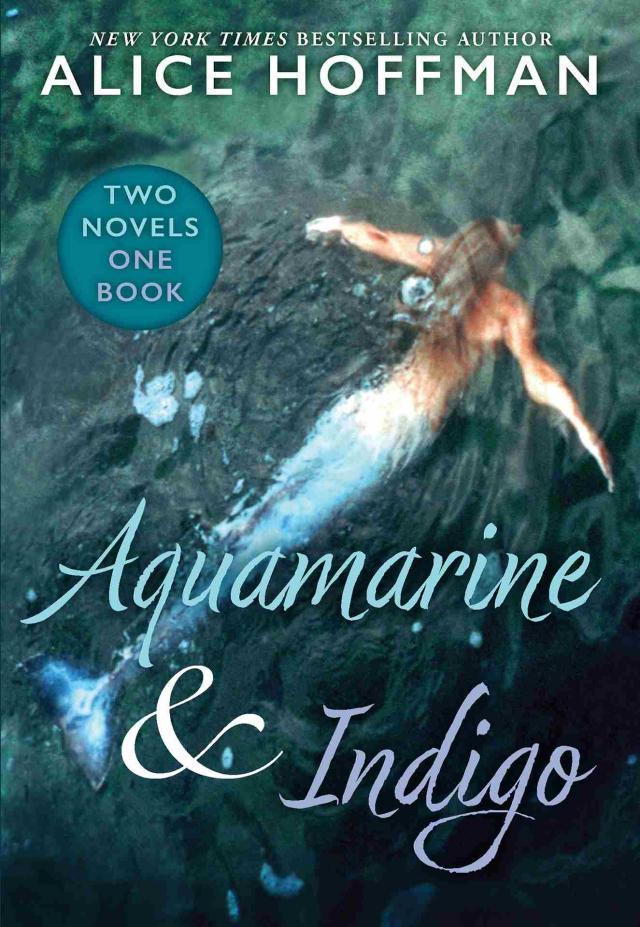
The woman’s skin was iridescent, and the blood that washed into the waves and floated on the surface of the water appeared to be blue. Her strength was gone, and she was going under; she might have already given up and sunk to the depths if she hadn’t had two little boys with her. Her fight to survive was strong, but she clearly couldn’t hold on much longer.
Please, she said to Charlie McGill. Take them. She spoke slowly, for she’d learned only bits of English from the sailor she had loved, the one who had drowned in the last storm.
Charlie McGill ferried the boys to shore, struggling against the sea, then went right back into the water to rescue their mother. By then, all he could see was the flash of a dark blue tail as she helplessly disappeared. But there, floating on a bed of seaweed, the mermaid had left something behind for her children: two beautiful rings. One was a circle of abalone shell, and one a circle of oyster shell.
Charlie McGill took the rings and swam back to shore. On that evening, Charlie and Kate made a vow to keep the boys away from the water and to care for them all of their lives. Storms had taken both of the boys’ natural parents, and the sea was always unpredictable. But try as you might to protect people from danger, you cannot keep them from their true nature.
“A mermaid’s last wish is always for her children to swim free,” Charlie McGill now told Martha, “but these boys also belong to the land.”
Hearing this story, Martha was torn. She wanted freedom and safety both for her friends. She decided that the best she could ever hope for was that the McGill boys be granted what they longed for most of all.
By now, Trout and Eel had reached the rock wall that held back the waters. Trout had been timing himself and had found he could hold his breath underwater for more than ten minutes. This was humanly impossible, and he knew it.
“When you dream about our mother,” Eel asked, “does she have webbing between her fingers, too?”
“She does,” Trout said.
“And between her toes?”
Trout’s memory had come back in waves, helped along by the storm. The way she taught them to dive. The way she combed her hair with a shell. “No toes. She had a tail, like a fish.”
Eel thought this over as they swam along. The cold water felt good on his skin. He had never had a swimming lesson in his life, and yet, like his brother, in the water he was faster and stronger than any champion. “But we don’t have tails.”
“Maybe we’ve lived on land too long, or maybe we’re half regular old human. But we’re half of whatever she was, too.”
The boys had kicked off their shoes, and the webbing between their toes gave them the streamlined glide of a porpoise. Quick as could be, they examined the stone wall that had been built to keep water out of Oak Grove and now had to be taken down to allow the floodwaters to drain. Trout knew what he had to do.
“All I need to do is pull the biggest rock out of the wall, and the rest will tumble down.”
Now that Trout understood who he really was, his green eyes were luminous. With his wet hair slicked back, he seemed more like himself. Still, he remembered that even a mermaid could have a terrible accident and drown, and he didn’t want his little brother to take any chances. “Stay here,” he told Eel. “Don’t follow me.”
Trout disappeared in the direction of the wall of stones that Charlie McGill had constructed years ago. Eel paddled around nervously. He would do anything for his brother, except this. He couldn’t let Trout go on alone, so he dove underwater as well.
Eel could see surprisingly far in the muddy water. There was Trout wrestling with the largest rock in the wall. It looked as if it should have been immovable, but after a moment it creaked and tipped. Quite suddenly, it fell, dragging Trout along with it. There was a landslide of stones, and it all happened so fast, Trout hadn’t time to get away.
Eel wasn’t strong enough to lift the heavy stones off his brother, and yet he did. People find strength they never knew they had at certain times, and this was one of them. The brothers nodded to each other, green eye to green eye. Eel used all the strength of the seas as he pulled off the stones, freeing his brother. Together, they swam to the surface, darting away from the rushing waters that could now flow out of town.
The river that Main Street had become began to drain, with wild currents and whirlpools everywhere. People on their roofs called out their approval. They cheered from whatever high ground they’d managed to find as the waters receded from basements and kitchens and roadsides alike.
One rowboat sat bobbing in the ebbing waters like an apple in a tub. Charlie McGill stood up the moment he saw the boys swimming toward him. He waved his arms and called, and if Martha and her father hadn’t taken hold of his jacket, Charlie might have jumped into the water to meet Trout and Eel.
The brothers towed the rowboat to what was not quite dry land, a muddy place they recognized as the school soccer field.
Martha jumped from the boat and hugged her friends, one after the other, with her good arm. “You saved everyone,” she told them.
Mr. Glimmer shook the boys’ hands and patted their backs. But it was Charlie McGill the boys were worried about, and it was to him they turned.
“Good work,” Charlie said.
He had never in his life been prouder than he was right now. Trout and Eel threw their muddy arms around their father.
“I thought if you got too near to water, you would swim away,” Charlie said as he held the boys close.
“We will,” Trout said.
“But then we’ll swim back,” Eel added. “We’re your sons. You can never lose us.”
When the McGills got back to their muddy house, Kate McGill was waiting at the door. Kate had made a vow to take care of these boys from the day they were found in the sea, and she’d remained true to her promise. She loved them as if she were their natural mother, but there was someone else who had loved them, too. For all these years Kate McGill had been waiting to give the boys a special gift, one she’d kept stored in a box fashioned out of starfish and shells that she’d bought long ago in Ocean City. She gave Eel the ring made of abalone shell, and Trout the ring made of oyster shell, and that’s when they knew they were home.
Dr. Marsh set Martha’s broken arm that evening. His office was filled with weary, damp people who had turned their ankles in the mud or sprained their backs toting buckets of water out of their basements. Dr. Marsh assured Martha that she’d soon be able to throw rocks at tin cans again, but for now she had best take it easy. Afterward, Martha and her father walked home. They waved to their neighbors, who all agreed that a clear, starry night had never looked better. Even Martha admitted that Oak Grove seemed brand new, as if the floodwaters had washed everything clean.
“I thought you had it in your head to leave Oak Grove,” Mr. Glimmer said.
“I might,” Martha told him. “Someday. But not now. When I grow up. I’ll travel and see all the places where my mother used to live, but today I’ll go home, and wash all this mud off, and be polite to Hildy Swoon, because that’s what you want me to do.”
“I don’t think that will be necessary,” Mr. Glimmer said. “When the storm came up, Hildy hightailed it to her mother’s house up on the mountain. I don’t think she’ll be coming back. She’s happier having things her own way.”
Unless Martha was mistaken, her father looked almost as pleased as she was by this news. Martha wanted to do a little dance, but instead she only nodded.
“Sometimes people get so lonely, they don’t know what to do,” Mr. Glimmer said, and Martha knew exactly what he meant. When her mother was sick, Martha often went into the yard and danced under the stars until she was too dizzy to feel anything. Now, whenever she looked at the night sky, she was reminded of her mother and she felt good and lonely all mixed up together.
“Maybe we should invite Jeanette Morton over sometime,” Martha said. “She’s lonely, too.”
While Mr. Glimmer thought this over, he took the yellow shawl from his pocket. “I found this floating by. I knew you’d want it.”
Martha hugged her father and gratefully took the shawl. After they’d cleaned the water and muck out of their house, she washed the shawl and dried it carefully. For years to come she would carry it with her whenever she danced. Her feet already felt lighter.
That night she went into the yard. With the yellow shawl held high, she danced beneath the stars once more. She danced until she was so dizzy she could feel everything, especially the way she missed her mother.
The McGills stayed in town until the end of the school term. They didn’t decide to leave because people made fun of the brothers or because they didn’t fit in. Far from it. Everyone was grateful that the boys had broken through the seawall. This summer, people would go swimming in the refilled Penman’s Creek, and every time they did they would be thankful to the McGill brothers. As for Richard Grady, he soon taught himself how to swim and began to give lessons to the younger children, who gave him the nickname of Fin, a name he was proud to possess in honor of the boys who’d saved him from the flood.
The reason Charlie and Kate McGill had decided to move was because they truly understood that the boys belonged as much to the water as to the land, and because it was what Trout had always wished for — to see the ocean. The McGills sold their house and the construction company and bought a place near the cove where the fisherman had lived, where they’d found the boys.
“It doesn’t seem fair,” Trout said to Martha on the boys’ last night in town. They were up on the garage roof, just the two of them, for Eel was home packing. They weren’t bothering to throw stones anymore. “I get my wish, and you don’t.”
Someday when Trout was all grown up, and she was, too, Martha might dance for him. Her father had agreed that she could take classes in the next town, where there was a dance school. And besides, Trout was wrong about Martha not getting her wish. Hildy Swoon was gone, after all, and Oak Grove didn’t look so bad anymore.
The truth was, it looked like home.
“Now that you remember your mother, do you miss her more?” Martha asked.
“I missed her, anyway,” Trout said. “Now I just know who I’m missing.”
* * *
On the day the McGills left town, Martha stood on the roof of the garage so that Trout and Eel could see her waving good-bye as they drove past. Even though her best friends were leaving, Martha felt lucky. She closed her eyes and wished them a good trip. She wished them everything they wished for themselves.
The McGills drove straight through to Ocean City. Finding the way was easy, straight over the mountains to a place they’d all been before. They reached the shore by suppertime, and as she was having her dinner with her father, Martha Glimmer could have sworn she, too, could hear the sound of the tides, an echo from the farthest sea, so deep and so blue, someone who had been there would never forget.
Author photo by Alyssa Peek
ALICE HOFFMAN is the acclaimed author of over thirty novels for readers of all ages, including The Dovekeepers, The World That We Knew—winner of the Dayton Literary Peace Prize, The Marriage of Opposites, Practical Magic, Incantation, The Foretelling, and The Invisible Hour. Her previous novels for Scholastic Press include Green Witch and Green Angel, which Publishers Weekly, in a boxed, starred review, called “achingly lovely.” She is also the author of When We Flew Away, a novel about Anne Frank’s life before the Frank family went into hiding. Alice lives outside of Boston. Visit her online at alicehoffman.com.
Aquamarine text copyright © 2001 by Alice Hoffman
Watercolors by Goro Sasaki
Aquamarine was originally published in hardcover by Scholastic Press in 2001
Indigo text copyright © 2002 by Alice Hoffman
Art by Erica O’Rourke
Indigo was originally published in hardcover by Scholastic Press in 2002
This book was originally published in paperback by Scholastic Inc. in 2003.
All rights reserved. Published by Scholastic Inc., Publishers since 1920. SCHOLASTIC and associated logos are trademarks and/or registered trademarks of Scholastic Inc.
The publisher does not have any control over and does not assume any responsibility for author or third-party websites or their content.
This book is a work of fiction. Names, characters, places, and incidents are either the product of the author’s imagination or are used fictitiously, and any resemblance to actual persons, living or dead, business establishments, events, or locales is entirely coincidental.
First printing 2003
Cover design by Elizabeth B. Parisi
Cover photos © Jason Gregory Gold/ZUMAPRESS/Newscom
e-ISBN 978-1-5461-5916-2
All rights reserved under International and Pan-American Copyright Conventions. No part of this publication may be reproduced, transmitted, downloaded, decompiled, reverse engineered, used to train any artificial intelligence technologies, or stored in or introduced into any information storage and retrieval system, in any form or by any means, whether electronic or mechanical, now known or hereafter invented, without the express written permission of the publisher. For information regarding permission, write to Scholastic Inc., Attention: Permissions Department, 557 Broadway, New York, NY 10012.
Alice Hoffman, Aquamarine / Indigo