Queens of the crusades, p.1
Queens of the Crusades,
p.1


Copyright © 2021 by Alison Weir
All rights reserved.
Published in the United States by Ballantine Books, an imprint of Random House, a division of Penguin Random House LLC, New York.
Ballantine and the House colophon are registered trademarks of Penguin Random House LLC.
Originally published in hardcover in Great Britain by Jonathan Cape, a division of Penguin Random House London, in 2020.
Library of Congress Cataloging-in-Publication Data
Names: Weir, Alison, author. | Weir, Alison, Queens of the conquest.
Title: Queens of the Crusades: England’s medieval queens, 1154–1291 / Alison Weir.
Other titles: England’s medieval queens
Description: New York: Ballantine Books, 2021. | Series: England’s medieval queens; Book two | Book one titled Queens of the conquest. | Includes bibliographical references and index.
Identifiers: LCCN 2020034731 (print) | LCCN 2020034732 (ebook) | ISBN 9781101966693 (hardcover) | ISBN 9781101966709 (ebook)
Subjects: LCSH: Eleanor, of Aquitaine, Queen, consort of Henry II, King of England, 1122?–1204. | Berengaria, Queen, consort of Richard I, King of England, approximately 1163–approximately 1230. | Isabella, Queen, consort of John, King of England, –1246. | Eleanor, of Provence, Queen, consort of Henry III, King of England, 1223 or 1224–1291. | Eleanor, Queen, consort of Edward I, King of England, –1290. | Queens—Great Britain—Biography. | Monarchy—Great Britain—History—To 1500. | Monarchy—France—History—To 1500. | Great Britain—History—Plantagenets, 1154–1399—Biography. | Plantagenet, House of.
Classification: LCC DA28.2 .W453 2020 (print) | LCC DA28.2 (ebook) | DDC 942.03092/52—dc23
LC record available at https://lccn.loc.gov/2020034731
LC ebook record available at https://lccn.loc.gov/2020034732
Ebook ISBN 9781101966709
randomhousebooks.com
Book design by Virginia Norey, adapted for ebook
Cover design: Victoria Allen
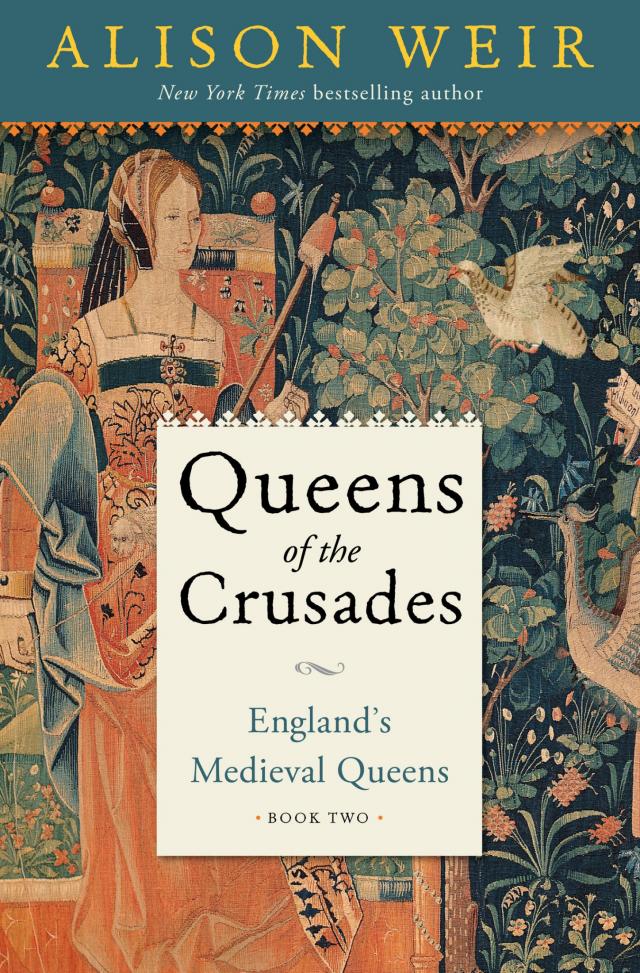
Cover images: Bridgeman Images
ep_prh_5.6.1_c0_r0
Contents
Cover
Title Page
Copyright
Maps
Illustrations
Introduction
Part One: Eleanor of Aquitaine, Queen of Henry II
Chapter 1: “An Exceedingly Shrewd and Clever Woman”
Chapter 2: “Mutual Anger”
Chapter 3: “My Very Noble Lord Henry”
Chapter 4: “Behold, the Lord the Ruler Cometh”
Chapter 5: “High-Born Lady, Excellent and Valiant”
Chapter 6: “Rich Lady of the Wealthy King”
Chapter 7: “All Things Were Entrusted to Thomas”
Chapter 8: “The King Has Wrought a Miracle”
Chapter 9: “The Wench Rosamund”
Chapter 10: “A Whirlwind of Clouds”
Chapter 11: “We Are from the Devil”
Chapter 12: “Beware of Your Wife and Sons”
Chapter 13: “The Eagle of the Broken Covenant”
Chapter 14: “Freed from Prison”
Chapter 15: “His Heart’s Desire”
Chapter 16: “Her Third Nesting”
Part Two: Berengaria of Navarre, Queen of Richard I
Chapter 1: “The Beautiful Navarroise”
Chapter 2: “The Disturber of Your Kingdom”
Chapter 3: “The Devil Is Loosed!”
Chapter 4: “An Incurable Wound”
Chapter 5: “Motherly Solicitude”
Part Three: Isabella of Angoulême, Queen of King John
Chapter 1: “A Splendid Animal”
Chapter 2: “An Incomparable Woman”
Chapter 3: “I Have Lost the Best Knight in the World for You”
Chapter 4: “Clouds That Have Overcast Our Serenity”
Chapter 5: “Cease to Molest Your Son!”
Chapter 6: “The White Queen”
Part Four: Alienor of Provence, Queen of Henry III
Chapter 1: “The Younger Virgin of This Most Lovely Race”
Chapter 2: “Our Dearest Love”
Chapter 3: “The Eagles of Savoy”
Chapter 4: “Most Impious Jezebel”
Chapter 5: “The Scum of Foreigners”
Part Five: Eleanor of Castile, Queen of Edward I
Chapter 1: “Prudence and Beauty”
Chapter 2: “Like Brothers and Sisters”
Chapter 3: “The Disseminator of All the Discord”
Chapter 4: “The Serpent-Like Fraud and Speech of a Woman”
Chapter 5: “In Inestimable Peril”
Chapter 6: “The Way to Heaven”
Chapter 7: “The Flower of Christendom”
Chapter 8: “The Queen Would Like Our Lands to Hold”
Chapter 9: “Chosen Lambs”
Chapter 10: “Undaunted in Battle”
Chapter 11: “Medicinal Waters”
Chapter 12: “The Impiety of Death”
Epilogue
Photo Insert
Dedication
Select Bibliography
Sources of Quotes in the Text
By Alison Weir
About the Author
Illustrations
The window in Poitiers Cathedral donated by Eleanor of Aquitaine in commemoration of her wedding to Henry II in 1152. (Alamy)
The Hall of Lost Footsteps in Eleanor of Aquitaine’s palace at Poitiers. (WikiCommons)
The tomb effigy of Henry II in Fontevraud Abbey. (Getty)
The tomb effigy of Henry, the Young King, in Rouen Cathedral. (Alamy)
Archbishop Thomas Becket, window in Canterbury Cathedral. (WikiCommons)
Fair Rosamund by John William Waterhouse, 1916, National Museum of Wales. (Alamy)
Chinon Castle, one of the great strongholds of the Plantagenets. (Shutterstock)
The mound on which once stood the city, cathedral and castle of Old Sarum. (Getty)
The tomb effigy of Eleanor of Aquitaine in Fontevraud Abbey. (Shutterstock)
The tomb effigy of Richard I in Fontevraud Abbey. (Alamy)
The kitchen Eleanor of Aquitaine built at Fontevraud. (© BrokenSphere / WikiCommons)
A mural in the church of Sainte-Radegonde at Chinon, which may depict the Plantagenets, with Eleanor of Aquitaine, crowned, in the center. (WikiCommons)
The tomb of “the beautiful Navarroise,” Berengaria of Navarre, in the abbey of l’Epau, Le Mans. (WikiCommons)
The Pedlar by Charles Allston Collins, 1850, Manchester Art Gallery. (WikiCommons)
The tomb effigy of William the Marshal, “the best knight who ever lived,” in the Temple Church, London. (Alamy)
The tomb effigy of King John in Worcester Cathedral. “He was a very bad man.” (Alamy)
The tomb effigy of Isabella of Angoulême in Fontevraud Abbey. (Getty)
The seal of Hugh de Lusignan X, Isabella of Angoulême’s second husband. (WikiCommons)
The tomb effigy of Henry III in Westminster Abbey. (Alamy)
The abbey of l’Epau, founded by Queen Berengaria in 1229. (WikiCommons)
The marriage of Henry III and Alienor of Provence. Historia Anglorum, Chronica Majora of Matthew Paris, Royal MS 14 C VII f. 124v, British Library. (Getty)
A thirteenth-century Corbel head of Alienor of Provence, in Westminster Abbey. (Used by kind permission of the Dean and Chapter of Westminster)
A thirteenth-century head of Alienor of Provence in Bridlington Priory. (Author’s own)
Peter of Savoy, above the entrance to the Savoy Hotel, which stands on the site of his palace. (Alamy)
Statues of Richard, Earl of Cornwall, King of Almayne, and his wife, Sanchia, in Meissen Cathedral. (Alamy)
Edward I and his wife, Eleanor of Castile. Chronica Roffense [Flores Historiarum made at Roch], British Library. (Alamy)
The abbey of Las Huelgas at Burgos, Castile. (Alamy)
Eleanor of Castile, window in St. Mary Magdalene’s Church, Himbleton, Worcestershire. (Alamy)
Edward I, painting above the sedilia in Westminster Abbey. (Alamy)
Leeds Castle, a dower palace of the queens of England. (Alamy)
An illustration in the Alphonso Psalter, Additional MS 24686, British Library. (Author’s own)
The tomb effigy of Eleanor of Castile in Westminster Abbey. (Getty)
Eleanor’s statue on the Eleanor Cross at Hardingstone. (Alamy)
The Eleanor Cross at Geddington. (Alamy)
The Eleanor Cross at Hardingstone. (Alamy)
The Eleanor Cross at Waltham. (Alamy)
Introduction
This book tells the stories of the lives of England’s queen consorts during the early Plantagenet period, 1154–1291. It covers five queens. Eleanor of Aquitaine needs no introductio
n, for she was one of the towering female figures of the Middle Ages, and the subject of a biography I published in 1999. Much scholarship has been undertaken since then, and I have revised certain aspects of her story, focusing chiefly on her career as queen of England. Her daughters-in-law, Berengaria of Navarre and Isabella of Angoulême, deserve to be better known, especially for their careers after the deaths of their husbands, Richard I and King John. The thirteenth-century queens Alienor of Provence and Eleanor of Castile dominated the English establishment for nearly seven decades. Both were controversial, and I hope I have presented a fair view of them.
In regard to the title, Queens of the Crusades, I am aware that only three of these queens actually went on crusade, but they lived in an age dominated by the crusading movement, which touched all their lives.
This is the story of the history of England through the perspective of its queens, but much of the action takes place on a wider stage, for England was just a part of the Angevin Empire founded by Henry II and Eleanor of Aquitaine. The book does not comprise a series of biographies, but tells the stories of the queens in a continuous, chronological narrative.
It is also important to understand how power was devolved in a feudal age. In the twelfth century, Europe was a hierarchical society, a patchwork of realms and principalities. There was no concept of nationhood or patriotism: all subjects owed fealty to their immediate overlord and to the King, who was the ultimate secular authority and answered only to God. Fealty was enshrined in the ceremony of homage, in which a kneeling vassal would place his hands between those of his king or overlord and swear to render him service and obedience. In return, an overlord was bound to offer protection and aid. A breach of fealty was held to be highly dishonorable, but feudal oaths were readily broken. English kings, in particular, resented paying homage to French kings for the continental lands they held of them.
Feudal vassals owed military service to their lords, supplying knights and men on demand for a certain number of days each year. This was how feudal levies were raised. There were no standing armies, although the levies might be supplemented by paid mercenaries.
Feudal custom and the developing code of chivalry demanded certain courtesies, even between enemies. Captive kings and lords were often on good terms with their captors; they met socially, exchanged gifts and even feasted together. This laid the foundation for future amicable relations once the captives had been ransomed.
* * *
—
As this book is intended for a general readership, I have kept references to a minimum and restricted them to original sources. Limitations on the word count do not permit me to list secondary sources in the references, so I wish warmly to acknowledge my indebtedness to the modern historians of the period and the recent biographers of these queens, especially (in alphabetical order) Darren Baker, Rachel Bard, Helen Castor, Sara Cockerill, Nancy Goldstone, Lisa Hilton, Margaret Howell, Elizabeth Norton, John Carmi Parsons, Ffiona Swabey, Anne Trindade, Ralph Turner, Nicholas Vincent and Kelsey Wilson-Lee. Their research, wisdom and insights have helped to inform this book.
It is difficult to calculate the modern equivalents of monetary values before 1270. Figures in parentheses after monetary amounts are rough, rounded estimates of their worth today. A livre tournois equated on average to about a quarter of an English pound and ⅘ of a livre of Paris.
I am truly grateful for the tremendous support and creative input of my editor, Anthony Whittome. Warm thanks are due also to the publishing teams at Penguin Random House in New York and London. Special thanks go to my agent, Julian Alexander, and my husband, Rankin, for their unfailing kindness and understanding, especially when I was panicking about my deadline!
1
“An Exceedingly Shrewd and Clever Woman”
On Sunday, December 19, 1154, Henry II, the first Plantagenet King of England, was crowned in Westminster Abbey, along with his Queen, Eleanor of Aquitaine, amid great splendor and rejoicing. Monarchs had about them an aura of spiritual sovereignty, conferred on them at their anointing with holy oil. The coronation of a queen sanctified her and set her apart from lesser women. It enhanced the dignity of her husband the King—especially so in this case because, through his marriage to Eleanor, Henry II had become master of a great continental domain.
The royal dynasty established on that day was to rule England for 331 years.
* * *
—
There are many perceptions of Eleanor of Aquitaine. Debate rages over the extent of her political activity and her influence on culture. As a stateswoman, her influence was felt for over six decades—she was both notorious and respected. It is possible to regard her as a romantic heroine in the widest sense, even though the wilder myths about her have now been dispelled. She inspires the imagination today, just as she did in her own time. But the sources form an incomplete record, so there will always be room to ask the question: who was the real Eleanor?
She was undoubtedly a forceful character. She was heiress to one of the richest domains in medieval Europe. In the twelfth century, Europe was divided into feudal domains, and what is now France then comprised the kingdom of France itself and several vassal domains, or demesnes. The county of Poitou and the duchies of Aquitaine and Gascony covered a vast region in the southwest, about one-third of modern France. By comparison, the kingdom of France was small, centered mainly upon Paris and the surrounding area. As descendants of the Frankish Emperor Charlemagne, whose empire had encompassed much of western Europe, French kings were overlords of all the fiefdoms, including Aquitaine, in the region roughly corresponding to modern France. This often led to power struggles between the kings and their vassals.
Aquitaine—named “land of waters” after its great rivers—had been established as a duchy by the middle of the tenth century, and it was now very prosperous. In 1058, the southern wine-producing duchy of Gascony, with its bustling port of Bordeaux, had been absorbed into Aquitaine. Poitou lay to the north, where its northern border marched with those of Brittany, Anjou and Touraine, and its chief city was Poitiers. Eleanor’s was a rich inheritance.
“Opulent Aquitaine [was] sweet as nectar thanks to its vineyards dotted about with forests, overflowing with fruit of every kind, and endowed with a superabundance of pasture.”1 Aquitanians spoke the langue d’oc (Provençal), or Occitan, a Romance language derived from the dialect spoken by Roman invaders centuries before. North of the Loire, and in Poitou, they spoke Poitevin, or the langue d’oeil.
The Aquitanian lordships and castles were controlled by hostile, feuding vassals who resented interference from their ducal overlords and were notorious for their propensity to rebel and create disorder. They enjoyed a luxurious standard of living compared with their unwashed counterparts in northern France, and were regarded by northerners as soft and idle, yet they could be fierce and violent when provoked. Successive dukes had consistently failed to subdue their vassals or establish cohesion within their own domains, and their authority still did not reach far beyond the vicinities of Poitiers and Bordeaux. They did not have the wealth or resources to extend their power into the feudal wilderness and forests beyond these areas.
Nevertheless, the duchy was wealthy, thanks to its lucrative trade in wine and salt, and its religious life flourished. Successive dukes built and endowed many fine churches and monasteries, notably the Romanesque cathedrals in Poitiers and Angoulême. The twelfth century witnessed a great monastic revival, with the founding of several new orders: the Cistercians; the Augustinian canons, whose double houses admitted both men and women; the Carthusians, who lived under an austere rule requiring them to embrace a life of solitude and silence; and the Order of Fontevraud, especially dear to Eleanor of Aquitaine and her family. The nuns’ necrology records that Eleanor “was from her earliest life a patron of the church of Fontevraud.”