

Into the thickening fog, p.26
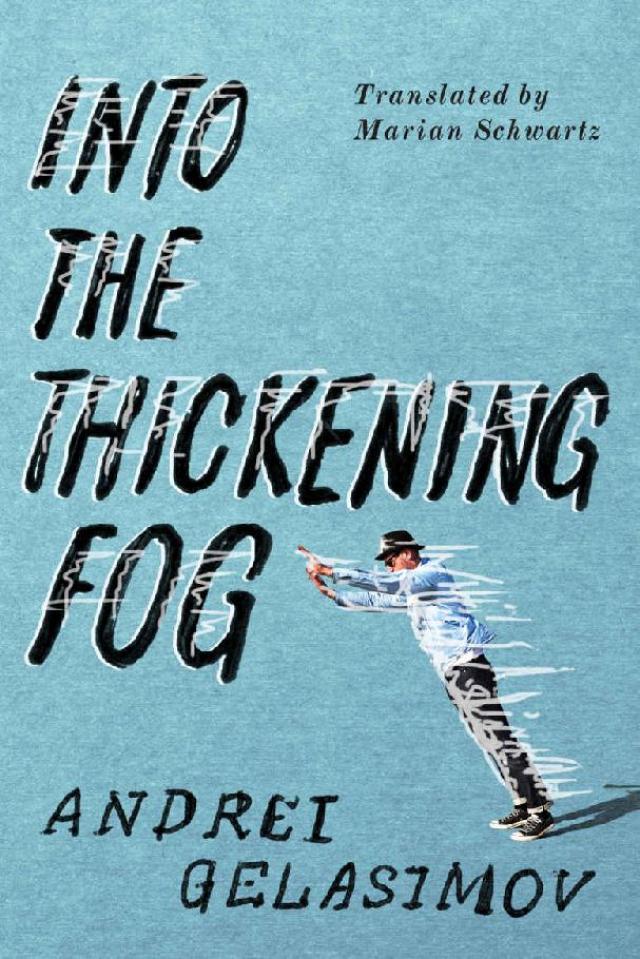
Into the Thickening Fog,
p.26


“Are you bonkers?” he said after a moment’s delay during which he realized what had happened.
“I could do it again,” Filya replied. “Want me to?”
He’d decided not to go to any more banks. It was much simpler to borrow cash from Danilov. In addition, Danilov had access to the city administration and so could render substantive support in the search for the missing child. In any case, it would be more effective than stupidly running around town or across the river, wasting precious time on the other car owners. The trader was right. Filya now knew that none of them could help.
No sooner had the car turned onto the suburban road than Tyoma began to flex his muscle. Driving around uneven surfaces, he kept throwing the car onto the shoulder, where it would rattle over the deep ruts in the frozen earth like the centrifuge in an ancient washing machine. The Japanese had built their car for off-road use, of course, but they hadn’t bothered to learn about the shoulders of Yakutsk roads. Filya grabbed on to the handle over his head, bounced patiently on the seat, feeling like a badly folded, decrepit blanket cover, and restrained himself for the time being, allowing the kid to express his attitude toward the unjust and cruel world.
Actually, his patience didn’t last long. When the SUV started swerving harder and sharper to the right, Filya pressed his temple firmly to the glass. Hitting his head on the window, he hissed, swore, and gave Tyoma a good clip on the back of his head.
Tyoma first tucked his head into his shoulders, like a tortoise into its shell. And then suddenly he let go of the wheel, shouted something, and, turning his whole body toward the passenger seat, started slapping Filya with both hands—as if putting out a fire that had broken out in the car—while shouting something unintelligible. He did this in such a heated and chaotic way, and Filya was so taken aback, that neither one saw the Kamaz leap out of the fog and come hurtling toward them.
The deafening honking paralyzed them both, but in the next instant Filya pulled on the wheel, and the SUV skipped completely off the road. The car flew across a field, and Tyoma grabbed on to the wheel at last, but he obviously had no intention of returning to the highway. Drifting farther and farther across the open ground, he steered into the fog, as if he were taking a frail little vessel into open waters. As the car was tossed around, Filya grabbed the handle. He no longer understood where the shore was, or rather, what might have played the part of a shore: dry land, reliable and solid ground.
Tyoma, his face distorted with rage, was muttering something under his breath, driving the gas pedal deeper and deeper into the floor. The car was speeding off into nowhere, and Filya, transfixed, with a desperately beating heart, looked into the fog in front of him in anticipation of a concrete barrier, a solid wall, or a tree.
Ultimately, it was a hole.
The car dove into it hood-first, like a small boat into a swelling abyss that had opened up before it. Filya’s heart lit out for parts unknown. His seat belt jerked his tension-twisted body back, breaking his collarbone. His head, like a soccer ball kicked through a goal, flew forward completely independently until it was stopped by his neck, which was prepared to stretch infinitely but not to be torn off. Filya heard the windshield shatter just a few centimeters in front of his face. After that, everything went black.
Consciousness returned a few seconds later—possibly even the next instant. Filya thought he could still hear the last strokes of the engine running. In the bowels of the car, something was still turning, making a muffled sound, but then there was a clunk, and total silence ascended, flooding the teetering SUV like dark water rushing into the breached hold of a sunken ship.
Filya had decided the blow had deafened him, so he was amazed to hear his own moan. And in that amazing, weightless silence, the moan sounded vulgar. An offensive, grating sound on the backdrop of the purest silence. Filya frowned and at the same moment was overtaken by excruciating pain.
He started moaning again and turned his head. His broken collarbone didn’t let him see all of Tyoma—only his oddly bent knee and the right hand lying on it motionless. All the rest was hidden from Filya where the pain was.
Falling still for a second and then nonetheless moving toward the fiery burst, he reached out to the youth, screamed from the ferocious pain that pierced his right shoulder, and grabbed Tyoma’s hand. He didn’t stir. His hand remained lifeless.
Grinding his teeth, moaning, and breathing brokenly, Filya fiddled with his seat belt for a whole minute until he finally unfastened it. Now he could reach the key to the ignition. He realized he had to get the engine going immediately. Otherwise, the temperature inside would soon be the same as outside. He had to maintain the heat in the car.
Tyoma still hadn’t come around, but he was alive. Filya could see him breathing. Barely noticeable steam was coming from the youth’s lips. Judging from that steam, Filya had spent more time unconscious than he’d thought. The car was cooling off. He had to hurry.
Turning the key and getting nothing, he remembered Tyoma’s phone. A couple of hours ago it had been working, which meant he could call someone for help. But the telephone wasn’t in Tyoma’s pockets. Filya tensed and looked behind the seat, figuring that Tyoma might have dropped the cell while he was in back, but there was nothing there, either.
He sat perfectly still for a moment, trying to concentrate and figure out where the phone could have gone, and then, in the light of a vivid flash, he saw Tyoma’s jacket falling off his head onto the sidewalk when he’d dragged the boy out of the car in Larisa Ignatievna’s courtyard. The telephone was probably in the jacket—in that stupid, useless jacket. By not picking it up, Filya had doomed them both to the saddest lot possible.
Now you’ll find out what it was like for them, stirred in his heart. What they felt.
For some reason he couldn’t even say the names of the people who’d frozen in the car and so got stuck on the faceless “them,” as if he were still hiding, trying to hide behind the fact that he didn’t know them, and since that was so, then they were people only in the most general, abstract sense.
More or less like you right now, flashed through his head. An abstract dude no one needs who’s about to freeze to death in this abstract car.
The thought of imminent death restored his strength. Filya roused himself and with his left hand tried to start zipping his jacket. He had to get to the road. People were driving there. Someone would stop, and he’d lead them here.
Now you’ll find out, sounded once again in his head, but he drove that out.
He still couldn’t do the jacket zipper, which required the use of his right hand, so in the end he jumped onto the snow without ever zipping up. The cold clutched at his rib cage with steel claws. Filya closed the jacket as best he could, holding the flapping edges with his left hand, and moved toward the road.
By now the fog had turned from the thick and dark gelatin it had been that morning into a translucent rice water, and Filya could make out certain surrounding areas through it. Behind him was a long line of low hills covered with scanty vegetation. Right in his way were light poles, which Tyoma had been lucky not to hit when they’d run off the road. Actually, if the SUV had hit one of those poles Filya would be a lot closer to the road now. The extra hundred meters played a large part.
Awkwardly turning his whole body around and looking at the abandoned vehicle in order to remember its location, he tried to pick up the pace, but the pain from that exhausted him even more. After ten meters or so he gave up and meandered the rest of the way like a sleepwalker, trying not to jiggle his right arm. Added to the incredible cold in this vast field was the light ground wind that singed his already frozen face. To hide it at least some from this icy napalm, Filya walked with his head well down and squinting and so didn’t realize right away that he was now on the highway.
On his left, the sound of an approaching vehicle mounted swiftly. He looked up, and the next moment a big army truck moving fast rumbled past him from behind. The honking crashed down on Filya and the wave of air burned him with such force that he could barely keep his feet. If it hadn’t been for that truck, he probably would have kept going.
Stopping in the middle of the road, he raised his left hand and waved it weakly in the hope that the truck driver was still looking at him in his mirror. But evidently he wasn’t. Filya’s jacket flew open, and the cold, like an experienced fighter who patiently waits for his foe’s mistake, pierced him straight through in a single blow of its sharpened silver claws.
For fifteen minutes or so, Filya was dying on the deserted highway. At a certain point he had the vague feeling that he was no longer on earth. With each second, this feeling got stronger, and in the end he was fully convinced of it. Truly nothing human remained around him. Even the road under his feet and the power masts blurry in the fog were nothing but relics of an alien ancient civilization. Strangely enough, this didn’t discourage him one bit. On the contrary, having clarified this for himself, he suddenly regained his strength, and the distressing despair that had not quit him since the moment he’d woken up in the silenced car finally receded.
Now he didn’t care. And this sensation gave him tremendous freedom. He agreed that he was freezing, falling into anabiosis, shutting down like a switched-off device.
The only thing that still tied Filya to the earth he’d abandoned was in the SUV that had died somewhere in the middle of the field and was swiftly losing heat. He vaguely remembered that Tyoma wasn’t wearing a jacket, and he wandered back, tripping as he went. The light poles served as guides, although fairly quickly he thought he might be going the wrong way. Returning to the highway, he made one last effort to stand for another five minutes in hopes that someone would drive by, and then he moved back to the field virtually at random. Everything alive in him at that moment had frozen so badly, had ceased to be alive to such a degree, that he was deeply indifferent to whether or not he was headed the right way.
Nonetheless, about twenty-five paces later he came across the distinct tire tracks left by the SUV. Following these still-fresh ruts, he limped as far as the car. Opening the door took some doing. Even his healthy left arm responded with such a delay it was as if the signal to it was coming from a neighboring galaxy. Filya climbed onto the passenger seat. Then, whining convulsively, he pulled off his jacket and threw it on Tyoma, who was still unconscious but also still breathing.
Filya would have been hard put to say how much time passed between when he climbed into the car and the moment he heard steps outside. The snow’s persistent creaking forced him to open his eyes halfway. Someone wearing a bright-yellow down parka was standing by the door on the driver’s side, leaning toward the window, looking into the car.
Filya straightened up in his seat. The yellow jacket noticed he’d moved. Making the snow creak, the bright spot walked around the car, stopped at the passenger door, and rapped something metal on the glass. Filya turned his head toward the window. The man standing outside gestured to him to open up.
“Hello,” the Demon of the Void drawled, smiling. “Been waiting long?”
“I’m not waiting,” Filya replied, frowning.
“All right, let’s go, my friend.”
The demon held out his arm for Filya to lean on.
“I can’t.” He shook his head and nodded in Tyoma’s direction. “He’ll die.”
“Let’s go, let’s go. They’ll save him in ten minutes.”
“And me?”
“I’m saving you.”
As they walked even farther from the highway, toward the low, endlessly stretching ridge of hills, the demon jabbered incessantly, as if making up for the time he’d been absent. Laughing at Filya’s adventures, he assured him that in the last two days he’d dealt with at least three different mutts, and not one of them had had the slightest connection to the poor thing that had croaked during his show.
“You’re so sweet.” Filya’s tried and true old friend laughed at him.
As it turned out, there’d been nothing between Danilov and Rita, either. The Demon of the Void wittily mocked the suspicious Tyoma, and then Filya himself for running around town in vain and as a result nearly putting the unfortunate boy in his grave.
“I was looking for the child.”
“What child? He wasn’t in that car. They left the kid in town.”
“Who with?”
“Do you care? They’re taking him to his grandmother right now. Actually, they already have.”
The demon continued to scoff, sharing far from the most chaste details from the lives of the people our protagonist had had occasion to encounter in these past few days in his hometown.
Filya shook his head and covered his ears, but his troublesome friend’s voice penetrated through his pressed hands, and he did learn a thing or two anyway. About Pavlik and Inga and about Zina—something he had no desire to know about her. About Danilov, and even about his old friend Peter. Actually, none of this surprised him. He’d supposed more or less these things in general terms and didn’t judge anyone in the slightest. Only the mention of the investigator Tolik wounded him. It turned out that Tolik had never spoken with him about Nina or his possible guilt in her death. Tolik didn’t even know about that tragic incident.
Filya flew into a rage.
“You think I invented that conversation myself? He was constantly dropping hints to me.”
“I don’t know.” The demon shrugged and nodded behind Filya, who had stopped in front of him. “Look. Recognize it?”
Filya turned around and saw a small dacha. The light wasn’t on in the windows anymore. There was just a dim bluish nightlight on the porch.
“Go,” the demon whispered to him. “It’s okay.”
Filya hesitantly climbed the wooden steps, pulled on the door, and it yielded. Inside it was warm. Somewhere very nearby was Nina. Filya knew she was in the house. He could smell her even on the porch. She was sleeping in the far room. He walked softly that way, easily orienting himself in the dark. He stopped next to Nina and for a long time listened to her breathing. Then he left the room. On the porch he stopped again and looked around. It was important to remember what she saw, which objects she was reflected in, what she touched most often.
His eye fell on the stove flue. The metal was firmly wedged into the blue wall. Filippov opened the stove door and glanced inside. The wood had obviously not burned down completely. Blue flames trembled on the glowing firebrands. One of the guests had shut the chimney a little sooner than he should have.
Filippov stood next to the stove, then pulled the flue, and left the house, gently shutting the door behind him.
Curtain
ABOUT THE AUTHOR
Photo © Lutz Dursthoff
Born in Irkutsk in 1965, Andrei Gelasimov studied foreign languages at Yakutsk State University and directing at State University of Theatre Arts in Moscow. In 2001, he became an overnight literary sensation in Russia when his story “A Tender Age,” which he published on the Internet, was awarded a prize for the year’s best debut. It went on to garner the Apollon Grigorev and Belkin Prizes, and his novels have regularly enjoyed critical and popular success in Russia and throughout Europe. This is his fifth novel to be published in English, following Thirst, The Lying Year, Rachel, and Gods of the Steppe, winner of Russia’s National Bestseller Prize in 2009 and praised by Bookslut as “a very rich, good book.” Gelasimov adapted Thirst for the screen, and the film, directed by Dmitriy Tyurin, won first prize in the Moscow Premiere Screenings at the Moscow International Film Festival and the Jury Prize at the Sochi Open Russian Film Festival.
ABOUT THE TRANSLATOR
Photo © 2014 Steven Noreyko
Marian Schwartz is an award-winning translator of Russian literature. She is the recipient of two translation fellowships from the National Endowment for the Arts and a past president of the American Literary Translators Association. Her translations include the New York Times bestseller The Last Tsar, by Edvard Radzinsky, Leo Tolstoy’s Anna Karenina, Andrei Gelasimov’s Thirst, The Lying Year, Gods of the Steppe, and Rachel, Olga Slavnikova’s 2017, and Mikhail Shishkin’s Maidenhair.
Andrei Gelasimov, Into the Thickening Fog


