The woman on the island, p.2
The Woman on the Island,
p.2
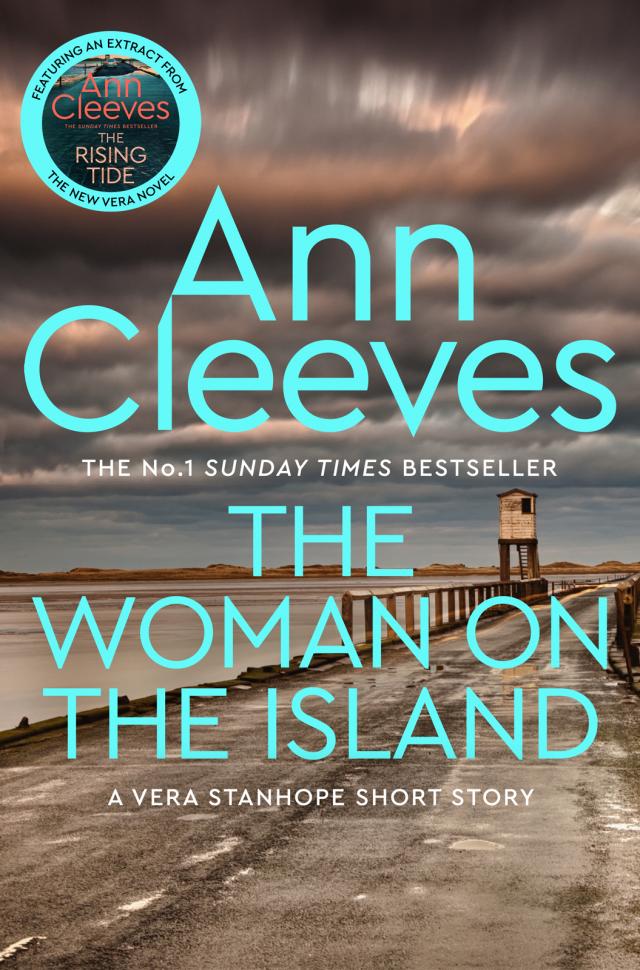


Now, when one of them is found hanged, Vera is called in. Learning that the dead man had recently been fired after misconduct allegations, Vera knows she must discover what the friends are hiding, and whether the events of many years before could have led to murder then, and now . . .
But with the tide rising, secrets long-hidden are finding their way to the surface, and Vera and the team may find themselves in more danger than they could have believed possible . . .
Click here to preorder now
Read on for an exclusive extract.
Chapter One
PHILIP WAS FIRST OF THE GROUP to the island. He’d had to drive overnight but it was worth the effort to get here before the morning high water, before the day trippers crossed from the mainland in their cars and coaches to buy ice cream and chips. He tried not to resent the squabbling children and the wealthy elderly, but he was always pleased when the island was quiet. As he did at every reunion, he wanted to sit in the chapel and reflect for some time in peace. This year would mark fifty years of friendship and he needed to offer a prayer of thanks and to remember.
The most vivid memory was of the weekend when they’d first come together on the island. Only Connect, the teacher had called it. Part outward bound course, part encounter group, part team-building session. And there had been a connection, so strong and fierce that after fifty years the tie was still there, unbroken and still worth celebrating. This was where it had all started.
The next memory was of death and a life cut short.
Philip had no fear of dying. Sometimes, he thought he would welcome death, as an insomniac longs for sleep. It was as inevitable as the water, which twice a day slid across the sand and mud of the shore until the causeway was covered. Eventually, he would drown. His faith provided no extra comfort, only a vague curiosity. Almost, he hoped that there would be no afterlife; surely that would take energy and there were days now when he felt that he had no energy left. It had seeped away in his service to his parish and the people who needed him.
He did regret the deaths of others. His working life moved to the beat of funeral services, the tolling of the church bell, the march of pall-bearers. He remembered the babies, who’d had no experience of life at all, the young who’d had no opportunity to change and grow. He’d been allowed that chance and he offered up another prayer of gratitude.
An image of Isobel, so young, so bonny, so reckless in her desires and her thoughtlessness, intruded into his meditation and he allowed his mind to wander.
Was it Isobel who kept the group returning to the Holy Island of Lindisfarne every five years? Had her death at the first reunion bonded them together so tightly that, despite their differences, they were as close as family? Perhaps that deserved gratitude too, because these people were the only family he had left.
In the tiny chapel, with its smell of damp and wood polish, he closed his eyes and he pictured her. Blonde and shapely and sparking with life. A wide smile and energy enough for them all.
From the first floor of the Pilgrims’ House, he’d seen her driving away to her death. He’d watched the argument that had led to her sudden departure. Forty-five years ago, Isobel had drowned literally. No metaphor had been needed for her. Her body had been pulled out of her car, once the waters had retreated. Her vehicle had been swept from the causeway in the high tide of the equinox, tossed from the road like a toy by the wind and the waves. Once she’d set out on her way to the mainland, there had been no chance to save her.
Had that been the moment when he’d changed from a selfish, self-opinionated, edgy young man to a person of faith? Perhaps the conversion had begun a little later, the evening of the same day, when he’d sat in this chapel in the candlelight with his friends and they’d cried together, trying to make sense of Isobel’s passing. Annie and Daniel, Lou and Ken, Rick and Philip. The mourning had been complicated because none of them had liked Isobel very much. The men had all fancied her. Oh yes, certainly that. She’d featured in Philip’s erotic dreams throughout his undergraduate years. But she’d been too demanding and too entitled for them to like her.
Philip opened his eyes for a moment. The low sunlight of autumn was flooding through the plain glass windows into the building, but he knew he had time for more reflection – more guilt? – before the others arrived. He closed his eyes again to remember Isobel and that argument which must surely have led to her death. He hadn’t heard the words. He’d been in his first-floor room in the Pilgrims’ House looking down, an observer, not a participant. Isobel and Rick had been fighting in the lane below him. There’d been no physical contact – it hadn’t come to that – but Philip had sensed the tension, which was so different from the weekend’s general mood of easy companionship.
The fight had seemed important. Almost intimate. Not a row between casual friends or strangers. Even if Philip had been closer, he might not have made out what was being said, because there was a storm blowing and the wind would have carried the words away. He’d relished the drama of the scene, looking on with a voyeur’s excitement, as he’d watched the row play out beneath him.
Then, from where he’d stood, he’d seen Annie rounding the bend in the lane, a woven shopping bag in one hand. She must have been into the village for provisions. No longer a mother, she’d mothered them all that weekend, and now, all these years later, she was still the person who shopped and cooked.
Rick and Isobel hadn’t noticed her, because they were so focused on each other, spitting out insults. Rick had hurled one more comment and suddenly Isobel had been flouncing away, her long hair blown over her face, feeling in the pockets of her flowery Laura Ashley dress for her car keys. At that point Philip could have changed history. If he’d rushed downstairs and outside, he might have stood in front of the car and stopped her driving away. He’d known after all that the tide was rushing in and it would be foolhardy to attempt the crossing.
But Philip hadn’t moved. He’d stayed where he was, staring out of the window like a nebby old woman, waiting to see what would happen next. And Isobel had started her car and driven to her death.
So, here Philip was, a priest on the verge of retirement, an old believer, yet with no great desire to meet his maker. Here he sat, hands clasped and eyes shut, waiting for his friends, longing again for the connection and the ease that only they could give, pondering the moment of Isobel’s death. It seemed to him now that he’d spent the rest of his life trying to find relationships that were as intense and fulfilling as those developed here. Nothing had lived up to expectation. Not even, if he was honest, his trust in Christ.
Perhaps that was why he’d never married. Later, there’d been women he’d fancied himself in love with, but there’d never been the same depth of understanding, and in the end, he’d refused to compromise. If one of the women who’d shared that first weekend of connection had been free, perhaps that would have worked. Now, it crossed his mind again that Judith, the teacher who’d brought them together, might make a suitable partner, that he might find company and intimacy in old age. They were both alone after all. But Philip knew that he was probably too cowardly and too lazy to make a move. He smiled to himself; he wasn’t sure he wanted to share his life after all this time. He was too comfortable, and too set in his ways.
He got to his feet, walked down the narrow aisle and out into the sunshine. He could smell seaweed and salt. He felt at home.
Chapter Two
ANNIE LAIDLER SHUT THE DELI DOOR and locked it. A regular customer turned up two minutes late and looked through the window. Usually, Annie would have let her in, all smiles and welcome – but today she pretended not to see. Jax had already left and this was October, a reunion year. Annie had been planning the moment for weeks.
She began to pack the two wicker hampers with jars and dried goods. They’d already been pulled from the shelves and were standing in a line on the counter. Then she turned her attention to the fresh items. There were green and black olives, all scooped into separate tubs. Slices of charcuterie glistening with fat. Cheese: Doddington, with its black rind and hard, sharp taste, Northumberland nettle, oozing brie and crumbling Wensleydale. Squat loaves of ciabatta and sourdough baked by Jax early that morning. Local butter, wrapped in greaseproof paper. A taste of home for her friends who’d moved away. A reminder to them that she and the region had moved on.
Still, at the last moment she added stotties – the flat-bread cakes that they’d filled with chips when they’d all been kids – then home-baked ham and pease pudding. Traditional Geordie fare. A kind of irony, a joke that they’d all appreciate. Through this food, memories would be triggered, and anecdotes would follow. Images clicked into her head like slides dropping into an old-fashioned projector carousel. A school play dress rehearsal. Rick in full costume as Claudius, collapsing suddenly in giggles and the rest of them losing it. Except Philip, who was Hamlet, furious that his long speech had been interrupted. And Miss Marshall, their English teacher, almost in tears because she thought the performance itself would be a disaster.
More slides. More images of Only Connect – the event originally organized by the school, or at least by Miss Marshall, as an attempt to bring together some of the new lower sixth. She wanted to challenge their preconceptions, she’d said; to open their minds to possibilities beyond Kimmerston Grammar. That initial weekend gathering – a kind of secular retreat – had turned them into this tight group. Still friends fifty years on; still meeting in the same place every five years. This time the recollection was of teenagers, talking endlessly, sitting at the long tables in the kitchen at the Pilgrims’ House, dipping stotties into the veggie soup, hardly pausing the conversation long enough to eat.
After the first reunion, and Isobel’s death, Annie had wondered if the reunions would continue, but they had. Rick had said to meet up would be an act of remembrance, but after all this time, the mentions of Isobel had become a ritual, no more meaningful than the Friday night drinking, or the Saturday afternoon walk.
The hampers were almost too heavy for Annie to carry to the car. Five years ago, she must have been fitter, stronger. She’d get someone to help her at the other end. One of the men. Rick was always keen to prove how macho he was, with his tales of marathons run, and trips to the gym.
Outside the sun was low. They’d stuck with October for the reunions, and there was always this sense of the year coming to an end. That first meeting of Only Connect had been a time of transition. They all agreed on that. So the date seemed appropriate.
Later kids had come along. Annie had swallowed her envy and her hurt and pretended to enjoy them. The reunion weekends had grown then; sometimes the place had the vibe of a chaotic playgroup, and later of a youth club for moody teens. They’d only come together for evening chapel at dusk. Now, the adults were alone again, and oddly it was as if they’d gone full circle. They had the same freedom and lack of responsibility as they’d had when they’d first come together as sixteen-year-olds. Tonight, she felt suddenly wild, ready for an adventure.
Some of their children had become friends and they met up too, independently in smart London wine bars. Not in an austere former convent on Holy Island, which had been refurbished now, but still smelled a little of mould and elderly women. As if the ghosts of the original occupants still lingered.
The Woman on the Island
Ann Cleeves is the author of over thirty critically acclaimed novels, and in 2017 was awarded the highest accolade in crime writing, the CWA Diamond Dagger. She is the creator of popular detectives Vera Stanhope, Jimmy Perez and Matthew Venn, who can be found on television in ITV’s Vera, BBC One’s Shetland and ITV’s The Long Call respectively. The TV series and the books they are based on have become international sensations, capturing the minds of millions worldwide.
Ann worked as a probation officer, bird observatory cook and auxiliary coastguard before she started writing. She is a member of ‘Murder Squad’, working with other British northern writers to promote crime fiction. Ann also spends her time advocating for reading to improve health and wellbeing and supporting access to books. In 2021 her Reading for Wellbeing project launched with local authorities across the North East. She lives in North Tyneside where the Vera books are set.
You can find Ann on Twitter and Facebook @AnnCleeves
By Ann Cleeves
A Bird in the Hand
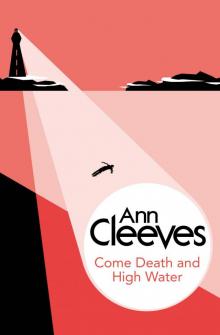
Come Death and High Water
Murder in Paradise
A Prey to Murder
A Lesson in Dying
Murder in My Backyard
A Day in the Death of Dorothea Cassidy
Another Man’s Poison
Killjoy
The Mill on the Shore
Sea Fever
The Healers
High Island Blues
The Baby-Snatcher
The Sleeping and the Dead
Burial of Ghosts
The Vera Stanhope series
The Crow Trap
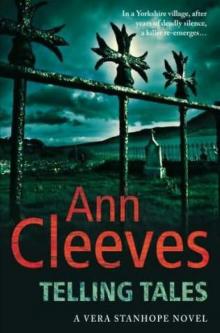
Telling Tales
Hidden Depths
Silent Voices
The Glass Room
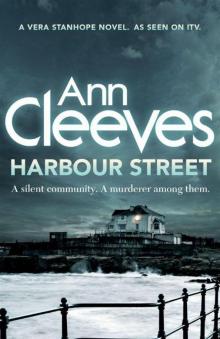
Harbour Street
The Moth Catcher
The Seagull
The Darkest Evening
The Shetland series
Raven Black
White Nights
Red Bones
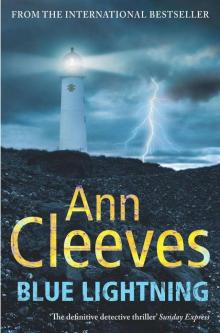
Blue Lightning
Dead Water
Thin Air
Cold Earth
Wild Fire
The Two Rivers series
The Long Call
The Heron’s Cry
First published 2014 by Macmillan
This electronic edition first published 2022 by Macmillan
an imprint of Pan Macmillan
The Smithson, 6 Briset Street, London EC1M 5NR
EU representative: Macmillan Publishers Ireland Ltd, 1st Floor,
The Liffey Trust Centre, 117–126 Sheriff Street Upper,
Dublin 1, D01 YC43
Associated companies throughout the world
www.panmacmillan.com
ISBN 978-1-0350-0797-4
Copyright © Ann Cleeves 2014
The right of Ann Cleeves to be identified as the author of this work has been asserted by her in accordance with the Copyright, Designs and Patents Act 1988.
You may not copy, store, distribute, transmit, reproduce or otherwise make available this publication (or any part of it) in any form, or by any means (electronic, digital, optical, mechanical, photocopying, recording or otherwise), without the prior written permission of the publisher. Any person who does any unauthorized act in relation to this publication may be liable to criminal prosecution and civil claims for damage.
A CIP catalogue record for this book is available from the British Library.
Visit www.panmacmillan.com to read more about all our books and to buy them. You will also find features, author interviews and news of any author events, and you can sign up for e-newsletters so that you’re always first to hear about our new releases.
Ann Cleeves, The Woman on the Island