Self made boys a great g.., p.22
Self-Made Boys--A Great Gatsby Remix,
p.22


With the help of Jay’s aunt, I’d rigged up the light to the splintered dock he’d jumped off as a child. With its leaf-bright glow, it called fireflies out from the reeds.
The constellations dipped down into the water. I thought of them in New York and California, emerging and vanishing into oceans, and here, drifting between the green light and the moon.
I thought of all those pearls floating through the sea like stars. I wondered how many new debutantes, for how many years, would hear stories about Daisy Fay and claim they’d found a pearl from her very necklace.
Within a few years, there would be rumors that Jay Gatsby never existed at all. Some would say he had been an invention of Martha Wolf. They had seen Martha closing up the mansion, readying it for sale to an unseen buyer.
Martha made Gatsby vanish, and that fueled the rumor that she had made him appear in the first place. Any question—about Gatsby, his blue gardens, his glimmering parties—she answered with a quirk of her painted lips. She was the only one left who knew for sure where we were, floating in that North Dakota night, imagining bay branches, white oleander, and orange trees.
It happened fast, Jay Gatsby becoming more legend than memory. The rich sons and daughters who drank champagne on his lawn whispered his name as though trying to grasp something, wondering if everything they remembered about the great Gatsby had been a dream.
AUTHOR’S NOTE
When I first read The Great Gatsby as a teen, I knew three things:
1) I was pretty sure Nick Carraway was in love with Jay Gatsby.
2) Daisy Buchanan enthralled me as much as she infuriated me.
3) I had a feeling this story wasn’t done with me.
But I wouldn’t find out why this story wasn’t done with me until years later, when I was invited to reimagine The Great Gatsby. And when I was, I knew I wanted to create a Gatsby that included my queer, transgender, and Latine communities.
I wanted to write Jay Gatsby as a transgender young man making an increasingly infamous name for himself in 1920s New York, a boy who’d once been one of hundreds of thousands of underage soldiers who served in World War I. I wanted to write Daisy as a Latina lesbian debutante who passes as white and straight as she moves through Manhattan high society. I wanted to write Nick Carraway as a Mexican American transgender boy wanting to make a better life for himself and his family, and who falls in love with the mysterious boy next door.
I wanted to write about the American dream for what it is, a hope so many of us have but that, for so long, didn’t belong to so many of us, and often still doesn’t. I call this novel Self- Made Boys both because The Great Gatsby deals so much in the American dream and its myths about self-made men, and because reimagining Jay and Nick as transgender casts them as self-made boys in perhaps the most literal sense.
The phrase self-made man has a complicated and often problematic history that seems to date back to the first half of the nineteenth century, but the concept was later redefined by Frederick Douglass in Self-Made Men: “Properly speaking, there are in the world no such men as self-made men. That term implies an individual independence of the past and present which can never exist.”
Nick and Jay are making themselves as boys and men, but they can’t do it without each other and without their communities. As trans boys, we make ourselves, but we don’t do it alone. None of us makes ourselves alone.
I started writing Self-Made Boys at a time when I was thinking deeply not just about my gender identity but also about my identity as a mixed-race American. I owe a great debt to another 1920s novel, Nella Larsen’s Passing. I first read Passing the same year I first read The Great Gatsby. Passing was, to me, both a window book—because I will never know what it was like to be a Black woman in 1920s New York—and a mirror book—because I felt seen as a mixed-race American who sometimes passes, sometimes doesn’t, and has sometimes made significant efforts to pass.
Yes, Daisy infuriated teen me. And as I reimagined her, she often still did. But she also made me face a part of myself, a part who didn’t realize how much what I was doing was breaking my heart until I stopped. I had to be willing to look at the ways in which Daisy held the girl I was once, the same way I had to be willing to see how Nick held the boy I later became.
A note on identity and historical accuracy: Whenever possible, I stayed true to likely events, even when they made me cringe (like Nick’s use of All Cotton Elastic; any of my fellow trans and nonbinary siblings reading this, please take Daisy’s advice to Nick and don’t do this). But I’ve also attempted to code and label race, sexual orientation, and gender identity in a way meant to fall between historical realism and contemporary consciousness. Sometimes I made decisions meant to acknowledge and question racism, queerphobia, and transphobia without putting the brutal slurs of the 1920s on the page. There are also places where I might have wanted to use contemporary wording but knew I should consider the terms used and not used in the time period (Latino, to give an example related to Nick’s identity and my own, didn’t come into common usage in the United States until later in the twentieth century).
Nick and Jay may not have had access to terms like transgender. Our ancestors may not have had the names for themselves and each other we have today. Regardless, we have, throughout history, found ways to know, affirm, and love one another. Without that, without the possibility of recognizing each other as we truly are, the American dream can’t exist.
As you leave West Egg, I hope you leave knowing this: You are worth being seen as you truly are. You are worth imagining your life for yourself instead of how you may have been told your life must be.
You are worth your own dreams.
ACKNOWLEDGMENTS
There are many people without whom this book wouldn’t exist. Here, I’ll name a few:
Emily Settle, for asking me to reimagine Gatsby for the Remixed Classics series, and for backing all the ways I wanted to make it gay.
Jean Feiwel, for supporting making room in classic books for our communities.
Brittany Pearlman, for being as caring as she is organized and innovative.
Veronica Mang, for your thoughtful vision for this cover, Elliott Berggren, for bringing Jay and Nick to such beautiful life, and Elizabeth Clark, for the wonderful art direction at MacKids.
Everyone at Feiwel & Friends and Macmillan Children’s Publishing Group: Kat Brzozowski (hi, Kat! I’m so grateful to be working with you on our next book together as I type this), Liz Szabla, Erin Siu, Teresa Ferraiolo, Kim Waymer, Ilana Worrell, Dawn Ryan, Celeste Cass, Lelia Mander, Erica Ferguson, Jessica White, Jon Yaged, Allison Verost, Molly Ellis, Leigh Ann Higgins, Cynthia Lliguichuzhca, Allegra Green, Jo Kirby, Kathryn Little, Julia Gardiner, Lauren Scobell, Alexei Esikoff, Mariel Dawson, Alyssa Mauren, Avia Perez, Dominique Jenkins, Meg Collins, Gabriella Salpeter, Romanie Rout, Ebony Lane, Kristin Dulaney, Jordan Winch, Kaitlin Loss, Rachel Diebel, Foyinsi Adegbonmire, Katy Robitzski, Amanda Barillas, Morgan Dubin, Morgan Rath, Madison Furr, Mary Van Akin, Kelsey Marrujo, Holly West, Anna Roberto, Katie Quinn, Hana Tzou, Chantal Gersch, Katie Halata, Lucy Del Priore, Melissa Croce, Kristen Luby, Cierra Bland, and Elysse Villalobos of Macmillan Children’s School & Library; and the many more who turn stories into books and help readers find them.
The fellow writers who were there during the drafting and revision process:
My fellow Remixed Classics authors. I have laughed during our chats, taken in your shared wisdom, and marveled at your stunning work. I am honored to be among you.
Nova Ren Suma, Emily X. R. Pan, Anica Mrose Rissi, Aisha Saeed, Emery Lord, Dahlia Adler, Rebecca Kim Wells, Elana K. Arnold, Lisa McMann, and Matt McMann, who shared space with me as I was writing this book while sharing about their own works in progress.
Alex Brown, for your literary brilliance, your extensive historical knowledge, and for virtually introducing me to las ratas adorables.
Aiden Thomas, for telling me how much you loved this book at the very moment I was wondering what exactly I’d done writing trans gay Gatsby.
Melissa Kravitz Hoeffner, for your help with a character who’s close to my heart and with showing more of her on the page.
Lieutenant Colonel Kevin J. Stepp and Staff Sergeant Matthew Chaison, for talking me through how soldiers say who they’re with, today and in the 1920s.
Taylor Martindale Kean, Stefanie Sanchez Von Borstel, the Full Circle Literary team, Taryn Fagerness, and the Taryn Fagerness Agency, for supporting how excited I was to envision my own Gatsby (and especially for Taylor’s 1920s enthusiasm).
Michael Bourret, for the shared queer puns and the patience for how many questions I ask.
Readers: for spending this time in my reimagining of West Egg and East Egg. Thank you.
Thank you for reading this FEIWEL & FRIENDS book. The friends who made Self-Made Boys: A Great Gatsby Remix possible are:
Jean Feiwel, Publisher
Liz Szabla, Associate Publisher
Rich Deas, Senior Creative Director
Holly West, Senior Editor
Anna Roberto, Senior Editor
Kat Brzozowski, Senior Editor
Dawn Ryan, Executive Managing Editor
Celeste Cass, Production Manager
Emily Settle, Editor
Foyinsi Adegbonmire, Associate Editor
Rachel Diebel, Associate Editor
Veronica Mang, Associate Designer
Lelia Mander, Production Editor
Follow us on Facebook or visit us online at mackids.com. Our books are friends for life.
ALSO BY ANNA-MARIE McLEMORE
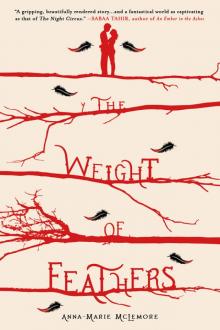
The Weight of Feathers
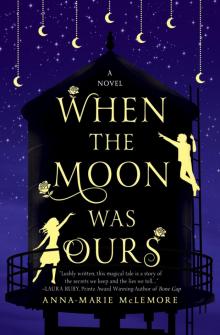
When the Moon Was Ours
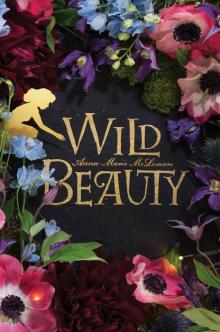
Wild Beauty
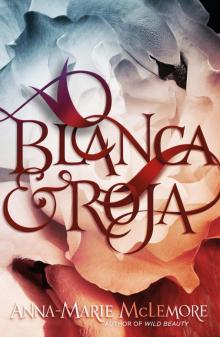
Blanca & Roja
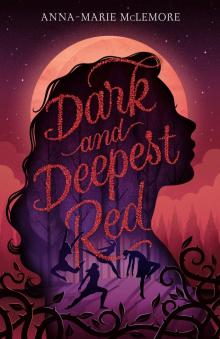
Dark and Deepest Red
The Mirror Season
Lakelore
ABOUT THE AUTHOR
Anna-Marie McLemore was born in the foothills of the San Gabriel Mountains and taught by their family to hear la llorona in the Santa Ana winds. They are the author of The Weight of Feathers, a finalist for the 2016 William C. Morris Debut Award; the 2017 Stonewall Honor Book When the Moon Was Ours, which was longlisted for the National Book Award in Young People’s Literature and was the winner of the James Tiptree Jr. Award; Wild Beauty; Blanca & Roja; Dark and Deepest Red; The Mirror Season, which was also longlisted for the National Book Award in Young People’s Literature; and Lakelore. author.annamariemclemore.com, or sign up for email updates here.
Thank you for buying this
Feiwel and Friends ebook.
To receive special offers, bonus content,
and info on new releases and other great reads,
sign up for our newsletters.
Or visit us online at
us.macmillan.com/newslettersignup
For email updates on the author, click here.
CONTENTS
Title Page
Copyright Notice
Dedication
Epigraphs
Chapter I
Chapter II
Chapter III
Chapter IV
Chapter V
Chapter VI
Chapter VII
Chapter VIII
Chapter IX
Chapter X
Chapter XI
Chapter XII
Chapter XIII
Chapter XIV
Chapter XV
Chapter XVI
Chapter XVII
Chapter XVIII
Chapter XIX
Chapter XX
Chapter XXI
Chapter XXII
Chapter XXIII
Chapter XXIV
Chapter XXV
Chapter XXVI
Chapter XXVII
Chapter XXVIII
Chapter XXIX
Chapter XXX
Chapter XXXI
Chapter XXXII
Chapter XXXIII
Chapter XXXIV
Chapter XXXV
Chapter XXXVI
Chapter XXXVII
Chapter XXXVIII
Chapter XXXIX
Chapter XL
Author’s Note
Acknowledgments
Also by Anna-Marie Mclemore
About the Author
Copyright
Content warning: This book contains references to racism, colorism, transphobia, queerphobia, and sexism
in the context of the 1920s, and references to soldiers’ experiences during and after World War I.
Copyright © 2022 by Anna-Marie McLemore
A Feiwel and Friends Book
An imprint of Macmillan Publishing Group, LLC
120 Broadway, New York, NY 10271
fiercereads.com
All rights reserved.
Feiwel and Friends logo designed by Filomena Tuosto
Library of Congress Cataloging-in-Publication Data
Names: McLemore, Anna-Marie, author. | Fitzgerald, F. Scott
(Francis Scott), 1896–1940. Great Gatsby.
Title: Self-made boys : a Great Gatsby remix / Anna-Marie McLemore.
Description: First edition. | New York : Feiwel & Friends, 2022. | Series: Remixed classics ; vol 5 | Audience: Ages 13 and up | Audience: Grades 10–12 | Summary: “Three teens chase their own version of the American Dream during the Roaring 20s in this YA remix of The Great Gatsby”—Provided by publisher.
Identifiers: LCCN 2021062266 | ISBN 9781250774934 (hardcover)
Subjects: LCSH: Rich people—Fiction. | First loves—Fiction. | LCGFT: Psychological fiction. | Romance fiction. | Novels.
Classification: LCC PZ7.1.M463 Se 2022 | DDC [Fic]—dc23
LC record available at https://lccn.loc.gov/2021062266
Our eBooks may be purchased in bulk for promotional, educational, or business use. Please contact the Macmillan Corporate and Premium Sales Department at (800) 221-7945 ext. 5442 or by email at
MacmillanSpecialMarkets@macmillan.com.
First hardcover edition 2022
eBook edition 2022
eISBN 978-1-250-77494-1
Anna-Marie McLemore, Self-Made Boys--A Great Gatsby Remix