Cradle

Cradle

Arthur C. Clarke

Science Fiction & Fantasy / Science

In 1994, the Marines test a new missile. After launch it mysteriously disappears. If it reaches civilian areas they'll be in big trouble. Carol Dawson, a journalist, is alerted by an unusual sight of whales in the Miami area & decides to write about it. Armed with equipment provided by her friend, Dr. Dale Michaels from the Miami Oceanographic Institute, she goes to investigate the rumors of a missing missile that could be behind the mysterious whale behavior. She hires the services of Nick Williams & Jefferson Troy, boat owners, so she can get to the Mexican Gulf to investigate. They find an unknown artifact. They have doubts about its nature, hoping it's part of a lost treasure. Old friends of Williams & Troy notice their discovery & want to steal it. In the story's background, the authors describe a submarine snake civilization on a planet called Canthor, & how they struggled to stay alive despite threats to their ecosystem. It's revealed that the artifact is actually a cradle that contains seeds with altered superhumans extracted from Earth millions of years ago & altered so they could live with other species--including the submarine snakes--on Earth. The spaceship that carries the cradle is manned by robots/cyborgs & has hidden itself on the ocean floor to make repairs. Dawson, Williams & Troy are asked to gather materials so the ship can be repaired & return to its mission. The ship...
Read online
  • 485
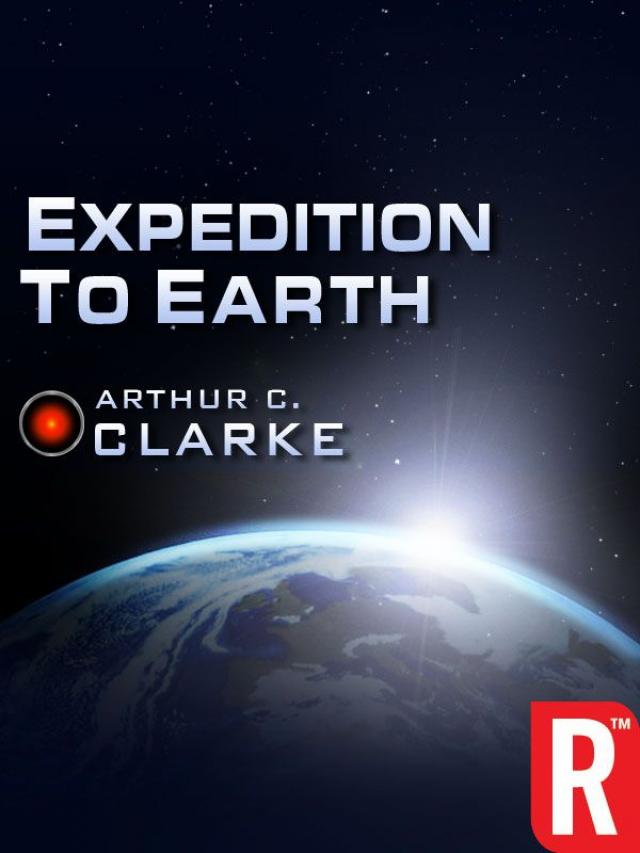
Expedition to Earth

Expedition to Earth

Arthur C. Clarke

Science Fiction & Fantasy / Science

This collection of Clarke's work was originally published in 1953, when it was selected as one of the best Science Fiction books of the year by Boucher and McComas. It contains many short stories that would later become classics, including "The Sentinel"-the basis for the later classic 2001: A Space Odyssey. These stories present a brilliant showcase of Clarke's many-layered approach to the moral dilemmas of scientific advancement-from the thrilling and brutal "Breaking Strain" to the more poetic and thoughtful "Second Dawn." This collection represents a tour-de-force of Science Fiction storytelling sure to delight fans of Clarke's work and the SF genre.
Read online
  • 411
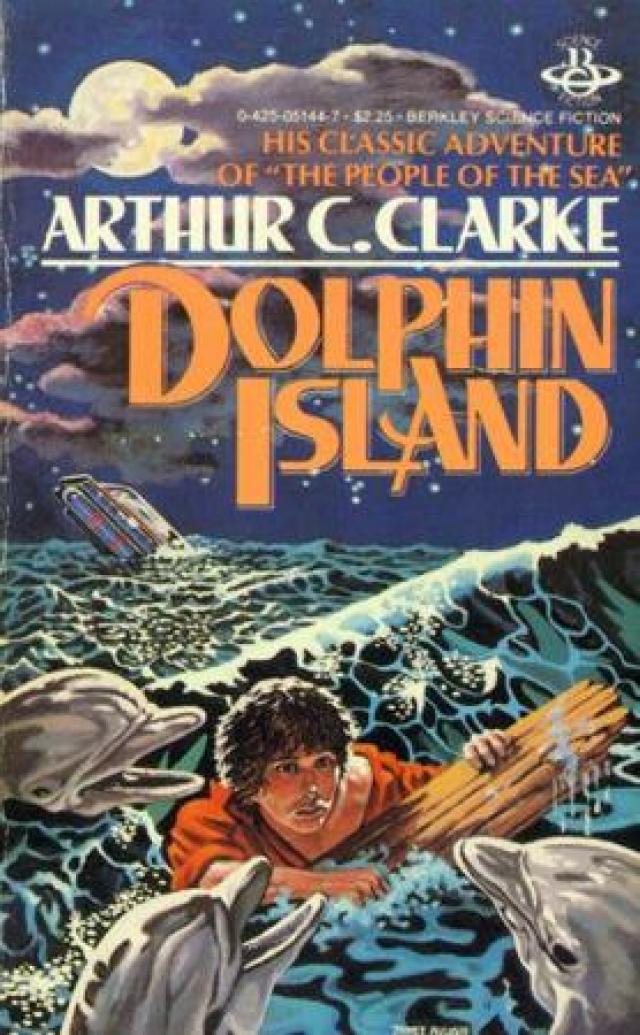
Dolphin Island (Arthur C. Clarke Collection)

Dolphin Island (Arthur C. Clarke Collection)

Arthur C. Clarke

Science Fiction & Fantasy / Science

A science fiction adventure for readers of all ages, from a winner of multiple Nebula and Hugo Awards. In the near future, a cargo hovership makes an emergency landing in a rural part of the Midwest. An adventurous teenager, Johnny Clinton, sneaks on board—only to survive a second crash a few hours later, this time into the Pacific Ocean . . . The crew escapes, but Johnny is left on board, adrift in the wreckage of the ship—until he is rescued by a pod of dolphins, who bring him to a remote island hidden in the heart of Australia’s Great Barrier Reef. There, Johnny meets the brilliant and eccentric Professor Kazan, who has dedicated his life to the study of dolphin communication. Here in this new world, Johnny will find his courage tested once again . . .
Read online
  • 389
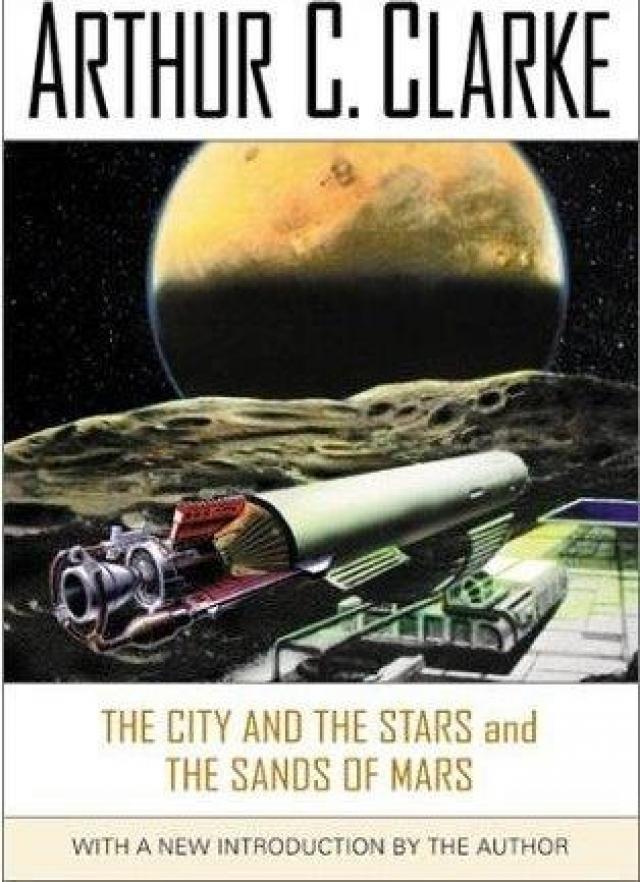
The City and the Stars

The City and the Stars

Arthur C. Clarke

Science Fiction & Fantasy / Science

Clarke's masterful evocation of the far future of humanity, considered his finest novel. Men had built cities before, but never such a city as Diaspar. For millennia its protective dome shut out the creeping decay and danger of the world outside. Once, it held powers that rule the stars. But then, as legend has it, the invaders came, driving humanity into this last refuge. It takes one man, a Unique, to break through Diaspar's stifling inertia, to smash the legend and discover the true nature of the Invaders.
Read online
  • 369
The Last Theorem

The Last Theorem

Arthur C. Clarke

Science Fiction & Fantasy / Science

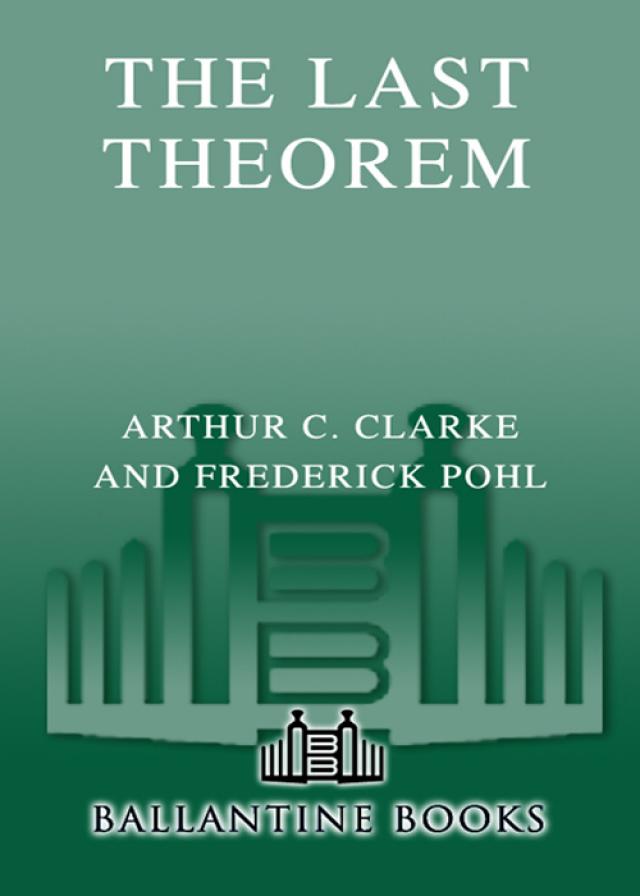
Two of science fiction’s most renowned writers join forces for a storytelling sensation. The historic collaboration between Frederik Pohl and his fellow founding father of the genre, Arthur C. Clarke, is both a momentous literary event and a fittingly grand farewell from the late, great visionary author of 2001: A Space Odyssey. The Last Theorem is a story of one man’s mathematical obsession, and a celebration of the human spirit and the scientific method. It is also a gripping intellectual thriller in which humanity, facing extermination from all-but-omnipotent aliens, the Grand Galactics, must overcome differences of politics and religion and come together . . . or perish. In 1637, the French mathematician Pierre de Fermat scrawled a note in the margin of a book about an enigmatic theorem: “I have discovered a truly marvelous proof of this proposition which this margin is too narrow to contain.” He also neglected to record his proof elsewhere. Thus began a search for the Holy Grail of mathematics–a search that didn’t end until 1994, when Andrew Wiles published a 150-page proof. But the proof was burdensome, overlong, and utilized mathematical techniques undreamed of in Fermat’s time, and so it left many critics unsatisfied–including young Ranjit Subramanian, a Sri Lankan with a special gift for mathematics and a passion for the famous “Last Theorem.” When Ranjit writes a three-page proof of the theorem that relies exclusively on knowledge available to Fermat, his achievement is hailed as a work of genius, bringing him fame and fortune. But it also brings him to the attention of the National Security Agency and a shadowy United Nations outfit called Pax per Fidem, or Peace Through Transparency, whose secretive workings belie its name. Suddenly Ranjit–together with his wife, Myra de Soyza, an expert in artificial intelligence, and their burgeoning family–finds himself swept up in world-shaking events, his genius for abstract mathematical thought put to uses that are both concrete and potentially deadly. Meanwhile, unbeknownst to anyone on Earth, an alien fleet is approaching the planet at a significant percentage of the speed of light. Their mission: to exterminate the dangerous species of primates known as homo sapiens. From the Hardcover edition.
Read online
  • 369


The Nine Billion Names of God

The Nine Billion Names of God

Arthur C. Clarke

Science Fiction & Fantasy / Science

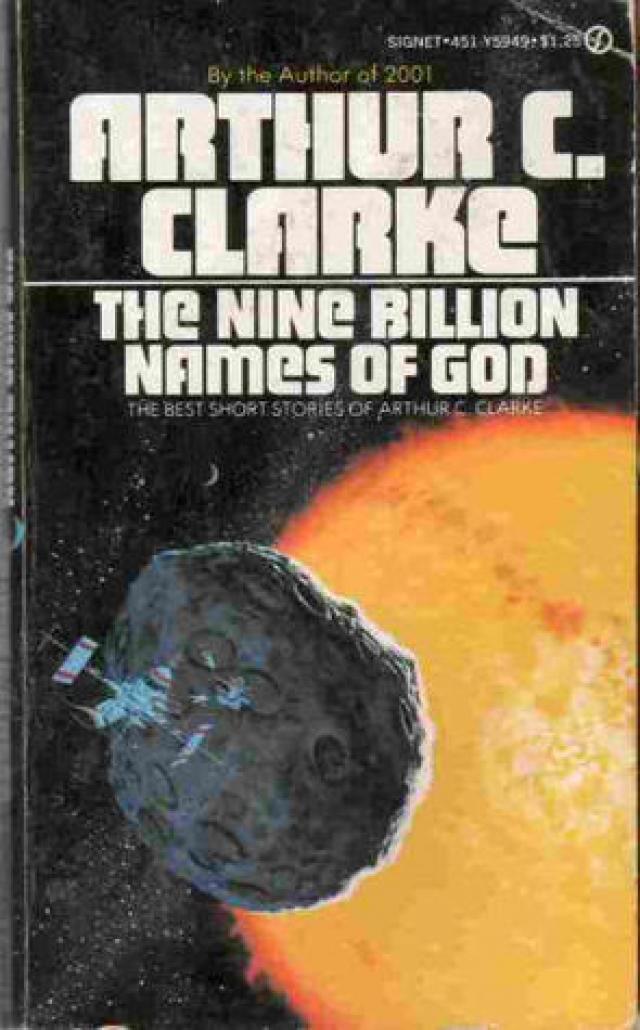
This collection of science fiction short stories includes: The Nine Billion Names of God I Remember Babylon Trouble with Time Rescue Party The Curse Summertime on Icarus Dog Star Hide and Seek Out of the Sun The Wall of Darkness No Morning After The Possessed Death and the Senator Who's There? Before Eden Superiority A Walk in the Dark The Call of the Stars The Reluctant Orchid Encounter at Dawn "If I Forget Thee, Oh Earth..." The Sentinel Transience The Star
Read online
  • 353
Sunstorm

Sunstorm

Arthur C. Clarke

Science Fiction & Fantasy / Science

When Sir Arthur C. Clarke, the greatest science fiction writer ever, teams up with award-winning author Stephen Baxter, who shares Clarke’s bold vision of a future where technology and humanism advance hand in hand, the result is bound to be a book of stellar ambition and accomplishment. Such was the case with Time’s Eye. Now, in the highly anticipated sequel, Clarke and Baxter draw their epic to a triumphant conclusion that is as mind-blowing as anything in Clarke’s famous Space Odyssey series. SUNSTORM Returned to the Earth of 2037 by the Firstborn, mysterious beings of almost limitless technological prowess, Bisesa Dutt is haunted by the memories of her five years spent on the strange alternate Earth called Mir, a jigsaw-puzzle world made up of lands and people cut out of different eras of Earth’s history. Why did the Firstborn create Mir? Why was Bisesa taken there and then brought back on the day after her original disappearance? Bisesa’s questions receive a chilling answer when scientists discover an anomaly in the sun’s core–an anomaly that has no natural cause is evidence of alien intervention over two thousand years before. Now plans set in motion millennia ago by inscrutable watchers light-years away are coming to fruition in a sunstorm designed to scour the Earth of all life in a bombardment of deadly radiation. Thus commences a furious race against a ticking solar time bomb. But even now, as apocalypse looms, cooperation is not easy for the peoples and nations of the Earth. Religious and political differences threaten to undermine every effort. And all the while, the Firstborn are watching... From the Hardcover edition.
Read online
  • 327
A Fall of Moondust

A Fall of Moondust

Arthur C. Clarke

Science Fiction & Fantasy / Science

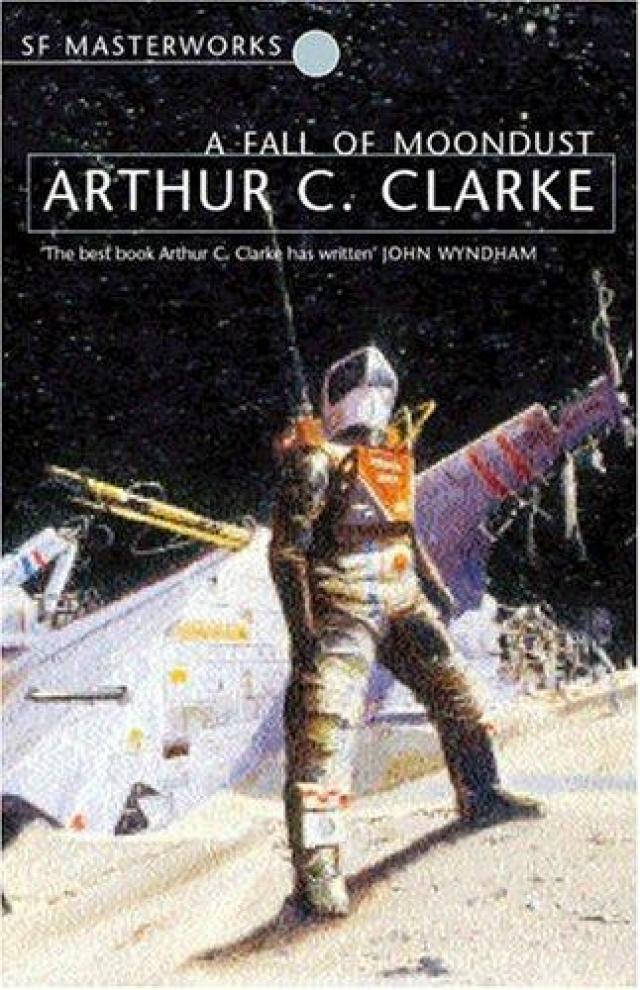
For a million years the bubble had been growing, like a vast abscess, below the root of the mountains. Now the abscess was about to burst. Captain Harris had left the controls on autopilot and was talking to the front row of passengers in the first tremor shook the boat. For a fraction of a second he wondered if a fan blade and hit some submerged obstacle; then, quite literally, the bottom fell out of his world. It fell slowly, as all things must upon the Moon. The sea was alive and moving . . . Every stage of that nightmare transformation was pitilessly illuminated by the earth light, until the crater was so deep that it's firewall was completely lost in shadow, and it seemed as if Selene were racing into a curving crescent of utter blackness – an arc of annihilation. In darkness and in silence, they were sinking into the Moon. . . .
Read online
  • 296
Richter 10

Richter 10

Arthur C. Clarke

Science Fiction & Fantasy / Science

When he was seven years old, a major earthquake killed Lewis Crane's parents. As an adult, Crane has dedicated his life to protecting humanity from a similar tragedy. He's a Nobel-winning earthquake scientist, and the founder of the Foundation-an organization that has perfected equipment sensitive enough to predict an earthquake strike down to the minute. With unrelenting dedication to his cause, Crane's organization explores the idea of fusing the Earth's tectonic plates together-stopping all earthquakes forever by halting tectonic activity. But what effect will this have on the earth-and can it stop another major earthquake due in the United States? In this book, Arthur C. Clarke applies an imagination big enough for deep space to the inner workings of our planet. It's a fascinating exploration of the possible future of earthquake prediction technology-and a compelling read for science fiction fans.
Read online
  • 182