A heart is broken, p.1
A Heart Is Broken,
p.1


Chapter One
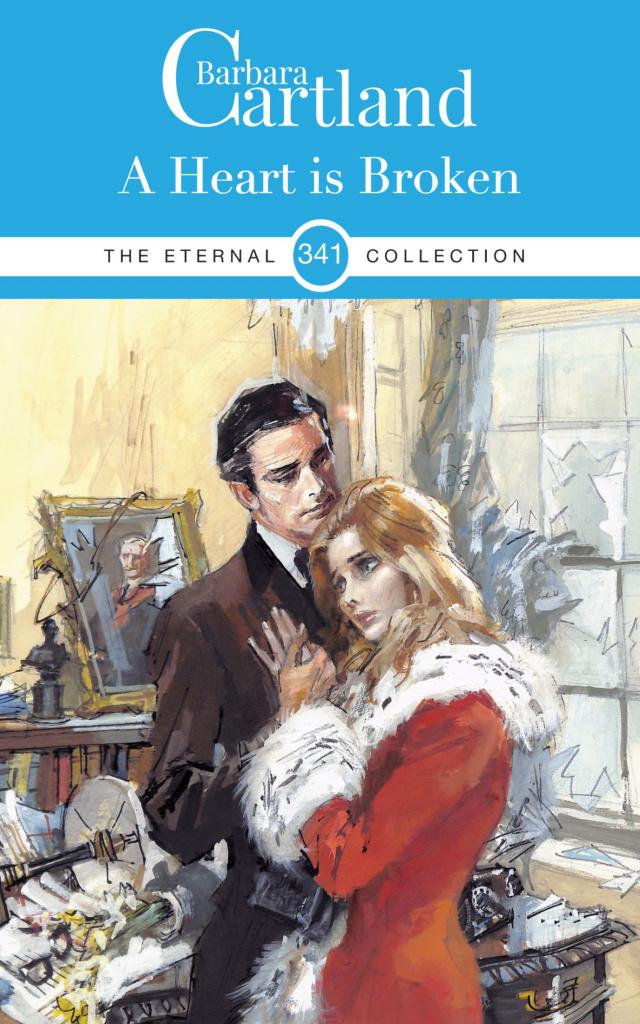
“I’m sorry, Mela old girl, but it’s no use. I’ve got to come clean and tell you that I care for someone else.”
I just stood and stared at Tim. I had been longing to see him, waiting impatiently – and it seemed to me for years – until he could get leave. Actually, he had only been in Winnipeg for three months, and the only things to cheer me up were his letters, but when they had begun to get fewer and fewer I told myself it was because he was working and had no time to write. After all, they keep them pretty hard at it in the Air Training Units.
Of course I was stupid – I suppose any girl is when she is in love. If I had read Tim’s letters unblinded by my own feelings, I might have guessed sooner. Instead of which I just went on loving and loving him. I was mad about him. I still am. It’s no use people telling me that ‘love dies in a night’ or burbling about ‘Time, the Great Healer’, or any of that sort of nonsense. Love doesn’t die because of what people do. One loves them because one just can’t help it.
I adore Tim. I adored him even when he said goodbye for the last time and walked out of the door, rather pink about the face with the little muscle at the side of his jaw twitching as it always does when he’s nervous. I knew he was worried and unhappy at having to tell me the truth but it made me love him even more, if possible, because he minded.
Anyway, I suppose it was some satisfaction to know he cared enough to be upset. But no – nothing was really any consolation. Nothing could lessen the blow or make me feel better about it. It was just the end of everything. The bottom had dropped out of my world.
At first it was hardly painful at all. Rather like being struck down and feeling numb.
“I met her when I first got to Winnipeg, Mela,” Tim was saying, “and when I saw her – I can’t explain – but an electric current seemed to flash between us and I knew without doubt she was the one girl for me. I’d always thought you the finest person in the world. We’ve been such pals, haven’t we, Mela?”
He waited for an answer but I couldn’t speak.
“But this was different,” he went on, “it sort of knocked me out – but Jeeze! it’s hell having to come here and tell you!”
I stood looking at him and all I could think about was that there was a tiny spot of blood on his collar and that his uniform wasn’t really blue. It isn’t a good colour for the Air Force at all, I thought. Too much grey in the mixture. And my mind ran on, thinking of the most idiotic things and all the time my heart was telling me,
‘This is the end! It’s over, Pamela MacDonald. Tim doesn’t love you anymore.’
I couldn’t believe it. I wanted to put my arms round his neck, pull his dear face down to mine and kiss him – one of those long, exciting kisses which used to make me feel breathless, shaken, and somehow a little shy. But I couldn’t do that now. The Tim who was talking to me wasn’t the same Tim I’d loved and who had loved me. This was another man – a man who loved a girl called Audrey Herman who lived in Winnipeg.
When Tim had gone, I stood for a long time looking out of the window. Our house in Montreal is high up on the hill and on the horizon the mountains were covered with snow, and I thought how last year Tim and I had gone skiing in the Laurentians. What fun it had been! The sunshine and the snow, and Tim laughing and teasing me, saying that my cheeks felt and looked like frozen apples. But they hadn’t been frozen when we’d sat in front of the blazing fire in the little log cabin which Tim’s parents had built in the forest. After the others had gone to bed, we used to sit up and talk. We made plans about all the things we’d do when Tim had made enough money for us to get married.
We were awfully sensible about it and decided to wait until we could be really comfortable. We weren’t going to rush into anything. Not like some of my friends, struggling along without any luxuries and without a car. Of course, things would have been better if it hadn’t been for the war.
Daddy had been hit and so had Tim’s father, so there wasn’t the nice, fat allowance that we might have looked forward to in ordinary times – but still, Tim was doing well. His father’s business is one of the oldest firms on the Stock Exchange, so even in the worst slumps he has always managed to keep his head above water.
And then, quite suddenly, Tim decided that he must join in. We talked it over very carefully when the war started and had come to the conclusion there was no reason why he should enlist. Tim has always been rather more pro-American than pro-British. I didn’t mind, although I was supposed to be opposite, having an English mother who loves her own country. Not that after twenty-five years in Canada she’s any reason to love England except sentimentally.
Her English relations, with the exception of Uncle Edward, have treated her pretty badly. I’ve often planned how, when eventually I meet my grandfather, I’ll tell him what I think of him. I’d like to show him my father and say,
“There’s a fine man for you. There’s a man who’s worked, who has been successful and kept his wife happy into the bargain. Now aren’t you ashamed of yourself for forbidding your daughter to marry ‘a common Colonial’?”
Yes, that’s what he called my father when my mother wanted to marry him, and then he chucked him off the estate and told him to go back to Canada as quick as he could. He went all right – but my mother went with him. How I would have loved to have seen my grandfather’s face when he woke up in the morning to find her gone and only a note left behind to tell him what had happened!
I expect the butler took it in to him on the silver salver, and his porridge couldn’t have tasted so good that morning when he realised that – perhaps for the first time in his life – he had been outwitted. I suppose really it was Scot meeting Scot, for my father was Scottish, although his family had been in Canada for two generations. They had emigrated with only a pound or so in their pockets and they worked like beavers to make good.
Well, they succeeded. Daddy had a decent education and I suppose he’s one of the greatest experts on forestry in the country. Yet when he went over to England they talked about him as though he was a lumberjack. Of course, he was young in those days, but even so you’d have thought the English would have seen some difference between him and the men who just fell the trees. But they didn’t.
Mummy crossed the Atlantic and when they got to Canada they were married, and from that day to this, Uncle Edward is the only one of her relations who has ever spoken to her. He is different, of course. He was considered the black sheep of the family for years – which is funny now when you think that he is the one member of the family who has got a position in the British Government – and a pretty important one too. But even England has woken up to the fact that stuffy old people don’t get her anywhere and that if they are going to win this war they will want go-ahead men who can forget tradition and class distinctions.
Uncle Edward’s go-ahead all right – he’s done strange and exciting things all his life. He’s been in a gold rush, and in the Relief of Ladysmith, and he was torpedoed in a minesweeper in 1917 – and that’s only a few of the adventures he’s had.
I’d rather listen to Uncle Edward telling me stories than read any thriller that you can buy on a bookstall. However, one swallow doesn’t make a summer and one Uncle Edward doesn’t make all English people seem marvellous to me. In spite of all that Mummy’s said – and she’s always been a little bit homesick for her own country – I’ve hated a lot of the English people I’ve met and a good deal that I’ve heard about England.
So frankly I didn’t care a jot when Tim decided that he wasn’t going to chuck up his whole career to rush off and fight simply because England said we ought to. After all, England was a long way away, and there’s certainly something to be said for those who argue that Great Britain pays precious little attention to us until she wants something. But, of course, Mummy gets absolutely livid when I talk like that.
“England’s not only our Motherland, Mela,” she has said to me frequently, “she’s the greatest power for good in the world today.”
I can’t argue with Mummy when she talks in that strain. She feels it all so deeply. Besides, if she thinks like that – let her. But I don’t agree. I get sick of being told that “this must be best because it’s English” – “buy British for value” and all that sort of sales talk.
It’s always seemed to me a lot of nonsense that Home, Sweet Home should make Canadians, who haven’t seen the shores of England for forty years – if at all – sob ostentatiously into their handkerchiefs. I think Canada’s fine. It suits me, and all I ask for is a cosy little apartment in Montreal and Tim coming home after work, hooting his horn as he turns the corner of the street so that I shall be ready to run down and meet him as he arrives. But that’s a dream that can never come true now and I wonder what’s going to happen to me?
I suppose really my dreams began to fall to bits the day that Tim told me he was going to join the Air Force. He had been a bit restless all the month. The papers had been full of the Battle of Britain.
The radio said, “775 Nazi planes ... 185 German planes destroyed ... London in flames ... bombs raining death ... women and children buried alive…”
People like Mummy walked about with white faces saying, “Can’t they stick it?” I used to wonder why they felt so keenly. I’d have been awfully sorry to see those Germans win, but somehow it didn’t seem real. I just don’t believe that it would make all that difference to us if Hitler did conquer England. Why, for years we’ve been speculating as to whether it wouldn’t be better for th
e capital of the Empire to be in Canada. People talked about asking the Royal Family to come and live over here. If anything would make me violently pro-British it would be the Queen’s smile. I saw her when they came to Canada. Daddy was presented to her and he said it was the proudest day of his life. And he meant it, too.
After I’d seen her I just hugged myself. I said,
“I’m Scottish too, and Scottish on both sides.”
Which is true, because Mother’s family have been lairds in Sutherland since the days of Bonnie Prince Charlie, and as for Daddy’s family – I believe there’s still a lot of MacDonalds in Scotland.
I was always sorry that Tim didn’t see the King and Queen. He was in the States at the time and he couldn’t get back. Perhaps if he had it would have made him join up sooner because, personally, the Queen would make me want to fight for England, while the Battle of Britain left me rather cold. Well anyway, while I was feeling interested but not emotional, so to speak, it took a lot of people quite differently, and Tim amongst them.
“I’ve got to go, Mela,” he said, and he said it desperately, as if he was being compelled against his will.
“But why?” I asked. “Why now? We’ve talked it all over. You decided not to volunteer. Of course, if it’s a case of conscription it’s a different thing. And now, suddenly, for no reason.”
“There’s a reason, all right,” Tim interrupted, “but I can’t put it into words. It’s those boys in the air – standing up to those devils – beating them at their own game without enough ’planes, without enough ammunition! They’re game enough but they want help and I’m going to give it them.”
I knew it was no use arguing with Tim. He’d made up his mind and that was that. Needless to say, I wasn’t enthusiastic. And what puzzled me was why he should suddenly change his mind and his life – or rather, our lives – overnight.
Dunkirk hadn’t made him want to rush off and defend England against invasion. I couldn’t see why a battle in the skies, which so far appeared pretty indecisive, should make such a difference to him.
But there it was – and there was nothing for me to do but grin and bear it. Really I was a tiny bit piqued, too. I felt that I should have been a good deal more important to Tim than a little island away across the Atlantic, but evidently I wasn’t to be considered. It surprised me, too, the way Mother and Father took it. I quite understood Mummy getting all sentimental and saying how proud and glad she was – she has always, to my mind, been a bit silly about England – but from Daddy I did expect a more level-headed attitude.
Instead he said, “Good boy!” and held out his hand to Tim. He put an accent on the ‘good’, which showed me he was particularly pleased. Everyone was unusually nice to me, too, as if I’d done something commendable. And when I tried to say I couldn’t quite understand Tim’s point of view, they took up the attitude that I was miserable because he was going away and that I must try to be unselfish and bid him Godspeed with a brave heart!
No one would see that while I minded him going personally – and I suppose selfishly – what puzzled me was why he should want to go. It was no use trying to talk to my friends. Most of their young men or their husbands had joined up at the very beginning. I’d known that in a sort of way they despised Tim, but I didn’t care. We were perfectly happy together and, what was more, a great many of his American friends thought it very sensible of him to keep on with his job and not start flag-wagging because there was a war going on in some other part of the world.
“Your boy’s got sense,” one of them said to me. “Look what happened last time. You’re too young to remember, but when the boys came marching home again what did they find? Their jobs had got filled by someone else! And let me tell you it’s no fun being a hero on an empty belly.”
But sensible or otherwise, Tim went off to Winnipeg to be trained as an airman and I learnt for the first time in my life what it was to be lonely. Tim had been about ever since I grew up. There had been other men, too, when I first left school, who’d given me a rush and made a fuss of me. Some of the boys had wanted to marry me, but there had never really been anyone but Tim.
I think I loved him from the first day that he tipped me out of his toboggan head first into a six-foot snowdrift. It soon became pretty plain, too, that there was no one else in Tim’s life, though he didn’t say anything for a long while. We just played around and had a good time.
Then one night coming home from a party, Tim stopped the car. It was a moonlight night and the stars were twinkling nearly as brightly as the lights of the city. Tim threw away his cigarette and turned towards me – he didn’t say anything but he looked at me and suddenly I felt strange and breathless. Tim’s arms went round my shoulders and his lips were against mine – then I knew that happiness hurts, but it is so wonderful that one is afraid even of moving lest such ecstasy should vanish for ever...
But it didn’t vanish. Not where I was concerned, at any rate. Everything went on getting more wonderful, until the day that Tim said he had got to go and fight for England. That certainly increased the grudge I have always borne against that country, but still I had to put a good face on his going, and I kidded myself that perhaps he’d be no use as a pilot and they’d throw him out.
When Tim wrote that he’d got leave and was coming to see me I walked on air. I’d had a pretty gloomy three months one way and another. There had seemed very little to do after Tim had gone. I suppose I ought to have made an effort and gone to work at the Red Cross or helped with some of the evacuees, but I didn’t see why I should. Any time I want work they are only too pleased to give it me at the McGill University. I find it quite simple to translate a German treatise into French or vice versa. I’ve translated one or two books and everyone’s been very complimentary about them – so it’s nice to think I can make a few dollars any time I want to.
Tim always said he wanted to support his wife and where Tim was concerned I wanted to be supported – so why worry about a permanent job?
Mother took all the credit for my ability.
“You’re just like your grandmother,” she said. “She was a brilliant woman. She travelled all over the world and could speak at least six languages, as if she were a native of the country. It’s funny how talents like that skip a generation. I was always a terrible French scholar and never even tried to learn any other language.”
I didn’t want to be beholden to any grandmother who was unnatural enough not to want to see her daughter after she had run away with the man she loved. Mother tried to tell me that Victorian wives didn’t dispute their husband’s decisions, but I took that with a grain of salt. If my grandmother had really cared for her daughter surely she would have written to her, if only once a year?
“Do you think there’s anything in this hereditary theory of Mother’s?” I asked Daddy.
“I shouldn’t be surprised,” he said. “Your mother’s mother was a fine woman.”
“You ought to hate her for the way she’s behaved,” I said.
Daddy laughed.
“Why should I?” he asked. “After all, she produced the one thing on Earth that I wanted more than any other. I am very grateful to her for that. Besides, my dear Mela, a victor should always be magnanimous to those he has defeated.”
I snorted. It was all very well for Daddy to feel philosophical about it, but somehow I couldn’t. It was annoying, too, not being able to boast at school about my smart relations. All girls – and boys too, for that matter – boast to each other, and there was a smug child at my school who used to tell us that she was a direct descendant of Louis the Fourteenth.
I used to itch to say that my family was related to Mary, Queen of Scots, for Mother had told me that we were and that a picture of her hangs in my grandmother’s castle. But I couldn’t tell them that without admitting that Mother had been cut off from her family for demeaning herself by marrying ‘a lumberjack’.
So I had to keep silent, but I nearly burst with the effort at times.
Oh well, I’m thankful I take after Father – and until the war came I don’t suppose I gave my English relations so much as one thought a year, but after that it was England, England, England all the time, and although Tim and I decided we wouldn’t let the war affect our lives, it did and it has! It has taken Tim away from me as surely as though he had been killed by a bullet. It’s ruined my life and it’s destroyed my happiness both now and for all time.