Ashes to ashes, p.21
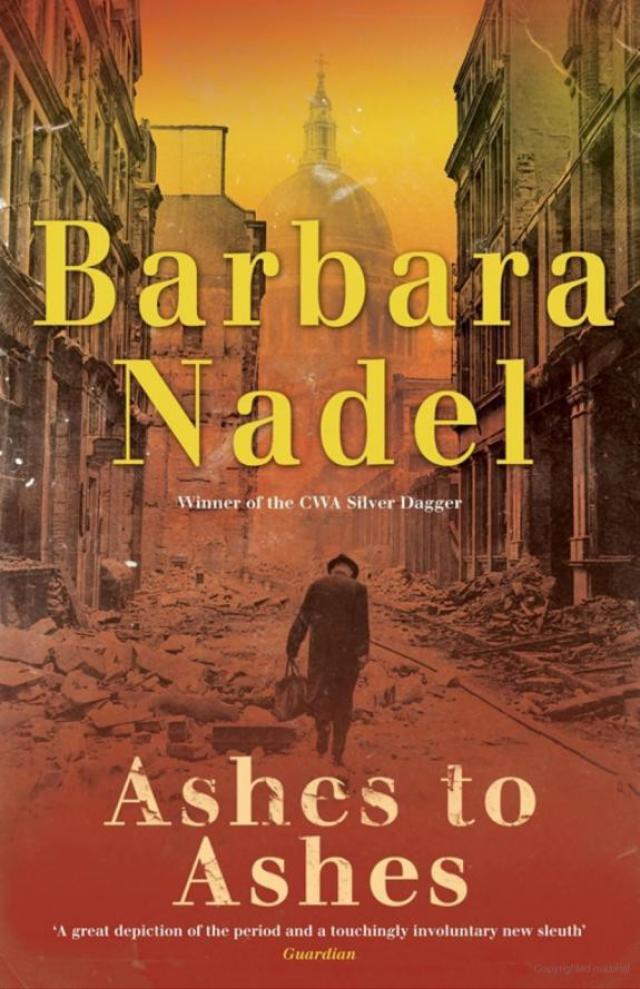
Ashes to Ashes,
p.21


I lit a fag up too now and leaned against the wall beside Milly. ‘Don’t you worry, Milly, about getting worn out and dying like your mum?’
‘I dunno.’ She shrugged. ‘But without Webb about I stand more of a chance. More money for me and the others now anyway.’
‘And Mrs Webb?’
‘Rosina?’ Milly laughed. ‘On her own she’s about as frightening as a bowl of cherries. Me and Rita can handle Rosina.’ And then she frowned. ‘Does Rosina know I killed her old man?’ She didn’t look scared about this at all, just curious.
‘No one knows you killed Mr Webb except for Mr Rolls, who will eventually stand trial for Mr Phillips’s death,’ I said. ‘And me, but for lots of reasons, I’m not saying anything.’
A voice from one of the other rooms down the hall rang out, ‘Fuck off, you old bitch!’
Milly and I ignored it. Then she said, ‘The only thing that Dad ever said to me about Mr Rolls was that he was a Mason. He said they was honourable men, that he’d wanted to be one himself one day. But then the drink took him.’ She looked up at me. ‘My dad would have been very powerful if he’d been one of them, wouldn’t he? I’ll never hear from anyone about what really happened in the cathedral, will I?’
‘No.’
And then as the horror and the enormity of what had happened to both of us in St Paul’s hit her she suddenly clung to my arm and said, ‘Fucking hell, they wanted to kill us! They wanted to kill us! Why did they want to do that?’
I said that I didn’t know. There was no point trying to explain it all to Milly. Rolls would certainly not go into what had happened in the cathedral, even at his trial. Even if he wanted to talk, he wouldn’t be allowed to do so. Mr Steadman and probably many, many more men, would make certain of that.
I put my hand on Milly’s shoulder and said, ‘Who can know what horrible, twisted habits and desires men have?’
She looked up at me and I saw in her eyes that she had a fair idea about a few of those.
‘Milly,’ I said, ‘in your line of work you will meet blokes who want to do really bad things. You met some last night and I’ve no doubt that you’ll meet more in the years to come. I know you say you have to do this…’
‘When Dad needs drink he needs drink,’ she said. ‘He can’t wait for us to get paid at the end of the week for doing our nice typing jobs! Me and Rita, we can make money just like that.’ She clicked her fingers. ‘And anyway, I’ve a habit of my own too.’ She put her head down in what looked like shame.
Back in the cathedral she’d said she smoked opium. Rolls and Smith had given her some but not enough, apparently, to make her compliant with their wishes. Milly had to have a fairly big habit, I imagined. At that moment she looked very young for her age but with opium in her life, even without the odious Webb to feed it to her, she wouldn’t look young for long. Milly would, if she needed to, I knew, find her own opium supplier pretty sharpish now.
I wanted to help her, I even left her one of my cards and told her to call me if she was ever in trouble. But I know that she won’t. Milly loves her useless alcoholic father and she is herself addicted to a drug that will almost certainly kill her. I kissed her gently on the top of her head and then I left without once looking back at her. I heard her open the door back into her room and go inside. As she shut it behind her a bloke, her father, I imagine, said, ‘Have you been working, Milly dear? How much did you get paid?’
So strange to hear a voice like that, smooth and educated, in a building that stank of stale booze, sewage and violent sex.
Chapter Twenty
I didn’t know what to expect when I got back to Annie’s place. I knew that where she was, just to the north in Finsbury, hadn’t been as badly hit as the City, but the old girl could still very easily have bought it. Even the outskirts of the Square Mile are only thinly populated – Hitler knew what he was doing when he ordered the raid for a Sunday night – and there hadn’t been many ordinary people, let alone any firemen, available for blazes outside the centre. All the firemen had had to work on the big things – or, to be more accurate, they’d had to concentrate their efforts on St Paul’s Cathedral. But as I turned into Wilmington Square I was very quickly reassured that Annie was all right. Sitting on an old kitchen chair on the pavement, Annie was at the centre of a group of women, drinking tea from a very delicate china cup.
‘Oh, there’s my nephew!’ I heard her call out. She waved a clawed, arthritic hand at me and I smiled and waved back at her. Two of the women with her turned round to look in my direction, one of them, wearing a tightly wrapped scarf around her head, puffed on what looked like a cigar. I later learned that it wasn’t a cigar at all. This woman was very hard up and had actually taken to smoking dried leaves.
Annie’s flat hadn’t taken any damage during the course of the night and so when she’d finished talking to her neighbours, she took me inside to her kitchen and put the kettle on the range.
‘Right firework display last night, wasn’t it?’ she said as she cleared a pile of tea towels from off her most comfortable chair and told me to sit down. She looked at me. ‘Gawd blimey, your face is a bit of a mess, Frank!’
I didn’t make any sort of comment.
Annie said, ‘I sat in here and, I’ll be honest with you, Frank, I prepared to meet my maker!’
Annie asked me what I’d done with myself all night long. I told her I’d been holed up in the cathedral crypt. I didn’t give her any details about what had happened to me while I was there, but I did tell her how wonderful the St Paul’s watchmen had been. Because they had. I was truly convinced by this time that the Dean had indeed had nothing to do with, or any knowledge of, Rolls and his sickening plans for the cathedral. Mr Matthews had simply led the watchmen magnificently, urging them and himself ever onwards to greater feats of endurance up in those hellish galleries on those awful burning rooftops. Mr Churchill, too, had played his part. The firemen had been told to save the cathedral on his orders and no one in their right mind ever disobeys Winnie.
As Annie sat down beside me to watch the kettle boil she said, ‘So, I bet you met a few characters down in that crypt!’
I smiled and then for some reason I don’t think I’ll ever be able to fathom, I told Annie about Milly. Why I’d tell an old lady about a child prostitute was a mystery then and, although it is less of a mystery now, I still don’t know exactly what started me off about it in the first place. I told her about how Milly’s father had been an architect, how he’d turned to drink and how the girl and her sister basically supported him.
‘She was, you know, sort of owned by another man,’ I said referring to Webb. ‘But he’s out of the picture now.’
Annie looked at me very matter-of-factly and nodded. ‘A pimp,’ she said. ‘Best off without him.’
I had resisted using the word pimp myself but Annie seemed to employ it without any embarrassment. I found myself, just for a moment, looking away.
‘The girl’s doing what she has to to keep her father,’ Annie said. ‘You might want to help her, Frank, but you can’t. One way or another it’ll all work out in the end whether you do anything or not.’
I looked back at her then and I know that I was frowning.
Annie smiled. ‘Oh, you look so serious!’ she said.
I almost felt that she was mocking me in a way. I wondered, in fact, whether she might know about Hannah and how I wanted to ‘help’ her, one way or another. But Annie didn’t know. She did, however, have some experience in these matters that I had no idea about.
‘Listen, Frank,’ she said, ‘I’ll tell you something now that you will find shocking. Just between you and me, it’ll be. It’s a secret, and it isn’t known to your mother or your sisters. It wasn’t even known by your father. Your grandfather, my brother, he knew. But then he had to because he was there when it happened.’
‘When what happened?’ I asked.
‘When Herbert and Emily Hancock took me in,’ Annie said. ‘Your grandfather, Francis Hancock, who you was named for, was ten.’ Seeing the look of confusion on my face Annie continued, ‘Your great-grandparents were poor. They lived—’
‘On Flower and Dean Street in Spitalfields,’ I said. ‘I remember.’
‘Yes.’ Annie smiled. ‘And my mother lived in the flat beside them. My mother was a prostitute and she was mad, quite mad.’ Annie’s smile faded. ‘Like you.’
I was shocked. I had lived all my life with the idea that Annie was my great-aunt. The story of how my great-grandfather had pulled his wife, his son Francis and daughter Annie out of the poverty of Flower and Dean Street was well known. Unlike most of the people in that area he’d succumbed to neither pimping nor robbery but had literally blasted his way out as a boxer. The money that Herbert made eventually allowed his son Francis to move to West Ham and start his own building company. He went into undertaking some years later, Hancock and Co. actually coming into being in 1885.
‘Emily couldn’t have any more children after she had Francis,’ Annie said as she poured the water from the kettle on to the few leaves she’d sprinkled into her old brown teapot. ‘The girl next door, my mother, didn’t want a kid, it was bad for business.’ What she said next she said very straight and without emotion. ‘Herbert and Emily paid her some money and the girl – Lavinia, she was called – gave me to them.’
‘Annie…’
She leaned forward and patted my hand. ‘She wasn’t a bad girl, Lavinia,’ Annie said. ‘I was only a baby when she sold me and I used to go and see her sometimes when I was older, when I heard her crying. She cried for the loss of me and for her other child, the one that had got her into trouble in the first place. I didn’t know any of that at the time. All I knew was that the lady next door to us was pretty and well-spoken and very, very sad.’
‘Annie,’ I said, ‘why are you telling me all this?’
Annie raised a finger up and said, ‘Listen. When I’ve done you can have your tea and we’ll never talk of this again. Now then… I was about eight when we moved out of Flower and Dean Street. Dad was becoming a bit famous in the East End and so we went to live over on the Mile End Road. I forgot about Lavinia. Then one day when I was sixteen, my dad took me over to the asylum at Claybury.’
I shivered at the sound of that name. How many times had I wondered when or if the nurses from Claybury would come for me with their straight-jackets and their cold baths and put me in that terrible cold hospital with all the other mad, staring lunatics?
‘He didn’t tell me why we were going,’ Annie said. ‘But once we were there we met this old man who was standing beside the bed of what looked to me like a little old lady. The bloke, who was very smart with a shiny black top hat and a cane, told Dad that his daughter was dying. He said that he’d have to make our meeting quick because someone like him couldn’t possibly be seen in a place like Claybury. He stared at me long and hard and then he gave something in an envelope to my dad and then we left.’ She took a deep breath in and then let it out with a sigh. ‘The dying woman was Lavinia and the smart old man was her father. I don’t know who the family are, but I do know that she was that man’s only child and I was his only grandchild. What he gave my dad, your great-grandfather, was the keys to this house, for me. It was my inheritance.’
‘Annie,’ I said, ‘I always, well, the girls and I always thought that well, maybe you were on the stage and—’
She laughed. ‘I got this place from money showing my ankles to bankers? No, no, no,’ she said. ‘This house was given to me. Dad gave me the keys without a word when I was twenty-one and I rented out much of it to others then as I do now. I thought Dad had bought it for me and I couldn’t understand why my brother Francis wasn’t jealous!’ She leaned forward towards me then. ‘But Mum had died when I was eighteen and when Dad died four years afterwards, it was Francis who told me the truth. My blood’s from the aristocracy, but my mother was mad. Francis told me Lavinia had her first baby because she let a man take advantage of her. I came along once she was on the streets. Whether she was born mad or became that way, I don’t know. But what I do know is that old man, my grandfather, risked the world knowing his shame because he wanted to give me, his only living grandchild, something from him.’
‘And Lavinia,’ I said. ‘Something from her too.’
Annie shrugged. ‘I don’t know about that,’ she said. ‘The poor thing looked all but dead by that time to me. But something like love was coming through. Maybe the old man feared I’d become mad like my mother and wanted to give me something so I wouldn’t walk the streets raving. I loved your great-grandfather and grandmother, Frank, they were my mum and dad. But blood is very powerful and just as my grandfather wanted to give me something, so this little girl of yours wants to do whatever she can for her father.’
‘He sells her!’
‘My mother sold me! Herbert and Emily could’ve been anyone! Flower and Dean Street was known for its crime and its easy women in those days!’ Annie poured tea into cups for us both and loaded them with sugar. She didn’t have any milk that day. ‘I know you say that this girl’s father sold her for drink money, but even if he did do that, if she wants to stand by him, then that is what she wants to do. They’re blood, Frank, and there is absolutely nothing anyone who isn’t blood can do about that. She’s gone back to him and you must leave it alone.’ She shook her head. ‘Blood is such a curse!’
We drank our tea in silence. I’d known as soon as I’d left Milly’s terrible building that I would probably never see the girl again. Who was I, a lunatic, to interfere with anyone? The mad were, I knew, often made incapable of having children in places like Claybury and maybe that was fitting and right. Annie had never had any children and I thought that maybe that was because of her feelings about who her real mother had been.
‘Yes,’ Annie said simply, ‘you’re quite right there, Frank. What if I’d given birth to someone like Lavinia? What would I have told the baby’s father? What would people who knew me as a Hancock think? None of them were barmy! I couldn’t embarrass my brother like that! Francis was a lovely man, he—’
‘Granddad wouldn’t have blamed you!’ I said. ‘God, Annie, is that why you never married? Is that why you live all on your own?’
She waited a moment before she nodded and then she said, ‘Barmy in its own way, too, that is.’ And then she smiled again. ‘Maybe that’s why I like you so much, Frank. With all your running about and your fears and your nightmares, you’re sad like my mother and even though you’re not my own blood, I feel a closeness with you I don’t feel with anyone else. You, Frank,’ she said finally, ‘are the only person on this earth I am close enough to that I would die for.’
I drank my tea in silence, shaking. Just like Mr Steadman, Annie had entrusted me with a secret I could never tell anyone. I was well beyond exhausted and I think that if I hadn’t got the point of what Annie was saying, I would have been angry. But my great-aunt, as well as my mother, my sisters, my nephew and my niece, even Hannah, loved me. What was more, they didn’t have to spill anybody’s blood in order to prove it. Not at that moment. What I had to understand, however, was the way that could change.
As I walked through the shattered streets of the City, beginning my long walk home from Annie’s, I thought about what Mr Rolls, Mr Steadman, the Dean, Milly and everyone had been doing in St Paul’s Cathedral only one night before. War makes desperate people of us all. The possibility of defeat and destruction of a place or a way of life that is loved is painful to think about. People over the ages have done whatever they felt they had to to protect their families and loved ones. Milly went out that night to earn some money for her father, the Dean risked his life on the roof of the cathedral not just once but many times, Mr Steadman fought against a man and a way of thinking he thought was wrong. And Mr Rolls and the men who followed him? In common with Mr Steadman, I can’t put aside the notion that Mr Rolls might have enjoyed the killing that he took part in, but I can’t prove that he did so, either. What I do know is that he tried to protect something very precious, St Paul’s Cathedral, with something very powerful, blood. To him, I think, it was the most effective thing he could do. War pushes you into these corners! War makes you get things wrong because blood on its own isn’t powerful at all, that’s just a medieval story, that is. Blood is only strong because of what we do to preserve our own blood – whether it’s the blood of our family, our loved ones, or the blood of our nation.
St Paul’s Cathedral stands, if not whole, then at least proud and upright now. Blood didn’t save it, water didn’t save it, luck or prayer or the position of the stars in the sky didn’t save it. St Paul’s was saved by people.
Author’s Note
St Paul’s Cathedral
St Paul the Apostle (as well as, later on, St Thomas Becket) is the patron saint of the City of London. A St Paul’s cathedral church has existed on the site of the current building since 604 when it was founded by the Roman saint, Mellitus. Its fortunes have always been very closely connected to the city it represents and there have been several St Paul’s cathedrals on Ludgate Hill over the centuries. The most famous being, prior to the current incarnation, the medieval cathedral which was destroyed by the Great Fire of London in 1666.
The architect chosen to build a new cathedral for London on the ashes of the old one was Sir Christopher Wren (1632–1723). A gifted draughtsman, Freemason and man of faith, he was a superstar of his time. Wren’s aim was to build something that fulfilled his belief that ‘architecture aims at eternity’. St Paul’s should be, Wren thought, eternal. In fact, the story of the stone that Wren used as a marker point for the centre of the cathedral dome illustrates this belief.
During the building of the foundations for the current church, workmen found a broken gravestone bearing the inscription ‘Resurgam’. This means ‘I shall rise again’ and it is therefore significant that Wren used this stone as the marker for the very apex of his dome, the closest point of his church to heaven.