The midnight ride, p.1
The Midnight Ride,
p.1
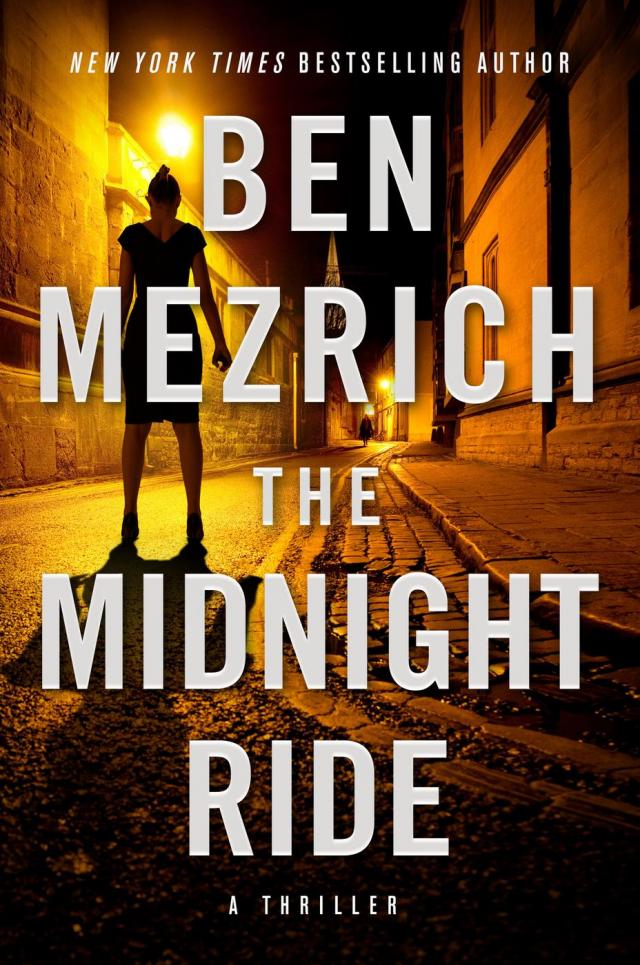


Copyright © 2022 by Mezco, Inc.
Cover design by Flag
Cover photograph by Paul Gooney/Arcangel
Cover copyright © 2022 by Hachette Book Group, Inc.
Hachette Book Group supports the right to free expression and the value of copyright. The purpose of copyright is to encourage writers and artists to produce the creative works that enrich our culture.
The scanning, uploading, and distribution of this book without permission is a theft of the author’s intellectual property. If you would like permission to use material from the book (other than for review purposes), please contact permissions@hbgusa.com. Thank you for your support of the author’s rights.
Grand Central Publishing
Hachette Book Group
1290 Avenue of the Americas, New York, NY 10104
grandcentralpublishing.com
twitter.com/grandcentralpub
First edition: February 2022
Grand Central Publishing is a division of Hachette Book Group, Inc. The Grand Central Publishing name and logo is a trademark of Hachette Book Group, Inc.
The publisher is not responsible for websites (or their content) that are not owned by the publisher.
Library of Congress Control Number: 2021947558
ISBNs: 9781538754634 (hardcover), 9781538754658 (ebook), 9781538723364 (international edition)
E3-20211209-NF-DA-ORI
Table of Contents
Cover
Title
Copyright
Dedication
Prologue
Chapter One
Chapter Two
Chapter Three
Chapter Four
Chapter Five
Chapter Six
Chapter Seven
Chapter Eight
Chapter Nine
Chapter Ten
Chapter Eleven
Chapter Twelve
Chapter Thirteen
Chapter Fourteen
Chapter Fifteen
Chapter Sixteen
Chapter Seventeen
Chapter Eighteen
Chapter Nineteen
Chapter Twenty
Chapter Twenty-One
Chapter Twenty-Two
Chapter Twenty-Three
Chapter Twenty-Four
Chapter Twenty-Five
Chapter Twenty-Six
Chapter Twenty-Seven
Chapter Twenty-Eight
Chapter Twenty-Nine
Chapter Thirty
Chapter Thirty-One
Chapter Thirty-Two
Chapter Thirty-Three
Chapter Thirty-Four
Chapter Thirty-Five
Chapter Thirty-Six
Chapter Thirty-Seven
Epilogue
Acknowledgments
Discover More
About the Author
Also by Ben Mezrich
For my dad and mom, for being my first readers and my biggest supporters—but mostly for making me read two books a week when I was a kid before I was allowed to watch TV.
Explore book giveaways, sneak peeks, deals, and more.
Tap here to learn more.
Prologue
And behold, there arose a great tempest in the sea…
The sensation was sudden and unexpected, so wild and intense and ferocious that Robert “Bobby” Donati actually gasped out loud. He could feel—really feel—the wooden deck rising up beneath his feet as the massive waves crashed against the stern of the reeling boat. He could see the dark, violent storm clouds billowing over the shattered mast, as the bow careened toward the jagged rocks that would surely kill them all. He could hear the screams of the huddled passengers behind him—most caught up in mindless panic, some still holding oars or reaching up to desperately try to fix the mainsail—frantically trying to do something, anything, save for one man, in the center of the deck, who peered out at the storm with a calm patience that could only be described as Christ-like, because, well—and then Bobby’s own voice tore him out of the moment, his thick Boston accent sounding vaguely tinny in his ears.
“Get over here and help me get this off the wall.”
Bobby stepped back, almost surprised to feel marble beneath his leather police boots, rather than the damp wooden slabs of a seventeenth-century sailing vessel. The boat and the waves and the storm weren’t any less impressive because they were behind thick glass, embraced by a five-foot-high gilded frame that looked like it must have weighed fifty, sixty pounds. Bobby wasn’t sure what had made him stop in front of that particular painting as he’d made his way across the darkened gallery—the lavishly decorated Dutch Room was lined with masterpieces, gratuitously ornate frame after frame speckled along the embroidered walls, beneath candelabras and chandeliers dripping tears of crystal as old and sad as the silken drapes hanging by the arched windows that overlooked the courtyard two floors below. But for whatever reason, the boat had called out to him, and Bobby’s inner voice had joined right in for the chorus; despite every rational bone in his body telling him that it was the wrong thing at the wrong time—that the smart, cautious, and safe way forward was to stick to the plan—Bobby had never been able to ignore that damn little voice.
He glanced over toward his partner, standing halfway across the gallery. Four inches taller than Bobby and twenty pounds heavier, Richie Gustiano looked ridiculous in his uniform, which was two sizes too small and bulging so much in the middle, Bobby was worried the shiny brass buttons running up the center might fly off at any moment. Worse, Richie’s mustache was hanging half off his upper lip and his hat was on backward; the only thing about him that looked real was his badge, which thankfully had been more than enough to get them from their red hatchback parked in an alley a block away and into the museum through the side door.
“You hear me?” Bobby asked, and then repeated himself, louder. “Get over here and help me with this.”
“Are you serious?” Richie finally responded, that mustache dancing in tune to an accent even heavier than Bobby’s own. “We ain’t even supposed to be in here.”
That was true; Richie might have been big, but he wasn’t stupid. Well, he was big and stupid, but the plan had been simple enough that even Richie could follow it without so much as a dress rehearsal. Contract gigs were often like that; every step spelled out in intricate detail, paint by numbers—all you had to do was keep your brush within the lines.
Bobby turned back to the storm, and the waves, and the boat.
“Yeah, I’m serious.”
“This ain’t the job,” Richie tried again.
“Yeah,” Bobby responded.
But he was already reaching for the frame.
* * *
Once that damn little voice started speaking, Bobby had never been very good at keeping the brush between the lines. Lack of impulse control—that’s what the teachers and the priests and the social workers who were eventually brought in had called it, when Bobby was growing up in East Boston; sometimes he just did things. Probably the reason, by the age of fifty-one, his arrest record was as long and varied as his debt ledger.
Bobby grinned, as he drew his box cutter down the length of the canvas that was now splayed out on the floor in front of him. The feel of the blade against the painting was strange and unique. The chips and dust from the paint sprayed up against his gloved fingers, filling him with a sense of gravitas. He knew that paint was old—even older than the building around him, which itself looked like some sort of Venetian palace that had been airlifted out of nineteenth-century Italy and dropped into a leafy suburb of Boston. But it wasn’t just the age of the canvas, already halfway out of the gilded frame and beginning to curl up at the edges, like a bit of a newspaper held too close to a flame—Bobby knew that the decision he had made wasn’t just spontaneous, it was, quite possibly, historic.
He kept his knee steady against the bottom of the frame as he worked, ignoring the beads of sweat dripping down the back of his neck and staining the stiff collar of his borrowed police uniform. He could hear Richie’s grunts as the bigger man worked on his own painting a few feet away on the floor—a much smaller frame, maybe two feet wide and tall, the canvas depicting some sort of seventeenth-century parlor scene involving a guy with a stringed instrument, two women, and a piano. It hadn’t taken much to convince his partner to join in on the fun, once they’d gotten the big one off the wall. Richie had always been more of a follower than most of the hoods Bobby had grown up with on the streets of Revere, which was why Bobby had tapped him for the job in the first place. No matter how simple a gig looked on paper, there was always the possibility of unexpected complications—and the last thing you needed when things went off script was a partner who liked to think for himself.
As Bobby slid the box cutter down toward the final corner of his own canvas, he finally surveyed the room around them. “Off script” was an understatement. It wasn’t just the painting of the boat, and the one Richie was digging into; there were now a half dozen empty frames splayed out across the gallery, each beside a little pile of shattered glass. Some of the canvases were already rolled up and piled in a corner by the door, while others were still spread out near where they were working. Bobby didn’t have tubes to put them in, but he had plenty of tape and zip ties in his duffel bag, which was just outside the Dutch Room, in the second-floor hallway leading to the rest of the museum. Tubes would have been better—Christ only knew how much these things were actually worth—but the tape and the ties would have to do.
T
his wasn’t Bobby’s first art heist, though it was certainly his strangest, mainly because it wasn’t really supposed to have been an art heist at all. But he’d stolen paintings before, and he knew that art this old often went for millions. Then again, with paintings like this, it wasn’t so much about how much they were worth, it was more a question of finding someone willing to pay for them. Even the most eccentric billionaire couldn’t exactly hang a Rembrandt on his living room wall.
But a little after 1:00 a.m., dressed as a cop working a box cutter through the last few inches of the border of a four-hundred-year-old painting, Bobby didn’t concern himself with potential next steps. One of the benefits of acting on impulse was you really got to feast on the moment, and looking across the violated gallery, it was clear that Bobby and his partner had served themselves quite a buffet. Bobby actually felt bad for the feds who would undoubtedly try to piece together what was now a chaotic crime scene. To be fair, even before Bobby had deviated from the plan, none of it had really made much sense.
Case in point, the two security guards who had first let them in the side door after seeing their badges, who were now taped up and handcuffed in a boiler room three floors below. If it had been up to Bobby, he would have taken the box cutter to them first, because he was a pro, and pros didn’t leave witnesses. Then there was the amount of time they’d already spent in the museum; a quick glance at his watch told him they’d already been there an hour—an insane amount of time, though in this Bobby only had himself and his impulsive nature to blame. If he’d followed the plan, they’d have been in and out in minutes.
But despite how confusing it would look to the feds, Bobby wasn’t concerned about the time, any more than he was worried about the security cameras they had passed on their way from the basement, where they’d taped up the security guards, to the second floor of the gargantuan building. The security system was nearly as dated as the gallery around him; on the way out, they’d have no trouble grabbing the tapes from the VCR in the first-floor security booth. Likewise, even if they’d spent the entire night taking frames off the walls of every room in the place, it was unlikely any real policemen were going to show up to interrupt them. There was a reason the people who had hired Bobby for the job had chosen that particular night—March 18—which also happened to be the tail end of St. Patty’s Day. Every self-respecting cop in Boston was either off duty and drunk, or on duty and dealing with drunks.
Bobby finished with the massive painting and rose to his feet, sliding the box cutter back into his pocket. Richie joined him in the center of the room a few minutes later, sizing up the scene with a resolved look in his thickset eyes.
“I guess we should get what we came for,” Richie finally said, and Bobby nodded, as he began scooping up the rolled canvases. As he started for the door, he noticed his partner had paused in front of a low shelf containing a handful of sculptures; the bigger man seemed particularly intrigued by an old-looking vase, something foreign, maybe Chinese or Arabic. The object didn’t seem that impressive to Bobby, but for whatever reason, Richie shrugged and grabbed it from the shelf.
Bobby smirked, as he led his partner out of the gallery and back into the second-floor hallway. They had a pile of paintings worth millions, and Richie had stopped for a vase that would look right at home in the back corner of their neighborhood pawnshop. At least the big mug was getting into the spirit. Hell, maybe the vase would pay for the parking tickets they were surely collecting in the alley down below.
* * *
Five minutes later Bobby was two steps ahead of his partner as they entered a much smaller exhibit—more of a hallway than a gallery, cluttered with period furniture and lined with drawers filled with portraits and drawings. This time, the walls sported only a handful of ornate, gilded frames. Still, Bobby counted more than a few that might make nice additions to the canvases he’d already accrued.
But his partner was focused on their target, affixed to the wall above a mid-eighteenth-century cabinet halfway across the room. Not a painting—nothing as intense as the boat in the storm that had first caught Bobby’s eye, or even as pretty, if staid, as the parlor scene Richie had grabbed from the Dutch Room. An object, something old, but nowhere near as ancient as the Chinese or Arabic vase. And it wasn’t in a frame, but even so, it was going to be difficult to remove. No box cutter, this time—Richie already had a screwdriver out of his jacket pocket and was judging the cabinet below the object with his eyes, trying to decide if it would really support his weight.
Then he paused, looking back at Bobby.
“They want the flag, too?”
Bobby shook his head. They didn’t want the flag.
They didn’t want the paintings.
They had hired Bobby—paid him a ridiculous amount of money—to get one thing from this museum, and one thing only. A ridiculous amount of money, to follow a plan that didn’t make much sense, to steal an object hardly worth anything at all.
Bobby glanced around the room, at the drawers filled with portraits and drawings—and then he grinned.
Impulse control.
As Richie took his screwdriver to the object attached to the wall, Bobby headed toward the drawers. He wasn’t Irish, but tonight he was going to celebrate like he’d been born in Southie, not Revere.
Paint by numbers was always the smart play; kept you safe, smooth, and under the radar.
But it was the Impressionist masterpiece that got you into the history books.
Chapter One
It was a little after 2:00 a.m. on a Wednesday, and Hailey Gordon was on the run of her life.
She gripped the cushioned edge of the blackjack table with both hands as she tossed a purposefully nonchalant glance at the cards spread out across the green felt. Christ, it was hard to keep her emotions in check, push down the excitement coursing through her veins. She wanted to leap from her chair, bear-hug the nice old man sitting two seats down from her, lift him up in the air, and swing him right out of his orthopedic clogs. Instead, Hailey painted her face with a bored look, then waved a manicured hand over the table, letting the dealer know she didn’t want any more cards.
Next it was the old man’s turn, down at third base, the last chair at the table. It had just been Hailey and the man for the past hour, because it was so goddamn late and the middle of the week, and because the limits in this particular corner of this particular casino were way too high for its zip code. Hailey had no idea how the man could afford a hundred-dollar minimum; from his clogs to his resort-wear linen suit, the man’s look screamed pension. Then again, Hailey knew better than most—looks could be pretty deceiving. She’d been using her looks to deceive for a really long time. And at the moment, she was about to deceive her way into a tidy little fortune.
The dealer wasn’t paying attention, and the pit boss—gnarled, mildly overweight, belly pushing precariously against the buttons of his uniform as he chatted up a cocktail waitress on the other side of the blackjack pit—was otherwise engaged, so Hailey let her glance linger a little longer across the table. The brightly colored metropolis of chips spread out across the felt nearest to her was a thing of pure beauty, and judging from the dealer’s revealed card—a six, a wonderful, incredible, palpably sexy six—things were about to get even better. Hailey had eight thousand dollars behind her four hands, another six thousand in yellow chips, bananas, already safe next to her drink, a light brown mixture in a scotch glass that smelled like apple juice if you got close enough. Because, in truth, it was apple juice.
Looks, again, deceiving.
But moving her eyes from the table to the surrounding casino, Hailey knew she had nothing to feel guilty about. The entire place—this entire industry—was built on sleight of hand. The table gaming room was vast and very beige, other than the felts; beige, from the tables themselves to the thick carpeting to the curtained walls. In stark contrast, there were velvety red chandeliers hanging from the high ceiling—matching the crimson tide that blanketed every inch of the nearby slots parlor, and soft, soothing music pumping in from speakers hidden somewhere in the corners. The air was cool and, if rumors held true, slightly over-oxygenated. And everything smelled slightly floral. To be sure, the place was rife with flowers. A seizure-inducing botanical excess, from the fifty-five thousand different blooms spanning the walkways out front of the lavish casino’s entrance, to the four thousand potted plants spread through the gaming areas and hotel rooms, to the multitude more intertwined in the working carousel that dominated the foyer. But the scent in the air didn’t come primarily from the colorful plants, it was manufactured by teams of aroma therapists and pumped in along with the oxygen. Everything, from the decor to the lighting to the air, was designed, by people much less interested in art than commerce.