Cave mountain, p.4
Cave Mountain,
p.4


Tim Ernst—a photographer, nature writer, blogger, dedicated conservationist, and chamberlain and historian of the lower Ozarks—would become a pivotal character in this story. He lived in a cabin he called Cloudland on the very edge of the bluff on the south face of Cave Mountain at one of its highest points. The view of the valley from the back decks of his cabin is as sublime as the view from Hawksbill Crag. A tall, thin, soft-spoken man with a gray beard and kind eyes and a rustic Mr. Rogers sort of serenity about him, Tim is a gentle soul if ever there were one, and every time I’ve seen him he’s been wearing a dun-colored slouch hat, ready for a walk in the woods.
After Doc Chester called and told him that a little girl had gone missing somewhere on the Hawksbill Crag Trail, Tim gave his fiancée, Pam, a two-way radio and posted her as lookout from one of the back decks of the cabin, which hangs directly above the last thin remnant of the Hawksbill Crag Trail. (Back then, at the point below the cabin’s back decks, the trail was so faint that most people probably wouldn’t have seen it; since then, it’s grown over and is gone now.) Tim stuffed a bottle of water and the other radio into a fanny pack and took off with his two dogs to help search along the bluff line. From his house Tim headed west along the bluff until he came to Hawksbill Crag.
“When I arrived at the Crag just past noon,” Tim wrote, “I found a lady standing there with a couple of other hikers. She had borrowed the hiker’s cell phone and was trying to talk to someone about the little girl, but she was not having much luck due to the poor cell reception.”
That lady standing at the crag was Joyce. She had found another couple of hikers—not the same people as the first two she had run into on the trail earlier—doing the ooh-and-awe at the crag; one of them had lent her a cell phone, and she had used it to call 911. (Joyce did not then, and does not now, own a cell phone.) She was trying to talk to the person who had answered the call at the Dispatch Center in the Newton County Sheriff’s Office in Jasper. “I could hear the sheriff’s voice,” Joyce wrote, “but he couldn’t hear me.”*
That moment—standing at the trail’s most picturesque vista point at Hawksbill Crag, desperately trying to call 911 from a borrowed cell phone that wasn’t working—was the first time Joyce met Tim Ernst, but she and Jay already knew who he was, because they were admirers of his work: They had bought several of his hiking guidebooks and nature photography calendars, which are display table staples of the Local Interest sections in the bookstores of northern Arkansas, and had also seen him talk at Sierra Club events. I don’t think the fact that they happened to be fans of his came up at that particularly high-stress moment.
Joyce’s nerves were so flooded with anxiety during this first stretch of minutes after Haley’s disappearance, her memories of exactly who was where and what happened in what order are jumbled, but she is pretty sure that after that failed call from the stranger’s cell phone at the crag and the brief encounter with Tim and his dogs, she went back to the Faddis Cabin, met Michelle Boles there, and called 911 from the landline. The call went through. Joyce remembers asking the dispatcher if they could bring search dogs, and being told none were readily available at the moment but they would start working on it. Official help was now on the way. It was a little over an hour after Haley had last been seen.
“Time continued to slip away,” Joyce wrote. “I had to admit that we were really in trouble. Now it was unavoidable to let Haley’s parents know what was going on.”
Kelly did have a cell phone, and so did her husband, Steve. But they had just gotten their first cell phones, and Joyce didn’t have their numbers memorized yet. Luckily, however, Joyce knew where Kelly was; they had chatted a bit when she and Jay had picked up Haley earlier that morning, and Kelly had mentioned that she planned to attend the Fayetteville Film Fest later that afternoon. “While the realization that Haley was really missing came on slowly for Jay and me, I knew it was going to hit Kelly and Steve right between the eyes,” Joyce wrote. “I wanted someone to be there with her so that she wouldn’t have to drive.”
First Joyce tried one of Kelly’s best friends, but, Joyce wrote, “she wasn’t at home.” (In the years that followed, the phrase “wasn’t at home” would be displaced by “didn’t pick up.”) Then she thought to ask Clay Bass’s wife, Cathy, who had also been invited on the hike that day but had decided not to go. Joyce got Cathy on the phone, explained the situation, asked her to go to the Fayetteville Film Fest, find Kelly there, and take her to Cave Mountain, along with some of Haley’s clothes, to give a scent to the search dogs she hoped would arrive soon. On the way, Cathy picked up another good friend of the family, Fran Alexander, and together they went to find Kelly.
Back in Fayetteville, Kelly had been having a relaxing Sunday. She then worked as an administrator for the Symphony of Northwest Arkansas, which had given a concert at the Walton Arts Center the night before; she had been surfing a crescendo of work stress in the week leading up to the performance, and now that it was over, the valve had opened, the pressure was gone, her husband, Steve, had been away for a week at his annual two weeks of National Guard training at Fort Chaffee and would be away for another week, her parents had her daughter for the day, and she had a precious rare day completely to herself, with no obligations on the horizon except putting Haley to bed when her parents brought her back after dinner later that evening; a beautiful empty spring Sunday spread out before her like a wide-open field. She had told her parents that morning that she planned to attend the Fayetteville Film Fest in the afternoon, but even that was an optional commitment, subject to change if she felt like it.
Kelly drove to the Walmart Supercenter past I-49 on the west side of Fayetteville to buy plants and seeds for her garden—April is prime seeding season, and she was about to miss it—and bumped into Ashley Garcia, the principal of Haley’s elementary school, in the greenhouse of the plant and garden section. Kelly talked with her awhile in the big blue-shadow-tinted luminous humid room, telling her that Haley was off on an adventure with her grandparents that day, hiking in the woods, seeing the Ozarks’ wildflowers, how excited Kelly was for the day off, and they talked about what flowers and vegetables they planned to grow in their gardens, the best things to plant at that point in the season. Kelly bought bulbs and seed packets, drove back home, ate a quick lunch, cleaned up, dressed up a little, and drove to the Fayetteville Film Fest, which was being held in an auditorium of the University of Arkansas’s continuing education building on a corner of Fayetteville’s town square. About an hour into the series of short films, the film that was playing abruptly stopped and a voice came over the PA, asking Kelly Zega to come to the back of the auditorium.
With a roomful of eyes on her, Kelly’s breath quickened as she apologized and pushed past people’s legs until she made it out of her row and into the aisle, and as the theater darkened again and the film restarted, her nerves began to prickle with dread; for some reason Cathy Bass, the wife of her father’s best friend, Clay, and Fran Alexander, another close friend of her parents, were standing by the doors at the back of the auditorium, looking very serious and worried.
In a few minutes, Cathy explained that Haley was lost in the Buffalo National River Wilderness, probably somewhere not far from Hawksbill Crag Trail, where they had been hiking. There were about fifteen people on the mountain right then looking for her, the local authorities had been engaged, and more people were on the way. Joyce had asked Cathy to inform Kelly what was happening, get some of Haley’s clothes for their scent, and drive her to Cave Mountain.
Kelly first called her husband, Steve, and tried to tell him the news, but he was deep in the middle of some big metal building at Fort Chaffee; Kelly, freaking out, kept trying to tell him what was happening, and Steve kept not understanding as the series of choppy calls on his cell phone kept cutting out and dropping while he made his way out of the building. When he finally made it outside, Kelly was in the passenger seat of Cathy’s car, on her way home. As soon as she had communicated the situation to Steve over clear cell reception, he asked her how to get there, and Kelly gave the phone to Cathy, who calmly gave him directions from the Fort Smith area to the Hawksbill Crag Trailhead.
Kelly, Cathy, and Fran—Kelly beside herself with terror and Cathy and Fran in clearheaded battle mode—stopped at Steve and Kelly’s house. “We expect she’ll be found right away,” Cathy told her, “but if this goes later than we hope, you should probably grab some things in case you end up needing to stay out there for a bit. And we also need you to grab some items that have a strong scent of Haley.” Kelly recalls having a sudden flash of absurd panic, remembering she had parked her car on the street in Fayetteville in a metered spot and it would get towed if it sat there too long; Cathy told her they’d make some calls in a little while and deal with it, don’t worry about the car. At home Kelly grabbed a pillowcase from Haley’s bed, a little purple dress Kelly had made for her that she wore all the time, and some toiletries and a change of clothes, and then they were off. Cathy knew the way: a straight shot east by southeast on AR-16 all the way to Cave Mountain Road, aka County Road 5. They made it to the top of Cave Mountain late in the afternoon.
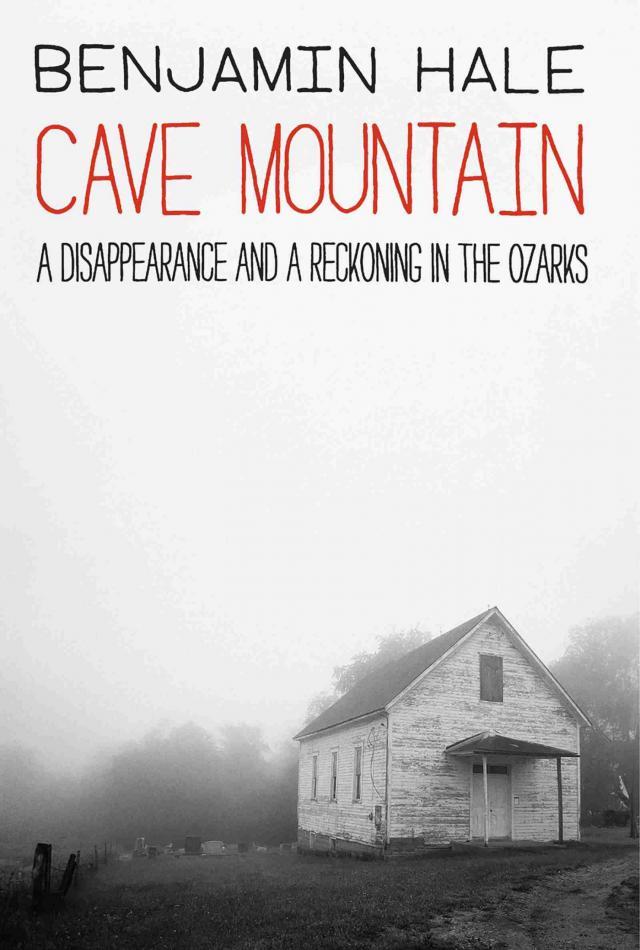
Not far from the Hawksbill Crag Trailhead, there is a graveyard next to a tiny church—and I mean tiny: Cave Mountain Church is basically just a one-room box smaller in square footage than some wealthy people’s bathrooms I’ve seen, with windows, a door, a pulpit, and two rows of five pews. The authorities—the Newton County sheriff, state troopers, park rangers, local police from several nearby jurisdictions—turned this church and its dirt parking lot into the “Command Center.” On one of my recent visits the church happened to be open, and I took some pictures inside. I don’t think any services have been held there in a long time, and it’s halfway fallen into desuetude: sagging plywood ceiling with slanting diamonds of dishwater light falling on dust-furred pews; it’s a building Walker Evans would have liked to photograph, as simple and haunted as a folk song.
Kelly, Cathy, and Fran arrived at Cave Mountain Church to find a few police cars, vehicles belonging to the Newton County Sheriff’s Office and the National Park Service, a couple of officers and a handful of local residents of the area—the first of many who’d heard the news and come to volunteer to help with the search—and Kelly’s mother, Joyce, waiting there to meet them. Everyone else—about twenty people, including Jay, Clay, Dennis, Michelle, Tim, Pam, and now some sheriff’s officers and park rangers—was out in the woods, looking for Haley.
Kelly on encountering Joyce in the church parking lot:
And what I remember so distinctly was, she came up and she just said, “Will you ever forgive me?” And I remember very distinctly saying “There’s nothing to forgive. I’m not angry at all.” And I wasn’t. I knew she was terrified and horrified and just frantic and my mom—she’s pretty high strung anyway, so when you add that level of fear on top of that, she was just beside herself. And I felt so bad for her, even though I was scared to death myself. I was just like, “I don’t want you to feel like this, I just want you to know it’s okay, we’re gonna figure this out.” But she was so scared I was going to be just furious. Then pretty shortly after that, Zega got there. I do remember really worrying that he was going to be mad at my parents and that he was going to lose it on them. But that is not what happened. At no point did anybody express anger to them, and at no point did he make me feel like he was angry with them. Even in private conversations, there was never any sort of blame that was levied, and that was such a relief to me, because I could only process one thing at a time. I was so worried about everybody, not just Haley, but very, very worried about my parents and him and everything that was happening.
Time began to blur for everyone at this point, but as the day waned, more and more emergency workers, mostly law enforcement officials of various kinds, arrived at Cave Mountain, more and more red and blue lights flashing on the trees as the sun began to set. The authorities wouldn’t let Kelly join the search; they wanted her to stay put so they would know where to find her. “So I was pretty much just sitting there by myself,” Kelly said, “just watching everything.” At that time she had been having some sort of minor medical issue with low blood pressure—if it dropped too low, she would pass out—and she had forgotten to bring her medication with her. She told this to one of the cops manning the Command Center—i.e., the little one-room church—and he made some calls—Kelly knew the name of the drug and the dosage—and got someone to fill it for her at a pharmacy somewhere nearby and drive it up the mountain for her, all without a call to a doctor or insurance company, no money changing hands or anything. Newton County is a very sparsely populated area where everyone knows everyone, including cops and pharmacists, and such a wink-and-handshake social ecosystem is useful for emergency rule breaking; it’s a small place where people can overpower bureaucracy. Kelly’s blood pressure remained at normal levels, and she remained conscious.
Night fell. Emergency vehicles rumbled up and down the mountain on a road so narrow that for most of it, when two cars pass each other, one driver has to stop and let the other carefully squeeze around. By about nine in the evening there were two helicopters equipped with heat sensors thudding low across the valley; they took off and landed in an open field not far from the church, adjacent to the private road that leads to the small cluster of cabins from which the hikers had set out for the bluff that morning.
The incident had been on the TV news by then, and one of the sheriff’s deputies approached Kelly, who was sitting on a pew in the church in a suspended state of terror and numb shock, feeling useless, and told her that Colleen Nick had called and asked to speak with her.
Kelly was already familiar with Colleen Nick; the story of her daughter Morgan’s abduction had been all over the news, especially the local news, in the summer of 1995, when Kelly had been home on maternity leave, pregnant with Haley. She had spent a lot of time sitting around watching TV that summer, and the TV was spending a lot of time on Morgan Nick. “So I always feel like this real connection to her,” Kelly said,
because I was watching it play out in the news when I was home and had way more time than I normally did. So I had always paid very close attention to the Morgan Nick story. When they told me that Colleen Nick had called and asked permission to speak with me, it actually pissed me off a little bit. Because—of course I didn’t know her, I had sympathy for her—but I’m like, Haley has not been abducted, so why are you calling me? It was kind of a strange reaction. It was just irritation, what I felt. I felt like by her calling, she was somehow implying that Haley was truly disappearing. And I was just like, “That is unacceptable, that is not the way I’m thinking and I’m not going to. I’m just kind of annoyed by this.” But then I thought, “Okay, she has gone to the trouble of trying to figure out how to get in touch with me.” And the sheriff’s deputy seemed to think it was a good idea for me to talk to her. So I’m like, “Okay, fine, fine.” So they took me over to one of the patrol cars that was hardwired with a functional phone. Because she couldn’t have called me on my cell phone, it didn’t work there. The communication situation, not having cellular service, was very problematic on a lot of levels throughout the whole time. So I’m sitting in this patrol car, talking to Colleen Nick, and it was a phenomenal conversation. She made me feel so calm. And she offered to come and be on site and to assist any way she could. She basically said, “My job is to not get in your way, my job is not to tell you what to do, but I have been involved with too many things like this and I know how I can help you to navigate some of the things that you’re about to be faced with.”
Colleen Nick did go up to Cave Mountain the next day—along with many other people—and stayed close to Kelly throughout the ordeal.
Not long after Kelly’s conversation with Colleen Nick—it was now after ten at night—the cops at the Command Center relayed to Steve and Kelly that Tim Ernst had offered to put them up for the night in his house, Cloudland, and they gratefully took him up on it. Someone—she doesn’t remember who—drove them down a “crazy, bumpy, wild road” in the dark down to Tim’s house. Steve and Kelly stayed with him that night and the next, along with a few other close friends who came to help the second day. Jay and Joyce, Dennis and Michelle Boles, and Clay and Cathy Bass stayed with Doc Chester, some in the house and some in the cruder cabin next door.
That first night, Tim showed Steve and Kelly to the guest bedroom on the first floor of the house and left them alone. It was the first time that day they had been alone together. “It was just Zega and me,” Kelly said, “and I just lost it. That was the first time that I just sobbed. Up to that point I was really trying to keep it together. And it was just like, being alone in this cabin in a stranger’s house and not knowing what was going to happen, I was just overwhelmed with grief. And it just, it felt awful.”
Tim’s house became, along with the Command Center at Cave Mountain Church, the other main hub of the search-and-rescue mission. The next morning, Steve Zega went out early to continue helping with the search. The house had a fully equipped home office for Tim’s photography and publishing ventures, a good internet connection, two phone lines, a high-end desktop PC, printer, scanner, fax machine, and so on—and he turned it over to Kelly that morning; and Kelly, whom they still wouldn’t let participate in the search, became the liaison-with-the-outside-world nerve center of the search-and-rescue operation from Tim’s office, which made her feel more useful in the coming days. She recalls Colleen—who was there by the second day—telling her “I think this is where you need to be. This is where you can do the most good.”