A family torn apart, p.1
A Family Torn Apart,
p.1


Copyright
Certain details in this story, including names, places and dates,
have been changed to protect the family’s privacy.
HarperElement
An imprint of HarperCollinsPublishers
1 London Bridge Street
London SE1 9GF
www.harpercollins.co.uk
HarperCollinsPublishers
1st Floor, Watermarque Building, Ringsend Road
Dublin 4, Ireland
First published by HarperElement 2022
FIRST EDITION
© Cathy Glass 2022
Cover design © HarperCollinsPublishers 2022
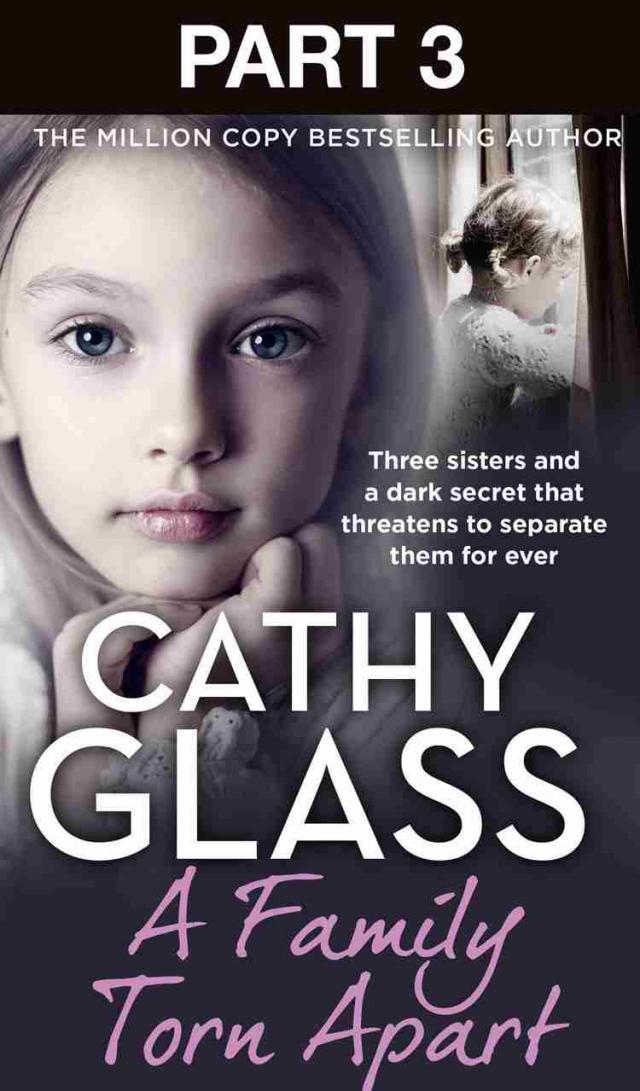
Cover photographs: © Sveta Butko/Trevillion Images (main image) and © Ute Klaphake/Trevillion Images (background figure); both images posed by models
A catalogue record of this book is available from the British Library
Cathy Glass asserts the moral right to be identified as the author of this work
All rights reserved under International and Pan-American Copyright Conventions. By payment of the required fees, you have been granted the nonexclusive, non-transferable right to access and read the text of this e-book on screen. No part of this text may be reproduced, transmitted, downloaded, decompiled, reverse engineered, or stored in or introduced into any information storage retrieval system, in any form or by any means, whether electronic or mechanical, now known or hereinafter invented, without the express written permission of HarperCollins e-books.
Find out about HarperCollins and the environment at
www.harpercollins.co.uk/green
Source ISBN: 9780008540845
Ebook Edition © September 2022 ISBN: 9780008540890
Version: 2022-08-11
Note to Readers
This ebook contains the following accessibility features which, if supported by your device, can be accessed via your ereader/accessibility settings:
Change of font size and line height
Change of background and font colours
Change of font
Change justification
Text to speech
Page numbers taken from the following print edition: ISBN 9780008540845
Contents
Cover
Title Page
Copyright
Note to Readers
Chapter Twenty: Court
Chapter Twenty-One: Voices in the Night
Chapter Twenty-Two: Guardian Ad Litem
Chapter Twenty-Three: Ashleigh’s Father
Chapter Twenty-Four: My Unease Grows
Chapter Twenty-Five: More Worry
Chapter Twenty-Six: I’ve Been So Stupid …
Chapter Twenty-Seven: A Family Torn Apart
Chapter Twenty-Eight: Court Hearing
Chapter Twenty-Nine: A Broken Man
Chapter Thirty: End of an Era
Epilogue
Suggested topics for reading-group discussion
Chronology
Cathy Glass
Moving Memoirs
Praise for Cathy Glass
About the Publisher
Chapter Twenty
Court
On Thursday when I phoned Selina for contact she seemed guarded in what she said to the girls. She didn’t want to speak to me before or after the call. She didn’t have to. The phone contact was for her and her daughters, although in the past she’d sometimes wanted to talk. I sensed there was something going on.
The following afternoon, shortly after I arrived home from collecting Polly from school, Fatima phoned and said contact was cancelled that afternoon.
‘Selina is unlikely to be back in time to go to the Family Centre,’ she said. ‘Phone her instead, but later, around six.’
‘All right. Why?’
‘We’re about to go into court. I’m applying for a care order. Tell Polly and Angie they can see their mother on Monday as usual and phone her.’
‘I will.’
‘I have to go,’ she said hurriedly, and ended the call.
I knew this wasn’t good. At present the girls were in care under a Section 20 (of the Children Act), which was a voluntary agreement between the parents and the social services and didn’t require a court order. It relied on cooperation and trust, which now seemed to be in short supply on both sides. For whatever reason Fatima had decided to apply to court for a care order. It didn’t make any difference to fostering the girls, but if the court order was granted it would remove parental responsibility from Selina and Tim and place it with the local authority. It would then require another court order to return the girls home.
However, that was for the lawyers to argue and the judge to decide. I sometimes have doubts about the appropriateness of the adversarial nature of our child-care proceedings, but until a better solution is found, that’s what we have. I now had to tell Polly she wouldn’t be seeing her mother that afternoon, and it was going to be difficult. I felt the girls had benefited from seeing their mother compared to the virtual contact we’d had before. I’d said so when asked and in my log notes.
I waited until Polly had eaten her lunch before I told her.
‘Your social worker has said we will phone your mummy rather than see her today,’ I said, phrasing it as sensitively as I could.
She looked at me and blinked as she did sometimes when considering something.
‘Why?’ she asked at length.
‘Because your mummy has to go to an important meeting and won’t get back in time. We’ll phone her later and then at the weekend. You’ll see her again as usual on Monday,’ I emphasized.
‘I miss Mummy,’ was all she said, and looked sad.
Later, when I collected Angie from school, Polly stayed at home with Paula so as soon as Angie came out she knew something was amiss.
‘Where’s Polly?’ she asked, frowning. ‘You’re supposed to bring her with you and then we go to see Mummy.’
‘We’re going to phone Mummy instead today,’ I said, and taking her hand I headed out of the playground.
‘Why?’ she demanded. ‘We see Mummy today.’
‘Fatima telephoned and said your mummy has to go to an important meeting with her and others, and she won’t be back in time. We’ll phone her later. You’ll see her on Monday.’
‘It’s not fair,’ she said angrily, and snatched her hand away.
‘I know it’s disappointing, love, but it can’t be helped.’ I opened the car door.
‘I hate you,’ she said, getting in. ‘I want to go home! Now! Take me home!’ she screamed, and lapsed into a full-scale tantrum.
I got into the back seat of the car beside her and closed the car door. I couldn’t drive with her like this and she needed comforting. She kicked the seat in front, screamed, cried and called me all the names she could think of. I’d never seen her so upset and angry, but I wasn’t surprised. All her pent-up emotion had to come out eventually. Most foster carers and many parents have been on the receiving end of their child’s anger at some time.
I sat with Angie, talking to her gently and trying to soothe her. I tried to hold her, but she pushed me away. Eventually, after many minutes, her anger peaked and then receded. Finally, she dissolved into tears. She allowed me to dry her eyes. ‘I know it’s difficult for you, love. You’re doing very well. Now let’s go home. Polly will be wondering where we are.’
Satisfied she was calmer, I got into the driver’s seat, started the engine and headed for home, every so often glancing in the rear-view mirror to check on Angie. She was gazing mournfully through her side-window, her cheeks red and her eyes ready to spill more tears. I felt so sorry for her. One change in arrangements and another disappointment had been enough to tip her over the edge. Polly was a different character, and two years younger reacted differently. I thought it was a pity the social services hadn’t gone to court on a day when there wasn’t contact, but then I didn’t know the circumstances leading to their decision. Perhaps it couldn’t have waited. Foster carers are often left second-guessing the reasons behind decision-making.
I parked on the driveway and let Angie out. ‘Are we going to phone Mummy now?’ she asked forlornly.
‘Not just yet, love – about six o’clock, so after dinner.’
‘Why can’t we phone her now?’
‘She’s in an important meeting until later,’ I said. I saw no need to go into the details, given her age.
I opened the front door and let us in. We took off our shoes and coats and then went into the living room where Paula was playing with Polly. Seeing her sister looking so miserable, Polly left what she was doing and gave her a big hug. It was really touching. Then, taking her hand, she led her in a motherly fashion to the sofa. ‘Would you like to watch television?’ she asked her. It broke my heart.
Angie nodded, so they sat with Paula watching children’s television while I went into the kitchen to prepare dinner. As I worked I wondered how Selina and Tim were faring in court; I assumed he would be there too. These were child-protection proceedings, so separate from any criminal charges he might face, although the judge would be aware of the allegations Ashleigh had made. It was the reason the children were in care.
As the dinner cooked and the girls watched television, I caught up with some work on my computer, then called Paula, Angie and Polly to the table. Polly ate well, but Angie picked
at her food and kept looking at the clock on the wall.
‘Come on, eat up,’ I encouraged her. ‘I won’t forget to phone, but it’s not six o’clock yet.’
She ate a little more. ‘Why can’t we phone now?’ she asked. It was 5.40.
‘Because I don’t think Mummy will be free yet. Fatima said six o’clock.’
Both girls ate a little pudding and then Paula took them into the living room to play on the tablets while I cleared up. At exactly six o’clock I stayed in the kitchen and called Selina, but it went through to voicemail. I left a message: ‘Selina, it’s Cathy. I hope you’re all right. Fatima told me to call you about this time for phone contact, so I’ll try again in about fifteen minutes.’
Angie must have been clock-watching for she came in. ‘It’s time to phone Mummy,’ she said.
‘I have, love, but she’s not answering yet. I’ve left a message and will phone her again shortly.’
‘Try her again now,’ Angie said.
‘In a few minutes. You go and play for a while.’
‘I don’t want to play,’ she muttered moodily, but returned to Paula and Polly.
Fifteen minutes later I tried Selina again and this time she answered. ‘Are you free to talk to the girls?’ I asked.
‘Yes,’ she replied tightly. ‘Put them on.’
I went into the living room and sat on the sofa between the girls, with my phone on speaker. Paula left to do something else.
‘Hello, Mummy,’ Angie said in a small, plaintive voice.
‘Hello. Is Polly there too?’
‘Yes,’ Polly replied.
‘Why couldn’t we see you?’ Angie asked in the same small voice.
‘Because we were in court,’ Selina replied. ‘You know Daddy and I want you to come home very much, so we went to court and told the judge.’
‘We can come home?’ Angie asked, her face lighting up.
‘No,’ Selina replied, and sounded close to tears. ‘People are telling lies about us, so you have to stay there for now.’ I had no idea what ‘lies’ she was referring to and I guessed this was a simplified version. Even so, the girls didn’t need to hear this. They were both looking very anxious and sad.
‘Selina, maybe change the subject,’ I suggested.
‘Why? They need to know what’s going on and that none of this is our fault. Ashleigh told lies about your father and the social worker believed her. That’s why you were taken from us. We’ve cooperated but it’s not helped, so our solicitor gave notice to the social services to say we were bringing you home. But the social worker took us to court and told the judge you’d be in danger if you came home and he granted them a court order, so you have to stay there, even though your daddy offered to move out …’
‘Selina, please. Stop,’ I said, interrupting. I took the phone off speaker and stood. ‘Wait here,’ I told Angie and Polly, who were now looking very worried and close to tears.
I went into the hall with the phone to my ear. I could hear Selina crying and cursing the social worker on the other end.
‘Selina, the girls can’t hear you,’ I said. ‘Have you got someone there with you?’ She sounded in a dreadful state, and I was concerned for her.
She continued to sob, close to hysterical. I poked my head around the living-room door to check on the girls. They were on the sofa where I’d left them, looking lost and afraid. ‘It’s all right, don’t worry. I’ll be with you in a minute,’ I told them.
I stepped back into the hall. It had gone quiet on the other end of the phone and then a man’s voice came on.
‘Cathy, this is Tim Fletcher. Are you still there?’
‘Yes, I’m here,’ I said, trying to keep my voice steady.
‘It’s probably better if you phone tomorrow. We’ve had a very difficult day and Selina is very upset.’
‘Yes, of course. I am sorry. I hope she feels better soon. Please reassure her Angie and Polly are all right. I’ll phone her tomorrow at the usual time.’
‘Thank you. And while I have the chance, I’d like to thank you for looking after my daughters. I appreciate none of this is your fault any more than it is ours. I would say please give my love to my daughters and tell them I miss them, but you probably wouldn’t be able to pass that on. Thanks anyway.’ He ended the call.
I stood for a moment, thrown, my heart pounding. Polite, sensitive and respectful. The last time I’d seen him – virtually, at the review – he’d been very angry. Now there was no bitterness and he had thanked me for looking after his daughters. However, he was right when he’d said I couldn’t pass on his message. It would be seen as a form of contact, which he wasn’t allowed.
As I stood there I had to remind myself that paedophiles don’t fit a norm and can often come across as friendly and courteous – in fact, ‘normal’ – despite their demonic acts.
I returned to the living room.
‘What’s the matter with Mummy?’ Angie asked.
‘She’s a bit upset right now. We’ll phone her again tomorrow.’
‘Is it our fault?’ Angie asked. So often children feel they are to blame.
‘No, love, it’s because you can’t be with her.’
‘Does she still love us?’ Angie asked. I swallowed hard.
‘Yes, very much.’
‘Does Daddy love us?’ Angie asked.
‘Yes.’
‘She said we could go home.’
I then explained in child-friendly language that they would be staying with me for now because their social worker and the judge wanted to make sure they were safe. They didn’t say much about what their mother had actually said about court and so on – I think it was all a bit beyond them. They had just heard her upset.
However, at bedtime, as I settled Angie and Polly into their beds ready to kiss them goodnight, Angie said, ‘Did Ashleigh tell lies about Daddy?’
‘I hope not.’
‘She and Daddy used to argue a lot, and that made Mummy and Daddy argue.’ She’d said similar before.
‘That must have been very upsetting for you to hear,’ I said.
‘Yes. I don’t like arguments.’
‘No, love, neither do I.’
I sat with them until they dropped off to sleep. Normally I said goodnight and came out and they fell asleep, but they’d been unsettled. Polly fell asleep first, while Angie took longer. She closed her eyes but every so often she frowned as if remembering something. I assumed it was about their mother being upset on the phone. Then she mumbled, ‘Mummy and Daddy were arguing on the night we had to leave home. About Ashleigh.’
‘It’s all right, love,’ I said, stroking her forehead. ‘No one is arguing now. You’re safe. Try to go to sleep.’
‘I don’t like arguing,’ she murmured groggily and then fell asleep.
I kissed her cheek and quietly left the room.
Now Angie and Polly felt more secure with us they were regularly letting go of snippets of information from home. The picture that was building was of a financially comfortable household with generally good parenting but scarred by distressing scenes between Ashleigh and her parents. It seemed that when Ashleigh was present there was an atmosphere in the house, especially between her and her stepfather. Angie had once said that there were no arguments when Ashleigh was out, and she thought she should live with her nana or father as she wanted to. It was sad she’d heard all that at her age.
Chapter Twenty-One
Voices in the Night
On Saturday morning I telephoned Ashleigh for the girls’ contact, but it went through to voicemail. I left a message saying I hoped she was well and to call me when she was free to talk to Polly and Angie. The girls didn’t ask about calling Ashleigh, so I didn’t tell them I’d phoned, although I noted it in my log.
The weather had turned warm again, as it can in the UK in September, so we arranged to meet Adrian and Kirsty, Lucy, Darren and Emma with picnic lunches at a local beauty spot. It was very picturesque with a small stream where tiny fish darted in shallow, clear water and bugs hopped across the surface. We dropped in leaf boats and watched them float away. There was also a play area for children. I really appreciated having all my family together again and hearing their news. Adrian was still working from home, Kirsty was in school again, and Lucy and Darren were part-time at the nursery where they worked. They only had about 60 per cent of the children who normally attended. Although we were out of lockdown, following government advice, many were still working from home to minimize the transmission of the virus, so parents didn’t need the same amount of day care.