The record keeper a murp.., p.1
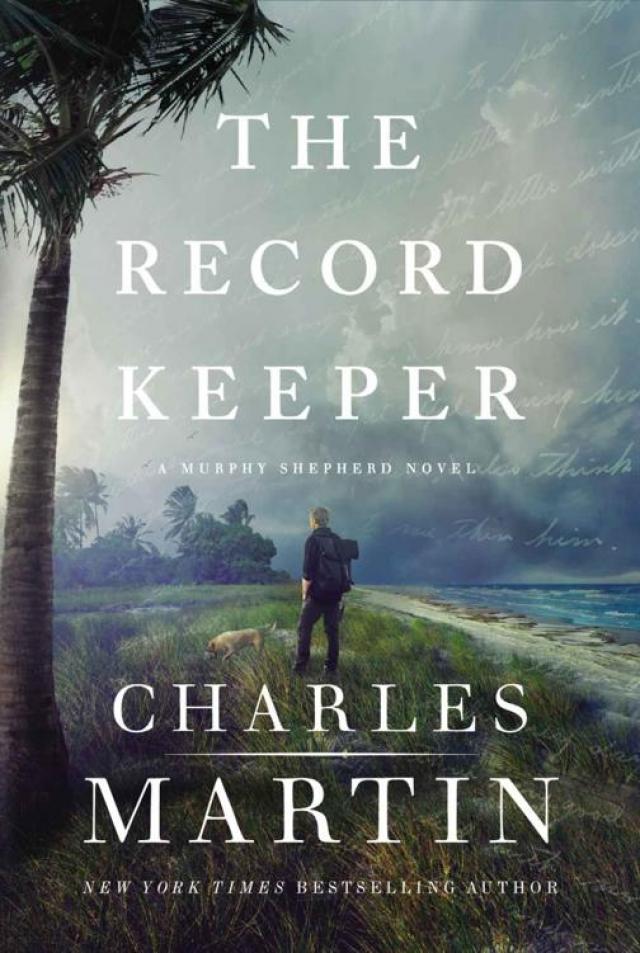
The Record Keeper (A Murphy Shepherd Novel),
p.1


Dedication
For Bones
Because the needs of the one
outweigh those of the ninety-nine
Contents
Cover
Title Page
Dedication
Part 1 Chapter 1
Chapter 2
Chapter 3
Chapter 4
Chapter 5
Chapter 6
Chapter 7
Chapter 8
Chapter 9
Chapter 10
Chapter 11
Chapter 12
Chapter 13
Chapter 14
Chapter 15
Chapter 16
Chapter 17
Chapter 18
Part 2 Chapter 19: Day 1 Without Bones
Chapter 20
Chapter 21
Chapter 22: Day 2 Without Bones
Chapter 23
Chapter 24
Chapter 25
Chapter 26: Day 3 Without Bones
Chapter 27: Day 4 Without Bones
Chapter 28: Day 5 Without Bones
Chapter 29: Day 6 Without Bones
Chapter 30: Day 7 Without Bones
Part 3 Chapter 31: Day 8 Without Bones
Chapter 32
Epilogue
Discussion Questions
An Excerpt from Long Way Gone Chapter 1
Chapter 2
Chapter 3
Chapter 4
About the Author
Praise for Charles Martin
Also by Charles Martin
Copyright
Part 1
Chapter 1
Coastal Georgia
The plane touched down on an off-the-grid military runway in southeast Georgia. I hesitate to say airport because there was no tower and ours was the sole airplane. We landed, climbed into a rented Suburban, and in less than three minutes were accelerating south down the I-95 on-ramp. A few miles later, we turned east off I-95 at exit 58 and wound through two-lane highways to a map-dot fishing hamlet called Spellman Bluff.
Just past the Dollar General, two run-down bars sat opposite each other on the only road leading in. The marquis at the first read, “My favorite form of exercise is a beer run.” The second played off it by responding, “Yeah, I have a feeling my check liver light might come on this weekend.”
We pulled off the hardtop onto a dirt road that led toward the water. Bones wound through abandoned double-wides and dilapidated shacks where bamboo shoots spiraled out of rusty cars with no wheels and no engines and long-forgotten sailboats lay on their hulls, choked by vines, home now to cats and rats. This is ancient earth populated by old trees, some six feet in diameter, whose moss-draped limbs swoop down to kiss the ground only to rise again.
We cruised down a private drive and parked at what looked like an old fish camp. Well kept, unlit, and apparently empty.
“How’d you know about this place?” I asked.
He smiled. “I don’t tell you all my secrets.”
We stowed our gear, and Bones took me to a covered dock where he punched a button, raising the door, and then pulled the cover off a Zodiac Pro RIB—an extremely durable half-rubber, half-fiberglass boat about twenty-four feet long and just over nine feet wide. Powered by twin 350-horsepower Mercury Verados, it could carry a dozen people and do so quickly. It also would allow us to do this relatively unseen, as matte black rubber tends to blend into the night.
“Nice boat,” I quipped.
“Thought you’d like it.” He tossed me a line. “Get in. Let’s go for a ride.”
It was after midnight. Dead low tide and the half-moon shone on the oyster beds rising up like pitcher’s mounds around us. If there were that many around us, then what lay beneath us was a bed of razor blades. Bones navigated through the shadows seemingly without thinking, turning the wheel via muscle memory. We ran dark. No running lights.
I asked but the question was rhetorical: “You been here before?”
He pointed to a bluff, the remains of a dock and what had been a home. “Grew up there.”
I had no idea. “Really?” Our wake spilled gently over the few remaining dock pilings freckled with barnacles.
Bones smiled like a man who’d just returned home to the smell of fried chicken and hugged his mother.
We idled out of the tributary and into the larger waters that bled into the Intracoastal. The Southeast Georgia coastline is protected by hundreds of barrier islands, most of which were inhabited at one time. North of us sat St. Catherines Island, once home to several thousand Guale Indians. South of St. Catherines sat Blackbeard Island, named after the famous Savannah smuggler and pirate. Some think the island still holds his treasure. South of the Sapelo Sound, gateway to the Atlantic and entrance to the Intracoastal, sat Sapelo Island. A wildlife refuge.
I could tell by the look on his face that Bones was calculating distance and time. He pointed at the sound. “If she enters here”—I followed his finger south down the IC Waterway—“either she’ll turn hard south and follow the coastline, or if she needs fuel or is picking up passengers, she’ll head inland.”
“How will we know?”
Another smile. “Local knowledge.”
Inland waterways are charted by multiple engineers and experts before they are printed. The intersection of land and sea is literally measured with satellites, and thousands of hours are spent providing the best and most up-to-date information available. But inland waterways are not static and have a way of moving. Whether a result of hurricanes or time, the banks and depths change constantly, which can wreak havoc on captains. Given this uncertainty, every chart is printed with words like “Strangers should seek local knowledge before navigating this area.” Or “Numerous submerged pilings. Local knowledge is advised.”
Local knowledge refers to what the locals know by use. By being on the water. And few, if any, have ever read a chart.
Bones said, “There’ll be a dozen. Nine to twelve years of age. Two pairs of brothers taken from Sweden to Switzerland. Blond hair. Fair skin. The traffickers wrote programs that sifted their parents’ social media.”
Disgust crossed his face. “Auction closed yesterday. Ten days and 130 time slots.”
“That’s a lot of money.”
Bones nodded. “The Sonshine is eighty meters, and they’ll board her east of Savannah. Four decks above the waterline. Three below. Her amenities include everything you can imagine. Saunas. Massage parlors. Hot tubs. Bars. Couple of pools. Several dining rooms. Dance floors. Fitness centers. Suites. Quarters for up to forty crew.” Bones shook his head. “It’s a floating hell. And citadel.”
“It’s a floating hundred million dollars.”
Bones continued, “She’ll sail south along the coast, then turn inland just north of Cumberland and take on the first clients in the ditch. Either by helicopter or a thirty-six-foot Intrepid. And before you ask . . . four 400-horsepower Mercury Verados.”
We studied the water for an hour. Talking through possibilities. What if she turned this way? What if she turned that way? Finally, at close to 2:00 a.m., we returned to the fish camp where Bones scrambled some eggs and I wandered around his two-bedroom home where I found no decorations. Only one small picture. Black and white. Two boys in the water. One holding a cast net. The other with his hand on the tiller.
“You come here much?”
He shook his head but didn’t take his eyes off the pan. “Not much.”
I had known Bones for twenty-five-plus years, and yet I’d never once heard about a home on the coast. Nor the fact that he grew up here. “You owned it long?”
A shrug. “Since before I found you.”
Bones’s silence struck me as strange, but I didn’t push him. It was late and he’d talk if and when he wanted. We finished our eggs, I washed dishes, and Bones headed to the door. As he closed it behind him, he said, “Gotta check on a few things.” He pointed at my room. “Get some sleep. Tomorrow we . . .” A chuckle. “Blend in.”
“Blend in” was code for reconnaissance, but I asked anyway. “What for?”
He smiled. “Local knowledge.”
Chapter 2
Colorado, 72 hours earlier
The morning air was chilly and thin, and I was breathing heavily before we set foot on the trail. Gunner jumped ahead, bouncing from rock to rock. I labored to put one foot in front of the other. Gunner had awakened me early at Summer’s command. Neither was going to let me get fat and lazy, and any excuse about having been shot in the back had no effect on either of them.
We had ascended a thousand feet with another three to go when I finally gave up the fight, turned to my right, dropped to my knees, and hurled from my toes. Gunner sat, tail wagging. Amused yet waiting. Seemingly unfazed by the sounds coming out of me, Gunner circled and eyed my mess. He looked like he was about to lick my face, then thought better of it, spun, and trotted ahead.
I stood to my feet, willed one foot in front of the other, and tried to remember.
My recovery had been slow in the making. Six months had passed since Bones’s brother sent his people to blow up Freetown and then paid someone else to shoot me in the back with my own crossbow. During that time, my body had spent itself fighting the infection that had occurred after I closed the wound in the cave. While I resembled my former self on the surface, save a limp and some abdominal scar tissue that made me look a little bit like the hunchback of Notre Dam
e, I knew inside I was not the same. My energy was low and strength even lower. Fatigue had become my unwanted companion. During my convalescence, Summer worked tirelessly to feed me, rehab me, stretch me, and get me moving when I didn’t want to. She started with a walk down the hall. Then Main Street. Then down and back twice. Then a mile. You get the point. In the last few days she’d been eyeing the Eagle’s Nest. Four thousand feet above us. The trail beckoned. I knew it was going to hurt.
In truth the physical pain wasn’t the deterrent. I’d been hurt before. Probably would be again. Pain came with the job. But as the weeks rolled by, I sensed there was something in me that was hesitant to climb back in the saddle. My problem wasn’t so much my body as my heart, and I’m not talking about the muscle in the center of my chest. I’m talking about the place in me that holds my love—and just as important, my hope. I like to think it’s down there behind my belly button. The place where you feel butterflies. Maybe when the crossbow bolt passed through me, it nicked it. Allowing it to leak. My problem was further compounded by the fact that I’d had ample time to navel-gaze and consider my own problems. A luxury I’d never enjoyed before.
All of Freetown—and I do mean everyone—had rolled out the red carpet to get me healthy. I became their singular focus. “What do you need?” “How can I help?” “Is there anything I can do?” “How are you feeling?” Those were the first questions out of everyone’s mouth, and each was well-meaning. Their intentions were beautiful. I’m not knocking the questions. And yet they produced consequences I never expected. This constant focus on me had an effect on me; it gave me time to think about me and what I needed, and did I really want to go through all of this again? That was a question I’m not sure I’d ever asked myself.
For the last fifteen years, I’d swallowed the pain of Marie’s absence in my life and then dealt with it through David Bishop’s fiction. But now, for the first time in my life, Murphy Shepherd was looking in the mirror and telling David Bishop to shut up. Don’t write another word. Don’t do that to your heart. It’s too painful. When I could muster the courage to pick up a pen, I found my hope bucket empty and the page wordless. I, as much as anyone, knew that hope is what feeds us. It’s the currency of mankind. The fuel of the soul. Without it, we wither and die.
My problem was twofold. One, even at my best, I could not protect those I loved. The events of six months ago proved that. And two, there was always one more. Despite over two decades of spending myself to rescue the lost, I’d made no dent in the cancer. Evil was no less evil. Some might find my longing to make a real difference idealistic. I don’t. I don’t do what I do for kicks and giggles. It’s not a game. It’s trench warfare. But somewhere, somehow, I needed to know that the sum of everything I’d done was having some effect on the guys in the other trenches. The war’s effect on me was apparent. I was limping. What about them?
Bones had been patient. Me? Not so much. Summer would take me either way.
Gunner stared at me with an Old man, what’s your problem? look on his face.
In short, I wasn’t back to being me. I was glad to be in the land of the living but a long way from fully alive. That might take some time. I’d spent what will and energy I had staying alive in that cave. When they found me, I was on my way out. The forces pulling me down were stronger than me. Then I felt something pulling me up. Voices. Tears. Then the darkness returned. Then singing pulled me back to the surface. The tug-of-war lasted weeks. I shouldn’t be here. Love won. That’s all I know to tell you.
Which made it all the more difficult to get myself ready to do it all over again.
Truth was, I was stalling. Choosing excuses over sweat. Which included sleeping in and not training when I should or doing so halfway. Sunrise would find me sitting and staring at the mountain rather than climbing it. I’d pick at my plate rather than clear it when I desperately needed calories to rebuild lost muscle. Where a hundred push-ups was once routine, thirty was now the new norm.
For the first time ever, I wasn’t doing what I knew I needed to—and the difference was not lost on Summer. My lax approach was dangerous, because those guys in the other trenches were doing what they needed to do.
Either unconsciously or not, I wanted out. When I asked myself why, the reason was simple. To make the bad man stop. Regardless of the success of Freetown and all those beautiful faces walking by us on the street or flashing across Bones’s Planetarium slideshow, or the freedom known by all the names tattooed across my back, what I remembered most was the pain; the images I saw when I closed my eyes were those of terror and horror and heartbreak and pain.
Maybe this I-want-out place was what Bones encountered after a decade of doing the same and that’s why he found me when he did. Maybe Bones chose to recruit, train, and then oversee me because he couldn’t continue in this life any more than I wanted to now. Unless you’ve lived it, the life we endure is surreal. Unnatural. We walk about the planet waiting for the next text or phone call. We sleep with clothes laid out. Our phones never off. Always five minutes from boarding a plane. Not knowing when or if we’ll return. We are tethered twenty-four-seven to “What if?”
Whatever my problem, I could not fix me. Summer knew this more than I. As I was about to discover.
During my convalescence, Freetown had rallied. Strengthened even. Our board is made up of many of the parents whose children we’ve rescued. From CEOs to scientists, from NYC to LA, these people are good at thinking outside the box and have the means to do so. They’re also motivated because they’ve known the helplessness of waiting for the phone to ring.
When I woke up, Freetown was in the midst of a massive repair and renovation. The sounds of construction, from hammers to excavators, echoed into my room. The black scar caused by the explosion had been removed and new construction had taken its place. In years past we’d kept a low profile by being known as a private rehab and addiction facility. It was partly true. We also never told anyone about those for whom we cared. We never shared a story. This created a cone of silence, which we valued. In fact, it was essential to who we are. We talk about no one.
That changed with Casey. When her book hit every bestseller list and movie rights were optioned, we did our best to protect not only her but everyone else. Admittedly, it grew more difficult with every copy sold because people wanted to know. Naturally, they were curious. As time passed, the cone of silence became more difficult to maintain, causing me to wonder if we shouldn’t replicate the model elsewhere—and tell no one.
When the bomb went off, Freetown was home to sixty-three rescued girls and women. Include parents or siblings who made the trek with them, and that number quickly swells to over a hundred people housed in more than forty cabins tucked into the mountain. To care for those individuals, we employ north of two hundred people, from counselors to security to landscapers to ice cream shop and pet store workers. Our board secures donations from around the world, and as a result, our hospital has become sought after for neonatal care, not to mention addiction and trauma recovery. Most of our girls stay with us for at least two years, during which—once healthy enough—they plug in and help where needed. Many work in the hospital. Some teach in the school. Some scoop ice cream. Others groom pets. We attempt to provide them with skills training in any area they desire. From art classes to nursing school to cosmetology to fashion design to completion of their college degree.
One of Angel’s footprints at Freetown was the creation and development of several stores along Main Street that design and sell women’s clothing, jewelry, and footwear. If they can think it and we can help them produce it, we sell it. Online sales are booming and at last count Angel employed more than a dozen girls, many of whom were either enrolled or applying to become enrolled in an online degree program out of New York.
One of the horrors experienced by trafficked boys and girls is that the world they live in becomes their box. The despair of their circumstances snuffs out any hope of ever stepping outside the confines of the cell in which they live, both physically and emotionally. They won’t let themselves think outside that box because it’s too painful. Hurts too much. When they come to us, we try to tear down the walls of the box and give them a reason not just to think outside it but to conceptualize the world in which that box is held. In our experience many trafficked women begin to believe they are not beautiful. They’re taught by how they’re treated—inhumanely, as less than an animal—that they are not only not beautiful but never will be. So why would they entertain the idea of fashion? They’re convinced they’re disposable and heinous, so why try to dress that up? The emotional warfare runs deep.