Lurker

Lurker

Stefan Petrucha

Horror / Science Fiction & Fantasy / Comics & Graphic Novels

Four ghost girls.A nightly ritual.When their precious bones are rolled, the ghosts tell of deaths so horrifying even the rats in the orphanage walls cringe.Tonight's tale . . .Seventeen-year-old Mandy has everything: popular friends; a hot boyfriend; plans for college, travel, the future. But after classmate Nicki is gruesomely murdered, Mandy is shaken to her core. Soon she's jumping at shadows and having nightmares of Nicki's killer — the Witchman. Mandy tells herself she's just imagining things — but nothing in her imagination prepares her for the terror that's about to attack.
Read online
  • 51
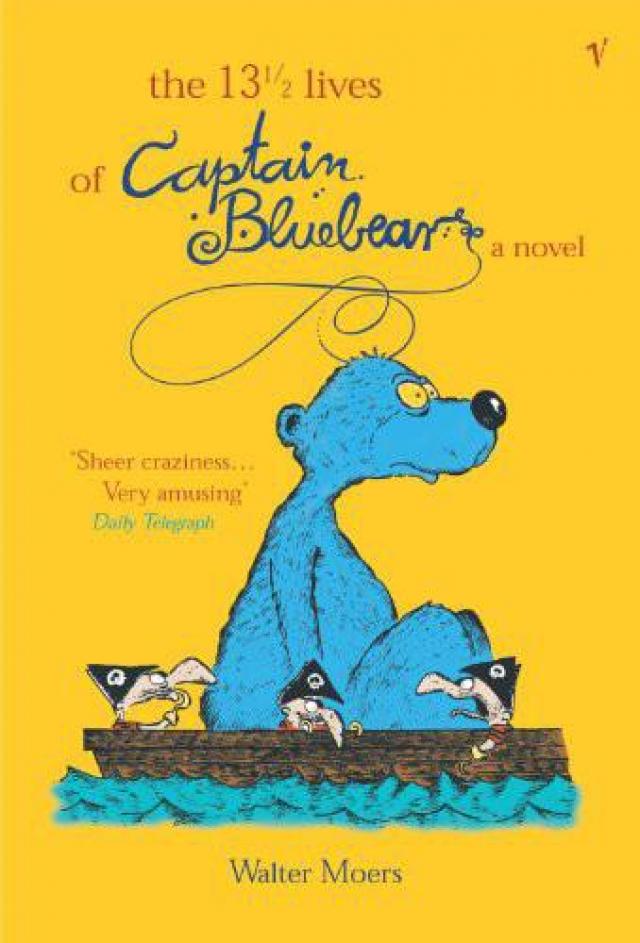
The 13.5 Lives of Captain Bluebear

The 13.5 Lives of Captain Bluebear

Walter Moers

Comics & Graphic Novels / Humor / Children's Books

A delightfully illustrated cult novel, literary satire and epic adventure.'Within the first 15 pages I was carried away by the sheer craziness of it all. Some Minipirates find a baby bear with blue fur inside a walnut shell floating on the ocean towards a giant whirlpool. They rescue him and teach him about knots and waves, and that a good white lie is often considerably more exciting than the truth. Then, when he outgrows their ship to such an extent that he is in danger of sinking it, they abandon him on an island with a bottle of seaweed juice and a loaf of seaweed bread. Thus Bluebear comes to the end of his first life and embarks on his second. By the end of the book, he has expended exactly half of his 27 lives. Again and again, Moers confounds our expectations as the narrative twists and turns, travels backwards and forwards in time. Part science fiction, part fairy tale, part myth, part epic, the book is a satire on all these genres and so constantly satirises itself. Very amusing' - Daily TelegraphFrom Publishers WeeklyStarred Review. Nine-lived cats have nothing on the "bluebear," who, according to German author and illustrator Moers, has a whopping 27 lives. In this inventive, zany, fun-for-all ages odyssey (a bestseller in Europe), an intrepid "seagoing bear" offers his "demibiography." A foundling floating in a nutshell on the Zamonian Sea, the azure-furred Bluebear is rescued by Minipirates, impish nautical geniuses, who raise him and then, after he gets too big, abandon him to live out 13 lifetimes of adventure populated by a dizzying array of eccentric characters. Among them, two argumentative waves known as the "Babbling Billows" teach Bluebear speech, sage dinosaur Mac (real name: Deus X. Machina) extends friendship and Professor Abdullah Nightingale at the Nocturnal Academy offers a particularly intense and wacky education. Even readers with short attention spans will find themselves captivated by the nonstop parade of madcap characters as treacherous predicaments resolve themselves with charming ease. Magnificent sugarstorms, tornadoes inhabited by old men and "dimensional hiatuses" propel the independent, indefatigable Bluebear to Atlantis, where he must demonstrate the relevance of his experiences in a psychological duel of sorts. Comparisons to Harry Potter aside, Moers's kaleidoscopic expedition is fanciful and endlessly entertaining. 136 b&w illus. Copyright © Reed Business Information, a division of Reed Elsevier Inc. All rights reserved. From School Library JournalAdult/High School–This novel opens with the title character's first memory: as a cub floating in the ocean with a nutshell for a life raft, he heads straight for a giant whirlpool threatening to suck him down. After he's rescued by a boatload of Lilliputian pirates, Bluebear enters into a life (or 13½ lifetimes) filled with humor and adventure. Each life has a different challenge to overcome, pitting him against the likes of headless giants and storytelling contests. The book is one part Norton Juster's The Phantom Tollbooth and two parts Douglas Adams's The Hitchhiker's Guide to the Galaxy. Each adventure mixes fantasy, science fiction, and fables in a satirical cocktail that readers can't help but gulp down. The quirky writing is definitely strong enough to carry itself, but Moers includes several black-and-white illustrations that enhance the whimsy. With so many little side trips in Bluebear's narrative, the story might frustrate those who prefer straight-line plots. But this is the kind of tale that readers have to just sit back and enjoy, wherever it takes them. The ending does tie the loose threads together. A wild, fun-filled ride.–Matthew L. Moffett, Northern Virginia Community College, Annandale Copyright © Reed Business Information, a division of Reed Elsevier Inc. All rights reserved.
Read online
  • 51
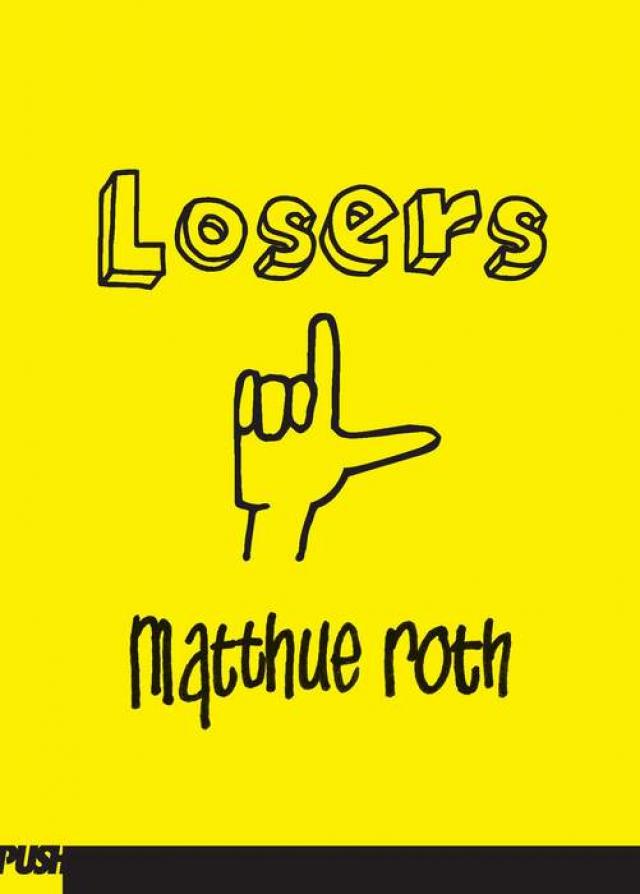
Losers

Losers

Matthue Roth

Children's Books / Biographies & Memoirs / Comics & Graphic Novels

The perks of being an émigré wallflowerJupiter was born in Russia, but he's getting quite an education in America. He sees everything slightly askew - but in a way that's endearing to (most) of his fellow students. A popular girl takes him under her wing. He falls for her. A bully sets him as a target. But Jupiter disarms him in an unexpected way. His best friend ends up hanging with a posse of science geeks. Jupiter feels left out. With dead-on deadpan humor, Matthue Roth makes everything illuminated about American teen life - like Borat as directed by John Hughes.
Read online
  • 50


X-COM: UFO Defense

X-COM: UFO Defense

Diane Duane

Science Fiction & Fantasy / Young Adult / Comics & Graphic Novels

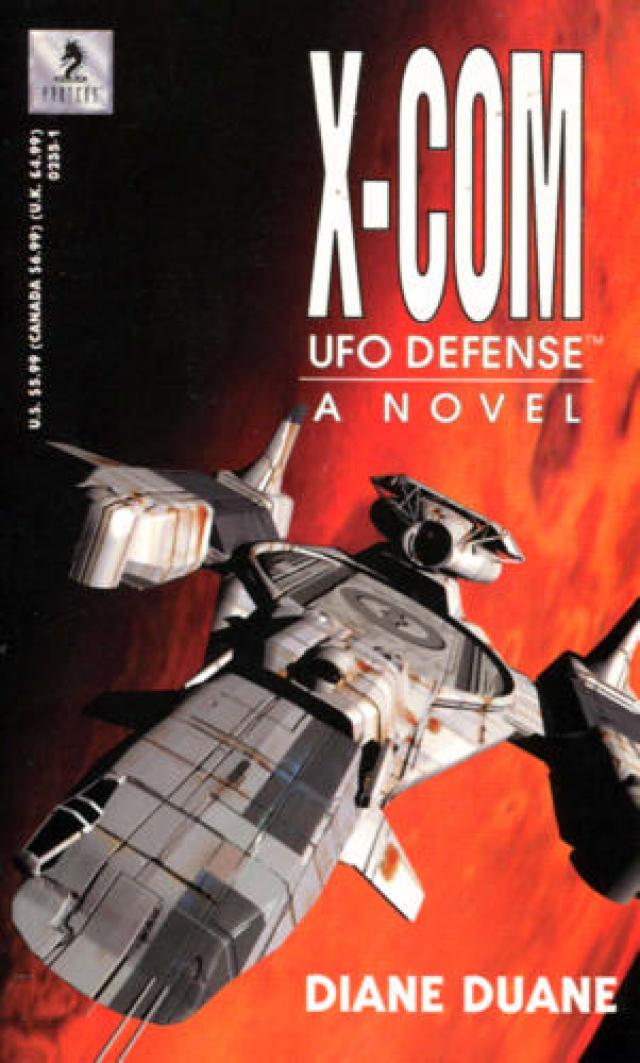
Commander Jonelle Barrett is determined to win. Having moved from Morocco to a new base in Switzerland, she is well-placed to build a fortified base and defend Europe from the marauding aliens who harvest humans as lab animals for breeding stock… and for their dinner tables! Barrett soon finds that her new territory is already riddled with alien invaders. Her handpicked garrison is all she has—until she learns that one of her most trusted people may be a traitor. Her task is twofold: keep the aliens at bay and keep her own sanity in the face of despair. She doesn’t know which will prove more difficult.
Read online
  • 50
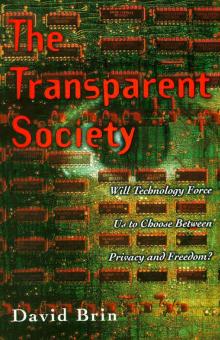
The Transparent Society: Will Technology Force Us to Choose Between Privacy and Freedom?

The Transparent Society: Will Technology Force Us to Choose Between Privacy and Freedom?

David Brin

Science Fiction & Fantasy / Science Fiction / Comics & Graphic Novels

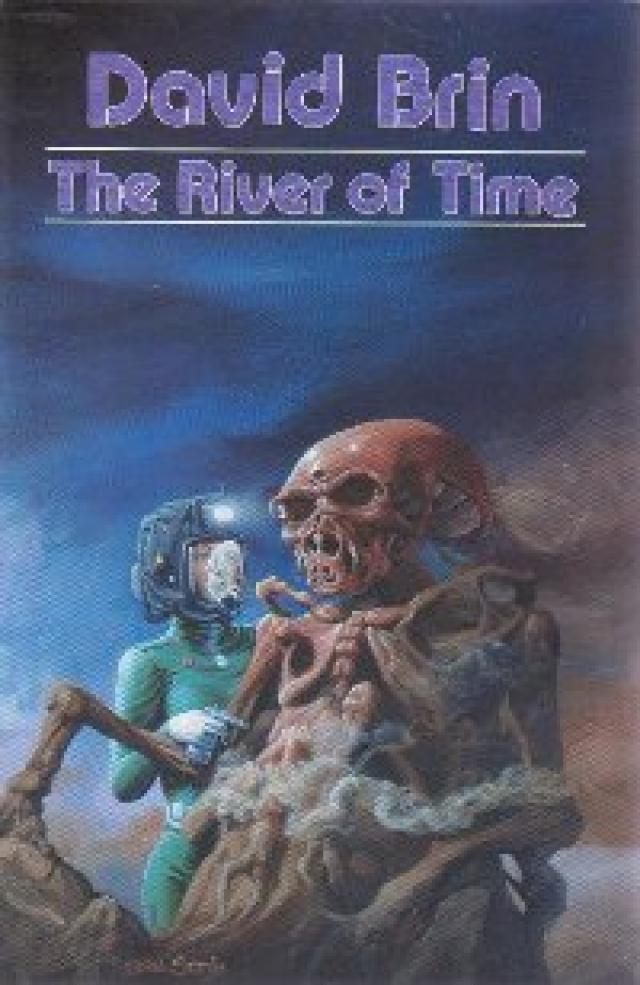
In New York and Baltimore, police cameras scan public areas twenty-four hours a day. Huge commercial databases track you finances and sell that information to anyone willing to pay. Host sites on the World Wide Web record every page you view, and “smart” toll roads know where you drive. Every day, new technology nibbles at our privacy.Does that make you nervous? David Brin is worried, but not just about privacy. He fears that society will overreact to these technologies by restricting the flow of information, frantically enforcing a reign of secrecy. Such measures, he warns, won’t really preserve our privacy. Governments, the wealthy, criminals, and the techno-elite will still find ways to watch us. But we’ll have fewer ways to watch them. We’ll lose the key to a free society: accountability.The Transparent Society is a call for “reciprocal transparency.” If police cameras watch us, shouldn’t we be able to watch police stations? If credit bureaus sell our data, shouldn't we know who buys it? Rather than cling to an illusion of anonymity-a historical anomaly, given our origins in close-knit villages-we should focus on guarding the most important forms of privacy and preserving mutual accountability. The biggest threat to our freedom, Brin warns, is that surveillance technology will be used by too few people, now by too many.A society of glass houses may seem too fragile. Fearing technology-aided crime, governments seek to restrict online anonymity; fearing technology-aided tyranny, citizens call for encrypting all data. Brins shows how, contrary to both approaches, windows offer us much better protection than walls; after all, the strongest deterrent against snooping has always been the fear of being spotted. Furthermore, Brin argues, Western culture now encourages eccentricity-we’re programmed to rebel! That gives our society a natural protection against error and wrong-doing, like a body’s immune system. But “social T-cells” need openness to spot trouble and get the word out. The Transparent Society is full of such provocative and far-reaching analysis.The inescapable rush of technology is forcing us to make new choices about how we want to live. This daring book reminds us that an open society is more robust and flexible than one where secrecy reigns. In an era of gnat-sized cameras, universal databases, and clothes-penetrating radar, it will be more vital than ever for us to be able to watch the watchers. With reciprocal transparency we can detect dangers early and expose wrong-doers. We can gauge the credibility of pundits and politicians. We can share technological advances and news. But all of these benefits depend on the free, two-way flow of information.Amazon.com ReviewDavid Brin takes some of our worst notions about threats to privacy and sets them on their ears. According to Brin, there is no turning back the growth of public observation and inevitable loss of privacy--at least outside of our own homes. Too many of our transactions are already monitored: Brin asserts that cameras used to observe and reduce crime in public areas have been successful and are on the rise. There's even talk of bringing in microphones to augment the cameras. Brin has no doubt that it's only a matter of time before they're installed in numbers to cover every urban area in every developed nation.While this has the makings for an Orwellian nightmare, Brin argues that we can choose to make the same scenario a setting for even greater freedom. The determining factor is whether the power of observation and surveillance is held only by the police and the powerful or is shared by us all. In the latter case, Brin argues that people will have nothing to fear from the watchers because everyone will be watching each other. The cameras would become a public resource to assure that no mugger is hiding around the corner, our children are playing safely in the park, and police will not abuse their power.No simplistic Utopian, Brin also acknowledges the many dangers on the way. He discusses how open access to information can either threaten or enhance freedom. It is one thing, for example, to make the entire outdoors public and another thing to allow the cameras and microphones to snoop into our homes. He therefore spends a lot of pages examining what steps are required to assure that a transparent society evolves in a manner that enhances rather than restricts freedom. This is a challenging view of tomorrow and an exhilarating read for those who don't mind challenges to even the most well-entrenched cultural assumptions. --Elizabeth LewisFrom Publishers WeeklyScience fiction writer Brin (The Uplift War) departs from technological fantasy to focus on the social and political ramifications of our information age. While addressing the technology-vs.-privacy debate, he offers an informed overview of the issues and a useful historical account of how current policies evolved. Also beneficial are his descriptions of the different viewpoints on encryption software, online anonymity, the Clipper Chip and techno-jargon. But when Brin opines on these topics, the book suffers from superficiality. He appends remarks to the end of each chapter as this: "When you've been invited to a really neat party, try to dance with the one who brought you." His main point--that information and criticism should flow unrestricted--is lost in a melange of armchair social science theory and unrelated observations on the media, morality, identity and manners. After making a thoughtful case for discouraging encryption and encouraging free speech on the Web, he undercuts his position by calling for e-mail civility, "because people who lash out soon learn that it simply does not pay," then states that a balance can be achieved between these two extremes. Despite a strong beginning, Brin's book ultimately lacks clarity and originality. Copyright 1998 Reed Business Information, Inc.
Read online
  • 50
Solomon's Key

Solomon's Key

Tim Ellis

Comics & Graphic Novels / Science Fiction & Fantasy / Mystery & Thrillers

Women are being murdered and mutilated in Hammersmith, London.The killer is leaving messages in ancient languages, and DCI James Harte gets a cryptographer in from GCHQ to help him.The decrypted messages raise more questions than they answer, and further help is sought from a Priest and a Biblical scholar.Harte must overcome enforced counselling and the worst winter in London since the first Ice Age to find the psychopath before the secret of Solomon's Key is unleashed on the world.
Read online
  • 50