T singer, p.21
T Singer,
p.21
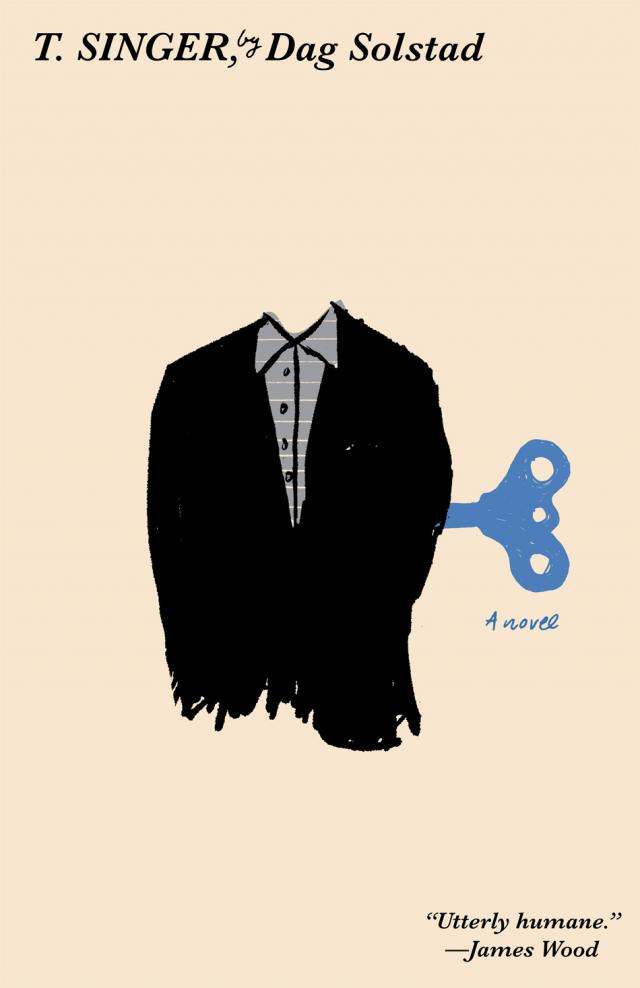


So Singer sits in his armchair, in his regular place, with his newspaper, or he lets the newspaper fall onto his lap or next to the chair, like a leaf, and he merely sits there, his eyes closed as he stares straight ahead while listening to the young ladies sashaying around, with their perfume scent and their mascara-lined glances, and now and then he hears one of them say: “Shh, I think he’s asleep,” while they sashay around him; but Singer isn’t asleep, or at least he’s awake enough that he can hear them as he sits there, with his eyes closed, with a newspaper that falls, like a leaf from the trees, in a peaceful moment of his life.
Now and then Ingemann showed up at this apartment where Singer resided, surrounded by sashaying young ladies who sometimes walked to and fro but mostly sat and whispered in Isabella’s room. Ingemann parked his fancy car outside the building where Singer lived, and he honked the horn. When the doorbell rang a few minutes later, Singer knew it was Ingemann. Ingemann came into the apartment and wanted to take him, Singer, along on some outing, or he had simply dropped by with no other purpose than to say hello, as he said. Ingemann, who talked about himself and his interests over and over again. About what he was doing, about what the consequences were, about what plans he’d made, and about all the cunning and all the tricks he had to employ in order to see these plans come to fruition, and about the world as a whole, Ingemann’s world, of which he was a prisoner, as he expressed it to Singer. It was as if Ingemann, by talking this way about himself and the life he was now living, was trying to breathe life into Singer, trying to get him to stare with anticipation toward something other than the wall, which he usually had in front of him, when he was in fact peering straight ahead, with his eyes open. He was imprisoned by his own time, Ingemann said about himself, and with the hope that he might cheer up Singer. But Singer remained uninterested in what Ingemann said. It went in one ear and out the other. In any case, he remembered little afterward, even though it was news from a man who had shaken off the disaster and dreariness of his life as a third-rate actor and become an idea man and a sharp-sighted observer in the wings of the stage where the deeply felt peculiarities of our time are created. For that he reaped his reward, his well-deserved reward, in the form of tons of money, thought Singer as Ingemann’s news went in one ear and out the other. Sometimes Ingemann might seem downright despondent because he noticed that Singer didn’t show any particular interest when he tried to entice him with everything that life had to offer — what it at least had to offer to Ingemann, and as a consequence, in keeping with Ingemann’s magnanimous spirit, also to Singer, if only he would open his eyes and see it; and he plied Singer with temptations, using mimicry, exaggerated glances, enthusiastic turns of phrase, phony charm, in short everything inherent in his own personality. He might even resort to old tricks, which he again performed before Singer. He would turn to his acting repertoire, choose some comical props from Singer’s apartment — an ashtray, a candleholder, a big broom, an old hat — and act out the classic roles, which he’d never actually been qualified to shoulder during his acting career, though he still knew the lines by heart ten years after he’d left the stage; major dramatic roles from the world theater, Chekov, Ibsen, Shakespeare, and finally Singer would allow himself to be enticed by his friend’s attempts and he couldn’t help smiling. Good old Ingemann, thought Singer then. My good friend, my loyal friend, he will never betray me. He has not lost his soul; on the contrary, he comes here to visit me, trying, if possible to save my soul. Thank you, Ingemann, he thought, deeply moved, as he somewhat reluctantly had to smile at Ingemann’s acting skills. And so they sat there, the two friends, the librarian and the former actor, in the librarian’s living room, while the young ladies, without the two friends noticing, approached; there were three or four of them, with Isabella behind the others, and they now gathered around the two friends, laughing with admiration, bubbling at Ingemann’s attempts to cheer up his old friend by employing old tricks. Isabella’s girlfriends were well aware of who Ingemann was, he was the one who had given Isabella the precious gem that they often watched on the video player. It was a secret tape of a promotional film that would never be shown, mostly because it was way too ahead of its time.
Isabella and her girlfriends had gathered around them, forming a young-lady circle of loveliness and laughing admiration. The three or four girlfriends in blissful and everlasting naïveté; but Isabella kept slightly to the background, with a somewhat pensive look on her face because she was doubly present in this scene, as she occasionally glanced at one or the other of her friends to find out, or ascertain, something about their blissful and everlasting naïveté. Because she was regarding Ingemann in a different way. Singer could clearly see Isabella an sich as she glanced toward her blissfully and everlastingly naive girlfriends. He could see the Isabella-ness radiating out of her, as she stood there, introverted, yet vibrating toward Ingemann, who was standing a meter and a half away from her, and who, it cannot be denied, approved of this Isabella-ness that radiated from her young-lady body, leaning toward him; in fact, he celebrated it.
It was more than five years ago that Singer realized his friendship with Ingemann had ended, in terms of reality, and yet they had continued to spend time with each other, as if nothing had happened; in fact, Ingemann hadn’t even realized that the friendship had ended, in terms of reality. By the way, in every novel there is a big black hole, which is universal in its blackness, and now this novel has reached that point. Surrounded by spirited young ladies, with all their sweetness, we find ourselves together with Singer in a novel that is like a big black hole. Why is Singer the main character in this novel? And not only the main character but the one around whom everything revolves? Fortunately, the other characters in this novel are completely unaffected by the fact that they are characters, or ideas, that exist only in that they revolve around this main character. I wish I could have said something that Singer wouldn’t be able to ponder. There’s something I would have said about precisely this point, but I have no words for it. My language ceases when Singer’s pondering ceases. Yet that does not make us identical.
So the friendship with Ingemann had ended more than five years ago, something that Ingemann wasn’t personally aware of, because it had continued to function, albeit as a former friendship, it has to be said. But the friendship ceased to exist as a reality, because Singer was “out.” He was gone. He understood that. And to understand precisely those kinds of things, at the same time as you are here, with your alive body, almost fifty years old and vulnerable, that can give you the feeling that you’ve been hurled out into space, like a satellite sent out there, as in a hurled movement, an outcast capsule. Singer noticed a ringing in his ears as he saw Ingemann surrounded by a circle of delightful young ladies who admired him, and behind the others stood Isabella, who was enjoying the fact that the others admired Ingemann, and she was leaning toward him, shut inside her now finished form, so to speak. Ingemann approved. Singer had no reason to blame Ingemann for that. On the contrary, Singer had much to thank him for. But he was no longer his friend, he hadn’t been his friend for more than five years. It was now time to speak up so that Ingemann would finally realize this. And so, Singer told Ingemann he had to leave and he should not come back, because there was no point in him coming back. At least not for my sake, he said.
“You don’t have to come here for my sake,” said Singer, “because it’s years since there has been any sort of friendship between the two of us. It’s undoubtedly my fault that things have turned out this way, but that’s how they’ve turned out, and for my part it has become a nuisance to see you here in my apartment. Why don’t you leave, there’s nothing for you here,” Singer told Ingemann, with the circle of delightful young ladies, so pure and present, standing around him. And so Ingemann left. A bit astonished, open-mouthed, you might say, but he left.
The delightful young ladies fell silent after Ingemann had gone, and soon they disappeared into Isabella’s room, closing the door after them, and not a sound could be heard from inside. Stunned, Singer remained in the living room. After an hour or so, the door to Isabella’s room suddenly opened and one of the young ladies came rushing through the living room, while one of the others still inside closed the door behind her. After a while this was repeated, as many times as there were young ladies, not counting Isabella, inside Isabella’s room.
Isabella never mentioned this confrontation between Singer and Ingemann, and it wasn’t really a confrontation, because Ingemann had simply left. Isabella continued living her own life, although possibly even more apart from Singer than previously; she didn’t directly avoid him, yet if Singer thought that was what she was doing, he could have pointed to a sufficient number of indications to confirm this in his own mind, if that was in fact what he wanted to confirm. But that was not what he wanted to confirm. And most likely Isabella was not avoiding him; he hadn’t done anything to her, after all. On the contrary, Isabella seemed the same as usual, even behaving in a friendly manner whenever she addressed him. And yet, in spite of everything, he had robbed her of Ingemann, who never showed up at their apartment on Suhms gate again. Yet that didn’t seem to affect her, which greatly astonished Singer. On the other hand, she was now eighteen years old and no longer needed to meet Ingemann in Singer’s apartment if she wished to meet with him, so that he might breathe some of his own imprisoned time into her, so that she might appear as a delightful young lady. This was not a thought that pleased Singer, but if that was the situation, then there was little he could do about it. In a way it had seemed like an ending, but an ending that once again made him feel like a capsule hurled out into space. For that reason he was greatly relieved when he happened to witness a little incident inside Isabella’s room. Isabella had a girlfriend visiting, and suddenly Singer heard a big commotion coming from inside her room, the sound of furniture being shoved aside, and a clattering, and he went to her room and from the doorway he witnessed how Isabella’s friend had found a photo in Isabella’s room, and she was now laughing over it, a photo of a young boy, and Isabella flung herself forward to wrest the photo away from her friend, partly embarrassed, partly laughing. Singer had been drawn to the scene because he’d heard a big commotion through the half-open door to her room, and he’d stood up, almost inadvertently, and without thinking he’d gone to her room, and now he stood in the doorway and watched as Isabella, with a disconcerted look, tried to wrest a photo of a young boy out of the hands of her amused friend, and he couldn’t help but conclude that Isabella was, in some way, involved with the young boy in this photo. He had no idea how that might be, and he would never find out, but the incident had such an encouraging effect on him that he laughed, a brief and dry laugh, as he stood there in the doorway and looked at the two eighteen-year-old young ladies in Isabella’s room engaged in what he perceived as a wild tussle over a photograph of a boy. Yet his brief outburst of laughter made Isabella furious, because she, we have to assume, felt that she’d been found out in some way by Singer, who without being invited was standing in her doorway and catching a stolen glimpse of her private young-lady life. As she calmly took the photo out of the hands of her now frozen-looking friend and put it away in her dresser, with the young boy’s face down, she asked in a caustic tone of voice whether there was some specific reason why he was standing there and watching what they were doing. Her voice was ice-cold, her whole being utterly deliberate and tense. Singer was shamefaced and assured her that it was not his intention to intrude, but he’d heard a bang, a really loud bang, he said, and he tried to laugh that little dry laugh again, though this did not particularly mollify Isabella, and her friend stood there like a frozen image, staring at him with astonishment. And so he continued to apologize for behaving as he had, it wasn’t something he usually did; you have to agree, Isabella, I don’t think it has ever happened before, I don’t think so, he said, and the friend again gave him an astonished look, while Isabella seemed disconcerted. He then realized that it would be best if he left, and after he’d left, he felt even more shamefaced, especially because of the astonished look on her friend’s face when he’d tried to explain.
Singer didn’t like subjecting himself to Isabella’s suspicion that he was snooping into her private life, and particularly not in the presence of one of her friends, who had looked at him with such astonishment because he’d tried to explain away such an accusation. He took great care not to snoop into her life; actually, he should have been upset that she behaved as she had toward him, because there was no reason for her to react in that way. In the eleven years he’d lived, all alone, with Isabella, he’d been extremely careful not to influence her, so as not to intrude on her life. He’d tried to influence her, but then immediately withdrawn when he realized that he hadn’t succeeded, nor would succeed. He’d never wanted to intrude on her life, in order to possess it and in that way shape her, because he had no right to do so, because who was he, Singer, when it came right down to it? He had no idea; but what he did know was that when he asked himself what right he had to intrude on her life, shape it, mark it, he always ended up ascertaining that he had no right to do so, and always with a reference to that unanswered question about who was he, Singer, when it came right down to it.
And so, shamefaced, he had withdrawn on this occasion as well, because he had inadvertently stood in her doorway and caught a stolen glimpse into her highly private young-lady life. He didn’t know her. He wanted to know her, but he couldn’t do that without intruding on her life, stealing a glimpse, in this way. When Isabella reprimanded him for the intolerable nature of his action, which he hadn’t even intended to take, he was annihilated by her ice-cold voice and subjected to the astonished look of her friend, and he had also seen that Isabella was disconcerted by the fact that he was so clearly annihilated by the fact that she’d expressed her annoyance that he, Singer, had seen her in a situation that she didn’t want him to see. Consequently, he had to realize that he’d been caught in such a manner that was possibly awful and in any case irreparable, that he felt exposed, plain and simple, and directly connected to the facts of the situation as his eighteen-year-old stepdaughter became annoyed, and then admonished him, in the presence of a witness, when he stood in her doorway and caught a stolen glimpse of her personal life, which had always seemed so alluring, which he’d always wanted to understand. And so the only thing he could do was to look forward to the day when Isabella finished secondary school and could move into her own place, beyond his reach.
Singer began preparing himself for the life that awaited him after Isabella graduated from secondary school and moved out on her own. He had a clear idea that when Isabella moved out, he wouldn’t see much of her anymore, he could only imagine that he would disappear from her life for good. For her he would then become part of the past she’d lived through, a past with which she was now finished. At any rate she wouldn’t see any reason to visit him again. He hoped that she would occasionally think back on those years, and without feeling any sort of discomfort, regard those years merely as the past, a time that no longer had anything to do with her present life. He had no opinion as to what would become of her. He had no idea what she would become or where she would live or whether she would get married and have children, and if so, how soon that might happen. Maybe she would get married at some point and have a child, and maybe she would then visit Singer with the child, wanting to show him the child. And of course he would like that, and he’d tell her as much when she arrived, but actually she could just as well refrain from visiting, because he couldn’t manage, at least right now, in his imagination, to take any particular interest in Isabella’s future child and husband, or to get involved at all in an internal discussion with himself about whether he would then want her to visit him with the child, possibly also with her husband, in order to show him the child, or possibly the child and the husband, because, in spite of everything, he had taken care of her when she was a child and unable to take care of herself, and for that reason she had lived with him while she was growing up until she could move into her own place after graduating from secondary school.
But for the time being she was still living here, walking around in Singer’s apartment and being Isabella an sich, stretched out toward her own forms, her own future, unconstrained by the fact that she was living here with Singer, while Singer sat in his armchair in the living room, his eyes half-closed, as he thought about what the future might look like. He couldn’t deny that he was looking forward to being all alone, having no one else living in the apartment. It was a fact that he was looking forward to this and there was nothing to do about it, except maybe feel slightly taken aback that the situation had turned out this way, and Singer was a little taken aback that the situation had turned out this way. Now that Isabella was living her young-lady life and no longer had need of him, in any way whatsoever, Singer found himself strolling through the streets in the evening. He often went down to the city center with its crowds of people and a trace of the big-city rhythm in the air. He liked to walk along Industrigata to Bogstadveien in Majorstua, and then continue on to where it crossed Hegdehaugsveien, and all the way to the end where the Lorry restaurant was located. There he’d cross the street, go past the Lorry, usually without going in, and walk around the corner to Wergelandsveien, continuing past the art gallery called Kunstnernes Hus, where he could see the silhouettes of the restaurant guests and the light from the café, and then head for the center of town. He might go over to the movie theaters and stand there watching life unfolding before a show started, first people coming out of the theater, and then those going in for the next show. Often he would go into the lobby and stand there with the moviegoers who were waiting for the doors of the theater to open. Occasionally, but not often, he would buy himself a ticket and go in with the others and watch the movie. Now and then, but not too often, as he passed the brightly lit restaurants where he saw people sitting close together around the tables, drinking and toasting each other and smiling, he might also have an urge to go inside and sit down at a restaurant table, and sometimes he did precisely that, although very rarely, and he never went into a restaurant he had just passed; instead he would choose another one, an out-of-the-way place where he thought he might be left more alone. And sometimes, as he stood outside the brightly lit and glittery movie theaters, or even inside the lobby, watching the frenzied and anticipatory hustle and bustle, he might run into one of his colleagues, or some other person he happened to know. As a rule it was a colleague, and usually someone younger than himself. She was there with her partner, or some of her girlfriends, and often she didn’t make do with giving Singer a friendly greeting, no, she would come over and ask him which movie he was going to see, because in the big movie theaters a number of films were shown at the same time, which makes the rhythm outside these buildings, and inside the shared lobby, even more frenzied and restless, and all the more fascinating to watch. Since he always stood outside and studied the posters for every movie before going into the lobby, he would answer the much younger female librarian’s question by mentioning the title of the film he thought best suited him. Often it turned out that his female colleague was also going to that particular film, along with her partner or her girlfriends. If so, this led to a minor dilemma for Singer, since he didn’t have a ticket to the film he’d just said he was going to see, and the next morning, during lunch at the Deichman Library, it was highly possible that she, his female colleague, would ask him what he’d thought of the film from the day before. Of course he could have offered some random remarks, but he didn’t want to do that, because if he was going to comment on a film, he wanted to say something specific about it, especially since he knew he was quite good at expressing himself when it came to both books and movies. So he would wait until the doors opened to the theater where the film in question was going to be shown, and he’d wait for the female colleague and her companion, or companions, to disappear inside, and then he’d go over to the ticket booth and ask if there were any tickets left for the show. Sometimes there were, and hence the minor dilemma was solved, but most often the show would be sold out. On such occasions he felt a bit worried because he thought he might find himself in an awkward situation at lunch the next day. But fortunately he found a solution for tackling this sort of problem as well. He could simply say — and it was the truth, or rather it ended up being the truth — that he hadn’t had a ticket to the show when he spoke to her, meaning the female librarian, last night, but he hadn’t seen any reason to mention this to her, because he’d been hoping there might be tickets left that had not been picked up before the movie started; and it was that sort of ticket that he, Singer, was expecting to get, intending to go over to the ticket booth and inquire, when she, his colleague, had shown up, along with her partner, or her female companions, and asked him which movie he was going to see, and he had of course replied that he was going to see this particular movie, that is, if there were tickets left; but unfortunately, when he got to the booth right before the show started, most likely at the very moment the lights in the theater went out and the doors were cautiously closed, at the last second, so to speak, it turned out that there were no tickets left that hadn’t been picked up for that particular showing, so he hadn’t been able to see the film after all, even though he’d gone out in the evening specifically to see it — that’s what Singer thought he would say if his female colleague, the next day at lunch, and in the presence of all the other librarians, happened to ask.