The reunion at herbs caf.., p.1
The Reunion at Herb's Cafe,
p.1


The Reunion at Herb’s Café
Books by Dan Jenkins
NOVELS
The Reunion at Herb’s Café
Stick a Fork in Me
The Franchise Babe
Slim and None
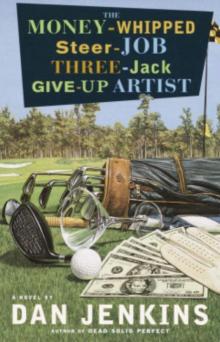
The Money-Whipped Steer-Job Three-Jack Give-Up Artist
You Gotta Play Hurt
Rude Behavior
Fast Copy
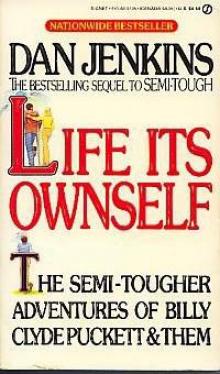
Life Its Ownself
Baja Oklahoma
Limo (with Bud Shrake)
Dead Solid Perfect
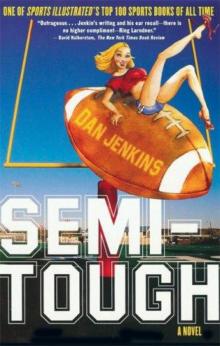
Semi-Tough
NONFICTION
Sports Makes You Type Faster
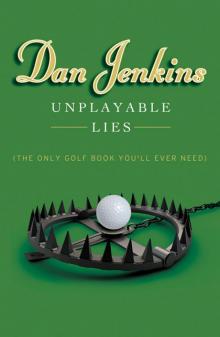
Unplayable Lies
His Ownself: a Semi-Memoir
Jenkins at the Majors
Texas Christian University Football Vault
Fairways and Greens
“You Call It Sports But I Say It’s a Jungle Out There”
I’ll Tell You One Thing
Bubba Talks
Saturday’s America
The Dogged Victims of Inexorable Fate
The Best 18 Golf Holes in America
The Reunion at Herb’s Café
DAN JENKINS
A Novel
Fort Worth, Texas
Copyright © 2019 by The Estate of Dan Jenkins
Library of Congress Control Number:2019946487
ISBN 9780875657363 (ebook)
TCU Box 298300
Fort Worth, Texas 76129
817.257.7822
www.prs.tcu.edu
To order books: 1.800.826.8911
Design by Bill Brammer
www.fusion29.com
Once more for June Jenkins, my dynamite lady,
who was always my Barbara Jane Bookman.
It’s the laughter you can carry
Through the years that turn you old.
—from Baja Oklahoma
a song by Juanita Hutchins
CONTENTS
Foreword
1.
2.
3.
4.
5.
6.
7.
8.
9.
10.
11.
12.
13.
14.
15.
16.
17.
18.
19.
20.
21.
22.
23.
24.
Afterword
FOREWORD
Two words.
I promise, just two that will make you laugh and hope for more.
Ready?
Dan Jenkins.
Gotcha.
Dan Jenkins was Texas born, TCU educated, whip smart, and ever ready to see folly when others saw reverence. He was from an early age a print junkie, gobbling up newspaper sports pages, reinventing the form so the absurd and the outlandish had a place at the altar alongside the worshipful.
It’s not that he was above his own large soft sweet spot. Mention the Masters Golf Tournament and watch him go all misty describing the bliss of sitting in the clubhouse on Sunday morning with a newspaper, a pot of coffee, and the lineup for the final round.
Dan worked for every print publication except the Vatican News. Sports Illustrated, Golf Digest, the leading Texas newspapers were his primary outlets, but with his first novel, Semi-Tough, he moved into the world of books and fictional characters that we knew were hilariously close to the real deal on gridirons and other playing fields.
Semi-Tough, the book and the movie, featured a Texas trio—Billy Clyde Puckett, Marvin “Shake” Tiller, and Barbara Jane Bookman—as the leading characters in the real world of pro football, Texas high rollers, and off-the-field, er, naked calisthenics. It was the first in a lineup of novels that cut through the sanctimonious treatment of big-time sports.
His boldest strike was a fictional “interview” with Tiger Woods in which he cut through the popular deification of Woods and asked about his arrogance around other players, his cheapskate ways with tips, and his cold dismissals of longtime aides.
Woods was not amused, but Dan stood his ground, knowing that the Tiger of TV promotion was not the same man of the clubhouse and player culture.
By the time I met Dan I was prepared to be worshipful, but it was clear he wasn’t interested in a fawning fan approach. He always had smart questions about the news. Very quickly Meredith and I became big fans of Dan and his wife, June.
As a longtime big sports-event fawning junkie, from Olympics to Super Bowls and Final Fours, I was thrilled when Golf Digest invited me to be a guest writer for a feature called “First Look,” an account of a first visit to the Masters.
Best of all, it was a chance to hang with Dan for the weekend on the course and at the evening southern-style dinners organized by the golf writers. They all had tales of the legendary golfers which would be imprudent of me to repeat (but if you spot me in a bar I may be tempted to share one or two). Dan was just one of the boys, his legendary status parked in the spectator’s gallery. Here the sweet potato pie had greater standing.
At the end of the weekend Dan looked at me solemnly, shook my hand, and said in his best Bogart style, “We’ll always have a Sunday at the Masters,” and broke out laughing!
Dan Jenkins always made me laugh and think.
He was Texas large and true as a Masters’ green.
In this quintessential Jenkins work, The Reunion at Herb’s Café, you’ll find all of the characters that bring us back to Dan through more than twenty books, fiction and nonfiction.
Puckett the potty mouthed, the laugh-out-loud premise and characters.
Pure Jenkins—the legacy that when I shared the news of this assignment with friends and fellow writers, the reaction was uniform: God, we’ll miss him.
Our mutual friend, Bob Schieffer, the CBS legend and another Horned Frog, recalled being on stage with Dan when they were asked what they wanted on their tombstones.
Dan replied that he wanted “I figured it would come to this.”
Dan left us laughing and missing him, but The Reunion at Herb’s Café is a comforting reminder that Dan and all of his character-friends will always be around.
Thank God.
And thank you, Dan.
Tom Brokaw
August 2019
1.
HERB MACKLIN always said he wanted to die in the arms of his dear second wife Nyla, the lady who helped him keep Herb’s Café thriving. Even though Nyla saw the place as her chief competition when it came to Herb’s attentions. Herb’s wish went south the day he decided to clean the gutters on the place himself. Nyla told him only a fool would get up on a ladder at his age, so when Herb fell and died in the arms of a yaupon holly, she found it hard to forgive.
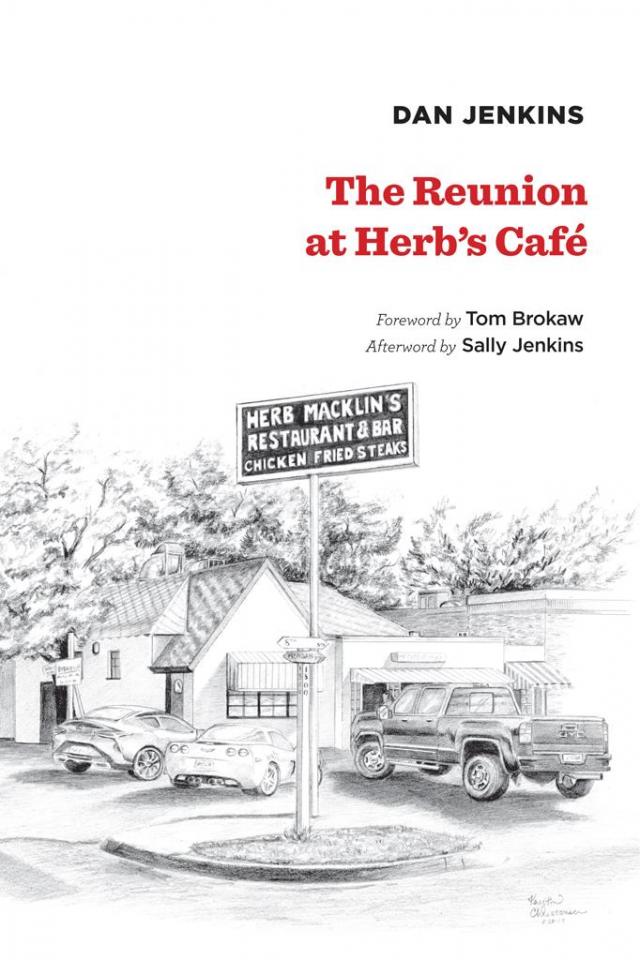
The restaurant had been a landmark forever, and never mind that Herb’s Café was not its proper name. The tall sign on the corner of South Side Boulevard and Spurlock Street accurately read:
“Herb Macklin’s Restaurant & Bar—Chicken Fried Steaks.”
The name had been shortened by faithful regulars like myself.
The building was originally built for Pug’s Drive-In. That was during World War II. Carhops wore roller skates to bring mugs of root beer, frozen chocolate malts, chili dogs, and skinny hamburgers to the vehicles. This was obviously before Herb’s time, or mine.
A young Herb had seen action in the Korean War after he was drafted into the Army. He bought the restaurant in 1962 when the bar side was a “bottle club.” That’s when he was married for a short time to “Maureen, the Queen of Mean.”
Texans didn’t vote in liquor by the drink until 1971. Herb liked to say that if the state had always served mixed drinks, Galveston would have been Las Vegas and San Antonio would have been our New Orleans.
It was my hero and good friend Billy Clyde Puckett who christened Herb’s regulars as “Great Americans and wonderful human beings.”
Nyla now had a different view of the crowd. She called them “the most pathetic group of no-count, pussy-ruint, hame-heads in God’s universe.”
I still don’t know what a hame-head is. I think it has something to do with a horse. But I felt sure that Nyla included me in the group.
Yeah. Me. Tommy Earl Bruner. As great an American and wonderful human being as you’d ever care to hoist a cocktail with.
*****
IT’S NOT true that I required a sedative when Nyla leased the restaurant to the rainbows. I don’t care how people live in private. I’ve always had friends who were members of the other team. A friend in college was a rainbow, I was certain, although he kept it to himself. He was witty and sharp. An interesting person to sit around and drink coffee with. We talked about stuff other than football. Movies, blues, TV, books that make you laugh. My football teammates made sport of me for befriending him, but he was a better conversationalist than most nose tackles. I’ve never known what happened to him, or bothered to find out.
I admit I can’t take rainbows in groups. When they come at me in groups they enjoy ridiculing straights with snickering whispers, and prattle on about things I file under Oriental Rugs. Frankly, I don’t care for groups of any kind, other than loyal friends and little warm puppies.
The new owners redecorated Herb’s to give it the look of a florist shop. They renamed it “Thad and Dorian’s Le Pub.” That would be Thad Shine, he of the ponytail, and Dorian Wage, he of the pompadour.
The rainbows were rich kids who came from towns named for thei
r relatives. Shine, Arkansas, and Wage, Oklahoma. Thad and Dorian had met at the Culinary Institute of Cuernavaca.
The lads also fancied crewneck sweaters or T-shirts worn under sport coats. That look may have spoken style to the easily led, but to me it looked more like a tourism poster for 1980s Miami. Most shirts I know have collars.
They didn’t make it easy on me to befriend, either. What with Thad reminding me that his favorite spectator sport was bodybuilding. And Dorian asking me what a Horned Frog was, and how it differed from, like, a frog?
My educated guess was that Le Pub would not have much staying power when the new owners insisted on closing for dinner after lunch on Sundays and all of Monday.
As long as anyone had known Herb’s, it had stayed open seven days a week, every week of the year. I’m saying breakfast, lunch, dinner, after-dinner, and late night. It was open every holiday, including Christmas, Easter, New Year’s Eve, and the bowl games on New Year’s Day.
The staff liked working holidays. The hefty tips rolled in on holidays. By staff, I refer to the longtime waitresses, Gloria, Agnes, Louise, Bernice, and Mildred, the bartenders from Juanita to Robyn to Trudy to Connie, and the cooks, Will, Opal, and Sugar.
The rainbows made another mistake in adding a selection of adventurous dishes to the menu. I give you the fig and sushi quiche, the rabbit and okra soufflé, the tripe and onions taco, the blended Brussel sprouts, broccoli, cantaloupe, and coconut water smoothie. And in a nod to Texas, the “bullrider’s soup.” This dazzler came in a bowl of thick brown gunk with what I swear was the brain of a small animal floating on top.
But their biggest mistake was taking the chicken fried steak off the menu and compounding the sin by replacing it with a chicken fried chateaubriand, hold the cream gravy.
Which led to eight other regulars and myself putting $100 each in the pot and setting the Over-Under at one year on how long Le Pub would stay in business.
The rainbows were too dumb to realize that Herb’s Café had been successful for reasons other than the chicken fried steak. Herb, who consistently wore a suit and tie to work, kept the establishment spotless, the restrooms more so, served a good drink, and everything else to eat was splendid—breakfast at any hour, the fried chicken platter, breaded veal cutlet, stuffed green pepper, bowl of chili, smothered pork chops, chicken and dumplings, corned beef hash, roast beef hash, Irish stew, cheese enchiladas, burgers, the entire menu.
Incidentally, Herb Macklin did not invent the chicken fried steak. That happened on a Texas ranch back in time, and by accident. The same way chili was created by a chuck wagon cook. Herb refined the chicken fried steak and made it the Fort Worth-famous item it has become. He used a thin prime cube steak, tenderized it until it begged for mercy, soaked it in a savory fried chicken batter, cooked it until the batter was slightly crispy, and served it on a slice of white toast or biscuits covered with cream gravy. White gravy, never brown.
When the lads bailed on their three-year lease after ten months, Nyla took their disappearance in stride.
She said, “It’s what I should have expected from two simpos who didn’t know a biscuit from a donut.”
Thad and Dorian’s getaway enabled me to scoop the money pool I’d organized. I won with nine months, twenty-three days.
Nyla received a letter from the lads eventually saying they were sorry they left town hurriedly, but she could expect to start receiving monthly payments from them as soon as they managed to get their Bed & Breakfast up and running in Pugwash, Nova Scotia.
She said, “I’ll sit on that till it sings like Tony Bennett.”
That’s when she made the decision to sell the property to Western City Bank. Let those thieves occupy another corner in town.
Well, I couldn’t let that happen. I bought it myself.
2.
I COULD afford to buy the joint by then.
I’d been a hard-working guy who deserved a financial break in my life and it arrived in the form of a wasteland my folks left me. The land only looked suitable for coyotes, wild pigs, deer, and Comanches, but it was discovered to be gurgling with oil and natural gas begging to reach the surface, and this allowed me to wind up richer than an A-rab with six wives and four goats.
My mom and dad, Eileen and Jake, were good-hearted people. They enjoyed great friends, lived a happy life, taught me to laugh at stuff, and raised me to do three things that would be helpful as an adult: read books to improve yourself, do honest work, stay out of jail.
They created a successful furniture store and came to possess the 4,500 acres located forty-five miles west of town from a customer who went broke in the lumber business. He paid them with the land. I took care of the taxes on the property for a number of years, betting on the come, seeing as how I held the mineral rights. The taxes went to a tobacco-chewing county tax assessor-collector who used my ass to give himself a raise every year.
I borrowed the money to pay the taxes from the only banker in town that I knew. He loaned me enough to cover the deal every year after I arranged for Billy Clyde Puckett to send him an autographed football. Billy Clyde’s playing days were well behind him, but old running backs don’t die, they just wind up with steel plates in their legs.
I’m proud to say my Daddy Jake fought in World War II. He said he used to pray every night that if he survived, the rest of his life would be ice cream. It was years before I found out what he did. He was seventeen and lied about his age to join the Navy the day after Pearl Harbor. I knew he’d served on an aircraft carrier, the USS Saratoga, but I was practically grown before I heard any details.
All he ever said as I was growing up was, “The cooks on the Sara made good potato soup.”
When I’d ask him about the war, my mom would smile and say, “He was kind of a hero, but he doesn’t like to talk about it.”
He was the gunner in a TBF, a torpedo bomber, which launched off the Saratoga when it was part of Admiral “Bull” Halsey’s task force in the raid on Rabaul in New Guinea. “I was eighteen years old, for Christ sake,” my dad said. “I knew we were in the Pacific Ocean, but I didn’t know where.”
Daddy Jake’s Grumman Avenger sprayed the deckhands and put a hole in an anchored Japanese cruiser before his TBF was shot down. My dad swam a good distance to collect his plane’s life raft, and swam a good distance back to rescue his pilot and torpedo officer. He lifted them onto the raft with him. They clung to the raft for three or four hours before they were rescued by the USS Bailey, a destroyer.
He said, “We were told there’d be no opposition, but when we were in sight of the Rabaul mainland there were so many Jap planes in the air you’d have thought everybody in that country had learned to fly. Later, after we were deposited on Tulagi in the Solomons, we saw an article in Stars & Stripes that said we’d been part of an engagement called ‘The Hornets Nest.’ Thanks for that lick, Naval Intelligence.”
My dad got around to showing me his medals and campaign ribbons one night when I was in high school. They were in his desk at home in a drawer under some business papers. I fondled the Navy Cross, the Distinguished Flying Cross, the Distinguished Service Medal, the Legion of Merit, and a Purple Heart.
I asked him what he did to earn the Purple Heart? All he said was, “I got stung by a jellyfish while I was flopping around in the ocean.”
*****
THE IDEA for a reunion occurred to me after I bought Herb’s. I wanted to celebrate it in some way. And celebrate the fact that I’d survived my previous adventures in commerce. The only time I showed any smarts was when I turned down one of Foster Barton’s get-rich-quick schemes. He invited me to go partners with him on manufacturing and selling school-color caskets.
I said, “Foster, who’s gonna buy one besides a Texas Aggie?”
His slump told me he’d rethink the notion.
I sold used Cadillac convertibles until nobody wanted one but Elvis impersonators. But only if it was painted pink. And Elvis impersonators were becoming extinct anyhow.
I went into bulletproof glass and formed Gang Resistant Systems, Inc. This was inspired by the suicide bombers, violent gangs, and vicious teenagers that were multiplying among us, having been raised on blood-thirsty video games, attention-deficit medications, and the skill of inventing cult handshakes.