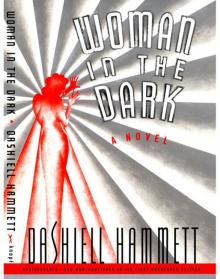
The essential noir bundl.., p.162
The Essential Noir Bundle,
p.162


“The cream of the crop, I guess, but any prison you’re in is a hole.”
“Don’t I know it! Did I ever tell you about the time I—”
I said, “Oh, for God’s sake,” and reached down to fold the stool I had been using.
“All right,” he said good-naturedly. “Remind me to tell you about it later. Where’d you get this dingus?” He looked down at the stool, a folding metal frame with dark-green duck seat and zippered compartments below.
“Gokey.”
“What’s that green and brown junk on the sides?”
“Mystik tape wrapped around the metal to keep it from shining too much in the woods.”
He nodded. “You do all right by yourself, but I guess a man of your age can’t be expected to squat on the ground.”
“You’re in your fifties yourself,” I said.
“You’re a lot older than that.”
“Nonsense, I’ll be fifty-eight this year.”
“That’s what I mean, Pop! You’ve got to take care of yourself.” He stood at the edge of the roothole while I went back a dozen yards to get the Mason jar I had wedged in the fork of a young maple and asked, “And what’s that?” as I returned screwing down the top.
“Rags soaked in skunk essence,” I explained. “It brings deer pretty close, maybe just because it kills man-smell. I was trying it out on fox.”
“You get awful childish sometimes,” he said as he followed me across the clearing.
He came behind me along the game path down through the woods and the walk down through the rock garden to the house. I stuck the Mason jar in its crevice between two rocks with a third over it, unloaded the shotgun, and we went up on the porch. Two battered leather valises and a forest-green duffle bag were on the porch just outside the door.
“What’s this for?” I asked. “I’m only visiting here myself.”
“What kind of friends are they if a friend of yours isn’t a friend of theirs? Anyhow I’ll only be here a couple of days. You know I can’t stand you much longer than that.”
“Nothing doing. I’m trying to get a book started.”
“That’s what I wanted to talk to you about.” He put a big hand on my back and urged me towards the door. “I can talk all right out here, but you need to be sitting down with a drink in your hand.”
I took him into the house, put the shotgun and folding chair in a corner of the hallway, and poured him a drink. When he looked inquiringly at me, I said, “I haven’t had any of it in three years.”
He sloshed his whiskey and soda around the way people do when they wish to hear the ice tinkle. “It’s probably just as well,” he said. “I don’t remember that you carried your liquor so good.”
I laughed and waved him towards a dark-red armchair. We were in the living room, a large brown, red, green and white room with a nice Vuillard over the television set. “That’s not the kind of thing that annoys ex-drunks. It’s being told they never did drink so awful much anyway.”
“Well, as a matter of fact, you—”
“Cut it out. Sit down and let me tell you why you’re going back to town after dinner. I’ve got a book started and—”
“That’s not what you told me out there,” he said.
“Huh?”
“You said you were trying to get a book started. That’s what I want to talk to you about. It’s silly of you—it’s always been very silly of you, Pop—not to see that I—”
“Look, Tulip—if you still insist that’s your name—I’m not going to write a word about you ever if I can help it. You’re a dull and foolish man who goes around doing dull and foolish things he thinks someday somebody will want to write about. Anything anybody did would be dull and foolish if it was done for that reason. And where in the name of God do you get the notion that writers go around hunting for things to write about? Organizing material is the problem, not getting it. Most of the writers I know have far too many things on tap; they’re snowed under with stuff they’ll never get around to.”
“Words,” he said. “If you’ve got so much stuff to write about, how come you haven’t done any writing for so long?”
“How do you know how much writing I’ve done?”
“It can’t be much. Magazines used to be lousy with you. All I ever see now is reprints of your early stuff, and less and less of that.”
“I don’t exist just to write. I—”
“You’re changing the subject,” he said. “We’re talking about your writing. I don’t care if you want to waste some of your time playing games with little animals out there or making yourself out a hero by going to jail, but—Look, Pop, you didn’t go to jail just for the experience, did you? Because I could have saved you a lot of time and bother by telling you all you’d really have to know.”
I said, “I’ll bet you.”
He shrugged, drank, wiped his lips with a thick forefinger and said, “That’s just like a lot of other things you say, it doesn’t mean a damned thing. You just say it. You writers have got more words that—” He looked around the room and seemed to like what he saw. “This is a pretty good layout. Who does it belong to?”
“Some people named Irongate.”
“Friends of yours?”
“No, I never heard of them.”
“Okay, that’s funny,” he said. “Are they around?”
“So far as I know they’re still in Florida.”
“That makes it sillier than ever saying I couldn’t stay here for a couple of days. What are they like?”
“People.”
“You may be an interesting writer, but you don’t talk it. What kind of people are they like? Young people? Old people? Left-handed people?”
“Paulie’s probably in her early thirties, Gus is a few years older.”
“Just the two of them? No children?”
“Why don’t you write these answers down so we won’t have to go over the whole thing again when the census man comes? Three children, ranging in age from about sixteen to maybe twelve.”
His grayish eyes brightened. “Sixteen, huh? And she’s only in the early thirties? A shotgun wedding?”
“How do I know? I’ve only known them since I got out of the Army.”
“What an army that was!” He stood up with his empty glass. “Don’t bother. I’ll fix it myself. You forgot whatever little you knew about pouring drinks since you stopped using them yourself. We fought one hell of a war in the Aleutians, didn’t we? Let’s see, didn’t you leave before I did?”
“I came back in September, ’45.”
“Then it’s nearly seven years since I’ve seen you.” He brought his drink back to the red armchair and sat down again.
“It’s longer than that. The last time I saw you was on Kiska, and I haven’t been there since ’44.”
“ ’44? ’45? What the hell difference does it make? What are you, a lousy historian going through life with a calendar in your hand? Tell me more about these Irongates. Have they got money?”
“Oh, so you don’t like being reminded of Kiska? I guess they have. I don’t know how much.”
“What does he do?”
“Paints pictures, but he doesn’t make a living out of that. I think his old man left him some dough.”
“His old man sounds like a nice guy.”
“But anyway you’re not to give them the business.”
He stared at me, his thick-featured face all surprised honesty under his short-clipped thick sandy hair. “What business?”
“Any business. No angles, Tulip.”
“Well, I’ll be good and damned,” he said. “You know, that’s the hell of the prison system. It throws a man in contact with the lowest criminal elements and first thing you know he’s seeing evil and skulduggery everywhere, not that you ever made much of a habit of seeing the best in your fellow man, but—”
“Besides,” I said, “the FBI probably still keeps some kind of an eye on me and—”
“That’s different,” he said. “Why didn’t you say so?”
“I didn’t want to scare you away.”
“Scare me? A fat chance! As a matter of fact, I’m pretty well fixed right now, sweating against silk, as the boys used to say, only that isn’t exactly what they said.”
“Where’d you get the potatoes?”
“Remember that crazy major that wanted us to go in for cattle-raising in the Aleutians after the war, said he could fix it with Maury Maverick to rent us one of the islands cheap?”
“For God’s sake, you didn’t do that? With transportation costs the—”
“No, I just happened to think about it. What was the major’s name?”
“You just happened to think about it to slide around my question about where you got the dough you claim you have.”
“Oh, that! I got that down Oklahoma-Texas way.”
“Oil-money widow?”
He laughed. “You’re a character, Pop.”
“Jailhouse experience. There were some guys waiting trial for that in West Street last summer.”
Tulip seemed surprised. “Jesus, how does a guy go about breaking laws to get money from women?”
“There must be some way.”
I went out to the kitchen where Donald was peeling vegetables at the sink while his wife, Linda, adjusted the radio so a song called “Cry” wouldn’t be so noisy and told them, “Mr. Tulip, or Colonel Tulip, if he still calls himself that—he was a lieutenant colonel in the Army—will be staying overnight, or maybe for a day or two. Will you fix him up?”
“You want him in the room next to you?” Donald asked. “Or in that yellow room down the hall?”
“Give him the yellow room. Thanks.”
Tulip got up when I returned to the living room and said, “You know, I’ve been thinking, Pop. I ought to phone a girl I know over in Everest, and she’s got a kind of cute sister, so why don’t I ask them if—”
“Oh, sure, and you must have some relations in the neighborhood, too. I can dig up some names and between us we ought to be able to get twenty or thirty people over here easily.”
“It was just an idea,” he said, and went over to the corner table to fix himself another drink. “Anyway, I’d rather talk to you about your writing. That’s what I came for.”
“You didn’t. You came here to talk to me about you.”
“Well, it’s the same thing in a way.” He went back to his chair, sat down, crossed his knees and looked me up and down. “Pop, do you want me to tell you why it is you always start to sulk as soon as anybody says anything about your writing?”
“No, I don’t,” I said honestly. “Get to the point. What have you been doing now that you think is so damned fascinating?”
“It’s not like that.” There was a touch of what could have been embarrassment in his always-husky voice. “Sometimes I don’t think you understand me all the time. Did you ever run into Lee Branch down on Shemya?”
“Not that I remember. Why?”
“He was in the XIIth, a flier. No reason, I was just thinking. He was a kind of nice guy. I went down and visited him awhile after I got out.”
Tulip told me about his visit, but he gave Branch a sister called Paulie—I had mentioned Paulie Irongate—he made their place sound a little like the Irongate’s place, though he set it in another state, and there were shotguns in his story as there had been in my hands when he met me up in the clearing where I had been watching the fox.
Tulip was usually longwinded—especially when he thought it necessary to back into one of his tales—but the guts of what he told me, not in his language and without any of the thoughts he said he had at the time, was that Lee Branch said, “The flag is waving,” and lowered his head a little to peer up under his dun hat brim through cattail tips.
Five ducks came in black against a dull pearl November sky, showing white underwings when they swept over the decoys and turned into the wind.
Tulip said, “Hit it, little man.” The 20-gauge Fox was a dainty weapon in his big hands. He fired without rising from where he sat on the ground under the dying willow, first the left barrel and then the right as the lead duck hung momentarily motionless at the foot of too sharply rising an angle. Both birds hit the water together. One was dead. The other swam three-quarters of a small circle and died.
Lee Branch, up on his feet, swung his heavier gun to the right, fired, swung on and fired again. Both birds fell. One of them lost a good deal of feathers. Lee grinned down at Tulip, who was reloading. “I guess we’ve got our stuff with us today, Swede.”
Tulip looked complacently at the dead ducks on the dry weeds beside him and at the four on the lake. “Uh-huh.” He felt in a pocket for cigarettes. “But you bazookaed the bejesus out of the first one.”
“I should’ve waited longer. I like a gun that jumps in my hand. I think I’ll get me a 10-gauge.” Lee reloaded the Belgian duck gun and laid it down tenderly. “Whose turn to fetch?”
Tulip jerked a thumb at Lee and lay back on the weeds. Lee Branch was twenty-eight, with smooth dark hair parted in the middle, and of course hidden just now by his dun hat, and bright dark eyes. He was not small, but his nimble trimness—even in horse-hide clothes pushing his way through briars to the other side of the tiny island where they had hidden their boat—made him seem smaller than he was.
When he returned with the birds Tulip was lying on his back smoking with his eyes shut.
Lee said, “One of yours was another wood duck.” He held it out.
“I know.” Tulip opened one eye to squint through smoke at the duck. “They’d be too pretty to kill if a man wasn’t always so hungry.” He tossed his cigarette over the cattails into the water and stretched his arms wide on the ground. “You weren’t kidding, boysie. This has been everything you said.”
Lee started to speak, then squatted on his heels, his dark eyes alert. “What do you mean by has been?” he asked. “Is.” A pause. “Will be.” He seemed very young.
Tulip shut his eyes again. “I don’t know, bub. How long have I been here?”
“A week. Ten days. I don’t know. What difference does that make? When we used to talk about your coming here after the war we didn’t—”
Tulip squirmed and frowned, but didn’t open his eyes. “Okay, okay, but you don’t think everybody ought to stick to all those post-war plans they make in the Army?”
“Of course not, but this is—This is different, isn’t it, Swede?”
“This is by itself,” Tulip said.
“Well, then?”
“Nobody’s got all the answers.”
“I’m not trying to tie you down, but—Listen, Swede, it’s not because the place is Paulie’s, is it?”
“No.”
“Because she likes you and would like to have you stay.”
“I’m glad she likes me,” Tulip said, “because I like her plenty.”
“And it’s not that?”
“No.”
Lee probably twisted a twig from the willow and split it with a thumbnail. “An old guy like you oughtn’t to be roaming around just for the hell of it.”
“I know. I don’t like roaming, only things are always reminding me of something some place else.” He opened his eyes and sat up, putting the Fox across his thighs. “You don’t use this little gun. Want to sell it?”
“I’d give it to you, but it’s Paulie’s. Ask her.”
Tulip shook his head. “She’s bats as her brother. She’d give it to me.”
“What are you? The last of the Confederates or something and don’t take gifts from women?”
“I reckon you never knew many Confederates, suh. Was Paulie much in love with her husband?”
Lee looked at Tulip, who was looking out over the lake at the decoys. “I don’t really know. He was a pretty good guy. You never ran into him, huh?”
“He was knocked off before I came down the Chain. They were still talking about him.”
“They liked him.” Lee threw the ruined willow twig away. “Why’d you ask that about Paulie?”
“I’m the nosey type, that’s all.”
“I didn’t mean you shouldn’t. Jesus, people are hard to talk to!”
Tulip shrugged his big shoulders. “You can talk to me about anything, only maybe there are some things you hadn’t ought to.”
“You mean things about you and Paulie?”
Tulip turned his head and looked carefully at the younger man. “Ah, the typical kid brother.”
Lee reddened and laughed and said, “Go to hell.” Then, after a little pause, “But that is what you mean, isn’t it?”
Tulip shook his head. “I don’t think there’s much there you can’t talk about.”
Paulie Horris came around a tall whitewood tree at the far end of the lake, made a funnel of her hands and called, “Hey, murderers. The sun’s down. You’re ten minutes illegal.”
They stood up to wave at her, picked up shotguns and dead ducks and went back through briars to the boat. Tulip stood in the stern of the boat and poled it out towards the decoys. Twice Lee Branch seemed about to say something, but he did not speak until he was leaning far over the side of the boat to pick up an artificial mallard. Then he asked, “You’re not just being a dope, are you?”
Tulip, bending to retrieve two decoys as the boat crept past them, said, “Stop mumbling.”
Lee straightened up and said clearly, “Her husband being a war hero and that kind of stuff. You’re not letting it throw you, are you?”
Tulip said, “Tch, tch, tch, and I thought I’d heard everything.”
Lee’s face reddened again. He laughed and said, “There was never any use talking to you,” and they picked up the rest of the decoys.
As Tulip poled the boat towards the bathhouse Paulie Horris came around a sumac thicket from the far end of the lake and walked down to the stone dock to meet them. She was a tall dark-haired, dark-eyed woman of thirty in a gray whipcord skirt and yellowish three-quarter-length leather coat.
“You’re a mighty pretty-walking woman, Mrs. Horris,” Tulip called to her.
She curtsied. “Thank you kindly, sir.”
Lee stowed the decoys in the bathhouse while Tulip tied up the boat so it couldn’t bang against the dock if wind blew. Then, each carrying some of the ducks, they walked abreast, with the girl in the middle, up the road towards the house.