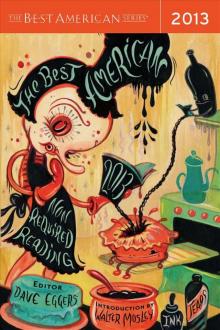
The every, p.28
The Every,
p.28



“You have to give up a bit of choice for the sake of the planet,” said Berit. “You probably saw that sentiment above. Though phrased in slightly stronger language.”
“Oh God, have you seen this?” Preeti said. The Supples gathered around and started talking about something called Friendy. Preeti’s cousin in Mumbai said it was everywhere. In a week it had amassed 41 million users there.
“Put it on the screen,” Joan said. “I don’t want to huddle around your little phone.”
Delaney looked up to the central office screen. An app came to life, revealing a face in a frame. “That’s my cousin Urmila,” Preeti said. Delaney did not breathe. It was AuthentiFriend. Everything was the same, but far more developed, and now it was called Friendy.
“Terrible name,” Joan said. “I hate it already.”
“No,” Preeti said. “It’s like a lie detector test. It tells you if someone’s honest, candid. You know dogs can sense cancer? This senses any untruth. Anything hidden, withheld. Is the word guile?”
“It can sense guile? That is fucking dark,” Joan said.
“What’s the big number in the corner?” Helen asked. In the upper right of the screen, above Urmila’s face, a number—88—was pulsing.
“That’s overall quality of friendship,” Preeti said. “You know the stats about friendship. You live longer and healthier if you have quality friendships. That’s why the slogan.” She pointed to the screen’s upper left corner, where the words “Who are your real friends?” were written in a sharp and accusatory font.
“It’s about quality, not quantity,” Preeti said. “We’re always worried about the number of friends we have, when we should be assessing the quality of those friendships.”
She really thought she was explaining it in a helpful way.
“This is sulfurous,” Joan said, and Delaney loved her for it.
“It’s just for fun,” Preeti said.
“That is some diabolical fun,” Joan said.
Her opinion was in the minority. The other Supples were trying to decide on someone they could call—a test subject. Berit had a college friend she thought would be appropriate. Minutes later, a dark-haired woman named Anita appeared on the Supples’ main screen. She was in Uppsala, Sweden.
“Hi Anita!” Berit said. She had positioned herself across the room, in a quiet corner. To Anita, Berit would seem to be alone, talking to her on a tablet. But all of the Supples were watching Anita on the large screen.
“How are you?” Berit asked.
Anita’s answer, “Good!” was deemed untruthful.
“Are you sure?” Berit asked.
“Yes. Why?” Anita asked.
Friendy’s red lights were pulsing—lack of candor, guardedness. The Supples, silent and huddled out of view, were having a ball.
“I’ve always meant to ask you,” Berit said, “when we were in college, you went to the Stockholm archipelago one summer with a bunch of people. Remember?”
“Of course,” Anita said. She seemed distracted. There was a gardener in the backyard, and a cat that periodically tapped across her keyboard. “Why?”
“My boyfriend at the time went with you,” Berit said. “Remember Per?”
Delaney’s brain was on fire. A moment ago Berit had seemed confident and kind, and now, with this weaselly tool, she’d become a weasel.
“I do,” Anita said uncertainly.
“You always seemed to have a thing for Per, am I right?” Berit asked.
“I wouldn’t say it was a thing,” Anita said. “Berit, why are you bringing this up now? It was eight years ago. I haven’t seen Per since that summer. Isn’t he in Toronto?”
“I just always had a feeling something happened between you two on that trip. And remember I couldn’t go. My brother was dying.”
“Yes, I know. I’ve always been sorry you couldn’t be with us,” Anita said, her voice quavering and eyes growing wet. Friendy’s sensors were going wild. “Nothing happened between us.”
A green light pulsed. This was truthful. The Supples were impressed. Berit pressed on.
“Just tell me,” she said. “You were attracted to him, yes?”
“Oh Berit,” Anita said. “When are you coming home next? Maybe we can talk then. I don’t like this.”
Overall Anita’s truthfulness score was in the low 20s.
“Never mind,” Berit said. “I got the answers I needed.”
And she ended the connection. She returned to the group of Supples, accepting their condolences and smiling grimly at their many cursings of Anita and all like Anita.
“This is a good friend of yours?” Preeti asked Berit.
“Since we were six,” Berit said.
“Berit!” Joan snapped. “Have you regressed to thirteen years old? You can’t take this seriously. It’s a fucking app that some nerds here developed.”
Berit laughed. “I know. I know it’s silly. I’ll call her again some other time and get a read on things.”
Ro comforted her. “Give her a few more chances. Average them together.” Her eyes were soft and magnanimous, almost saintly. “She deserves that—an aggregate score.”
As Friendy caught fire in the next days, Delaney waited for the outrage. It did not come. Friendy burned through South Asia in a week and then went east and north. In Japan and South Korea, it was the most downloaded app in a decade. Delaney planned to check in with Wes, to see what he knew of an American rollout, but before she could, it was everywhere. There had been no announcement, no fanfare. It was simply on everyone’s phone and then the topic of half of all conversations. Friends used it on friends, and when all friends became wise to its ubiquity, they used it on relatives. A billion lies, small and large, were told and were caught, and a remorseless wave of sorrow and suspicion swept over humanity. It was far worse than Delaney had imagined.
And yet no one blamed the Every. The company had done a brilliant job of concealing their role in its rollout, wanting to first see how it played out before taking credit. A smattering of family-welfare associations issued admonitions and a handful of psychologists and pundits explained the problems with friends and family subjecting each other to data-driven analyses of sincerity, but in short order, the app was instantly as acceptable and common a tool of measurement as the thermometer or yardstick. Because, humanity said in one unified voice, a person has a right to know if they’re being lied to, and who in their midst was a true friend.
XXVIII.
DELANEY COULDN’T UNDERSTAND it. She passed weeks boggled and benumbed. She sleepwalked through her time at AYS, hearing the vaulting praise attached to Holstein, who had managed to seize credit for Friendy, though she did, once or twice, mention Wes’s valuable contributions. On a sunny Saturday, Delaney got a text from Wes: “Come see the moms. We’re meeting at El Toro.”
She took the BART to the Mission District, and when she arrived at 16th Street, she found Wes standing at the top of the escalator. This interception, and his large floppy sunhat, made clear that the meeting of the moms, had been a ruse. He smiled, greeted her blandly, and gave her a sunhat, too. Hers was covered in tiny anchors. The Mission’s camera density was middle-range, but Delaney understood Wes’s facial-rec protections. She followed him silently and soon realized he was taking her to TrogTown.
TrogTown was only sixteen square blocks, but it was a radical throwback to what cities had once been, or perhaps never were. Delaney had no point of reference, really. She’d arrived in California only a few years earlier, but this, to her, was some semblance of a mythical urban past. At the outer fence, blocking a narrow alley, they met an elderly trog volunteer in a white vest. Without a word, Delaney and Wes dismantled their phones and handed them over. The volunteer bagged and locked them in one of a grid of small lockers.
“Welcome,” the volunteer said, finally smiling. “I’m Jackie. Do you two need any directions or help?” She offered a crudely printed brochure with a map included on one side.
“Post office?” Wes asked, and Jackie provided guidance to 16th and Bryant, the city’s only post office located in a trog zone. They made their way through the alley until it opened up to a sensory riot. The stench hit them in seconds—a melange of hot garbage, urine, feces, spices, barbecue, human sweat, cigarettes. The streets were crowded with a chaotic mix of hippie holdouts, anarchists, apostates and eccentrics—and thousands who simply couldn’t afford to live anywhere else. Half the buildings in TrogTown had been converted to SROs, and makeshift homes had been carved out of vestibules, garages and rooftop pigeon coops. Disorganized density abounded. A stray dog rushed past them, then turned briefly, as if to assess the likelihood they might feed him. Delaney stepped over a woman’s sidewalk display of old paperback books, batik handicrafts and glitter art.
“Trade for the hat?” the woman said, and Delaney declined.
“Satay! Satay!” a hairless man yelled, holding chicken skewers out in an unwittingly threatening manner. The tiny wooden spears were the first sharp objects Delaney had seen in months.
“Sorry for the cloak and dagger. Here,” Wes said, handing her one of Agarwal’s distinctive envelopes. Delaney folded it and put it in her pocket. “You have to get a post office box,” Wes said. “We’ll forward your mail there. It feels unwise to get your mail at the Shed.”
They watched a man of about thirty speed by on a bicycle, without a helmet, riding no-handed. With his black hair flowing behind him, he looked like the freest human on Earth.
“Sorry about Friendy,” Wes said. “I thought that would have been a turning point. Not just a cliff, but an abyss.”
Delaney could barely hear him. An street orchestra was playing “Rhapsody in Blue.” It was good, very good, and no one was recording it. No phones. Delaney had a reflexive moment of panic, knowing that something was happening that would not be captured, would be heard only by the few dozen people within earshot—and lost forever.
“Del!” yelled Wes. He was halfway up the block. She caught up.
“Maybe we can market it to kids,” Delaney said. “That’s the only way to get it regulated. Tweak it so kids use it on their parents.”
“You don’t understand,” Wes said. “Half the Friendy users are kids. Mostly girls. The parents just shrug as the girls go at each other with a new level of ferocity. It’s so terrible, Delaney. And the divorces! You can’t get an accurate number, but it’s got to be thousands. In weeks. In a year it’ll be the main hiring tool for most companies. There are already apps that promise to improve your Friendy scores. Therapists who say they can make you more trustworthy. A plastic surgeon in Dallas is claiming he can make your face Friendy-proof. Something he calls facial dulling.”
Delaney and Wes walked around a ladder. From the top rung, a man in a puffy jacket was examining the eave of an old warehouse. Something caught his attention, and he pulled out a telescoping tool and jabbed it upward. A tiny SeeChange cam fell free and crashed on the sidewalk. He climbed down the ladder, crushed it underfoot and picked up the pieces. He held out a shard to Delaney.
“Souvenir?” he asked.
She declined, and they walked on. They passed a row of apartments carved from warehouses, thumping basslines coming through bootleg windows. From somewhere above, a rooftop squat maybe, they could hear a screaming argument between middle-aged lovers. A man walked by on stilts, smoking a blunt and cackling. A pair of junkies emerged suddenly from an alley, scared by the barking of a desperate labrador. In the distance, someone was setting off firecrackers. But amid all the clatter of TrogTown, one sound was not heard, not yet by Delaney and Wes at least—the sound of children. The law prohibited them from living in trog homes. It was assumed by all that they were here, that hundreds lived in TrogTown, but today they were invisible.
“How about,” Delaney said, “Friendy can read your friends’ texts and find all the times they mention you. That would be so—”
“Already done,” Wes said. “You have to understand, they have the best people on the planet working on it. And the AI is fine-tuning itself every hour. It grabs every available piece of information. Body language in videos, photos. It sees things you can’t even personally control. You can’t train yourself like you could with an old-time lie detector test. It’s measuring minute muscle-indicators on your face you have no way of suppressing. And there’s a new tool that measures not just truth, but degree of truth. You say something, it assigns a numerical value to its candor.”
“What does Holstein say?”
“She’s so happy. I mean, it’s the first significant and profitable idea the company’s had in years.”
“What about Stop+Lük? StayStïl?” Delaney asked.
“There’s no money in those,” Wes said. “But Friendy, god. You have no idea how many ways they’re monetizing this. The Gang of 40’s doing everything but removing Holstein’s brain to study it. Did I tell you that they’ve brought me into some meetings?”
“At the Gang of 40?” Delaney was astonished, aghast.
“Not like I’m a member yet. Still, though. It’s interesting.”
“Interesting?” It was like Wes being invited to UN Security Council and acting like he’d been brought to a neighbor’s fantasy football meeting.
“Have to say, they are some high-minded weirdos,” he said. “Profit and purity are mentioned in the same breath. It must come from Mae. This idea that anything concealed hurts humanity and the bottom line at the same time. The two are just inextricably linked. So Friendy is like their ultimate tool—it straightens out the last few hidden thoughts, motives, private opinions. The software sees it all. If you say you like something but you don’t, it calls you on it. Instantly. And what can any opposition say? That we should have more lying? Deception? Duplicity? How do you defend our right to lie?”
Delaney was sick. “I thought it would be some silly thing. Like one of those apps teenagers use to put funny noses on each other.”
“This is another purging,” Wes said. “That’s the thinking among the leadership—that these moments are necessary cleansings. That the improvement of the species, its perfectibility, is only possible by shaking off all our frailties and deviances. And anyone who can’t adapt is part of the culling. The brash or incautious are eliminated, and the species moves on, only tamer. Step back.”
Wes pulled Delaney into an alley, where they crouched behind a dumpster. A self-driving police cruiser, designed for surveillance, hummed by. Even the most truculent trogs couldn’t stop police from sending vehicles through their neighborhoods and photographing faces, capturing voices. The sweeper passed slowly and stopped, blocking the alley. Delaney put her hand over Wes’s mouth. A rooftop sensor spun for a few moments, and finally the sweeper continued down the road.
“You don’t want to know about the government contracts,” Wes said. “Think of the uses by police, the army. Interrogations. I mean, even simple negotiations between diplomats. Think of those without any ulterior motives, or possibility of deception.”
In a window above the dumpster, a handwritten sign read END THE EVERY, SAVE THE MANY. Delaney squinted beyond the glass, and was sure she saw the silhouette of a tiny girl, no more than five. But another figure appeared and hustled her away.
“Speaking of which. Did I tell you my Stenton theory? It was confirmed, but no one’s talking about it. He went to Huawei to ruin it. He went in, insisting that they make their phones lighter, cheaper. No one bought them, their stock cratered, and Every phones dominate the market. Then, conveniently, he leaves Huawei and comes back to the Every. It’s so diabolical I almost respect him. Let’s go.”
She and Wes stood and rejoined the flow of people. They dodged a magnificent woman on a magnificent horse, who was momentarily spooked by the sound of a pair of men on a nearby rooftop shooting drones for sport. A pair of middle-aged women serpentined by on roller skates, heading toward a kind of forbidden marketplace—every urban trog zone had one—where tables offered those things banned or unsellable anywhere else: cigars, suede shoes, peanuts, Barbies, bison jerky, busts of Lincoln and Churchill, sheepskin condoms, books by Garrison Keillor. At the makeshift entrance to the market, a rail-thin man in a red satin vest was selling balloons. Delaney almost bought one in the shape of a panda; she hadn’t seen an actual rubber balloon since she was twelve.
They stopped at a stall filled with copies of the world’s remaining newspapers. One from Austria, three from Germany. A magazine put out by the Cuban diaspora. And of course a whole section dedicated to Liberia, the last trog nation. Their print media was thriving, and in English. A headline read New WTO Director General Exploring Ambitious Anti-Trust Agenda.
A fortysomething woman wearing a vintage vendor’s smock, with wide front pockets for change, assessed them. “You can’t bring these back to the Every,” she said, and waved them away as if she were sweeping dust from a mantlepiece. “Look and leave.”
Delaney and Wes hustled off, past an effigy of Mae Holland hanging from a powerline. Down the block, in the middle of the road, a Cold War–era missile, nonfunctional but still unsettling, was pointed in the direction of Treasure Island. Someone had painted Thinking of You along its length.
“I need to sit down,” Delaney said, and collapsed on the curb. “How’d that lady know we were from the Every?”
Wes shrugged. “I haven’t been to TrogTown in a while. People are angrier now.” An elderly man walked by carrying a boombox on his shoulder, Public Enemy radiating through the man’s remaining brain-tissue.
“You see that your beauty-assessor is out there?” Wes asked.
“I did,” Delaney said.
Delaney’s suggestion, tossed off to Alessandro, had yielded an app called Hermosa. The original marketing encouraged users to submit paintings, photos, flower arrangements, and the ever-learning algorithm would assess the submission and provide a rating, 0 to 1000, based on composition, symmetry, color harmony—hundreds of inputs.