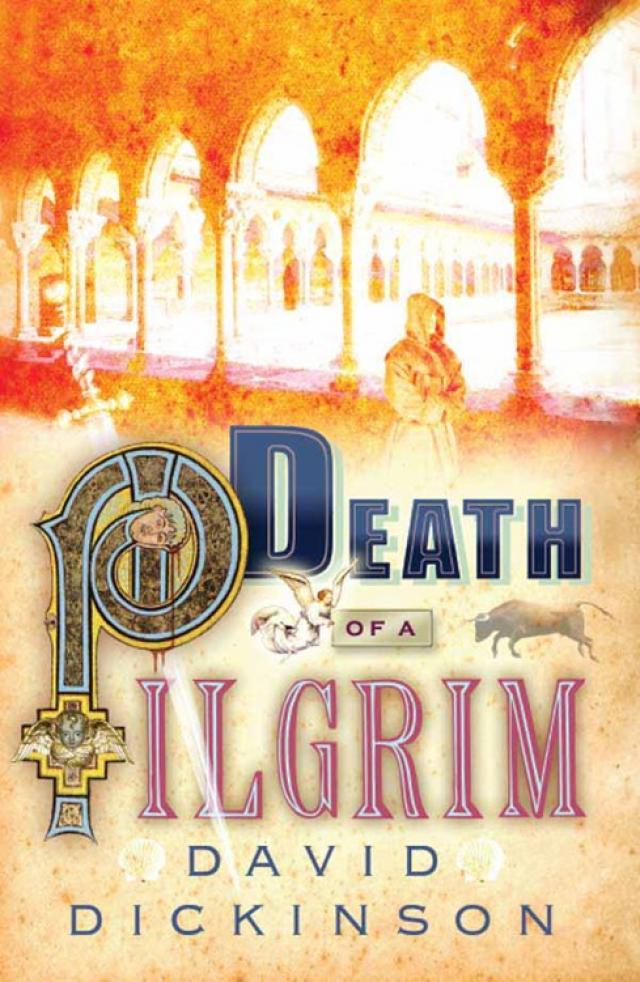
Death of a pilgrim lfp 8, p.7
Death of a Pilgrim lfp-8,
p.7


Whitelaw Reid, the American Ambassador Extraordinary and Plenipotentiary to the Court of St James’s, had enjoyed a long and distinguished career in journalism and politics. He had served as the special representative of the US Government at the coronation of Edward the Seventh. He had been Ambassador in Paris before his present posting. He too summoned his assistant. ‘Get me the Commissioner of the Metropolitan Police,’ he said. ‘Tell them it’s urgent. Tell them they’re to pull him out of whatever damned meeting he’s in and bring him to the phone.’
Sir Edward Henry, the Commissioner, came on the line straight away. He listened carefully as Reid put forward before him the little he knew.
‘You’ve come to the right place, Mr Ambassador,’ he began. ‘I believe we do have such a man in this country, though I do not know if he is available at present. Let me fill you in on his career. He served in the Army as an intelligence officer. Then he took up work as an investigator. He was involved some years ago – this is for your ears only, Mr Ambassador – in some delicate work involving the household of the then Prince of Wales. He was sent by Prime Minister Salisbury to reorganize Army Intelligence in the Boer War. He’s solved murders in the world of art and in a leading West Country cathedral. Recently he was dispatched by our Foreign Office to look into the mysterious death of a British diplomat in St Petersburg where, as you know as well as I do, he will have had to speak French. He’s charming, he’s clever and he has a very attractive wife.’
‘What’s his name?’ said Reid.
‘Our friend is called Lord Francis Powerscourt. I have been looking for his address for you while we speak. He lives at 24 Markham Square, Chelsea.’
‘Commissioner, I am more than grateful. If there’s anything my country can do for you in return, just let me know.’
‘Just one other thing, Mr Ambassador,’ said the Commissioner. ‘If you want a second opinion, could I suggest you get in touch with Lord Rosebery, our former Prime Minister? He’s long been a great friend of the Powerscourt family.’
‘Thank you, sir,’ said the Ambassador. ‘Thank you so much.’
‘Right, young man,’ Ambassador Reid turned to the languid young man beside him, ‘this is what I want you to do. Take a cab. Go to 24 Markham Square. Find me Lord Francis Powerscourt and bring him straight back here. Immediately. You got that?’
‘Yes, sir,’ said the young man, heading for the door at considerable speed.
‘You’d better take him this cable so he can see what’s going on.’ James Whitney took the message from his master and hurried off through the wet streets of London. It was shortly after eleven o’clock in the morning.
Lord Francis Powerscourt was sitting in his favourite armchair by the fireplace in his upstairs drawing room reading a pamphlet by the suffragettes. He was just under six feet tall with curly brown hair and deep blue eyes that inspected the world with interest mixed with irony. He found some of the suffragette arguments quite convincing. His wife Lady Lucy was looking at the catalogue for a forthcoming auction of antique furniture. There was a loud knock at the front door and Rhys, the Powerscourt butler, slipped into the room.
He coughed. Rhys always coughed. ‘There’s a young man to see you, sir. From the American Embassy, sir. Mr James Whitney.’
The young man strode into the room and shook Powerscourt and Lady Lucy firmly by the hand.
‘Please forgive me for rushing in like this, sir, but my mission is most urgent. Ambassador Reid has sent me here to bring you to him at once. It’s terribly urgent, sir.’
Powerscourt smiled at the young man. ‘Am I being kidnapped by American forces, Mr Whitney? May I not learn something of what all this is about?’
‘My orders are to bring you at once, Lord Powerscourt. I have a cable for you to read on the way. My cab is waiting.’
‘Well,’ said Powerscourt, ‘I will come with you. You will remember, Lucy, the circumstances of my departure, virtually taken prisoner by our young friend here.’ With that he kissed her goodbye and was escorted off towards the American Embassy.
As they rattled along in their cab Powerscourt found himself fascinated by the little he learned from Delaney’s cable. The case interested him. A band of pilgrims marching towards a holy shrine as people had done in centuries past to Canterbury or Rome. Some of these towns on the route he knew already, Conques and Figeac and Cahors. He had always wanted to see the cloisters at Moissac. Roncesvalles in the Pyrenees spelt high romance with the death and the Chanson de Roland. Pamplona, he thought, had something to do with bulls.
‘Lord Powerscourt.’ Ambassador Reid had risen from his desk to greet his visitor. ‘Thank you so much for coming so promptly. Thank you indeed.’
‘I had little choice, Mr Ambassador,’ said Powerscourt with a smile. ‘Your young man here virtually carried me off at gunpoint.’
The Ambassador laughed. ‘Tell me, Lord Powerscourt, now you have read that cable you know about as much as we do. What do you think of it?’
‘I think the immediate position is difficult, Mr Ambassador. They can be very obstinate, these French policemen, and the French bureaucracy is never quick. Maybe Mr Delaney needs to put his hand in his pocket.’
‘What do you mean, put his hand in his pocket?’ said the American quickly. He didn’t want to see his Embassy and his country dragged through the courts of Le Puy on charges of bribery and corruption.
‘I don’t mean pressing notes into the hands or the pockets of this Sergeant and his men, Mr Ambassador,’ said Powerscourt with a smile. ‘I was wondering about a contribution to the restoration fund of the cathedral, maybe. These ancient buildings swallow money whole, as you know. Another contribution or even the endowment of a charity to look after the widows and orphans of the local police force, something like that, perhaps?’
Whitelaw Reid had known as soon as he heard the Commissioner’s description that this was his man. Now he was certain.
‘Lord Powerscourt,’ said Ambassador Reid, ‘let’s not beat about the bush. Will you take the case?’
‘I will,’ said Powerscourt.
‘Excellent,’ said the Ambassador. ‘May I tell Delaney the news?’
‘You may,’ said Powerscourt.
‘Is it too soon to ask how soon you will be able to depart?’
‘Well,’ said Powerscourt, ‘let me see. I would like, with your permission, to bring my wife along in the first instance. Her French is better than mine. Two translators will be better than one. I have one or two commissions I would like to perform before we go. I wish to brief my companion in arms Johnny Fitzgerald about the case and to leave him here for now. It may be necessary to pursue various inquiries here or in Ireland about the background of some of these pilgrims. I hope we could set off this afternoon, Mr Ambassador.’
‘Very good, Lord Powerscourt, that all sounds in order. May I thank you again for taking the case on. Let me quote the words of your poet John Bunyan, if I may, with yourself in the role of the pilgrim:
He who would valiant be
’Gainst all disaster,
Let him in constancy
Follow the Master.
There’s no discouragement
Shall make him once relent
His first avowed intent
To be a pilgrim.
‘May I wish you God speed, Lord Powerscourt.’
‘Thank you,’ said Powerscourt. ‘Who knows? Perhaps we shall meet true valour on the way.’
6
Michael Delaney thought his pilgrims were bearing up remarkably well as they neared the end of their third day of incarceration in the Hotel St Jacques. They knew that a miracle worker called Lord Francis Powerscourt and his wife were travelling through France at breakneck speed to help them. Father Kennedy had organized little prayer meetings in his room for interested parties. Patrick MacLoughlin, the trainee priest from Boston, was a regular participant. Shane Delaney, the man on pilgrimage for the life of his wife Sinead, had written her a long letter. In his first draft he waxed lyrical, for Shane, on the subject of the food. Then he could hear his wife’s voice in his ear: ‘What in God’s name do you think you are doing, Shane Delaney, here’s me dying now in a rainy Swindon, and all you can do is tell me about the feasts of French food in some place I can’t pronounce, all stuffed out with that disgusting garlic, no doubt. You’re not on some bloody holiday, Shane Delaney; if you’ve got nothing better to do while you’re stuck in this hotel, get down on your bloody knees and pray for me. That’s what you’re there for, in heaven’s name.’ So Shane had torn that version up and composed another letter which might not have been one hundred per cent accurate, but would surely save him from the wrath of Swindon. He talked of regular prayer meetings with Father Kennedy. He said he was going to pray for her in front of the Black Madonna in the cathedral. He mentioned, towards the end of his letter, which nearly filled a page, that the Bishop of Le Puy would be coming to visit them in the next day or two. Sinead had always had a weakness for the church hierarchy, monsignors better than priests, abbots better than monsignors, bishops better than nearly everyone else. Shane Delaney did not mention the death of John Delaney. If he had, he was sure, he would be summoned home on the next train.
Waldo Mulligan, the man who worked for the senator in Washington, had come on pilgrimage to break off an affair he had been having with a colleague’s wife. The woman’s name was Caroline. To his horror he found during these days in the hotel that Caroline had followed him across the Atlantic. He saw her slender form and dark hair disappearing round the corridors of the Hotel St Jacques. At night she came to him in his dreams, turning into a wraith and vanishing when he reached out to touch her on the other side of his bed. He didn’t know what to do. He found that the hotel bar had a good supply of Irish whiskey and Waldo would sit by himself in some dark corner twirling his drink round the glass and nursing his broken heart.
Christy Delaney and Jack O’Driscoll had been making good progress in their French language lessons at the other end of the bar. They could now order glasses of red or white wine, cognac or pastis. They had advanced to Thank You and Good Afternoon and Good Morning and Good Evening. In his spare time Jack had begun writing his account of recent events for his newspaper. He kept it factual. Jack always remembered the grizzled chief sub-editor on his first paper, the Wicklow Times, telling him, as he struck his red pencil through the offending words, ‘We don’t want any of your bloody adjectives here, and we don’t want any of your bloody adverbs either.’
Brother White, the Christian Brother who taught at one of the leading Catholic public schools for boys in England, seemed to all who looked at him or spoke with him to be a man at peace with himself. Inside he was in turmoil. He had a secret, a rather terrible secret. Brother James White liked beating boys. He enjoyed it very much. He could still remember the very first caning he had administered years before. It had been on a Saturday afternoon in the summer term and the boy had failed to hand in his maths homework three days in a row. Outside he could hear the shouts of the cricketers as they appealed for leg before wicket or caught behind. Before the first stroke, the boy’s body stretched taut leaning over a chair, Brother White felt a small frisson passing through him. His first three blows, he remembered, had been wide of the mark, landing on the top of the legs or the very bottom of the back. The last three had struck home, the whish of the cane alternating with the whimper of the victim. From then on, Brother White beat as many boys as he could. He had a wide selection of instruments now, hidden in his cupboard, the thinnest cane reserved for the occasions when he wanted to inflict the maximum pain. He had tried to stop. He had prayed for guidance. It was no good. Once he had beaten an entire class in the course of an afternoon as they failed to own up to breaking a window. On very rare occasions, he beat boys he really disliked with their trousers down and with his thinnest cane. That always gave him special pleasure. He was always careful not to draw blood. It was now fifteen days since he had last beaten anybody. That last victim had left his room with tears running down his face, only turning at the door to catch the look of guilty pleasure that had spread all over Brother White’s features. I’m like an alcoholic now, he said to himself sadly, all I can think of is the next beating. Alone in his spartan room in the Hotel St Jacques in Le Puy-en-Velay, Brother James White found himself remembering his favourite beatings as others would remember favourite evenings at the theatre or visits to the National Gallery.
The chef, Michael Delaney would have been the first to admit, had been a major contributor to the bonhomie of his pilgrims. A succession of delicious dinners had been served with delicate tomato soup or coarse local pate, roast guinea fowl or navarin of lamb, tarte tatin, which the chef felt sure his visitors would never have tasted in their places of culinary darkness. Father Kennedy rather wished he could stay for ever, or at least until the chef had exhausted his repertoire. Even then, the Father felt, he could have happily gone back to the beginning and started all over again. The head waiter had been varying the seating plan, tables of four alternating with tables of six or eight. They were all working their way through a tarte aux myrtilles when the doors were flung open by the proprietor, and a tall man with curly brown hair in a dark blue travelling cape and a woman with a very elaborate hat strode into the dining room.
‘Please don’t get up,’ said the man with a smile, as chairs began edging backwards amid a rustling of feet. ‘My name is Powerscourt, Francis Powerscourt, and this is my wife Lucy.’ He offered her forward as one might offer a trophy to the winner of the Derby.
‘Why,’ said Michael Delaney, ‘welcome, Lord Powerscourt, Lady Powerscourt! Welcome indeed! I have had these two spaces on either side of mine ready for you for the past two days.’ He pointed to two empty chairs, places set, as a single place had been set for John Delaney days before. ‘Do you need food? Are you hungry?’
Powerscourt assured him that they were in no need of food and asked for introductions. When he asked Lady Lucy later that evening how many names she could remember from this first encounter, she managed twelve. Powerscourt had got stuck on nine. Lucy was always better at remembering names than he was. He claimed it was because she belonged to such a large family and would be cast into outer darkness if she could not recall the name of some distant cousin from the depths of Shropshire. As Powerscourt shook hands with the pilgrims he was saying to himself, One of you is a murderer. Is it you? But answers came there none. Maggie Delaney simpered over Lady Lucy for some time, delighted to have another woman on the premises. When the pilgrims returned to their tarte aux myrtilles, Powerscourt and Lady Lucy joined Delaney and Alex Bentley and Father Kennedy at a table set back from the others.
‘Tell me, Mr Delaney, what has happened since you sent your telegram?’
Delaney grimaced. ‘Not a lot, if I’m honest with you, Lord Powerscourt. We’re still locked up here. We’re not allowed out at all. Nine people have been interviewed so far. Alex here does his best but it’s very slow work.’
Alex Bentley explained the bizarre method of translating they had been forced to adopt.
‘A book, do you say, Mr Bentley? Are the questions and the answers written down in the same book?’
‘Yes, they are,’ said the young man.
‘And where is the book now? Does the Sergeant take it away with him when he leaves?’
‘He does, usually. But he left it behind today. I think he was in a hurry. He said something, I think, about his wife’s mother coming over.’
‘So do you have this book in your room, or the room where the interviews take place?’
‘I do.’
‘Could you copy it before morning, before the Sergeant comes back?’
‘Of course,’ said Alex Bentley, and rose to begin the process of turning himself into the scribe of Le Puy.
‘Don’t go yet,’ said Powerscourt. ‘Having access to that information could make my life easier, Mr Delaney,’ he added. He didn’t say that he would have access through the book to what nine of the pilgrims had told the authorities about where they were on the day John Delaney died. He leant forward and helped himself to the last slice of the tarte aux myrtilles. Lady Lucy declined. Father Kennedy watched it go rather wistfully. He thought he had enough room for one more helping.
‘Let me tell you, gentlemen, my current thoughts. I have been thinking about this situation on the train. In one sense, there is a paradox at the centre of affairs. You have employed me, Mr Delaney, to find out who killed your cousin John. If you are an investigator, what could be better than to have all the suspects cooped up in one place? They can’t go out. They’re in a sort of sealed box where the investigator can have access to them whenever he wants. But that doesn’t suit your particular circumstances. You are here on pilgrimage. You want to move on, all of you.’
‘Of course we want to move on,’ said Michael Delaney with feeling. ‘The question is, how do we do it?’
‘Well,’ said Powerscourt, ‘the first thing is to speed up the process of translation. Lady Lucy or I will translate tomorrow for the Sergeant for a start. You see, I don’t think these people can be persuaded to let you go until the due processes have been completed. I’m not familiar enough with French police procedure to know what is meant to happen next. But I think the time has come to take the initiative.’
Michael Delaney cheered up at this point. He had always believed that in business, if you didn’t take the initiative, somebody else would do it for you and you would lose the deal. Alex Bentley was wondering if this Lord Powerscourt might not be as formidable an operator in his special field as Delaney was in his.
‘Tomorrow morning – ’ Powerscourt began, and then stopped as the rest of the pilgrims began drifting out of the room. He turned to face them. ‘Gentlemen, Miss Delaney, my apologies, I noticed a facility for posting letters in the hotel entrance on my way in here this evening. Have any of you actually posted a message to what we might call the outside world? If you have, would you be so kind as to let me know before you leave the room?