Thrillers, p.1
Thrillers,
p.1
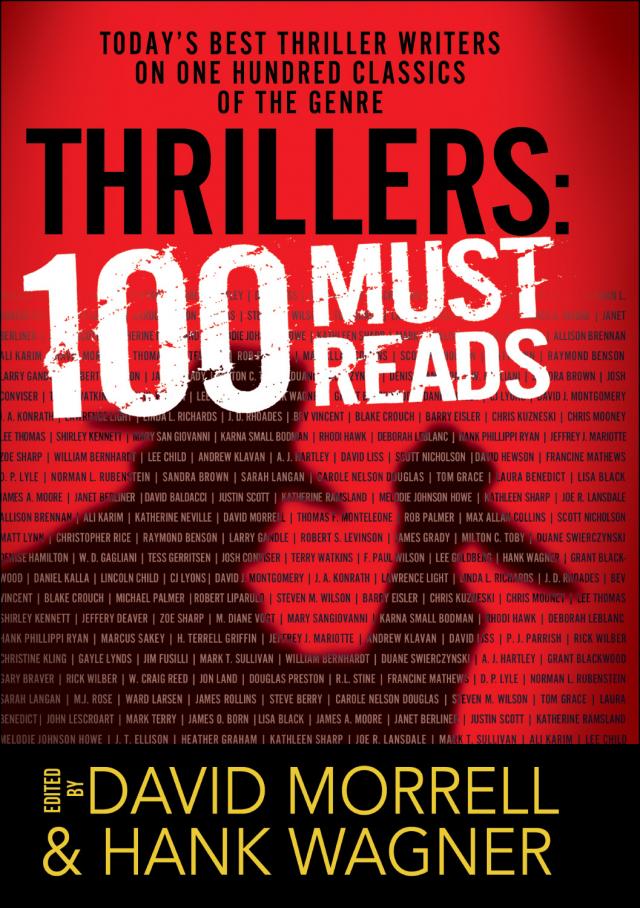


THRILLERS
ONE HUNDRED MUST-READS
THRILLERS
100 MUST-READS
David Morrell
and
Hank Wagner
Copyright © 2010 by International Thriller Writers
FIRST EDITION
All rights reserved. No part of this book may be reproduced in any form or by any electronic or mechanical means, including information storage and retrieval systems, without permission in writing from the publisher, except by a reviewer who may quote brief passages in a review.
ISBN 978-1-933515-56-4
Published in the United States of America by Oceanview Publishing Longboat Key, Florida
Visit our Web site at www.oceanviewpub.com and the International Thriller Writers Web site at www.thrillerwriters.org.
10 9 8 7 6 5 4 3 2 1
PRINTED IN THE UNITED STATES OF AMERICA
ACKNOWLEDGMENTS
The editors are indebted to Stephen Jones and Kim Newman for the example of their influential 1988 volume Horror: 100 Best Books and its follow-up,Horror: Another 100 Best Books. Mr. Jones provided invaluable advice about how to organize this complex project.
Various thriller reviewers offered helpful suggestions, in particular Larry Gandle, Ali Karim, and David Montgomery. Agent Henry Morrison drew our attention to E. Phillips Oppenheim’s The Great Impersonation. Nonetheless, the editors of this volume are solely responsible for the final selections.
Hank Wagner thanks his wife, Nancy, along with his daughters, Leigh, Melissa, and Sarah, for making daily life a thrill, and to Theo and Ella for providing comic relief.
David Morrell thanks the many ITW members who contributed to this volume. Without a second thought, they generously donated their time and talent to this educational project. Their commitment to the community of authors and readers is inspiring.
CONTENTS
Welcome to the World of Thrillers by David Hewson
One Hundred Must-Read Thrillers by David Morrell/Hank Wagner
1 Theseus and the Minotaur (1500 B.C.)
Lee Child
2 Homer’s The Iliad and the Odyssey (7th Century B.C.)
William Bernhardt
3 Beowulf (between 700 and 1000 A.D.)
Andrew Klavan
4 William Shakespeare’s Macbeth (1605 – 1606)
A. J. Hartley
5 Daniel Defoe’s Robinson Crusoe (1719–1722)
David Liss
6 Mary Shelley’s Frankenstein, or The Modern Prometheus (1818)
Gary Braver
7 James Fenimore Cooper’s The Last of the Mohicans (1826)
Rick Wilber
8 Edgar Allan Poe’s The Narrative of Arthur Gordon Pym of Nantucket (1838)
Katherine Neville
9 Alexandre Dumas’The Count of Monte Cristo (1845)
Francine Mathews
10 Wilkie Collins’s The Woman in White (1860)
Douglas Preston
11 Jules Verne’s Mysterious Island (1874)
D. P. Lyle
12 H. Rider Haggard’s King Solomon’s Mines (1885)
Norman L. Rubenstein
13 Robert Louis Stevenson’s The Strange Case of Dr. Jekyll & Mr. Hyde (1886)
Sarah Langan
14 Anthony Hope’s The Prisoner of Zenda (1894)
Michael Palmer
15 Bram Stoker’s Dracula (1897)
Carole Nelson Douglas
16 H. G. Wells’s The War of the Worlds (1898)
Steven M. Wilson
17 Rudyard Kipling’s Kim (1901)
Tom Grace
18 Sir Arthur Conan Doyle’s The Hound of the Baskervilles (1901)
Laura Benedict
19 Joseph Conrad’s Heart of Darkness (1902)
H. Terrell Griffin
20 Erskine Childers’s The Riddle of the Sands (1903)
Christine Kling
21 Jack London’s The Sea Wolf (1904)
Jim Fusilli
22 Baroness Emma Orczy’s The Scarlet Pimpernel (1905)
Lisa Black
23 Edgar Rice Burroughs’s Tarzan of the Apes (1912)
W. Craig Reed
24 Marie Belloc Lowndes’s The Lodger (1913)
James A. Moore
25 John Buchan’s The Thirty-Nine Steps (1915)
Janet Berliner
26 E. Phillips Oppenheim’s The Great Impersonation (1920)
Justin Scott
27 Richard Connell’s "The Most Dangerous Game" (1924)
Katherine Ramsland
28 W. Somerset Maugham’s Ashenden or The British Agent (1928)
Melodie Johnson Howe
29 P. G. Wodehouse’s Summer Lightning (1929)
R.L. Stine
30 Edgar Wallace’s King Kong (1933)
Kathleen Sharp
31 Lester Dent’s Doc Savage: The Man of Bronze (1933)
Mark T. Sullivan
32 James M. Cain’s The Postman Always Rings Twice (1934)
Joe R. Lansdale
33 Daphne du Maurier’s Rebecca (1938)
Allison Brennan
34 Agatha Christie’s And Then There Were None (1939)
David Morrell
35 Eric Ambler’s A Coffin for Dimitrios (1939)
Ali Karim
36 Geoffrey Household’s Rogue Male (1939)
David Morrell
37 Helen Macinnes’s Above Suspicion (1941)
Gayle Lynds
38 Cornell Woolrich’s "Rear Window" (1942)
Thomas F. Monteleone
39 Vera Caspary’s Laura (1943)
M. J. Rose
40 Kenneth Fearing’s The Big Clock (1946)
Lincoln Child
41 Graham Greene’s The Third Man (1950)
Rob Palmer
42 Patricia Highsmith’s Strangers on a Train (1950)
David Baldacci
43 Mickey Spillane’s One Lonely Night (1951)
Max Allan Collins
44 Jim Thompson’s The Killer Inside Me (1952)
Scott Nicholson
45 Ernest K. Gann’s The High and the Mighty (1953)
Ward Larsen
46 Jack Finney’s Invasion of the Body Snatchers (1955)
James Rollins
47 Hammond Innes’s The Wreck of the Mary Deare (1956)
Matt Lynn
48 Ian Fleming’s From Russia, with Love (1957)
Raymond Benson
49 Alistair MacLean’s The Guns of Navarone (1957)
Larry Gandle
50 Richard Condon’s The Manchurian Candidate (1959)
Robert S. Levinson
51 Len Deighton’s The IPCRESS File (1962)
Jeffery Deaver
52 Fletcher Knebel & Charles W. Bailey’s Seven Days in May (1962)
James Grady
53 Lionel Davidson’s The Rose of Tibet (1962)
Milton C. Toby
54 Richard Stark’s (Donald E. Westlake’s) The Hunter aka Point Blank (1962)
Duane Swierczynski
55 John le Carré’s The Spy Who Came in from the Cold (1963)
Denise Hamilton
56 Wilbur Smith’s When the Lion Feeds (1964)
W. D. Gagliani
57 Evelyn Anthony’s The Rendezvous (1967)
Sandra Brown
58 Michael Crichton’s The Andromeda Strain (1969)
Josh Conviser
59 James Dickey’s Deliverance (1970)
Terry Watkins
60 Frederick Forsyth’s The Day of the Jackal (1971)
F. Paul Wilson
61 Brian Garfield’s Death Wish (1972)
John Lescroart
62 David Morrell’s First Blood (1972)
Steve Berry
63 Trevanian’s The Eiger Sanction (1972)
Lee Goldberg
64 Charles McCarry’s The Tears of Autumn (1974)
Hank Wagner
65 Peter Benchley’s Jaws (1974)
P. J. Parrish
66 William Goldman’s Marathon Man (1974)
Hank Wagner
67 James Grady’s Six Days of the Condor (1974)
Mark Terry
68 Jack Higgins’s The Eagle Has Landed (1975)
Zoë Sharp
69 Joseph Wambaugh’s The Choirboys (1975)
James O. Born
70 Clive Cussler’s Raise the Titanic! (1976)
Grant Blackwood
71 Ira Levin’s The Boys from Brazil (1976)
Daniel Kalla
72 Robin Cook’s Coma (1977)
CJ Lyons
73 Ken Follett’s Eye of the Needle (1978)
Tess Gerritsen
74 Ross Thomas’s Chinaman’s Chance (1978)
David J. Montgomery
75 John D. MacDonald’s T he Green Ripper (1979)
J. A. Konrath
76 Justin Scott’s The Shipkiller (1979)
Lawrence Light
77 Robert Ludlum’s The Bourne Identity (1980)
Linda L. Richards
78 Eric Van Lustbader’s The Ninja (1980)
J. D. Rhoades
79 Thomas Harris’s Red Dragon (1981)
Bev Vincent
80 Jack Ketchum’s Off Season (1981)
Blake Crouch
81 Thomas Perry’s The Butcher’s Boy (1982)
Robert Liparulo
82 Tom Clancy’s The Hunt for Red October (1984)
Chris Kuzneski
83 F. Paul Wilson’s The Tomb (1984)
Heather Graham
84 Andrew Vachss’s Flood (1985)
/>
Barry Eisler
85 Stephen King’s Misery (1987)
Chris Mooney
86 Nelson DeMille’s The Charm School (1988)
J. T. Ellison
87 Dean Koontz’s Watchers (1988)
Lee Thomas
88 Katherine Neville’s The Eight (1988)
Shirley Kennett
89 Peter Straub’s Koko (1988)
Hank Wagner
90 John Grisham’s The Firm (1991)
M. Diane Vogt
91 R.L. Stine’s Silent Night (1991)
Jon Land
92 James Patterson’s Along Came a Spider (1992)
Mary SanGiovanni
93 Stephen Hunter’s Point of Impact (1993)
Christopher Rice
94 John Lescroart’s The 13th Juror (1994)
Karna Small Bodman
95 Sandra Brown’s The Witness (1995)
Deborah LeBlanc
96 David Baldacci’s Absolute Power (1996)
Rhodi Hawk
97 Gayle Lynds’s Masquerade (1996)
Hank Phillippi Ryan
98 Lee Child’s Killing Floor (1997)
Marcus Sakey
99 Jeffery Deaver’s The Bone Collector (1997)
Jeffrey J. Mariotte
100 Dan Brown’s The Da Vinci Code (2003)
Steve Berry
Index
WELCOME TO THE WORLD OF THRILLERS
David Hewson
Storytellers began thrilling their audiences before human beings learned to write. When a poet-singer called Homer entranced his listeners in the Mediterranean almost three thousand years ago, one of his staples was a tale that could fit on any airport shelf today: Odysseus fighting against extraordinary odds to return home from war to save his threatened wife and son.
Today, thrillers provide a rich literary feast embracing a wide variety of worlds—the law, espionage, action-adventure, medicine, police and crime, romance, history, politics, high-tech, religion, and many more. But old or new—and this vibrant field never remains still—all thrillers share certain characteristics. Like Homer trying to keep his audience captive while telling his tale in ancient Greece, thriller authors are constantly aware that their readers want them to provide the sudden rush of emotions: the excitement, suspense, apprehension, and exhilaration that drive the narrative, sometimes subtly, with peaks and lulls, sometimes at a constant, breakneck pace. By definition, if a thriller does not thrill, it is not doing its job.
But thrillers are also intensely human stories, allegories that find truths in fiction in order to tell us more about the world we inhabit and the kind of people we are. Sometimes, the protagonist will be a classical hero, focused on the challenge ahead, and perhaps a little damaged by his or her destiny in facing it. Other times, the protagonist will simply be an ordinary man or woman on the street, finding a steely thread of heroism inside, one that provides the strength to confront the challenge ahead.
That challenge may be personal, like that of Odysseus. Or, in our modern world, it will often be global, such as averting a pandemic or war or act of terrorism. It may even be both, seeking to crystallize a broader story by focusing on how it impacts the individuals who matter most to the protagonist. Whatever the canvas chosen by a thriller author, it must feel real, often through scrupulous research into science, crime procedures, or history.
Its authenticity will be found, too, through richly rounded characters who rise to challenges in the fictional world that mirror those we face in the real one: how to meet our responsibilities as human beings, even when there is a cost; how to lead a good life in a world where the line between right and wrong can sometimes be hard to discern. Being real means being honest, too. The best thrillers pull no punches. Happy-ever-after endings are, as in life, never guaranteed.
Odysseus, a battle-damaged warrior desperate to save his family. Beowulf, a king determined to protect his people, even at the cost of confronting a creature from hell. Robinson Crusoe, a shipwreck victim alone on a remote island, struggling to find the means of survival, but one day finding something else: footprints. The thriller is the oldest kind of story— rooted in our deepest hopes and fears, for ourselves, those we love, and the world around us.
David Hewson’s books have been published in more than a dozen languages. The sixth novel in his Rome-based Nic Costa series,The Garden of Evi l, was voted best mystery of 2008 by the American Library Association. His first novel,Semana Santa, won the WHSmith First Choice Prize for debut book of the year and became a movie starring Mira Sorvino. David is now a regular speaker at writing schools around the world, including International Thriller Writer’s annual Craft-Fest and the Book Passage Mystery Writers’ Conference in Corte Madera, California. He left school at the age of seventeen to become a cub reporter on one of the smallest evening newspapers in England, in his native Yorkshire. Later he worked as a journalist for the London Times and Sunday Times before becoming a full-time author.
ONE HUNDRED MUST-READ THRILLERS
David Morrell and Hank Wagner
In October 2004, at the Bouchercon conference in Toronto, Canada, a group of authors celebrated their common interest by creating the International Thriller Writers organization. ITW has grown considerably since then, but its goals continue to include educating readers about thrillers and encouraging ITW members to explore the creative possibilities of the form. Accordingly, ITW sought recommendations from various knowledgeable members and asked advice from several noted thriller reviewers in an effort to compile a list of one hundred thrillers that made a difference. That number was arbitrary. Obviously, more than one hundred important thrillers were published prior to 2000. We could easily have tripled the list, sometimes adding numerous titles by the same author, but practicality forced us to stop at one hundred, and individual contributors often decided which book by a prolific author would be included.
Books were chosen on the basis of the impact each had on the genre. Did the author contribute a new subject, direction, character, and/or technique that had a lasting effect? Did a work make such an impression that it was frequently imitated? After the final list was determined, ITW members were invited to choose a favorite thriller from the list and write an essay that analyzes the work’s importance.
Some authors, such as Sandra Brown, had a favorite that they asked to be included. In her case, the book was Evelyn Anthony’s The Rendezvous (1967), a work that greatly influenced Brown’s fiction but that is no longer in the public’s mind. Other “lost” novels—E. Phillips Oppenheim’s once widely read The Great Impersonation (1920), for example—are also on the list, filling gaps in thrilller history. R.L. Stine requested that P. G. Wodehouse’s Summer Lightning (1929) be included, using the interesting premise that a comedy could also be a thriller.
Brown and Stine are among twelve essayists who also have must-read titles of their own on the list. The others include: David Baldacci, Lee Child, Jeffery Deaver, James Grady, John Lescroart, Gayle Lynds, David Morrell, Katherine Neville, Justin Scott, and F. Paul Wilson. In addition, several essayists have a strong relationship with the topic of the novel they chose to write about. For example, Raymond Benson, author of many James Bond novels, analyzed Ian Fleming’s From Russia with Love. A. J. Hartley, a Shakespeare professor whose work includes some Shakespeare-based thrillers, wrote about Macbeth. Professional pilot Ward Larsen discussed Ernest K. Gann’s aviation thriller,The High and the Mighty. Emergency physician CJ Lyons wrote about Robin Cook’s medical thriller, Coma. Attorney M. Diane Vogt analyzed John Grisham’s legal thriller,The Firm. Sailor Christine Kling provided her thoughts about Erskine Childer’s nautical thriller,The Riddle of the Sands. Law enforcement officer James O. Born gave his views on Joseph Wambaugh’s police thriller,The Choirboys. Max Allan Collins, a friend of Mickey Spillane, discussed Spillane’s One Lonely Night. In many cases, the essayists also composed the biography of the author whose book they discussed. Those brief biographies should be considered part of the essay, providing essential background.
Where to begin the list? When first conceived, this project began with Wilkie Collins, whose contemporaries credited him with inventing “the novel of sensation” when he wrote The Woman in White in 1860. But sensational works obviously predate that novel. Next, we thought that Edgar Allan Poe seemed a good place to start. It was intriguing to consider that the creator of the mystery story might also have created the thriller in his only novel,The Narrative of Arthur Gordon Pym. Later discussions led us further and further back until, at Douglas Preston’s suggestion, we began the list with Homer’s Odyssey. But then Lee Child made the case that the ancient story of Theseus and the Minotaur (with its labyrinth, monster, and secret weapon of a ball of string) might own that distinction.