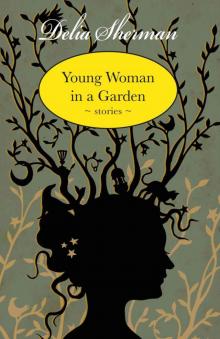
The freedom maze, p.1
The Freedom Maze,
p.1



Sophie Martineau looked out the window of her mother’s 1954 Ford station wagon and watched her life slide behind her into the past.
It was raining. It rained a lot in May in Louisiana, but Sophie couldn’t help feeling this rain was personal. It was bad enough to be saying good-bye to her friends and her school and the house she’d grown up in to spend the summer stuck out in the bayou with Grandmama and Aunt Enid, knowing she’d be coming back to a different neighborhood and a different school in the fall. Doing it in the rain was just rubbing her nose in it.
They drove past her best friend Diana Roget’s house. In the wet, the big stucco house was grim and uninviting — just like Mrs. Roget after Papa up and moved to New York. Once the divorce was final, she hadn’t even allowed Diana to come over any more, and Sophie wasn’t invited to Galveston as she had been every summer since third grade. It was like Mrs. Roget thought divorce was catching, like cooties. Although she’d denied it, Sophie suspected Diana thought so, too.
They stopped at a red light and Mama glanced over. “You’re very quiet. Are you thinking about your big adventure?”
“Yes, ma’am.” The fib came automatically. Life was easier when Sophie told Mama what she wanted to hear.
“What a sad little voice! You’re not nervous, are you? You used to love Oak Cottage when you were small.”
“I’m afraid I don’t remember very much.”
This was beyond a fib and right on into a lie. Sophie had hated visiting Oak Cottage, even for a weekend. Even though she’d only been six at the time, she had very vivid memories of uncomfortable meals where Grandmama talked about how much better everything had been when she was a girl, Papa made silly jokes, and Mama radiated chill like an open refrigerator. There was no air-conditioning at Oak Cottage, and too many bugs. The idea of spending a whole summer there was hardly bearable. But with Mama working all day and going to Soule College at night so she could be a Certified Public Accountant, and no money for camp, there wasn’t any other choice.
“Don’t tell me you don’t remember Aunt Enid’s garden,” Mama said. “All those beautiful roses! And Grandmama’s snuffbox collection. You’d play with them by the hour, just as I did when I was a little girl. You haven’t forgotten that, have you?
“No, ma’am.” Another lie. “Of course not.”
The light turned green, and they took off again.
Now she thought about it, Sophie did have a vague picture of herself sitting on a very high bed, making patterns with bright little boxes. Her memory of Oak Cottage itself was a lot more vivid. It looked like an ogre in a fairy tale, big and green, with two angry-looking windows sticking out of the roof for eyes and steep red steps up to the gallery that stretched across the front like a toothy mouth. She’d screamed blue murder the first time they visited, and Papa had had to carry her up from the car. He’d laughed when she told him why she was scared, but Mama had been too disgusted to speak to her.
As they reached the Huey P. Long Bridge over the Mississippi, the rain shut off like a faucet, the sun came out, and the Ford turned into a sticky steam bath. Sophie stood it as long as she could, then cranked the window down an inch.
“What on earth are you doing?” Mama asked.
“Letting in some air. My back’s all sweaty.”
“Horses sweat,” Mama reminded her. “Ladies gently glow. I suppose you can open the window a crack. But put something over your hair, or the wind will blow it into a hooraw’s nest.”
Sophie’s reflection in the window told her that her hair had already frizzed up like cotton candy. But she knew that arguing with that particular tone of voice was useless, so she tied a silk scarf around her head before rolling the window down all the way.
Hot air hit her face like a sponge soaked in gas fumes and swamp water. Sophie thought wistfully of Papa’s Cadillac, which had air-conditioning and padded cloth seats that didn’t stick to your back like the Ford’s woven plastic. Papa liked to drive, and flew along the blacktop with his elbow cocked out the window, singing. He had a deep, clear voice and sang show tunes. “Oh, What a Beautiful Morning” was his favorite.
Mama, on the other hand, gripped the wheel with her hands at ten-to-two exactly and kept her eyes fixed grimly on the road. She never sang — she wouldn’t even turn on the radio. Back when Sophie was little, Mama used to pass the time on long car trips telling stories about growing up at Oak Cottage and going to school with all the grades together in one room and reciting “The Wreck of the Hesperus” on Prize Day. It was her second-favorite topic, after The Good Old Days before the War of Northern Aggression, when the Fairchilds had raised sugarcane on Oak River Plantation.
Mama was very proud of being a Fairchild of Oak River. Sophie knew exactly how many acres the Fairchilds had owned at the outbreak of the War of Northern Aggression (nine hundred), how many slaves (one hundred and fifty), and when Mr. Charles Fairchild III had built his fancy brick plantation house (1850). She’d heard about Mammys (fat, fussy, and comical) and Beaux (dashing, polite, and handsome) and, most importantly, about Southern Belles, who had twenty-inch waists and huge frothy dresses and nothing to do all day but look pretty and decide who they’d dance with at the next ball.
In Sophie’s mind, those Southern Belles looked just like Mama. Everybody said Mama was a beauty. Her chestnut hair was wavy and shiny like a Breck Shampoo Girl’s, her skin was smooth and creamy, and her waist not much bigger than twenty inches around, even without a girdle. Sophie’s puppy fat, frizzy, dishwater hair, imperfect skin, and thick glasses were a great trial to Mama, but she never gave up hope. She made Sophie brush her hair one hundred strokes and scrub her face with lemons every night. She’d even bought her a garter belt and nylons for her thirteenth birthday last year, along with a completely pointless bra that rode up Sophie’s chest when she played volleyball. Sophie was wearing them all right now, under her blue seersucker suit and her first pair of high-heel pumps.
I bet those Belles were bored silly, she thought viciously. I bet they didn’t dare move because they might sweat and had a special slave to measure their waists and see how they were getting along with looking pretty. I can just hear it: “Why, Miss LolaBelle! I declare, child, you plain as puddin’ this mornin’. You best stir yourself if you thinkin’ of lookin’ pretty today!”
Past Bridge City, Route 90 plunged straight into swampland. Scrubby woods alternated with wide fields of young sugarcane and ponds of still, dark water spotted with neon-green duckweed. Sophie saw a heron standing stilt-legged in a culvert and a possum lying crushed at the side of the road. Every so often, a town would pop up — a handful of peeling clapboard houses, a general store, a church, a saloon bar, a filling station.
Mile after mile, Sophie watched it all scrolling past the window and wondered what she was going to do all summer out in the bayou. Unless things had changed, Grandmama and Aunt Enid didn’t even have a TV. The nearest movie house was probably all the way up in New Iberia, or even Lafayette. Sophie had packed a suitcase full of her favorite books: Alice in Wonderland, The Time Garden, The Witch of Blackbird Pond, Swiss Family Robinson, Great Expectations. But she doubted they’d last the whole summer.
Sophie shifted uncomfortably on the seat, wincing as her garters pinched viciously at the flesh of her thighs. “Mama, can we stop soon?”
Mama considered a moment. “I might could stretch my legs. And a glass of ice tea would be welcome. We’ll see if there’s a nice drugstore in Morgan City.”
Morgan City was a real town, with sidewalks and traffic lights and people and a drugstore with a brand-new neon sign in the window.
Inside, a couple of ceiling fans ruffled the pages of the magazines and comics on the revolving rack. Sophie looked around at the cracked Formica, the faded sign proclaiming Dr. Pepper to be “The Friendly Pepper-Upper!” and the three men in shirtsleeves slouching over the lunch counter, and wished she was back home in Metairie, where everything was nicer.
Mama asked the colored girl behind the counter where the restroom was, and disappeared. Sophie picked up Little Lulu. It was from March, 1960, two months old, and she’d read it already at the dentist’s. But she pretended to be interested in Lulu’s adventures until Mama returned, wiping her hands on her handkerchief.
“The restroom’s nothing to write home about,” she said. “But perfectly adequate. Remember to wash your hands with soap and use a paper towel to open the door. I’ll order us some tea.”
“Can I have a Coca-Cola? Please?”
“We’ll see. Don’t dawdle.”
Above the bathroom door, a hand-lettered sign read Whites Only! Sophie locked the door, wincing at the strong smell of disinfectant, peeled off her nylons and garter belt, and stuffed them into her purse. With any luck Mama wouldn’t notice, and if she did, maybe she’d pretend not to. Some battles were too small for even Mama to fight.
When Sophie came out, the men had left and Mama was sitting at the lunch counter, sipping ice tea and chatting with the colored girl like she’d known her all her life. A green bottle of Coca-Cola sat on the counter next to a glass of ice. Guiltily conscious of her stockingless legs, Sophie edged up on a stool and poured herself a glass. It tasted just like it looked, bright with bubbles and the sugar Mama said would rot her teeth.
Sipping and swinging on her stool, she caught sight of a Negro man tapping on the window. The counter girl glanced from him to Mama and shook her head just a little. Sophie was relieved. She didn’t mind Negro women — Lily, the colored woman who did for Mama in Metairie, had prac
tically raised her. But Negro men made her nervous. Mama had explained it to her over and over. Negro men, especially young ones, could be dangerous. They were lazy and dirty, and sometimes they drank. Never, under any circumstances, was Sophie to speak to any Negro man she didn’t already know.
Well, the only Negro men Sophie knew were Lily’s husband, Hector, and Mama’s gardener, Sam. She didn’t know about Hector — she only saw him when she went to church with Lily — but Sam was pretty much always busy and couldn’t help being dirty, working in the garden all day. She sometimes wondered if Mama might be a little unfair — about Hector and Sam, anyway. Still, talking to strangers made Sophie nervous no matter what color they were, so it wasn’t hard to obey.
Mama put down her empty glass and said, “Time to go, darling. We don’t want to keep Grandmama waiting, do we?”
For all Sophie cared, Grandmama could wait forever.
Sitting out in the sun, the Ford had gone from steam bath to oven. Mama rolled down her window and handed Sophie a brown paper bag. “For a rainy day at Oak Cottage.”
Sophie opened the bag and pulled out The Secret of the Old Clock, a Nancy Drew mystery. She looked up, surprised. Nancy Drew books were right on up there with comics on Mama’s list of Things Young Ladies Don’t Read. “Thank you, Mama.”
“You’re welcome. Now, close that window. I think it’s going to rain again.”
Sure enough, the heavens opened. Mama turned on the windshield wipers and slowed the car to a nervous crawl. Then they had to get gas, and then Mama saw an antique shop, and what with one thing and another it was almost four o’clock when they reached Oakwood.
Oakwood looked pretty much like every other town they’d driven through — sleepy, wet, all but deserted. Among the usual weathered clapboard houses, Sophie spotted two churches, a little restaurant called Cleo’s Kitchen, a brick building with Trahan’s Foundry, 1898 written on it, and a pink and white Victorian house with a sign out front: Iberia Parish Museum.
They drove out into cane fields again. “This used to be Fairchild land,” Mama said. “It all belongs to a big commercial grower now, of course. Grandmama’s hardly got twenty acres left, and that’s all gone to scrub and weeds.”
Rolling down the window, Sophie breathed damp, clean air and watched the cane flash by, pale green and graceful. Soon she’d be greeting Grandmama and Aunt Enid, curtsying like a perfect little lady and not speaking until she was spoken to. She wasn’t looking forward to it.
A thick grove of oak and swamp maple appeared on the left. Mama turned onto a narrow dirt road, canopied with arcing branches. Sophie gasped as the heavy heat pressed down on her chest like a hand. The roaring of a million cicadas soared above the Ford’s chugging. Great swags of Spanish moss hung everywhere like cobwebs in a haunted mansion.
“There’s the old slave quarters,” Mama exclaimed suddenly.
Beyond the dark, dark trees, Sophie caught a glimpse of a group of little silver-brown houses floating hazily in the sunlight, looking, if possible, even spookier than the oak grove. Despite the heat, Sophie shivered and turned her gaze back to the road, which opened into a weedy field scattered with trees. Down next to the bayou, she saw a shabby, deserted-looking house shaded by big old live oaks. Mama bumped the Ford across the field, pulled up in front of the house, put on the parking brake, and turned off the ignition.
“We’re home,” she said.
Sophie got out of the car.
Oak Cottage didn’t remind her of an ogre anymore. The angry eyes were just dormer windows, the toothy mouth just an old-fashioned gallery. The long tongue was just a stair, its red paint as chipped and faded as the green wooden siding. It was smaller than she remembered.
The screen door screeched. A sturdy woman in a cotton housedress appeared on the gallery, waved, and came down the steps. Sophie recognized her, more from her picture on the piano than memory — Mama’s sister, Aunt Enid, as plain as a loaf of brown bread, with graying hair scraped back in a bun and a bony face. It was hard to believe she was Mama’s sister, except for their noses: the Fairchild nose, Mama called it — straight and long, with delicate nostrils. Sophie had it, too.
The sisters touched cheeks. “You’re looking well, Enid,” Mama said. “I’m that glad to get here, I can’t tell you! It was an awful trip. Why you don’t have that oak drive graded and paved, I’ll never understand. How’s Mama?”
“Middling.” Aunt Enid turned to Sophie and held out her hand. “Hello, Sophie. You’ve certainly changed since I saw you last.”
Sophie shook the hand and curtsied politely.
“I know I shouldn’t be surprised,” Aunt Enid said. “Children do grow, after all. How old are you now?”
Before Sophie could answer, Mama said, “Thirteen. Fourteen in July, though you wouldn’t think it to look at her.”
“I expect she’s a late bloomer,” Aunt Enid said cheerfully. “Now, you just leave your cases in the car for Ofelia to deal with and come on back to the kitchen. I’ve got a pitcher of ice tea waiting for you, and biscuits, fresh this morning.”
“I don’t want you going to any trouble,” Mama said.
“Oh, no trouble,” Aunt Enid said. “Ofelia made them.”
The biscuits were good, but not as good as Lily’s. Sophie chewed and chewed, eyes on her plate, thinking of Lily’s biscuits, warm and flaky, spread with butter and mayhaw jelly, thinking of Lily, shadow-dark in her white uniform, smelling of laundry and baking and hair oil, sitting at the kitchen table and listening to Sophie tell her about her math teacher and the book she was reading and what Diana said in class.
She missed Diana, but she missed Lily more.
The tea had mint in it, fresh from a little pot on the windowsill, and was delicious. Aunt Enid poured it into cut-crystal glasses from a pitcher she took from the icebox, a rusty metal cabinet with the motor perched on top like a big drum. It looked almost as old as the stove and the long porcelain sink under the window.
Sophie edged off her pumps and doused her biscuit with Karo syrup. Aunt Enid sat back in her chair and picked up her glass. “Well,” she said, “now you’ve taken the edge off, I want to know how you’re doing, Sister.”
Mama’s mouth tightened. “As well as can be expected, under the circumstances.”
Sophie winced at the chill in her voice, but Aunt Enid just laughed. “Lord, Sister, you know that tone doesn’t work on me. Now, tell me about this job you’ve gone and taken. A secretary, of all things! Didn’t that fancy lawyer of yours get enough from Randall to keep you and Sophie comfortable?”
Clearly, Aunt Enid had her own way of dealing with Mama. Mama sighed. “I can’t complain. Randall’s taking care of the mortgage and Sophie’s tuition. But between paying Lily and Sam and Sophie needing piano lessons and uniforms and new glasses every whipstitch, some months I hardly know how to make ends meet. A secretary’s salary just doesn’t cover it all. So I’ve decided to sell the house, rent a little place in town, and take an accounting course at Soule College so I can be a CPA and make some real money.”
Sophie noticed that Mama didn’t mention that her bridge friends had stopped inviting her over or that she spent nearly all her evenings in the city. She hadn’t mentioned those reasons for moving into town to Sophie, either.
Aunt Enid took a sip of tea. “I see. And what about Sophie’s schooling?”
“That’s a worry,” Mama admitted. “Randall’s been complaining about how expensive private school is, but I just can’t see my way clear to sending her to public school. No daughter of mine is going to sit in the same classroom with little Negro children, no matter what the Supreme Court says. It’s not natural.”
“Of course not,” Aunt Enid said. “The very idea.”
Mama buttered a biscuit. “I’m going to send her to St. Mary’s.”
“St. Mary’s!” Aunt Enid set her glass down with a snap. “That’s a Catholic school!”
Mama shrugged. “What if it is? There’s no danger of enforced desegregation, and the fees are very reasonable. And I’ve heard that the education’s excellent.”
Aunt Enid raised her eyebrows. “Have you? Oh, I’m not going to say a word — she’s your child, and I’m not one to stick my nose into other folks’ business. Just don’t you let Mama get wind of it. You know how she feels about Catholics.”