Were alone, p.5
We're Alone,
p.5


In October 2003, I was invited to participate in a PEN America tribute to Gabriel García Márquez. The title of the evening was “Gabriel García Márquez: Everyday Magic.” The great man himself wasn’t there. He was already ill, I think. Among the other speakers that evening were the writers Francisco Goldman, Salman Rushdie, Paul Auster, and William Kennedy—and former president Bill Clinton, on video. That he counted Bill Clinton and Fidel Castro among his friends astounded and outraged the woman sitting beside me. The writers, however, focused on his work.
Francisco Goldman mentioned a study that had found that, aside from the Bible, García Márquez’s Love in the Time of Cholera was the book you were most likely to find in possession of Latin American sex workers. Salman Rushdie pointed out the many similarities between García Márquez’s world and the one where he’d grown up, in India.
“It was a world in which there were colossal differences between the very poor and the very rich and not much in between; also a world bedeviled by dictators and corruption,” Rushdie said.
Like many of the other speakers that night, Rushdie rejected the idea that García Márquez’s fiction was “fantastic.”
And I agreed. Having been born and lived in a profoundly spiritual and extraordinarily resourceful Haiti, I often found what might seem magical to others entirely plausible. What seems implausible is a lifetime of absolute normalcy, a world without assassinations, coups d’état, invasions, occupations, poverty, dictators, earthquakes, or hurricanes. I had always felt that García Márquez’s short stories often took a back seat to his longer works and that his deadpan dark humor was not discussed often enough, so that night, I read an excerpt from one of my favorites of his short stories, “One of These Days.”
In the story, the town mayor, a military torturer, shows up in absolute agony at the office of Aurelio Escovar, “a dentist without a degree.” The mayor is in so much pain from an abscess in his mouth that he’s unable to shave half his beard. Yet he still announces that he will shoot the dentist if he refuses to help him. Finally, seeing an opportunity to avenge the recent massacre of twenty of his neighbors, the dentist tricks the mayor into letting him pull the diseased tooth out without anesthesia. But the dentist does not quite get the revenge he seeks. When he asks the mayor whether to send the bill to him personally or to the town, the mayor exclaims, “It’s the same damn thing.”
Like so many others, this story shows how García Márquez also depicted some common yet unbearable daily realities. Still, I keep returning to José Arcadio Buendía and his desire to leave. José Arcadio had hoped to guide his people toward the “invisible north,” only to discover that Macondo was entirely surrounded by water. But he would not despair. There was more work to do. And he had not yet experienced death and the light rain of tiny yellow flowers that would fall to mark his passing. He had not yet seen that silent storm and the cushion of petals that had to be cleared with rakes and shovels as his funeral procession went by. And perhaps neither had Gabo until he died.
Morrison and Marshall
I learned of Toni Morrison’s death at sunrise, and Paule Marshall’s a week later, at sunset. News of Ms. Morrison’s transition, as many of my bereaved friends called it, quickly spread on social media and in the international press. Word of Ms. Marshall’s passing—another term many of us used to soften the blow of both deaths—was disseminated more slowly. (Ms. Morrison was eighty-eight; Ms. Marshall was ninety.) In Ms. Marshall’s case, her death initially felt, as Ms. Morrison wrote in her 1984 essay “Rootedness: The Ancestor as Foundation,” like “a very personal grief and a personal statement done among people you trust.” I heard about it from a journalist who emailed me to confirm that Ms. Marshall had, indeed, died on Monday, August 12, 2019.
I knew both women and was blessed to have spent some time in their company. Before I ever saw them in the flesh, though, I was in awe of their words.
I first encountered Ms. Morrison’s words in “Rootedness” in Mari Evans’s Black Women Writers (1950–1980): A Critical Evaluation, in which Ms. Morrison wrote, “It seems to me interesting to evaluate Black literature on what the writer does with the presence of an ancestor.” Ancestors, she wrote, “are not just parents, they are sort of timeless people.”
Growing up, I had been told similar things by members of my family. I had been assured that our ancestors were always with us, if no longer in body, always in spirit. Ms. Marshall, too, referred to herself as an “unabashed ancestor worshipper.” She could have been describing the women who’d raised me when she wrote in her essay “From the Poets in the Kitchen”:
I grew up among poets. Now they didn’t look like poets—whatever that breed is supposed to look like. Nothing about them suggested that poetry was their calling. They were just a group of ordinary housewives and mothers, my mother included, who dressed in a way (shapeless housedresses, dowdy felt hats and long, dark, solemn coats) that made it impossible for me to imagine they had ever been young.
Ms. Marshall further wrote of the women in her family, “They never put pen to paper except to write occasionally to their relatives in Barbados. ‘I take my pen in hand hoping these few lines will find you in health as they leave me fair for the time being,’ was the way their letters invariably began.”
My parents’ letters began similarly, except we would add grace à Dieu (thanks be to God).
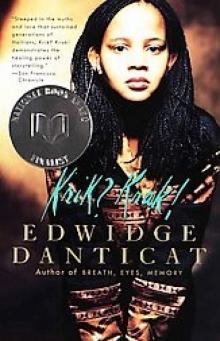
To honor this connection and the other ways I felt seen in Ms. Marshall’s short stories and many of her novels—including Brown Girl, Brownstones, The Chosen Place, The Timeless People, Praisesong for the Widow, and Daughters, among others—I draped my words around hers in the epilogue of my 1995 story collection Krik? Krak!:
Are there women who both cook and write? Kitchen poets, they call them. They slip phrases into their stew and wrap meaning around their pork before frying it. They make narrative dumplings.
Krik? Krak! was my second published book, but the one I first began writing parts of soon after I’d read both the Evans anthology and Ms. Marshall’s essay about kitchen poets. As the oldest child and only daughter of parents who were always working, I often cooked for my family, and I worried that I might not be able to cook and write equally. This often crossed my mind when I had the honor of breaking bread with Ms. Morrison and Ms. Marshall.
After Krik? Krak! was published, Ms. Marshall called me to ask if I wanted to teach at New York University, where she had a permanent position. Before the official job interview, she invited me for tea at her apartment overlooking Washington Square Park. We discussed the job a bit. Then we talked about Haiti, where she lived on and off while she was married to her second husband, a Haitian businessman. After overcoming my shyness, I asked her how she’d found such a fabulous apartment so close to the university. She chuckled, then said, “When I came for my job interview, the dean asked me where I wanted to live. I looked around his lavish office and said, ‘Something like this will do.’”
We laughed. She had a vibrant and youthful laugh. Even though I knew that as an adjunct I was getting neither a lavish office nor a fabulous apartment, I took the job. That fall, she hosted a reading series and invited me to read in it, along with the novelists Glenville Lovell and A. J. Verdelle. She encouraged me to speak to her if I needed anything. Not wanting to bother her, I only took up that offer once when one of my white male students was particularly disruptive in our majority women of color class. I had spoken to the young man, but everything had stayed the same, so I went to Ms. Marshall for advice. I suspected she had taken up the issue herself because the young man reverted to regular writing-workshop banter soon after our conversation and retreated from personal attacks.
The first time I broke bread with Ms. Morrison was in the fall of 2006, in one of the cafés at the Louvre, in Paris, where she was in residence for a month. A few months earlier, her assistant, Rene Boatman, had called to ask if I would join Ms. Morrison and a group of other writers, dancers, and filmmakers, including Charles Burnett and Michael Ondaatje, at the Louvre. When the call came, I had just been diagnosed with pneumonia and was still nursing my infant daughter, Mira. So I told Ms. Boatman I couldn’t go. Besides, I thought they’d made a mistake. I felt undeserving.
The next day, Ms. Morrison called, and I told her about my infant and my pneumonia, and she said, “You’re not going to have pneumonia for a year, and your baby’s going to grow. So tell me what you’ll need to be there.”
I made what I believed was an unreasonable request, but it was what kept me afloat. I told her that my husband, who worked remotely, and I needed my mother and mother-in-law to help with the baby while I participated in the planned events.
She said, “Done.” A few months later, my family and I were in Paris, in an apartment near the Louvre. Seeing Paris had been a lifelong dream for my mother, and though we had gone on many other trips together, we had yet to make it there. When she met Ms. Morrison at the opening event, my mother thanked her profusely. Ms. Morrison smiled mischievously at both my mother and my mother-in-law and told them to go out alone now and then and enjoy the city.
There were many more moments of extraordinary kindness afforded to me by Ms. Marshall and Ms. Morrison. In Paris, Ms. Morrison had given me a gorgeous hairpin—like the ones she sometimes wore. The next time I saw her at an event, I felt terrible for not having it on, then confessed that I’d had to stash the hairpin away because my daughter loved it so much that she kept trying to eat it. The next time I saw her, at another event, she gave me another pin. “Your baby can keep the first one,” she said.
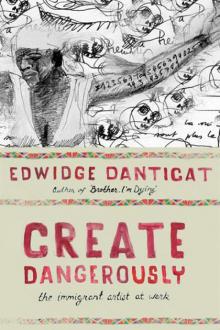
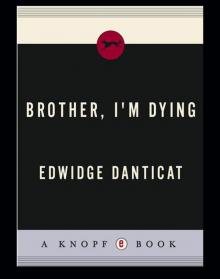
Ms. Marshall wrote me a thoughtful condolence note after my uncle died, in immigration custody, in 2004. In 2007, Ms. Morrison was at the National Book Awards ceremony, where my book about my uncle’s death, Brother, I’m Dying, was a finalist. At the end of the night, as my family and I were leaving the hall, someone stopped me and told me that Ms. Morrison wanted to speak to me. Ms. Morrison then walked up to our group, which included my mother. We all chatted about the evening, then Ms. Morrison leaned over and said, “I’ve never won one of these, either. Only the one for all my books.” She was referring to her 1996 National Book Foundation Medal for Distinguished Contribution to American Letters.
At the dinner, before a talk I gave for her eponymous lecture series at Princeton in March 2008, as soon as we sat down to eat, she asked me if I had been well compensated. When I told her I was, she smiled that broad, generous smile, then said, “Good. I don’t want them being cheap in my name.”
During these brief and sometimes longer interactions with Ms. Morrison and Ms. Marshall, I saw myself as lucky but not necessarily singular. At times, I felt like a representative of all their younger writer admirers, particularly those who enjoyed both the person and the work. And I sometimes worried as the years went on that one day I might have to share these stories about them while I was weighed down with sadness. I guess you might call that feeling, to use Ms. Morrison’s words from her 1973 novel, Sula, the “sheer good fortune to miss somebody long before they leave you.”
Ms. Morrison was still writing toward the end of her life—she would often say so at public events—but Ms. Marshall had not published a book since her slim 2009 memoir, Triangular Road. Every now and then, when I tried to reach Ms. Marshall and never heard back, I would imagine her writing yet another epic novel that would take me weeks to read. Ms. Marshall often said that she was a notoriously slow writer. I kept hoping that she was just being slow.
Triangular Road, adapted from a series of lectures Ms. Marshall delivered at Harvard University in 2005, begins with a scene in which Ms. Marshall receives an invitation to go on a European speaking tour with the writer Langston Hughes.
“The invitation in hand, I stood dumbstruck for the longest time,” she wrote. “Langston Hughes! None other than the poet laureate of Black America had chosen me to accompany him on a cultural tour of Europe! Me a mere fledging of a writer, with only one novel and a collection of stories published to date! Why would someone of his stature so much as consider a novice like myself?”
This also describes how I often felt in both Ms. Morrison’s and Ms. Marshall’s company. I wouldn’t even allow myself to address them by their first names out of respect and reverence. Ms. Marshall referred to Langston Hughes as Mr. Hughes during her talks and throughout her memoir.
“For me,” she wrote, “he was a loving taskmaster, mentor, teacher, griot, literary sponsor and treasured elder friend. Decades have passed since his death in 1967 and I still miss him.”
In the 1970s, Ms. Marshall and Ms. Morrison were members of The Sisterhood, a New York–based Black women writers’ group whose members included Ntozake Shange, Louise Meriwether, June Jordan, and Alice Walker. Perhaps Ms. Morrison and Ms. Marshall had some extraordinarily insightful discussions before, during, and after those meetings, chats that I wish I could have eavesdropped on. Maybe they are still having some of those chats now, with Lorraine Hansberry, Audre Lorde, James Baldwin, and Gabriel García Márquez, among others.
When I was asked to speak at Ms. Morrison’s memorial service at the Cathedral of St. John the Divine in New York City on November 21, 2019, a service that also included the writers Jesmyn Ward, Ta-Nehisi Coates, Michael Ondaatje, and Oprah Winfrey, I began to see her and aspects of her work everywhere.
I saw her in bleak and sunny skies. I saw her in daisy trees. I saw her on benches by the road. I heard her voice in church hymns, spirituals, and jazz tunes, because she was, as she wrote of Jadine in Tar Baby, “not only a woman but a sound … a world and a way of being in it.”
I kept seeing her, too, in shiny, beautiful hairpins woven through gray locks. Each time she’d given me one of those hairpins, I felt as though she was sharing pieces of her infinite crown with me. I felt her presence in her sister writer friends, Sonia Sanchez and Nikki Giovanni, and Black women writers closer to my age and younger, like Jesmyn Ward and Tayari Jones. Though she carried a particular strand of genius in every single cell of her body, she had constantly reminded us that it is indeed not scarce and that we, too, could skillfully, beautifully, and politically tell our stories. (“If there is a book that you want to read, but it hasn’t been written yet, then you must write it.”) This had made it so much easier to tremble less in her physical presence. Because “quiet as it’s kept,” she half giggled when she laughed and had a twinkle in her eye when she was in the presence of someone whose company she enjoyed. She drank vodka on a cold day—the really good stuff—and smoked cigarettes. At the Louvre, she was the literary giant that is Toni Morrison, but she was also Chloe Wofford, and she allowed me, in brief, privileged moments, to see them both, for which I will always be grateful. Her work was, of course, sublime. We do not just read it, we experience it. She gave us both lullabies and battle cries. She turned pain into flesh and brought spirits to life. She urged us to be dangerously free. She gave this foreigner a home. Her work has carried me through adolescence and marriage, parenthood, and orphanhood. I have recited and paraphrased her sentences to myself while cradling the tiny bodies of my newborn daughters (“They get bigger, older, but grown? What’s that supposed to mean?”) and the skeletal faces of my dying parents (“Soft as cream”). I hoped that, like Baby Suggs, they too would die soft as cream. And I came to think of her, as she wrote in The Bluest Eye, not only as a friend of my mind but as someone who “does not want me to die.”
“Death is as natural as life,” she wrote. “And you sure did live in this world!” I said in the church that day. Some called her Sister, Soror. Others called her Teacher, Editor, Beloved, and Mentor. “We still call you by those names,” I said, “but now we also call you Timeless. We now call you Ancestor.”
I remember visiting her home in Grand View, New York, in 2016. We had spent the morning revisiting, for a documentary called The Foreigner’s Home, the month she was in residence at the Louvre. That day in her house, we talked about slavery, racism, immigration, political art, Hurricane Katrina, breakdancing, and hip-hop, particularly Kendrick Lamar, for whom she expressed her admiration. When it came time for me to leave, it was snowing outside, a sheet of snow so thick that it blocked her view of the Hudson right below. She was sitting by the window at her kitchen table with the winter afternoon light and shadows of snowflakes dancing across her face. Before leaving, I leaned down to kiss the top of her head, which was covered with a beautiful black-and-white scarf. At that moment, I felt, once again, the sheer good fortune of already missing her long before she was gone. My kiss on the top of her head created a spark that startled us both, with a surge of static electricity from the rug beneath our feet.
“Goodbye, Ms. Morrison,” I said.
“Goodbye,” she said. Then she added, “I’m going to rest now.”
“Dying was OK because it was sleep,” she has written.
In Tar Baby, a doubter is told, “The world will always be there—while you sleep it will be there.” This, of course, is also true for her, I reminded her at the memorial.
The world will be here, though certainly less rich, or full. It will still be there, though, while you rest. And when you’re done resting, remember, they are waiting in the hills for you. Just as Jadine’s ancestors were waiting for her in Tar Baby. They are all waiting in the hills for you, a hill full of benches by the roads where the daisy trees plentifully grow. They are all waiting there for you, Maya Angelou, Langston Hughes, Nina Simone, Chinua Achebe, Billie Holiday, Josephine Baker, Audre Lorde, Lorraine Hansberry, James Baldwin, Gabriel García Márquez, Paule Marshall, and so many others. They are all waiting in the hills for you. So go ahead and join them after your well-earned rest, I told her from the church pulpit. Hopefully, she will also be waiting for me when my time comes.