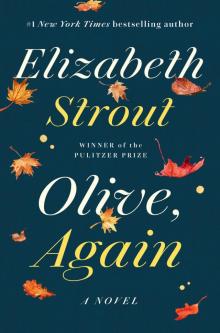
Oh william, p.1
Oh William!,
p.1
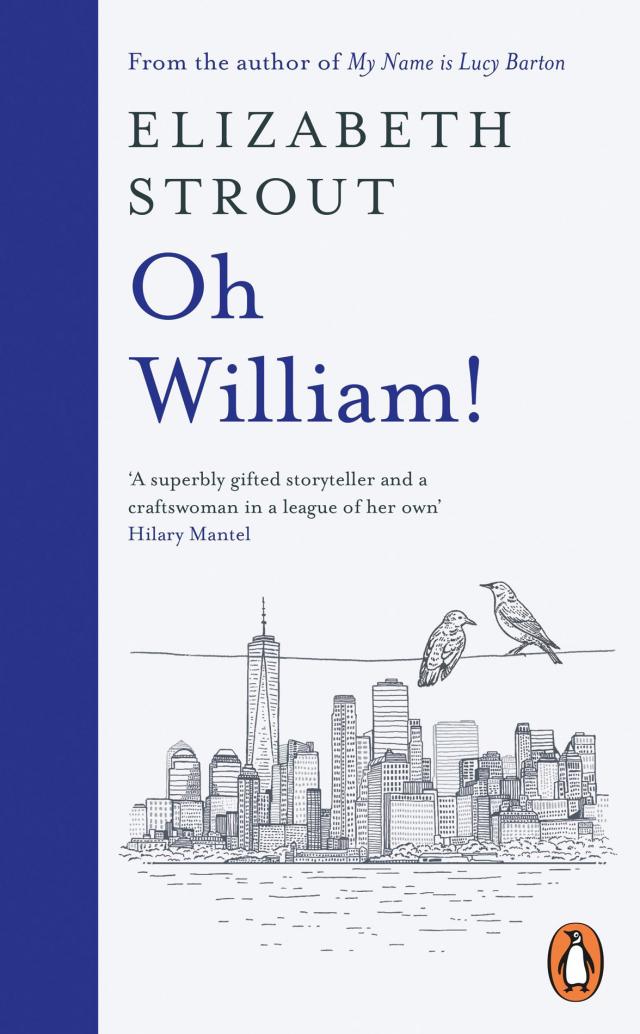


Elizabeth Strout
* * *
OH WILLIAM!
A Novel
Contents
OH WILLIAM!
ACKNOWLEDGMENTS
About the Author
Elizabeth Strout is the Pulitzer Prize-winning author of Olive Kitteridge, as well as The Burgess Boys, Abide with Me, Amy and Isabelle, My Name is Lucy Barton, Anything is Possible and Olive, Again. She has also been a finalist for the PEN/Faulkner Award, the Orange Prize and was longlisted for the Man Booker Prize. She lives in Portland, Maine.
BY ELIZABETH STROUT
Oh William!
Olive, Again
Anything is Possible
My Name is Lucy Barton
The Burgess Boys
Olive Kitteridge
Abide with Me
Amy and Isabelle
This book is dedicated to my husband,
Jim Tierney
And to anyone who needs it—this is for you
I would like to say a few things about my first husband, William.
William has lately been through some very sad events—many of us have—but I would like to mention them, it feels almost a compulsion; he is seventy-one years old now.
My second husband, David, died last year, and in my grief for him I have felt grief for William as well. Grief is such a—oh, it is such a solitary thing; this is the terror of it, I think. It is like sliding down the outside of a really long glass building while nobody sees you.
But it is William I want to speak of here.
His name is William Gerhardt, and when we married I took his last name, even though at the time it was not fashionable to do so. My college roommate said, “Lucy, you’re taking his name? I thought you were a feminist.” And I told her that I did not care about being a feminist; I told her I did not want to be me anymore. At that time I felt that I was tired of being me, I had spent my whole life not wanting to be me—this is what I thought then—and so I took his name and became Lucy Gerhardt for eleven years, but it did not ever feel right to me, and almost immediately after William’s mother died I went to the motor vehicle place to get my own name back on my driver’s license, even though it was more difficult than I had thought it would be; I had to go back and bring in some court documents; but I did.
I became Lucy Barton again.
We were married for almost twenty years before I left him and we have two daughters, and we have been friendly for a long time now—how, I am not sure exactly. There are many terrible stories of divorce, but except for the separation itself ours is not one of them. Sometimes I thought I would die from the pain of our separating, and the pain it caused my girls, but I did not die, and I am here, and so is William.
Because I am a novelist, I have to write this almost like a novel, but it is true—as true as I can make it. And I want to say—oh, it is difficult to know what to say! But when I report something about William it is because he told it to me or because I saw it with my own eyes.
So I will start this story when William was sixty-nine years old, which is less than two years ago now.
A visual:
Recently William’s lab assistant had taken to calling William “Einstein,” and William seemed to get a real kick out of that. I do not think William looks like Einstein at all, but I take the young woman’s point. William has a very full mustache with gray in its whiteness, but it is sort of a trimmed mustache and his hair is full and white. It is cut, but it does stick out from his head. He is a tall man, and he dresses very well. And he does not have that vaguely crazy look that Einstein, to my mind, seemed to have. William’s face is often closed with an unyielding pleasantness, except for once in a very great while when he throws his head back in real laughter; I have not seen him do that for a long time. His eyes are brown and they have stayed large; not everyone’s eyes stay large as they get older, but William’s eyes have.
Now—
Every morning William would rise in his spacious apartment on Riverside Drive. Picture him—throwing aside the fluffy quilt with its dark blue cotton cover, his wife still asleep in their king-size bed, and going into the bathroom. He would, every morning, be stiff. But he had exercises and he did them, going out into the living room, lying on his back on the large black-and-red rug with the antique chandelier above him, pedaling his legs in the air as though on a bicycle, then stretching them this way and that. Then he’d move to the large maroon chair by the window that looked out over the Hudson River, and he would read the news on his laptop there. At some point Estelle would emerge from the bedroom and wave to him sleepily and then she would wake their daughter, Bridget, who was ten, and after William took his shower the three of them had breakfast in the kitchen at the round table; William enjoyed the routine of this, and his daughter was a chatty girl, which he liked as well; it was as though listening to a bird, he once said, and her mother was chatty also.
After he left the apartment he walked across Central Park and then took the subway downtown, where he got off at Fourteenth Street and walked the remaining distance to New York University; he enjoyed this daily walking even though he noticed that he was not as fast as the young people who bumped past him with their bags of food, or their strollers with two kids, or their spandex tights and earbuds in their ears, their yoga mats on a piece of elastic slung over their shoulders. He took heart in the fact that he could pass many people—the old man with a walker, or a woman who used a cane, or even just a person his age who seemed to move more slowly than he did—and this made him feel healthy and alive and almost invulnerable in a world of constant traffic. He was proud that he walked more than ten thousand steps a day.
William felt (almost) invulnerable, is what I am saying here.
Some days on these morning walks he would think, Oh God I could be that man—! over there in the wheelchair sitting in the morning sun in Central Park, an aide on a bench typing on her cellphone as the man’s head dropped forward to his chest, or he could be that one—! with an arm twisted from a stroke, a gait uneven— But then William would think: No, I am not those people.
And he was not those people. He was, as I have said, a tall man, to whom age had not added extra weight (except for a small potbelly you could barely see with his clothes on), a man who still had his hair, white now but full, and he was—William. And he had a wife, his third, twenty-two years younger than he was. And that was no small thing.
But at night, he often had terrors.
William told me this one morning—not quite two years ago—when we met for coffee on the Upper East Side. We met at a diner on the corner of Ninety-first Street and Lexington Avenue; William has a lot of money and he gives a lot of it away and one place he gives it to is a hospital for adolescent children near where I live, and in the past when he had an early-morning meeting there he would call me and we would meet briefly for coffee on this corner. On this day—it was March, a few months before William was to turn seventy—we sat at a table in the corner of this diner; on the windows were painted shamrocks for St. Patrick’s Day, and I thought—I did think this—that William looked more tired than usual. I have often thought that William gets better-looking with age. The full white hair gives him an air of distinction; he wears it a little bit longer than he used to and it rises slightly from his head, with his big drooping mustache to counter it, and his cheekbones have emerged more, his eyes are still dark; and it is a tiny bit odd, because he will watch you fully—pleasantly—but then every so often his eyes become briefly penetrating. So what is he penetrating with that look? I have never known.
That day in the diner, when I asked him “So how are you, William?,” I expected him to answer as he always does, which is to say in an ironical tone “Why, I am perfectly fine, thank you, Lucy,” but this morning he just said “I’m okay.” He was wearing a long black overcoat, which he removed and folded over the chair next to him before sitting down. His suit was tailor-made, since meeting Estelle he had been having his suits tailor-made, and so it fit his shoulders perfectly; it was dark gray and his shirt was pale blue and his tie was red; he looked solemn. He folded his arms across his chest, which is what he often does. “You’re looking nice,” I said, and he said, “Thanks.” (I think William has never told me that I am looking good, or pretty, or even well, in all the times we have seen each other over the years, and the truth is that I have always hoped he will.) He ordered our coffee and his eyes flitted about the place while he tugged lightly on his mustache. He spoke about our girls for a while—he was afraid that Becka, the younger, was mad at him; she had been sort of—vaguely—unpleasant to him on the phone when he had simply called to chat with her one day, and I told him that he just had to give her space, she was settling herself into her marriage—we spoke like that for a bit—and then William looked at me and said, “Button, I want to tell you something.” He leaned forward briefly. “I’ve been having these awful terrors in the middle of the night.”
When he uses my pet name from our past it means that he is present in some way he is so often not, and I am always touched when he calls me that.
I said, “You mean nightmares?”
He cocked his head as though considering this and said, “No. I wake up. It’s in the dark when things come to me.” He added, “I’ve never had this sort of thing before. But they’re terrifying, Lucy. They terrify me.”
William leaned forward again and set his coffee cup down.
I watched him, and then I asked, “Is there some kind of different medication that you’re taking?”
He scow
led slightly and said, “No.”
So I said, “Well, try taking a sleeping pill.”
And he said, “I have never taken a sleeping pill,” which did not surprise me. But he said that his wife did; Estelle took a variety of pills, he had stopped trying to understand the handful she took at night. “I’m taking my pills now,” she would say gaily, and in half an hour she was asleep. He didn’t mind that, he said. But pills were not for him. Still, in four hours he would often be awake and the terrors often began.
“Tell me,” I said.
And he did, glancing at me only occasionally as though he were still inside these terrors.
One terror: It was not nameable, but it had something to do with his mother. His mother—her name was Catherine—had died many, many years earlier, but in this nighttime terror he would feel her presence, but it was not a good presence and this surprised him because he had loved her. William had been an only child, and he had always understood his mother’s (quietly) ferocious love for him.
To get over this terror while he lay awake in bed next to his sleeping wife—he told me this that day, and it kind of killed me—he would think of me. He would think about the fact that I was out there alive, right now—I was alive—and this gave him comfort. Because he knew if he had to, he said, arranging the spoon on the saucer of the coffee cup—even though he would never want to do this in the middle of the night—he knew if he should have to, that I would take a call from him. He told me my presence is what he found to be the greatest comfort and so he would fall back to sleep.
“Of course you can always call me,” I said.
And William rolled his eyes. “I know that. That’s my point,” he said.
Another terror: This had to do with Germany and his father, who had died when William was fourteen. His father had come from Germany as a prisoner of war—World War II—and been sent to work on the potato fields in Maine, where he met William’s mother; she was married to the potato farmer. This might have been William’s worst terror, because his father had been fighting on the side of the Nazis, and this fact would visit William in the night sometimes and cause him terror—he would see very clearly the concentration camps—we had visited them on a trip to Germany—and he would see the rooms where people were gassed, and then he would have to get up and move into the living room and put the light on and sit on the couch and look out the window at the river, and no amount of thinking about me or anything else could help with these terrors. They did not come as frequently as the ones with his mother, but when they did come they were very bad.
One more: This had to do with death. It had to do with a sense of leaving, he could feel himself almost leaving the world and he did not believe in any afterlife and so this filled him on certain nights with a kind of terror. But he could stay in bed usually, though sometimes he got up and went into the living room and sat in the large maroon chair by the window and read a book—he liked biographies—until he felt he could return to sleep.
“How long have you been having these?” I asked. The diner we sat in had been there for years and was crowded at this time of day; four white paper napkins had been tossed onto the table after our coffee had been brought.
William looked out the window and seemed to be watching an old woman who was walking by with her walker with a seat in it; she moved slowly, bent over, her coat blowing behind her in the wind. “A few months, I think,” he said.
“You mean they just started out of the blue?”
And he looked at me then; his eyebrows were getting shaggy above his dark eyes, and he said, “I think they did.” After a moment he sat back and said, “It must be just that I’m getting older.”
“Maybe,” I said. But I was not sure this was the reason. William has always been a mystery to me—and to our girls as well. I said, tentatively, “Do you want to see anyone to talk to about them?”
“God, no,” he said, and that part of him was not a mystery to me, I thought he would probably say that. “But it’s awful,” he added.
“Oh Pillie,” I said, using my pet name for him from so long ago. “I’m so sorry.”
“I wish we’d never taken that trip to Germany,” he said. He picked up one of the napkins and swiped at his nose with it. Then he ran his hand down over—almost reflexively, as he often does—his mustache. “And I really wish we’d never gone to Dachau. I keep picturing those—those crematoriums.” He added, glancing at me, “You were smart not to go into them.”
I was surprised that William remembered that I had not gone into the gas chamber or the crematoriums that summer we went to Germany. I did not go into them because even back then I knew myself well enough to know I should not do that; and I did not. William’s mother had died the year before, and the girls had been nine and ten; they were in summer camp together for two weeks and so we flew to Germany—I had asked only that we take separate flights, I was that scared of us both dying in a plane crash and leaving the girls orphans, which was silly, I saw later, because we could easily have both died on the autobahn as the cars whizzed past us—and we went there to find out what we could about William’s father, who had died, as I have said, when William was fourteen; he died in a hospital in Massachusetts from peritonitis, he was having a polyp removed from his intestine and there was a puncture and he died. We went to Germany that summer because William had come into a great deal of money a few years earlier, it turned out his grandfather had profited on the war, and when William turned thirty-five he came into the money from a trust, and this was a source of distress for William, and so we had flown over together and seen the old man, he was very old, and met two aunts of William’s, they were polite but cold, I felt. And the old man, his grandfather, had small glittery eyes and I disliked him especially. The trip left us both unhappy.
“You know what?” I said. “I think the nighttime stuff will start to disappear. It’s a phase of some kind—it will work its way out.”
William looked at me again and said, “It’s the ones of Catherine that really get to me. I have no idea what they’re about.” William has always spoken of his mother by her first name; he called her that as well. I can never remember his calling her “Mom.” And then he put his napkin on the table and stood up. “I have to get going,” he said. “Always nice to see you, Button.”
I said, “William! How long have you been drinking coffee?”
“Years,” he said. He bent to kiss me and his cheek felt cold; his mustache bristled just slightly against my cheek.
I turned to glance out the window at him, and he was walking quickly along to the subway; he was not walking as erect as he usually did. A little bit, the sight of him then broke my heart. But I was used to that feeling—I had it almost every time after I saw him.
During the days, William went to work in his lab. He is a parasitologist and he had taught microbiology at New York University for many years; they still allowed him his lab and one student assistant; he does not teach classes anymore. About not teaching: He was surprised to find he did not miss it—he told me this recently—it turned out he had felt trepidation every time he stood before the class, and it was not until his teaching stopped that he understood that that had been true.
Why does this touch me? I guess because I never knew; and because he never knew too.
And so now he went to work every day from ten in the morning until four in the afternoon, and he wrote papers and did research and supervised the assistant who worked in his lab. Every so often—a couple of times a year, I think—he went to a conference and would deliver a paper to other scientists who worked in his field.
Two things happened to William after we met at the diner, and I will get to those soon.
Let me first just speak briefly of his marriages:
Me, Lucy.
William had been the teaching assistant for my biology class—he was a graduate student—my sophomore year at a college right outside of Chicago; this is how we met. He was—he still is, of course—seven years older than I am.