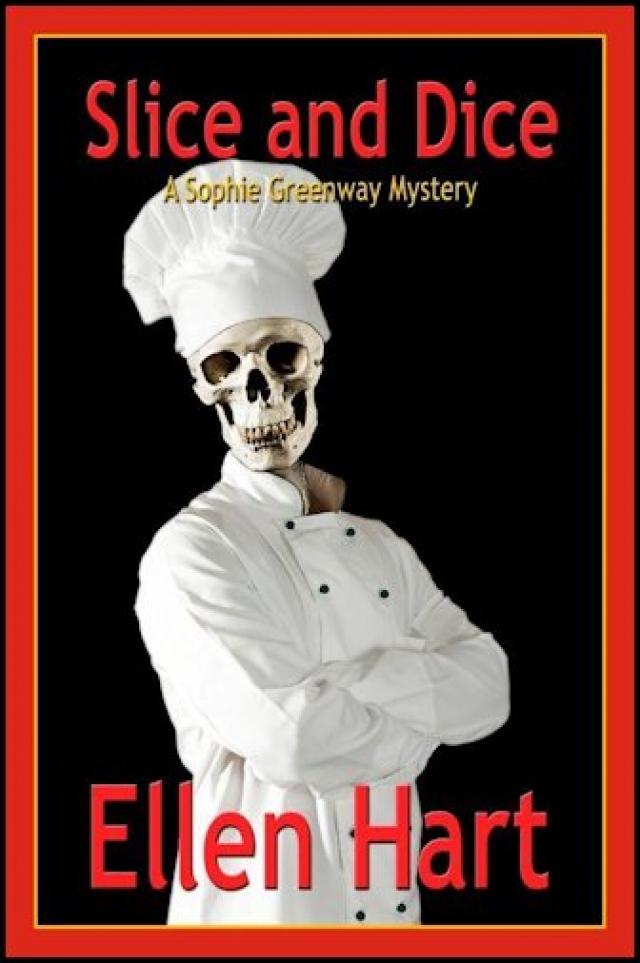
Slice and dice, p.19
Slice and Dice,
p.19


Sophie was captured instantly. “Explain a bit more.”
“Well, to put it simply, if man doesn’t have free will, if his fate is already determined by factors beyond his control, then he cannot sin. If there’s no such thing as sin, man needs no redemption. The whole system of Christian thought is based on free will. It’s a rather large issue.”
“You were always good at understatement.”
He grinned. “I’m not saying that humans don’t need morals and ethics. We do. Society must have order. But isn’t it interesting that with all the dos and don’ts out there, we’re all still making terrible choices, both personally and as a society. Why do you think that is?”
She shrugged. “Disinterest. Stupidity. Arrogance. Confusion. Simple rebellion.”
“Possibly. But when it comes to the larger issues of life, I think it’s more basic. You’ve heard the old argument about nature versus nurture?”
She nodded.
“Are we born who we are or did our experience create us? Most psychologists and philosophers have come down somewhere in the middle. We’re a mixture of nature and nurture. It’s a safe position. Hard to refute. Theologians maintain that our nature is evil, but that we must fight against it. Choose to be good.”
“You’re saying that’s not possible?”
“In the larger sense, no, I don’t believe choice is possible. At least not according to the theory I’m positing.”
“What decides for us? God?”
“Heavens, no. It’s simply our chemical makeup. The more scientific evidence that becomes available, the more studies that are done, the clearer it becomes that we’re simply small chemical factories. Hormones. Neurotransmitters. Put simply, our genetic code rules. We’ve already discovered that there is a genetic component to sexuality, also to the way men’s and women’s brains function. Some people think an additional Y chromosome may designate a criminal, though it’s never that simple, never just one thing. There’s a genetic component to genius, madness, shyness, aggression. People are genetically predisposed to be happy, cheerful. And the reverse is also true. The more we understand, the more we see that our very natures are defined by our DNA — and our unique and changing chemical makeup. Anyone who has ever had a chemical imbalance knows what a precarious existence we all live.”
“Okay, so if one person murdered another, there’s nothing wrong with it because sin doesn’t really exist? Just chemical reactions?”
“No, no. Of course it’s wrong. And we have to punish people who commit such acts. But one can determine ethics and morals without a theological basis. Society has to have a way to regulate its members. But the murderer himself, he’s not a sinner condemned to lower hell. He’s a result of his genetic predispositions and the choices those predispositions engender.”
“His chemicals made him do it.”
“More or less, yes. If you could change his genetics, you’d have a very different kind of man. His brain chemistry could probably be altered once we know more about what we’re dealing with.”
“I’m not sure I’d want to live in that world.”
This time his smile was sheepish. “I’m not either. As I said, it’s just a theory, but one I’m very drawn to. I give up on it for years at a time, but then some study comes out and it brings it all back. I’ll probably die before I come to any firm conclusions.”
“Maybe the conclusion would be nothing more than a chemical reaction.”
He laughed. “You’re too smart for your own good, young woman. I wish you well, Sophie. I also hope you’ll give the situation with Nathan a little more thought before you dump him again.”
“If there’s no right or wrong, Arthur, then you can’t guilt-trip me.”
He laughed again, shaking his head. “God, you’d be a great addition to this family. Think about it, Soph. A little more time couldn’t hurt.”
18
After her meeting at the newspaper, Sophie took a quick trip up to George’s office to retrieve the names of several local restaurateurs from his Rolodex. When she entered the room, she was surprised to find that all of his personal items — including the picture of his wife and kids, the cacti, the orchids, and the grow lights — had been removed. His son had left a note on the desk asking her to give him a call if she found anything else that had belonged to his father.
Looking around, she realized that this was what she’d wanted. The office no longer felt as if it belonged to George, but it also seemed painfully empty. She was struck momentarily with intense guilt for being annoyed by his tomato seedlings. She hoped his son would care for them, see that they had a good life on the hobby farm George had loved so much. At the same instant, the horror, shock, and regret she’d experienced the night she’d found his body all rushed back to her, more forcefully than at any time since that awful night. She’d been insensitive about the office, too eager to erase a man’s life. Feeling ashamed of herself, and totally exhausted in general, she left without checking the Rolodex. What she needed was to go home.
On her way out of the building, she nearly bumped into Nathan.
“Hey, are we simpatico or what? You’re just the woman I came to see.”
When he smiled at her, she found herself smiling back. “How did you know I was here?”
“I spoke to a woman at the concierge desk back at the hotel. Come on, Soph. It’s after five. Time to stop working and relax a little. Let’s walk over to Orchestra Hall and sit by the fountain. It’s a beautiful spring day. We should be enjoying it.” He studied her face for a moment, paying particular attention to her eyes. “You look tired. Dr. Buckridge suggests a strong cup of coffee.”
Sophie had an overwhelming urge to just chuck all her fears and concerns and go play with him. Why did everything have to be so hard? Here was the opportunity she’d been waiting for, and yet now that Nathan was standing in front of her, not only were her feet cold, they’d turned to ice. She considered making an excuse. She needed to get back to the Maxfield because her dog missed her. Or she had to clean her refrigerator.
By the time she realized it was hopeless, they were already across the street heading for Peavey Plaza. She was joking with him and he was laughing. How she was able to carry on two conversations at once, one with herself and one with him, was beyond her.
“You sit here and I’ll go get us some coffee. What would you like? Espresso? Cappucino? A latte?”
“Surprise me.”
He grinned, then took off across the Nicollet Mall and disappeared into a coffeehouse.
She was grateful for the moment alone. She knew she should be formulating her questions about his presence in George’s apartment. Instead, she could focus only on her own anxiety. At the same time, the birds twittered, the sun warmed her face, and a soft breeze ruffled the short wisps of hair around her ears. How could the day be so perfect when she was feeling so miserable?
Before she knew it, Nathan was back.
“I got you a double Turkish. In ten minutes, you’ll have more energy than you thought humanly possible.”
“Either that or I’ll be so nervous I’ll twitch uncontrollably until midnight.”
“Yeah, I suppose that’s possible. But it’s a risk we caffeine addicts gotta take.” He handed her the small cup, then sat down next to her, leaving several feet of space between them.
She was glad for even a little distance. She supposed that there were lots of women who wouldn’t find Nathan attractive. Unfortunately, she wasn’t among their number. “Thanks.”
“Anyone ever tell you you work too hard?”
She took a sip. “Frequently.”
“You should slow down. Take time to smell the roses.”
She thought of what Bram had said last night. “Is that what you do?”
He looked away. “No, not really. But I’d like to change. I’d like to change a lot of things.”
“Are you okay, Nathan? Really okay?”
He looked over at her and smiled. “Sure, especially now that I’m with you.”
He had no idea how hard he was making this for her.
He glanced back at the Times Register Tower. “What were you doing in there?”
“I had a meeting. My editor’s asked me to write a feature on George Gildemeister, sort of a long obituary. Did you know him?”
Again he looked away. “Yes, I’d met him once or twice.” He sipped his coffee.
She closed her eyes and took the plunge. “Did you know I was the one who discovered his body?”
“Yes, you told me.”
“Did I?” She remembered now that she had. They’d been driving home from New Fonteney. “I suppose it’s kind of a funny coincidence,” she continued, smoothing the crease in her slacks, “but when I pulled up to his apartment that night, I saw you coming out of the building.”
He didn’t respond for several seconds. “Yes,” he said finally, “1 was there.” He fixed his gaze on a bus rumbling down the mall. “Believe it or not, I still have a lot of friends in this town.”
“Anybody I know?” She finished her coffee, then crushed the cup, waiting.
Nathan finished his as well. “An old high school buddy. No one you’d remember.”
So there it was. The lie. She should be angry, probably even scared, but all she could feel was a terrible sense of desperation. “Nathan, look at me.”
He turned toward her, his face a tight scowl.
“Tell me the truth.”
“What do you mean?”
She waited. When he said nothing more, she exploded. “You may have visited an old friend, but you saw George, too!”
He stared at her. “You’re actually accusing me of lying?”
“I know you were in George’s apartment that night.”
Now he looked shocked. “That’s ridiculous.”
“Is it? A neighbor saw you leave. An old woman across the hall. I spoke to her last night.”
He closed his eyes. “God, I don’t believe this.”
“Did you murder him, Nathan?”
“No! How could you even think that? I found him on the pantry floor, just like you did. I knew I should call the police, but I was afraid I’d become the number one suspect. I mean, I was there. There were no witnesses. How could I prove I hadn’t done it? I panicked, Sophie.”
His explanation seemed thin.
Raking a nervous hand through his hair, he continued. “Look, it wasn’t just the fact that it would cause problems for me. I had to protect my mother and the rest of the family. I’d stumbled on to a murder scene, but I knew the local and national media would make more of it than that — just an innocent fact. They’d jump on the story because of my last name. And right now it’s the worst possible timing because —” He stopped himself.
“Because of what?”
He shook his head, looking up at the sky. “God, this is such a mess.”
“Nathan, please. I want to believe you, but you have to help me understand. You say you’re innocent, that you didn’t call the police because it was bad timing. What does that mean?”
He took Sophie’s hands in his, squeezing them gently. “Listen to me. Nobody knows about this except my family, so you’ve got to promise to keep it to yourself.”
She wasn’t sure what sort of bargain she was making, but she needed him to finish his story. “All right. I promise.”
He appeared terribly uneasy, but he went on. “There’s a woman, a writer. Her name is Marie Damontraville. She’s writing an unauthorized biography of my mother and the Buckridge family. She’s trying to dig up as much dirt as she can. All families have secrets, Sophie, things they don’t want the rest of the world to know about. My mother’s no different. She hasn’t done anything evil or illegal, but she wants to keep her private life private. If I were to become a suspect in a murder investigation, the entire family would be put under a microscope. I can’t allow that, especially with a piranha out there looking to make a buck on whatever cheap gossip she can dream up.”
Sophie let his words sink in. “I guess I can understand your reasons,” she said finally. “But why did you go to see George in the first place?”
“It was nothing, really. I’d called him Sunday morning wanting to talk about New Fonteney. He said he knew the spot and thought it would make a great place for a culinary school. He told me to come by his apartment that evening around eight. I was a little early, but I didn’t think it would be a problem. See, I felt his input might be important. He knows the metro area far better than I do. I figured he could help me sell the idea of developing a second campus in Minnesota to my mother. I also thought he might have some ideas on marketing. Our primary campus right now is in New Haven. Having a good local and regional base is very important. The Midwest has never been known for culinary excellence, so it’s an area that’s just waiting to be developed. I see it as a real positive. Paul sees it as a negative. I thought that if I could get George excited about it, I might be able to convince him to talk to my mother, get her to see all the reasons why it was such a good idea. George’s opinion would have carried a great deal of weight. At least I figured it was worth a try.”
“So walk me through this. You buzzed his apartment and he let you in?”
“No. I buzzed, but there was no response. I waited a few minutes and buzzed again, but when he still didn’t answer, I figured he was in the shower or something. That’s when a woman came out and I charged past her before she could stop me. When I got upstairs, the door was ajar. I found George in the pantry. Once I saw the blood and realized he was dead, I shot out of there as fast as I could.”
“And you didn’t see anybody else?”
“The only person I saw in the entire building was the woman leaving by the front door when I first arrived. I have no idea who she was. I’m not even sure I could describe her.” He squeezed her hands again. “Sophie, you’ve got to believe me. I had nothing to do with his murder. I’d never lie to you about something so important. I should have trusted you and told you the truth right away. I hope you can understand why I didn’t. And, well, after they arrested Hongisto, I guess it seemed even less important for me to come clean — to anyone — about what I’d seen. I figured the police had their man.”
She acknowledged his comment with a slight nod.
“If he’s innocent, Sophie, I hope he gets off.”
“I do, too. Because something doesn’t add up. The neighbors I talked to said they heard George arguing with some unknown person on two different occasions on Sunday night. Harry was gone by seven. The neighbor who saw you come out of his place said she heard a second argument around seven-thirty. Harry was gone. You said you didn’t get there until close to eight. Who was he talking to?”
Nathan gazed at her thoughtfully. “If Harry really was gone, like you say, then the person George was arguing with at seven-thirty probably murdered him. All I know is, it wasn’t me. I’m telling you the truth. Please, please, believe me.” He looked at her with pleading eyes.
Maybe she was a fool. Maybe she should have her head examined, but she did believe him. Her sense of relief was so great, she felt almost giddy. “God, I’m so glad you finally trusted me enough to tell me the truth.” She threw her arms around him and hugged him tight.
They stayed that way until Sophie’s cell phone beeped.
“I’d better answer that,” she said, drawing away from him. She was embarrassed now. She knew her reaction had sent him the wrong message again. Digging in her purse, she found the phone and pressed the on button. “Hi, this is Sophie.”
“Hey, beautiful. It’s your equally beautiful husband.”
“Bram. What’s up?”
“I have to work late tonight. Someone just dropped a ton of research on my desk. Life-and-death stuff. You know the drill.”
“Intimately.”
“I think I’ll grab a quick dinner with my producer and then spend the rest of the evening in my office. Oh, except for part of the time I’ll probably be over at McDougals’Bar. Jerry Mulzak just got engaged. I told him I’d help him celebrate.
But if you need to reach me, I should be here most of the evening.”
“Thanks for letting me know. Don’t be too late.”
“I’m sure you’ll find something to occupy your time. You usually do.”
“Are you being snide?”
“Look, you’re probably relieved to have me out of your hair for a night. You can bury your nose in your office computer with complete abandon.”
“That’s an interesting image, dear”
“I’m just doing the poor soul routine, darling, so you’ll take pity on me and give me a back rub when I get home. Should be around ten. No later than eleven. I love you.”
“I love you, too.” As she clicked the phone off, Nathan gave her a questioning look.
“Bram has to work late?” he asked.
“Afraid so.”
His smile returned. “Well, that’s perfect timing because I was hoping to make dinner for you this evening.”
“Nathan, I… don’t know.”
“Oh, come on, Soph. A little good food. A little Italian wine. No big deal.”
“We need to talk first.”
“I thought that’s what we were doing.”
She could see the humor return to his eyes, and that didn’t help. She hoped the right words would come when she needed them. “I know you think there’s a chance for us. But honestly, Nathan, there isn’t. I love my husband. Friendship is all I can offer you.” She couldn’t cut him off totally, refuse to see him again, especially after what Arthur had said to her earlier in the day. She had to get a better handle on this depression business of his before she condemned him to even more gloom.
“Okay, Sophie. Message received. But I do cook for my friends, and that means I’d still like to cook for you.”
The gleam in his eyes hadn’t diminished one bit. For a second she wondered if he’d even heard her. But when she looked at him, his expression so open and eager, she couldn’t say no. “Where and when?”