Love objects, p.1
Love Objects,
p.1


PRAISE FOR
LOVE OBJECTS
‘Revelatory. Three unforgettable characters, their everyday tragedies, and the visceral ties between a woman and her sister’s children. Love Objects is moving and deeply human, an exploration of the limits of our understanding and the depths of our compassion.’
—Kristina Olsson, author of Shell and Boy, Lost
‘Love Objects is that rare thing: a novel of ideas which is also full of heart. Emily Maguire shines a light on elements of contemporary Australian life which are often hidden and in doing so gifts the reader with a rich and vivid world, sizzling with wit, humming with tenderness. Her characters sing on the page but more than that, they live away from the page. I see them everywhere now. It’s a stunning, immersive novel that will change the conversation about class and about what possessions mean. It’s important and funny and sad and beautiful and I absolutely adored it.’
—Kathryn Heyman, author of Storm and Grace and Fury
‘Love Objects is an antidote to the clinical Kondo-world of glossy magazine layouts. Emily Maguire’s characters are as messy as Aunty Nic’s hallway—and every bit as layered and astonishing. She writes of their struggles and pains with dark humour and an unflinching eye, but what prevails—and makes me want to read and re-read her pages—is their tenderness and shared humanity.’
—Ailsa Piper, author of The Attachment
‘Maguire channels contemporary life with fierce and fearless attack, targeting our deepest fears and vulnerabilities, exposing hidden shame and questioning the meaning of privacy in today’s digital world. As well as wielding a forensic scalpel to human nature, she brings tender insight and compassion to those so often on the margins of society.’
—Caroline Baum, author of Only
‘Emily Maguire pulls no punches in Love Objects; it is bold, furious, unapologetic and deeply insightful. This wise, brave author gave me energy and passion and rage, and made me want to write to change the world. Unforgettable.’
—Sofie Laguna, Miles Franklin-winning author of The Eye of the Sheep and Infinite Splendours
‘This story is full of grit, with rough edges and harsh truths, but the humanity that shines through is phenomenal. Love Objects has got to be one of the most big-hearted novels I’ve ever read. Each person fully formed, each scene and new catastrophe rooted in truth. I learned something deeper about struggling and coping against class and I looked anew at how I relate to the things I own. I finished this book in two sittings and I challenge anyone to pick it up then simply put it down. I truly believe the talent and insight on display here place Maguire in the company of greats.’
—Bri Lee, author of Eggshell Skull and Beauty
PRAISE FOR
AN ISOLATED INCIDENT
‘Emily Maguire creates characters whose complexities and fragilities explore despair, loss and grief, and also the redemptive power of love and empathy.’
—Miles Franklin Literary Award (2017) judges’ comments
‘Utterly engrossing … this hugely chilling and evocative story, mixing lyrical language and brutal events, is told with great psychological acuity.’
—Sydney Morning Herald
‘Within its gripping storytelling An Isolated Incident raises many disturbing questions about men and women, and about attitudes to what can seem the inevitability of violence by one sex upon the other. But above all this is a powerful and provocative examination of grief, and in Chris Emily Maguire has created a character who resounds in the imagination.’
—Newtown Review of Books
‘Harrowing, fascinating, compelling … accomplished and thoughtful.’
—The Australian
‘Intelligent and compelling.’
—Hannah Richell, Australian Women’s Weekly
‘Superb writing and sense of place. Totally credible voices. Read her!’
—Ann Cleeves
EMILY MAGUIRE is the author of six novels, including the Stella Prize and Miles Franklin Award shortlisted An Isolated Incident, and three non-fiction books. Her articles and essays on sex, feminism, culture and literature have been published widely, including in The Sydney Morning Herald, The Australian, The Observer and The Age. Emily works as a teacher and as a mentor to young and emerging writers and was the 2018/2019 Writer-in-Residence at the Charles Perkins Centre at the University of Sydney.
This a work of fiction. Names, characters, places and incidents are products of the author’s imagination or are used fictitiously. Any resemblance to actual events, locales, or persons, living or dead, is entirely coincidental.
First published in 2021
Copyright © Emily Maguire 2021
All rights reserved. No part of this book may be reproduced or transmitted in any form or by any means, electronic or mechanical, including photocopying, recording or by any information storage and retrieval system, without prior permission in writing from the publisher. The Australian Copyright Act 1968 (the Act) allows a maximum of one chapter or 10 per cent of this book, whichever is the greater, to be photocopied by any educational institution for its educational purposes provided that the educational institution (or body that administers it) has given a remuneration notice to the Copyright Agency (Australia) under the Act.
Lyric from ‘Iris’ on p. 308, words and music by John Rzeznik. Copyright © 1998 BMG Platinum Songs and Scrap Metal Music. All rights administered by BMG Rights Management (US) LLC. All rights reserved. Used by permission. Reprinted by permission of Hal Leonard LLC.
Allen & Unwin
83 Alexander Street
Crows Nest NSW 2065
Australia
Phone: (61 2) 8425 0100
Email:info@allenandunwin.com
Web:www.allenandunwin.com
ISBN 978 1 76087 833 7
eISBN 978 1 76106 139 4
Set by Bookhouse, Sydney
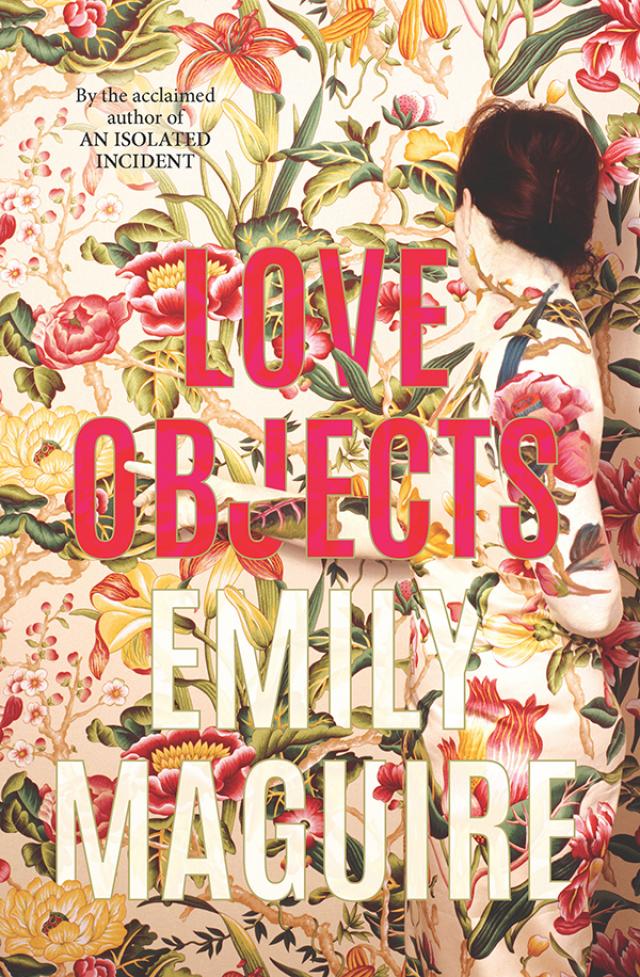
Cover design: Sandy Cull
Cover artwork: Cecelia Paredes
CONTENTS
ONE
NIC
LENA
NIC
LENA
NIC
LENA
NIC
LENA
NIC
LENA
TWO
WILL
LENA
NIC
WILL
LENA
WILL
NIC
WILL
NIC
LENA
WILL
THREE
NIC
LENA
WILL
NIC
LENA
NIC
LENA
WILL
NIC
WILL
FOUR
WILL
LENA
WILL
NIC
ACKNOWLEDGEMENTS
NIC
Nic’s shoes had always worn unevenly. Pigeon-toed was what the ballet teacher, who was actually just an ordinary mum who had lived in France for a year when she was younger, had called her. Such a pretty face, but those feet! the fake-French ballet teacher would cry, patting six-year-old Nic’s smooth cheeks and gazing not at the terrible feet but away from them at the school hall rafters. What would she say now? Nic wonders, watching each foot press its inside into the asphalt as it stepped. Such a sagging face! At last a match for your sloppy feet!
Sagging face, sloppy feet, arse outgrowing its pants, right hip which has, in the three years since she’s turned forty, woken her most nights with its urgent ache. Not all bad, though, or else Jase from the stockroom, who goes to the gym every morning before work and wears tight shorts and tighter singlets to show how well that regime is working for him, wouldn’t whistle appreciatively and call her gorgeous when she passed him, and Reg the store’s night manager wouldn’t stand far closer than polite in the break room and ask her for the thousandth time if she wouldn’t consider joining the night shift so he’d have something good to look at during the long quiet hours between six and closing.
Night shift is better money, but aside from having to dodge Reg there’s the matter of transport. Nic isn’t a panicky person; not like her sister Michelle, who sees rapists and meth heads where there are only passing motorists and harmless neighbourhood kids. Still, even the calmest and most reasonable woman doesn’t take twenty-minute walks alone after midnight. Or accept the no-doubt-insistent offer of a lift from the creepy manager finishing work at the same time.
Besides, if she got home after midnight she wouldn’t get to sleep before one, but would have to rise at six anyway to make sure the cats didn’t howl the neighbourhood awake in hunger.
Besides, if she didn’t walk home in the bright, clear light of afternoon she would miss so much.
Like the newly pasted telegraph pole poster telling whoever passes to LOOSE WEIGHT NOW!!!! She tears a tab off and slips it into her uniform pocket to nestle with the SECRETS OF YOUR SOUL TAROT business card she picked up from the shopping centre information desk this morning and the kebab shop receipt with today’s queue number 14 in thick black texta on the top. On second thought, she unsticks the whole poster, working carefully so the bits of tape come away with the paper. Folds it in three so the tabs are safely tucked away.
Like the way this pair of sneakers looks ready to chuck on the inside edge and yet near new on the outer. Is it time to swap them with one of the pairs she bought in Kmart’s January sale or should she wait until the canvas wears right through? First sight of skin, that was the marker.
Like the fact the diamond chi
p in Mum’s engagement ring is not sparkling as it should in the late afternoon sun. Michelle, who wears Mum’s plain gold wedding band, told Nic to keep it sparkly with a monthly bath of half hydrogen peroxide, half Windex solution, but that was typical Michelle over-fussiness. Dishwashing liquid, warm water, soft toothbrush, good as new. She’ll do it tonight while watching Married at First Sight.
Like the peeling polish on her left index fingernail. A raw pink spot at the edge of an otherwise perfectly glossy lavender finish. How long had it been that way? All day she looks at her own hands without seeing them. Product-scanning robots. Only on the walk home do they become part of her again; only now can she see their messiness and feel the shame of it. She should have expected this. The lavender polish had been gloopy and her usual solution of acetone drops had not sufficiently thinned it. She’d known it and now look!
Like the mustard-coloured envelope slipped under the windscreen wipers of a shiny black Jeep in the no-parking zone outside of the nursing home. Some people had so much money they treated a ticket as a minor fee for the convenience of parking wherever they damn well liked. Never used to see those kinds of people in Leichhardt. The owner of this car probably didn’t even know anyone in the home. Another scavenger tracking which old ladies were due to die next, leaving their unrenovated 1960s houses to be bought cheap, flipped and sold within a month for millions.
Nic plucks the parking fine from beneath the wiper blade and drops it into her handbag, next to the empty Coke bottle from lunch and the Thermomix pamphlet from the pop-up stall outside the shopping centre toilets.
If she walked home at night she would not see treasures like the doll’s bonnet (she at first thinks baby’s bonnet, but not even a newborn’s head could be so tiny, surely?) that winks at her from under the swings in the pocket park three doors from her house. It must have been dropped only that afternoon, so unblemished by dust or dog piss or cigarette ash is the white brocade. When she holds it up close, she can see that a length of shiny satin ribbon meant to act as an under-chin tie has been attached to each side, but unevenly and in a jagged stitch. A handmade bonnet, imperfectly made but so clean and crisp it hurts her heart to think how the one who sewed it would feel about its casual discarding. She pulls a scrunched plastic bag from her jacket pocket, shakes it smooth and gently places the bonnet inside.
So much she would miss if she were to walk home in the dark with only the too-far-apart streetlights to guide her.
The letterbox is satisfyingly stuffed. Nic sifts through the pile as she approaches the front door: new catalogues from Target and Bunnings and Aldi, a voucher book from a local pizza shop and a couple of real estate ads. Rosa D’Angelo’s place down the street has a price guide of $2.2 million. Rosa used to wrap her torso in newspapers to keep warm during the winter. The last time Nic visited, a month or so before Rosa died, there’d been a pot of beef bones boiling on her stove. The butcher gave her the bones for free because her late husband had worked with his grandfather forty years ago.
Shouting rudely from among the real estate brochures is a page torn from a school exercise book: perfect, pale-blue lines marred by angry block letters.
PLEASE STOP FEEDING STRAY CATS!!! IT MAKES THEM GATHER IN OUR STREET AND THEY FIGHT AND CLIMB ON OUR CARS WHERE THEY LEAVE MARKS. I KNOW YOU THINK YOU’RE DOING A NICE THING BUT PLEASE THINK OF YOUR NEIGHBOURS.
THANK YOU!
Instant heat, like she’s sitting under the hairdresser’s lamp. Thought she’d seen the last of this nastiness when she quit the neighbourhood Facebook group. She reads the note over, rage rising. Anonymous, too, the coward. She returns to the letterbox, glares a challenge up and down the street. Nobody is out. Nobody watching from behind glass, either, far as she can tell. Well. When she figures out who it is she will anonymously dump a tin of Fancy Feast chicken liver on their precious car. Anonymously scatter dry kibble all over their lawn. Because if it’s someone with a car who can’t tolerate cat paw prints it will be someone who lives in one of the new places built on the blocks that used to hold two or three houses like hers. It’ll be one of them and they all have lawns—showy, tree- and shrub- and flower-less expanses of green. The buzz and whine of mowers around here on Saturday mornings is louder these days than the planes overhead.
Returning to her front porch, she slips the foul note into the middle of the stack of catalogues, smothering the nasty slip of paper with colour and gloss. Imagine being ALL CAPS angry at a sleepy, well-fed cat! Miserable fuckers.
Nic unlocks the door and turns to her side to squeeze through, careful not to catch her clothes or bag on the swinging latch. Inside, she takes a moment to adjust to the gloom. The light bulb blew weeks or months ago, and every day at this time she curses herself for not changing it, but then her eyes recover from the transition and she sidles smoothly past the newspaper stacks and into the kitchen and doesn’t think of it again until the next re-entry.
Her niece Lena says that beating yourself up for failing to reach your goals is a waste of energy; recommit or ditch the goal but no negative self-talk about what you woulda-shoulda-coulda. Lena was usually talking about her diet, which week by week seemed increasingly strict and easy to fail at: no sugar, no dairy, no gluten, no artificial sweeteners, no caffeine. If she ate something she shouldn’t, she would ask herself: is it important to me to stick to this rule? If it was, she forgave herself the mistake and promised herself she’d do better. If it wasn’t, she would decide to ditch the restriction.
Lena had never, to Nic’s knowledge, made the latter choice, but that doesn’t mean Nic can’t. To hell with changing the hallway light bulb, she decides, edging her way through the kitchen. If it worked she would only worry about forgetting to switch it off, then worry about the electricity bill being even more than it was already.
She feels immediately lighter. Lena’s been a wise old thing since she was a baby. Proven by the fact she’s always liked me more than her own mother, Nic would say if either mother or daughter were here right now. Lena would tell her not to be such a bitch, but wouldn’t mean it; Michelle would laugh, and she wouldn’t mean that either.
Nic adds the catalogues to the stack beside the microwave and the vouchers to the one on the front left hotplate. She puts today’s newspaper on the kitchen table, where it slips about for a few seconds before settling nicely. It would sit on the kitchen table until she had a chance to finish reading it, and if that hasn’t happened by bedtime she will put it with its colleagues in the hallway, waiting for a day when she has more time, better concentration.
Nic opens her handbag, sees the plastic bag within, thrills at the baby doll bonnet. The problem, though, is where to put it. It is such a new and special thing that it has no place.
The kitchen is out of the question. It’s for paperwork and food containers and recipes and medicines, for things that need processing or dealing with or eating or discarding, for life’s ephemera (a word from Lena’s vocabulary homework a decade ago and which Nic loves so much she uses at every opportunity).
She scuffs her way through to the living room, holding the bonnet in both hands. It would be safe from physical harm atop one of the towers of DVDs or VHS tapes lining the right-hand wall, but it’d be lonely surrounded by hard plastic with only the dull grey popcorn ceiling above. The toy crates were a better choice. There, the bonnet could nestle against other things made to be fondled by tiny hands, other things left behind by a child too spoilt or ignorant to appreciate what she had. The top toys on the top crates had views clear out into the street—or would if Nic opened the curtains. Even with them closed, they were able to enjoy the filtered sunlight for much of the day and the friendly glow of the streetlights after dark.
Nic lays the bonnet on top of the centre crate, which is full enough that the new addition perches like a crown with the clear air and views it deserves. She takes a careful step back. Something is making her heart hammer. What what what what? She returns to the crate. There! Little Bo-Peep with her crinkly blonde hair and wonky staff lined with tiny teeth marks is suffocating! Nic snatches up the bonnet. ‘Sorry, sorry.’ She repositions the doll, tiny chin on the edge of the crate so she is looking out to the street. ‘I was only resting it there, to see. You’re okay now.’