

Leg man, p.1
Leg Man,
p.1
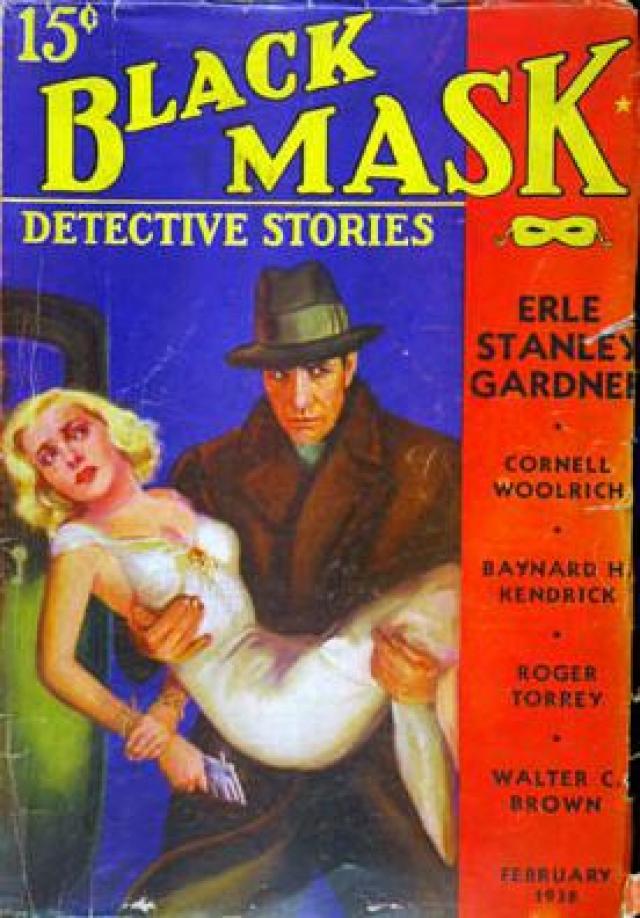


Leg Man
ERLE STANLEY GARDNER (1889-1970)
Although Erie Stanley Gardner didn’t turn to writing until he reached the relatively ripe age of thirty-four, when he died at age eighty-one on his California ranch, 141 of his books were in print and 5 more were awaiting publication. By 1986, a staggering 319 million copies of his books had been sold in thirty-seven languages, making him one of the most popular writers of fiction ever. The Mystery Writers of America made it official by declaring him a Grand Master in 1962.
Gardner was born in Maiden, Massachusetts, the son of an engineer whose work moved him to Oregon and then California-a state that the boy loved and the man used as the base of his fiction. As a youth, he boxed professionally and promoted boxing bouts and, reputedly, was expelled from college for slugging a professor. He educated himself by reading law books and helping an attorney, passed the bar exam at twenty-one, and established a reputation as a canny defence attorney. He learned the writing trade in the same way-reading and studying the work of others in the field.
Gardner had been writing prolifically for ten years before he published the first of the Perry Mason series. His huge output for the pulps introduced numerous characters, including Speed Dash, a detective who can scale the sides of buildings in the event that a door is locked, and the armchair detective Lester Leith, whose specialty is solving jewel thefts by means of reading newspaper accounts.
Mason is introduced in The Case of the Velvet Claws. In this novel, Mason deduces that dampness around an umbrella stand means that a witness was at the murder scene when he said he was. He thereby saves an obnoxious character and makes the point that justice and law are more important than personal considerations. Gardner’s knowledge of and respect for criminal law form a thread that runs through all the Mason books.
Gardner created other series characters with legal connections. Middle-aged sleuth Bertha Cool teams up with Donald Lam, a disbarred attorney whose legal advice helps to solve cases. Gardner used district attorney Doug Selby to illustrate his appreciation of the prosecution’s outlook on crime.
Leg Man also features a character from the world of law. The story is unusual in that it puts the legal assistant at centre stage as protagonist. It is typical of Gardner’s work in its use of canny tricks and an eye for detail to solve the mystery.
Leg Man
Mae Devers came into my office with the mail. She stood by my chair for a moment putting envelopes on the desk, pausing to make little adjustments of the inkwell and paper weights, tidying things up a bit.
There was a patent-leather belt around her waist, and below that belt I could see the play of muscles as her supple figure moved from side to side. I slid my arm around the belt and started to draw her close to me.
“Don’t get fresh!” she said, trying to pull my hand away, but not trying too hard.
“Listen, I have work to do,” she said. “Let me loose, Pete.”
“Holding you for ransom, smile-eyes,” I told her.
She suddenly bent down. Her lips formed a hot circle against mine-and Cedric L. Boniface had to choose that moment to come busting into my office without knocking.
Mae heard the preliminary rattle of the door-knob, and scooped up a bunch of papers from the desk. I ran fingers through my hair, and Boniface cleared his throat in his best professional manner.
I couldn’t be certain whether I had any lipstick on my mouth, so I put my elbow on my desk, covered my mouth with the fingers of my hand and stared intently at an open law book.
Mae Devers said, “Very well, Mr. Wennick, I’ll see that it gets in the mail,” and started for the door. As she passed Boniface, she turned and gave me a roguish glance, as much as to say, “Now, smartie, see what you’ve got yourself into.”
Boniface stared at me, hard. His yellowish eyes, with the bluish-white eyeballs, reminded me of hard-boiled eggs which had been peeled and cut in two lengthwise. He was in a vile humour.
“What was all the commotion about?” he asked.
“Commotion?” I inquired raising my eyes, but keeping my hand to my mouth. “Where?”
“In here,” he said.
Mae Devers was just closing the door. “Did you hear anything, Miss Devers?” I asked in my most dignified manner.
“No, sir,” she said demurely, and slipped out into the corridor.
I frowned down at the open law book on the desk. “I can’t seem to make any sense out of the distinction between a bailment of the first class and a bailment of the second class.”
That mollified Boniface somewhat. He loved to discourse on the academic legal points which no one else ever gave a damn about.
“The distinction,” he said, “is relatively simple, if you can keep from becoming confused by the terminology. Primarily, the matter of consideration is the determining factor in the classification of all bailments.”
“Yes, sir,” I said, my voice muffled behind my hand.
Boniface stared at me. “Wennick,” he said, “there’s something queer about your connection with this firm. You’re supposed to be studying law. You’re supposed to make investigations. You’re a cross between a sublimated law clerk and a detective. It just happens, however, that in checking over our income tax, I find that the emoluments which have been paid you during the past three months would fix your salary at something over fifteen thousand dollars a year.”
There was nothing I could say to that, so I kept quiet.
Mae Devers opened the door and said, “Mr. Jonathan wants to see you at once, Mr. Wennick.”
I got out of the chair as though it had been filled with tacks and said, “I’m coming at once. Excuse me, Mr. Boniface.”
Mae Devers stood in the doorway which led to the general offices and laughed at me as I jerked out a handkerchief and wiped lipstick from my mouth. “That,” she told me, “is what you get for playing around.”
I didn’t have time to say anything. When old E. B. Jonathan sent word that he wanted to see me at once, it meant that he wanted to see me at once. Cedric L. Boniface followed me to the door of my office and stared meditatively down the corridor as though debating with himself whether or not to invade the sanctity of E. B.’s office to pursue the subject further. I popped into E. B.’s private office like a rabbit making its burrow two jumps ahead of a fox.
Old E. B. looked worse than ever this morning. His face was the colour of skimmed milk. There were pouches underneath his tired eyes as big as my fist. His face was puckered up into the acrimonious expression of one who has just bit into a sour lemon.
“Lock the door, Wennick,” he said.
I locked the door.
“Take a seat.”
I sat down.
“Wennick,” he said, “we’re in a devil of a mess.”
I sat there, waiting for him to go on.
“There was some question over certain deductions in my income tax statement,” he said. “Without thinking, I told Mr. Boniface to brief the point. That made it necessary for him to consult the income tax return, and he saw how much you’d been paid for the last three months.”
“So he was just telling me,” I said.
“Well,” E. B. said, “it’s embarrassing. I need Boniface in this business. He can spout more academic law than a college professor, and he’s so damn dumb he doesn’t know that I’m using him for a stuffed shirt. No one would ever suspect him of being implicated in the-er, more spectacular methods which you use to clean up the cases on which he’s working.”
“Yes,” I conceded, “the man’s a veritable talking encyclopaedia of law.”
E. B. said, “We’ll have to handle it some way. If he asks you any questions, tell him it’s a matter you’d prefer to have him discuss with me. Wennick! Is that lipstick on the corner of your mouth?”
Mechanically, I jerked a handkerchief out of my pocket to the corner of my mouth. “No, sir,” I said, “just a bit of red crayon I was using to mark up that brief and...”
I stopped as I saw E. B.’s eyes on the handkerchief. It was a red smear. There was no use lying to the old buzzard now. I stuck the handkerchief back in my pocket and said, “Hell, yes, it’s lipstick.”
“Miss Devers, I presume,” he said dryly.
I didn’t say anything.
“I’m afraid,” he said, “it’s going to be necessary to dispense with her services. At the time I hired her, I thought she was just a bit too-er, voluptuous. However, she was so highly recommended by the employment agency that-“
“It’s all right,” I said. “Go ahead and fire her.”
“You won’t mind?”
“Certainly not,” I told him. “I can get a job some other place and get one for her at the same time.”
“Now, wait a minute, Wennick,” he said, “don’t misunderstand me. I’m very well satisfied with your services, if you could only learn to leave women alone.”
I decided I might as well give him both barrels. “Listen,” I said, “you think women are poison. I think they’re damned interesting. The only reason I’m not going to ask you whether the rumour is true that you’re paying simultaneous alimony to two wives is that I don’t think I have any business inquiring into your private life, and the only reason I’m not going to sit here and talk about my love life is that I know damned well you haven’t any business prying into mine.”
His long, bony fingers twisted restlessly, one over the other, as he wrapped his fists together. Then he started cracking his knuckles, one at a time.
“Wennick,” he said at length, “I have great
hopes for your future. I hate to see you throw yourself away on the fleeting urge of a biological whim.”
“All right,” I told him, “I won’t.”
He finished his ten-knuckle salute and shook his head lugubriously. “They’ll get you in the long run, Wennick,” he said.
“I’m not interested in long runs,” I told him. “I like the sprints.”
He sighed, unlaced his fingers and got down to business. “The reason I’m particularly concerned about this, Wennick, is that the case I’m going to send you out on involves a woman, a very attractive woman. Unless I’m sadly mistaken, she is a very vital woman, very much alive, very-er, amorous.”
“Who is she?” I asked.
“Her name is Pemberton, Mrs. Olive Pemberton. Her husband’s Harvey C. Pemberton, of the firm of Bass & Pemberton, Brokers, in Culverton.”
“What does she want?” I asked.
“Her husband’s being taken for a ride.”
“What sort of a ride?”
He let his cold eyes regard me in a solemn warning. “A joy ride, Pete.”
“Who’s the woman?”
Old E. B. consulted a memo. “Her name is Diane Locke-and she’s redheaded.”
“What do I do?”
“You find some way to spike her guns. Apparently she has an ironclad case against Pemberton. I’ll start Boniface working on it. He’ll puzzle out some legal technicality on which he’ll hang a defence. But you beat him to it by spiking her guns.”
“Has the redhead filed suit?” I asked.
“Not yet,” E. B. said. “At present it’s in the milk-and-honey stage. She’s getting ready to tighten the screws, and Mrs. Pemberton has employed us to see that this other woman doesn’t drain her husband’s pocketbook with this threatened suit. Incidentally, you’re to stay at the Pemberton house, and remember, Mr. Pemberton doesn’t know his wife is wise to all this and is trying to stop it.”
“Just how,” I asked, “do I account for my presence to Mr. Harvey C. Pemberton?”
“You’re to be Mrs. Pemberton’s brother.”
“How do you figure that?”
“Mrs. Pemberton has a brother living in the West. Her husband has never seen him. Fortunately, his name also is Peter, so you won’t have any difficulty over names.”
“Suppose,” I asked, “the real brother shows up while I’m there at the house?”
“He won’t,” E. B. said. “All you have to do is to go to the door at seven-thirty this evening. She’ll be waiting for your ring. She’ll come to the door and put on all the act that’s necessary. You’ll wear a red carnation in your left coat lapel so there’ll be no mistake. Her maiden name, by the way, was Crowe. You’ll be Peter Crow, sort of a wandering ne’er-do-well brother. The husband knows all about you by reputation.”
“And hasn’t seen any pictures or anything?” I asked.
“Apparently not,” E. B. said.
“It sounds like a plant to me,” I told him dubiously.
“I’m quite certain it’s all right,” he said. “I have collected a substantial retainer.”
“O.K.,” I told him, “I’m on my way.”
“Pete,” he called, as I placed my hand on the door.
“What is it?”
“You’ll be discreet,” he warned.
I turned to give him a parting shot. “I certainly hope I’ll be able to,” I said, “but I doubt it,” and pulled the door shut behind me.
I looked at my wrist watch, saw I had three minutes to go, and put the red carnation in the left lapel of my coat. I’d already spotted the house. It was a big, rambling affair which oozed an atmosphere of suburban prosperity. I took it that Bass & Pemberton, Brokers, had an income which ran into the upper brackets.
I jerked down my vest, adjusted the knot in my tie, smoothed the point of my collar, and marched up the front steps promptly at seven-thirty. I jabbed the bell. I heard slow, dignified masculine steps in the corridor. That wasn’t what E. B. had led me to expect. I wondered for a moment if there’d been a hitch in plans and I was going to have to face the husband. The door opened. I took one look at the sour puss on the guy standing in the doorway and knew he was the butler. He was looking at me as a judge looks at a murderer when I heard a feminine squeal and caught a flying glimpse of a woman with jet-black hair, dusky olive complexion and a figure that would get by anywhere. She gave a squeal of delight and flung her arms around my neck.
“Pete!” she screamed. “Oh, Pete, you darling. You dear! I knew you’d look me up if you ever came near here.”
The butler stepped back and coughed. The woman hugged me, jumped up and down in an ecstasy of glee, then said, “Let me look at you.” She stepped back, her hands on my shoulders, her eyes studying me.
Up to that point, it had been rehearsed, but the rest of it wasn’t. I saw approval in her eyes, a certain trump-this-ace expression, and she tilted her head to offer me her lips.
I don’t know just what E. B. referred to as being discreet. I heard the butler cough more violently. I guess he didn’t know she had a brother. I let her lead. She led with an ace. I came up for air, to see a short-coupled chap with a tight vest regarding me from brown, mildly surprised eyes. Back of him was a tall guy fifteen years older, with fringes of what had once been red hair around his ears. The rest of his dome was bald. He had a horse face, and the march of time had done things to it. It was a face which showed character.
Mrs. Pemberton said, “Pete, you’ve never met my husband.”
The chunky chap stepped forward and I shoved out my hand. “Well, well, well,” I said, “so this is Harvey. How are you, Harvey?”
“And Mr. Bass, my husband’s partner,” she said.
I shook hands with the tall guy “Pete Crowe, my rolling-stone brother,” Mrs. Pemberton observed. “Where’s your baggage, Pete?”
“I left it down at the station,” I told her.
She laughed nervously and said, “It’s just like you to come without sending a wire. We’ll drive down and pick up your baggage.”
“Got room for me?” I asked.
“Have we!” she exclaimed. “I’ve just been dying to see you. Harvey is so busy with his mergers and his horrid old business that I don’t ever get a chance to see him any more. You’re a Godsend.”
Harvey put his arm around his wife’s waist. “There, there, little girl,” he said, “it won’t be much longer, and then we’ll take a vacation. We can go for a cruise somewhere. How about the South Seas?”
“Is that a promise?” she asked.
“That’s a promise,” he told her so solemnly I felt certain he was lying.
“You’ve made promises before,” she pouted, “but something new always came up in the business.”
“Well, it won’t come up this time. I’ll even sell the business before I get in another spell of work like this.”
I caught him glancing significantly at his partner.
“We’ve just finished dinner,” Mrs. Pemberton explained to me, “and Mr. Bass and my husband are going back to their stuffy old office. How about going down and picking up your baggage now?”
“Anything you say,” I told her, leaving it up to her to take the lead.
“Come on then,” she invited. “Harvey’s car is out front. Mine’s in the garage. We’ll go get it out. Oh, you darling! I’m so glad to see you!” And she went into another clinch.
Harvey Pemberton regarded me with a patronising smile. “Olive’s told me a lot about you, Pete,” he said. “I’m looking forward to a chance to talk with you.”
Bass took a cigar from his pocket. “Is Pete the one who did all the big game hunting down in Mexico?” he asked.
“That’s the one,” Mrs. Pemberton told him.
Bass said, “You and I must have a good long chat some time, young man. I used to be a forest ranger when I was just out of school. I was located up in the Upper Sespe, and the Pine Mountain country. I suppose you know the section.”
“I’ve hunted all over it,” I said.
He nodded. “I was ranger there for three years. Well, come on, Harvey, let’s go down and go over those figures.”
“We go out the back way,” Olive Pemberton told me, grabbing my hand and hurrying me out a side door. She skipped on ahead toward the garage. “Hurry,” she said. “They have a conference on at their office and I want to hear what it’s about.”















