The case of the vagabond.., p.12
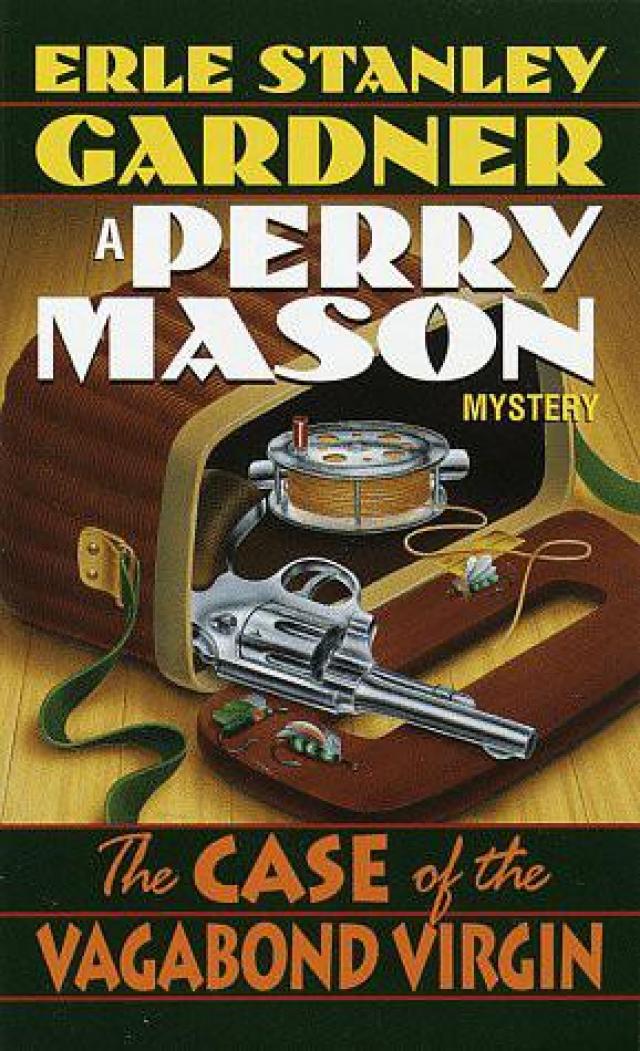
The Case of the Vagabond Virgin,
p.12


“Perhaps they don’t have fatherly wolves in the little town where she was raised.”
“They have movies. They have magazines. They have radios. And while they may not have wolves who live in such nice dens, you can bet they have wolves.”
Mason said, “Well, I’ll go take a look at the little lamb.”
“The willing little lamb, if you ask me,” Della Street said, “just wandering around outside of the fold, bleating helplessly, looking in sidelong anticipation out of its sweet little eyes for the wolf. Gosh but I’m catty! I can’t help it.”
Mason smiled. “I’ll take a look.”
Della Street said, “If you take my advice, you’ll have a witness.”
“Witness or chaperone?”
“Both.”
“I may go farther if I’m by myself.”
“You might get too far. Remember, Chief, you can’t ever tell what she’ll say. And if she says it with that sweet little air of round-eyed unsophistication, she …”
“You’ve made a sale,” Mason told her. “Get your notebook and come along.”
Della Street picked up her shorthand notebook, pushed it into her purse and accompanied Mason down two flights of stairs to Apartment 13-B.
Mason tapped on the door.
Veronica Dale flung the door wide open.
There was a momentary flash of expression on her face, just one brief flicker. It was hard to tell whether she was disappointed or startled.
“Why, Mr Mason!” she said. “It’s so nice of you to come to look over my apartment. It’s absolutely wonderful here. I don’t know how I can ever thank Mr Addison for …”
Mason pushed his way on into the apartment, said, “I thought I’d look it over.”
“It’s marvellous. It has everything.”
Della Street seated herself unobtrusively in a corner of the apartment and held her shorthand notebook balanced on her knee.
Mason said, “Do you have any idea why you’re here, Veronica?”
“Mr Addison said he was going to try to get something for me. He said a girl couldn’t go on living at the hotel and working – well, you know, you can’t afford a hotel room with hotel service. He was going to try to find an apartment for me. So then he sent me this note saying I was free to go out with the bearer of the note, that I wouldn’t have to work, and I was to do just what the man said. It was a strange note, but I knew he was upset and I made allowances for that. I had an idea it had to do with getting an apartment.”
“You knew apartments were scarce?”
She smiled and said, “I know that Mr Addison has influence. Look at what he’s done – thanks also to Miss Street, of course.”
Mason said, “Veronica, let’s have a chat. I want to find out something about your background.”
“Why, yes, Mr Mason,” she said, and then added, “of course.”
Mason moved a chair for her so she was facing Della Street. He seated her and seated himself, crossed his long legs, lit a cigarette and regarded the girl speculatively.
“What is it?” she asked.
Mason said, “Veronica, I take it you feel grateful to Mr Addison?”
“Grateful!” she exclaimed. “I’d do anything for him! I think he’s the nicest man in the world.”
“That’s fine. Now, I’m Mr Addison’s lawyer.”
She nodded.
“And Mr Addison is in trouble.”
“In trouble? Mr Addison? Oh, no, Mr Mason, that couldn’t be. He’s so nice. He …”
“He’s in trouble over the death of his partner. Now, Veronica, I want you to answer a few questions.”
“Yes, sir.”
“You were hitchhiking when you met Mr Addison?”
“Yes.”
“How long had you been hitchhiking?”
She held up her hand, started counting with her fingers. “Five days.”
“Why were you hitchhiking?”
“I don’t know, Mr Mason. I just had an irresistible desire to get out of that small town. It seemed as though I couldn’t stand it another day. I hated to leave Mother, but – well, that’s the way it is. A girl has to live her own life. It’s all right for Mother to settle down in that town with that little restaurant business, but it just seemed as though I was trying to bury myself. Mother runs a small restaurant. I helped her by waiting on tables, doing some of the cooking and dishwashing and keeping things clean. There was lots of work in connection with it.”
“Quite a business?” Mason asked.
“No, just a little place where people stop in. We had a regular trade with truck drivers and people who were on the road all the time. And then, of course, there were a few local people. We almost never caught a real transient. The town was so small, few people stopped there. They just kept right on going.”
“You didn’t tell your mother when you left where you were going?”
“No. I just took off.”
“And have you notified her, now that you’re located here?”
“No.”
“Why not?”
“I’m afraid she – well, I don’t know. I’m afraid she’d come and get me.”
“How old are you?”
“Eighteen.”
“You don’t think your mother might be trying to follow you even without knowing where you are?”
“Heavens, no. She wouldn’t have had any idea whether I’d gone north or south, east or west.”
“Don’t you suppose she’s worrying about you?”
“I doubt it. I’m old enough to take care of myself.”
“Veronica, what is your mother’s name and where does she live? Where is this small town you keep talking about?”
“Her name’s Laura – Laura Mae Dale, and I don’t want to tell you where she lives.”
“Why?”
“You’d write her. I don’t want her to know where I am. She might take me back.”
“Tell us just what happened before you met Mr Addison.”
“Before I met him?”
“That’s right, immediately before.”
“I had trouble.”
“What sort of trouble?”
“Wolf trouble.”
“How did it happen?”
“The same old way. I try to pick my cars. I size them up and listen to the sound of the motor. When you’re standing by the side of the road you can hear a car’s motor for a long ways. And, then, of course, you can tell a lot by the look of the car. If it has a lot of shiny finish on the front of it and looks expensive, I turn around so the people can see I want a ride. But if it’s a shabby car, I turn my face the other way and keep my chin up in the air to show them I’m waiting for a bus.
“Sometimes I make a mistake. This man was one of them. I thought he was all right and got in the car with him. It was after dark then, and I couldn’t really size him up. Almost as soon as I got in the car, he started making passes.”
“Did you mind that?”
“As long as he kept his hands off of me, I – I rather liked it. Is that terribly wrong, Mr Mason?”
Della Street, glancing up from her notebook, caught Mason’s eye, closed her own in a slow wink.
“That depends,” Mason said. “Why did you like it, Veronica?”
“It was so different from the small town sort of stuff, the way he went at it and everything. It was – well, it was clever. Then he started putting his hands on me and I wanted to scream. I just wanted to get out of the car right away.”
“And what did you do?”
“I switched off the ignition, grabbed the ignition key after I’d locked the switch, and, of course, the car came to a stop. I opened the door and jumped out. He couldn’t run after me and catch me, and he couldn’t leave his car right there in the middle of the road and start running.”
“And what did you do when you jumped out?”
“I tossed him the keys and — well, that’s all. I just tossed him the keys.”
“And then what?”
“Oh, he said a lot of things, but, of course, men do that when they’re disappointed.”
“How,” Mason asked, “did you learn that much about men?”
“I … I’ve talked with people.”
“And about hitchhiking, how did you know the way to handle the wolf?”
“A girl told me that. I guess that’s where I got the idea of hitchhiking, Mr Mason. This girl was one of the few transients who stopped in at the restaurant and she got to talking with me. She wanted a place to spend the night. Gosh, Mr Mason, she certainly had courage. She only had about two dollars and fifty cents. She’d been hitchhiking and she intended to keep on hitchhiking. She said she’d get by somehow. I thought that a girl had to be – well, you know, a bad girl, in order to do things like that. But she told me that you didn’t have to at all, that nearly all men were very gentlemanly and some of them would give a girl money, just to help her on her way. I asked her about the bad ones, and she told me about the trick with the ignition. She said that whenever she got in a car, the first thing she did was to notice the ignition lock, and when things got too bad she could always reach over and cut off the ignition, turn the key in the lock, bring the car to a stop, and then get out and wait for another ride.”
“And that is what you did that night, just before Mr Addison picked you up?”
“Yes.”
“Can you remember the place where he picked you up?”
“Yes, right by a culvert.”
“Now, tell me exactly what happened.”
“Well, I got out of the car. This man was pretty mean and said a lot of things, but then he drove on. I was frightened. I didn’t try to get a ride for a while. I guess I walked for a mile or so, and every time I’d hear a car coming I’d get off to the side of the road and hide in the brush. I thought it might be that man coming back.”
“How long did you keep that up?”
“It must have been half to three-quarters of an hour.”
“Then what?”
“Then I got tired and realized I couldn’t keep on that way, so I sat down by the side of the culvert.”
“How many cars did you pass up after you sat down?”
“None. Mr Addison’s was the first car that came along then.”
“You listened to the sound of the motor?”
“Yes. As a matter of fact, Mr Mason, Mr Addison’s car was down a side road somewhere. I heard it start and then it went along a road more or less parallel to the highway, and then I heard the wheels on a plank bridge, and then the car climbed up to the highway, came to a stop, and then started on again. I heard the driver shift the gears and the way the motor sounded and everything and – well, I was tired enough to have taken a chance with almost anything.”
Mason glanced at Della Street. “How long were you sitting on the culvert, Veronica?”
“I don’t know. Four or five minutes, perhaps. There wasn’t too much traffic along that road at that hour. It’s one of the main roads, but not the main road.”
“While you were there did you hear anything that could have been a shot?”
“No shot,” she said. “There was someone having trouble with an automobile. It backfired four or five times.”
“Where?” Mason asked.
“Over on the side of the road. Gosh, Mr Mason, it may have been Mr Addison’s car. I don’t know. It was in that general vicinity somewhere.”
“You heard it backfire?”
“Yes, five or six times.”
“Describe those backfires,” Mason said. “Was there one loud noise and then after quite a little while another one, and–?”
“No, they were all together, almost all at once. I remember wondering about them, because usually when you hear a whole series of backfires that way it’s when a truck is coming down the hill or something like that. When a person starts a car and it misses and backfires, it is longer between the … between the noises.”
Mason studied her face. She met his eyes with calm candour, the tranquillity of utter innocence.
“You didn’t say anything about these backfires when I talked with you before.”
“Good heavens, why should I, Mr Mason? Just an old automobile backfiring.”
“And they were all together?”
“Yes. The first one, and then another one, and then three or four really quick, right together.”
“And that was the last of it?”
“I guess the person got his car started then.”
“But that was some time before Mr Addison showed up?”
“Oh, yes.”
“How long?”
“A minute or so,” she said innocently.
“Much more than a minute?”
“I don’t think so. Perhaps a minute or two minutes. I guess, now that I come to think of it, it could have been Mr Addison starting his car. It …”
Knuckles pounded on the door, then someone rattled the knob and kicked against the base of the panels.
“Come on, come on. Open up!” a man said impatiently. “Open up or we’ll take the door down. This is the Law.”
Mason said, “Veronica, I want you to think carefully …”
“What’s the Law doing here?” she asked.
“About those backfires,” Mason went on, “now did you …”
A voice from the hall said, “Please don’t make so much racket. Here’s a pass key.”
A key clicked in the lock. Lieutenant Tragg and Sergeant Holcomb entered the room.
“Well, well, well,” Tragg said, “interrupting a nice little tête-à-tête, eh?”
“Interrupting is right,” Mason told him.
Holcomb said, “I think we’ve got him on this, Lieutenant. He’s tampering with a witness for the Prosecution.”
Mason smiled and said, “A witness for the Defence, gentlemen.’
“You may think so,” Tragg said, “but it’ll be a different story when she tells the real truth. You knew we wanted to take this girl out on the road and have her point out the place where Addison picked her up.”
“But not until night,” Mason said.
“So what?”
“It’s not night yet.”
“She’s a witness for the Prosecution.”
Mason said wearily to Della Street, “There’s no use arguing with these fellows, Della. I guess this is where we came in.”
Tragg’s smile was triumphant. “Wrong again, Mr Mason. This is where you go out.”
Out in the corridor, Della Street folded her notebook, then said, “Well, I guess we led with our chins on that one.”
“I don’t know,” Mason said. “We have Tragg worried. He won’t know just what Veronica told us, and he’ll know that we have it down in shorthand.”
“He’ll ask her to tell him what she told us.”
“He still won’t know. And by the time he gets done asking questions, he’ll have her a little rattled, unless she’s the most practised liar in seventeen states.”
“As far as I’m concerned,” Della Street said bitterly, “you can make it eighteen states.”
“That bad?” Mason asked.
Della Street jabbed the elevator button viciously. “All that business about backfiring,” she said, “that really puts Addison on the spot.”
“It sure does,” Mason admitted. “Of course, in a way, Addison put himself on the spot.”
They entered the elevator, rode up two floors and walked down to Della Street’s apartment.
Della pushed her key in the door, twisted back on the key and, when nothing happened, said, “What do you suppose is wrong with my lock? I …” She rattled the key again. “It won’t turn,” she said.
Mason tried the key, said, “Gosh, Della, it feels like it’s unlocked.” He turned the knob and the door opened.
“Well, I’ll be darned,” Della Street said. “I guess I left without snapping the spring lock on. I’d left it on the catch so you could get in, in case I had to just call to you to open the door.”
“I think you did. I don’t remember seeing you take the catch off the lock.”
“Well, I should have. I always do.”
“It’s hard to recall little matters of routine,” Mason said, “but I’m pretty sure you didn’t. However, that’s a minor matter. The thing we’re up against now is trying to give Addison a break. Things look pretty black. His car was out there, probably at the exact time the murder was being committed. The man was killed with his gun. A witness will put him on the spot about the time the shots were fired. And now we have a witness who will testify that the shots were all fired in rapid succession. You can see the way the police will build up that theory. Addison, a crack shot, stands out by his automobile. Ferrell is in the upstairs room. Addison takes an armrest on the door of the automobile or perhaps crouches down and takes a rest on the top of the hood. He takes a careful bead and pulls the trigger, sends one shot crashing through the window glass and into Ferrell’s brain. Then he calmly turns, empties his gun, breaks open the cylinder, pulls out the shells, puts them in his pocket and throws the gun away.”
“What was the idea in taking out the shells?” Della Street asked.
“Apparently the person who committed the murder,” Mason said, “thought that if the police couldn’t get hold of the bullets that were in the gun and prove that the lead alloy in the fatal bullet was the same as the shells remaining in the gun, they couldn’t definitely prove what gun committed the murder.”
“But it’s such a peculiar thing for a man to throw a gun away at the scene of the crime, particularly when police could check up the numbers of the gun and find out who owned it.”
Mason said, “You have to remember that, as Addison pointed out, the gun probably wouldn’t have been found if the police hadn’t been messing around there at night and the beam of the flashlights hadn’t reflected from the blued steel. Addison seemed rather surprised that the gun had been found. It had dropped down behind some stream-worn boulders, a couple of feet in diameter, and could only have been seen from just the one direction. It was fortunate that that police flashlight managed to pick it up – or unfortunate, depending on how you happen to look at it.”
“You don’t think Addison killed him?”
Mason said, “Addison isn’t the type. He’s impulsive, irritable and nervous. But he’s accustomed to weighing consequences.”