The case of the fabulous.., p.16
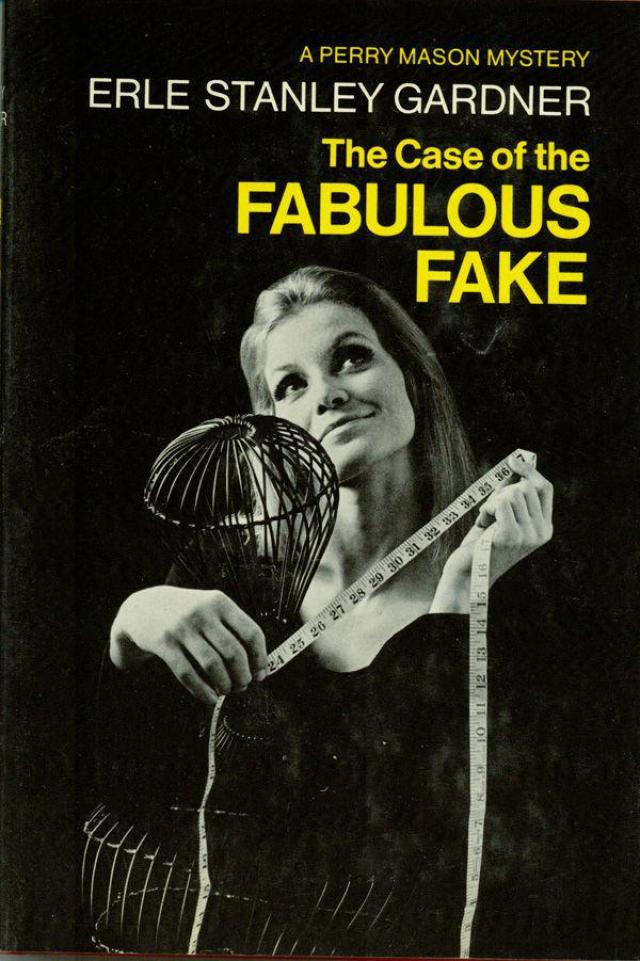
The Case of the Fabulous Fake,
p.16


“That is one.”
“Was a benzidine test performed upon this gun?”
“It was.”
“With what result?”
The witness hesitated, then chose his words carefully. “There were widespread reactions. Evidently the gun had been exposed to blood over almost its entire surface. More probably it had been exposed to a concentration of blood and then someone had attempted to wash that blood off very hastily with water or with a damp rag.”
“That concludes my cross-examination,” Mason said.
“Any redirect?” Judge Elliott asked Ralph Floyd.
“Certainly not,” Ralph Floyd said. “We consider these so-called points completely extraneous.”
“Now, you have a case to put on for the defense, Mr. Mason?”
“Yes, I will call my first witness, Miss Stella Grimes.”
Stella Grimes came forward, gave her name, age, occupation, and residence.
“When did you first see the defendant in this case?” Mason asked.
“It was at night. Mr. Drake and I were in a taxicab. We both wore dark glasses. Mr. Drake had put an ad in the paper suggesting that the person who had money to pay could make the payment to a person in a taxicab at a certain place.”
“Did you talk to the defendant at that time?”
“No, she walked past two or three times, but gave no sign of recognition, no indication that she wished to convey any message.”
“When did you next see her?”
“The following day.”
“Where?”
“At the Willatson Hotel.”
“What room?”
“Room Seven-sixty-seven.”
“And what happened while you were there?”
“I was instructed to take over as the occupant of that room.”
“And the real occupant of that room was the defendant?”
“That’s right.”
“And what was done with her?”
“You had rented another room down the hall. You took the defendant down to that room.”
“Then what happened?”
“Then there was a knock at the door and the decedent paid us a visit.”
“By the decedent, you mean Moray Cassel?”
“Yes, sir.”
“And what was the conversation?”
“It was very apparent that he was expecting a payment of money, that he expected this from a man, that when he saw that two people were in the room he became suspicious and thought perhaps a trap was being laid for him.”
“So, what did you do?”
“I followed a code signal from you, Mr. Mason. I pretended that I was simply a girl friend who was paying you a visit for purposes of affection. I gave you a casual kiss, departed, but, in accordance with your code signal, I rented a taxicab, watched the exit of the hotel so that I could follow Mr. Cassel when he left, and did so follow him to the Tallmeyer Apartments.
“I then reported to you, giving you the license number of the Cadillac owned by the decedent and the address to which he had driven.”
“And then?” Mason asked.
“Then I returned, and continued to occupy the room, waiting for someone to get in touch with me seeking a blackmail payment.”
“When the defendant was in the room did you see her purse?”
“I did.”
“The purse which has been introduced in evidence and which I now hand you?”
“It was either this purse or a similar one.”
Mason said, “I now put the gun which is supposed to have fired the fatal bullet into this purse and ask you if, in your opinion, that gun could have been in that purse at the time that the defendant left the room.”
“It definitely could not have been in the purse, not that gun. I would have noticed the manner in which the purse was bulged out of shape.”
“Cross-examine,” Mason said to Ralph Floyd.
Floyd said, “The defendant could have had the gun someplace else, in her suitcase or concealed somewhere on her person and put it in her purse at a later date.”
“Mr. Mason took her suitcase,” Stella Grimes said, “to smuggle it out of the hotel. She was to take with her nothing but her purse and a black sort of overnight bag.”
“And that gun could have been in the overnight bag?”
“It could not.”
“Why not?”
“Because that bag was full of money with which to pay a blackmailer.”
“How much money?”
“I didn’t count it,” she said, “but it was full of money. I saw that much.”
Floyd hesitated a moment, then said, “I guess that’s all.”
“If the Court please,” Mason said, “I notice that an officer has handed the bailiff an overcoat. I believe this is the overcoat that was taken from Mr. Cassel’s closet, the one which didn’t fit him?”
“I don’t know that it didn’t fit him,” Floyd snapped.
“We’ll very soon find that out,” Mason said. “Mr. Ballard, will you come forward and be sworn, please.”
Ballard, a very short, thick-set individual in his early forties, came to the witness stand, moving with surprising swiftness and agility for one of his build.
He gave his name, address, occupation, age, and then turned to face Mr. Mason.
“You knew Moray Cassel in his lifetime?”
“Yes, sir.”
“How long had you known him?”
“About seven years.”
“What is your occupation?”
“I am a custom tailor.”
“Did you make clothes for Mr. Cassel?”
“I did.”
“How many clothes did you make?”
“Heavens, I don’t know. He seldom kept a suit over six months, and I know that he had a very extensive wardrobe. I made literally dozens of suits for him.”
“And you kept his measurements on file?”
“Certainly. I didn’t want to have to measure him every time he came in. He would pick out the material, tell me what he wanted, and I would have the clothes ready for the first fitting within a few days.”
“I show you an overcoat which I will mark for purposes of identification as Defendant’s Exhibit Number One and ask you if you made that overcoat.”
The witness fingered the overcoat. “I certainly did not.”
“I ask you if that overcoat could have been worn by Moray Cassel.”
The witness pulled a tape measure from his pocket, made a few swift measurements, then shook his head. “Moray Cassel would have been lost in that overcoat,” he said.
“Cross-examine,” Mason said.
“I certainly have no questions about this overcoat of this witness,” Floyd said.
Mason said, “In view of the fact that this overcoat which has been marked for identification as Defendant’s Exhibit Number One is one that was produced by the prosecution as having been found in the closet in Moray Cassel’s apartment, I now ask that this be introduced in evidence as Defendant’s Exhibit Number One.”
“Objected to as wholly incompetent, irrelevant, and immaterial,” Floyd said.
“I would be inclined to think so,” Judge Elliott said, “unless counsel believes it can be connected up. The Court would be glad to hear your theory of the case, Mr. Mason.”
Mason said, “Before I give my theory of the case, I would like to have this overcoat tried on by someone who will fill it out. I have two witnesses here in court whom I expect to use. I think they will be willing to volunteer. Mr. Franklin Gage, will you step forward, please, and try on this overcoat?”
Franklin Gage hesitated, then got to his feet, came forward, took the overcoat, looked at it, and put it on. It instantly became apparent that the sleeves were too short and the overcoat too full.
“That won’t do,” Mason said. “Mr. Homer Gage, will you step forward please and put on the coat?”
“I see no reason to do so,” Homer Gage said.
Mason looked at him in some surprise. “Is there any reason why you don’t want to?”
Homer Gage hesitated for a moment, then said, “All right. It looks like it’s about my size, but I’ve never seen it before.”
He stepped forward and put on the overcoat. It instantly became apparent that the coat was a perfect fit.
“Now, then, Your Honor,” Mason said, “I will give the Court my theory about the overcoat. … Thank you very much, Mr. Gage. You may take the coat off.”
Homer Gage squirmed out of the overcoat as though he had been scalded.
Mason folded the overcoat and put it over his right arm.
“Now then, Your Honor,” he said, “if a person approaches a man who is armed and dangerous and wants to be absolutely certain that he gets the drop on him, he must necessarily have a gun in his hand, cocked and ready to fire.
“The best way to do this without being detected is to have a folded overcoat over the right hand, which can hold the gun under the folds of the overcoat. … If you’ll hand me the gun which is the exhibit in the case, Mr. Bailiff … thank you. I will illustrate to the Court how it can be done.”
Mason folded the coat, placed it over his right arm, and held his hand with the gun in it just under the folded overcoat.
“Now then, if the Court please, I will make my opening statement. It is my belief that a young woman who was a friend of a girl who worked with Moray Cassel got into that condition which is generally known as being ‘in trouble.’ I believe that an executive for the Excobar Import and Export Company was responsible for that condition. I will refer to this man as Mr. X.
“Moray Cassel was a very shrewd, adroit blackmailer. He found out about what was happening and what company the man worked in. He wasn’t too certain of some of the facts, but he saw an opportunity to make a few easy dollars. I believe the young woman had no part in the blackmail scheme.
“She had gone to some other state to have her baby. But one of Cassel’s scouts learned of the facts in the case and probably knew that the young woman used a code in communicating with her lover. Mail was probably addressed simply to thirty-six-twenty-four-thirty-six, Excobar Import and Export Company, and signed the same way—and these may well have been the measurements of the young woman in the case.
“So Moray Cassel took a chance on making some quick and easy money. He wrote a letter to the Escobar Import and Export Company and probably said something to the effect that if thirty-six-twenty-four-thirty-six wanted to escape a paternity suit it was incumbent to have five thousand dollars in spot cash. He probably said he was related to the young woman.
“Mr. X was married. He couldn’t afford to have the true situation come out. His marriage was not a happy one and he knew that his wife would sue for divorce and for large alimony if she could find some good legitimate reason to prove infidelity.
“So Mr. X went to Edgar Douglas and persuaded him for a financial consideration to pretend to be the man responsible for the woman’s condition, to go to Los Angeles and make the payment to Moray Cassel. He furnished Edgar Douglas with five thousand dollars in cash with which to make that payment.
“It happened, however, that when Edgar Douglas was getting his car filled with gas, preparatory to his trip to Los Angeles, he became involved in an automobile accident which rendered him unconscious and he remained unconscious until the time of his death.
“Mr. X, knowing that Moray Cassel was getting impatient, didn’t dare to try to find another stooge. He took five thousand dollars in cash, but he also took a gun, which as it happened, although he probably didn’t know it at the time, was a gun belonging to Edgar Douglas. He went to Los Angeles feeling that he would make a payoff if he could be absolutely certain that there would only be one pay-off. If he couldn’t be certain there would only be one pay-off, he intended to kill the blackmailer.
“He went to Moray Cassel’s apartment. They had a conversation. Mr. X was a man of the world. He knew a blackmailer when he saw him, and Moray Cassel was a shrewd blackmailer who knew a victim who would be good for any number of payments when he encountered him.
“Very calmly, very deliberately, Mr. X killed Moray Cassel, left the gun on the floor in a pool of blood, and returned to San Francisco.
“The defendant entered the apartment some time later, found a gun which she recognized as her brother’s gun on the floor in a pool of blood. She hastily washed off the blood, wiped the gun with a damp rag, put it in her purse, and returned to San Francisco.”
Judge Elliott leaned forward. “How did this Mr. X get hold of the gun that belonged to Edgar Douglas?” he asked.
Mason looked at Joyce Baffin and said rather kindly, “Edgar Douglas was a nut on guns and on the protection of his women. He wanted any woman in whom he was interested to know how to shoot and loaned one young woman his gun for target practice. I think that Mr. X probably had some influence over the woman to whom Edgar Douglas had last loaned his gun. He may have seen it in her apartment. … Do you care to make any statement, Miss Baffin?”
Homer Gage got up and said, “I guess everybody’s done with me,” and started hurrying out of the courtroom.
Judge Elliott took one look at the white-faced Joyce Baffin, at Homer Gage, and said to the bailiff, “Stop that man! Don’t let him out of the door. This Court is going to take a half-hour recess and the Court suggests that the Deputy District Attorney in charge of this case use that half hour to advantage—bearing in mind, of course, that the parties are to be advised of their constitutional rights in accordance with the recent decisions of the United States Supreme Court.
“Court will recess for thirty minutes.”
18
MASON, Della Street, Paul Drake, Franklin Gage, and a starry-eyed Diana Douglas were gathered in the private dining room at Giovani’s.
“How in the world did you ever get all that figured out?” Diana asked.
Mason said, “I had to put two and two together and then find another two that seemed to fit into the picture. A net shortage of ten thousand dollars in the revolving cash fund indicated that there could well have been two withdrawals of five thousand dollars each. With Edgar dead there was no need to explain the first five-thousand-dollar shortage. The explanation would be that Edgar was an embezzler and he might as well have been pegged for a ten-grand theft as for five thousand. … Actually, I don’t think your nephew would ever have given himself away, Mr. Gage, if it hadn’t been for your presence.”
“It is a tremendous shock to me,” Franklin Gage said. “I had no idea … no idea at all of what was going on.”
“Of course,” Mason said, “handling it as we did, Ralph Gurlock Floyd wanted to button the whole thing up quick. He didn’t want to be characterized in the press as one who had prosecuted an innocent person. Therefore, he was willing to make a deal with your nephew for a plea of guilty to second-degree murder and call everything square.”
Diana said, “I know that my brother wouldn’t have had anything to do with getting this young women—I mean, because of … well, the way you said.”
Mason said, “But I couldn’t count on that. I was working fast and I didn’t dare to share your faith without the evidence of that overcoat.
“Apparently, Homer Gage was in a situation which could have cost him his position, his social prestige, and a lot of alimony. Moray Cassel found out about it and put the bite on him, but Moray Cassel wasn’t entirely certain of his man. He knew that he was an executive in the Escobar Import and Export Company, that the woman in the case prided herself on her perfect measurements and that the man used to address her as ‘Dear Thirty-six-twenty-four-thirty-six.’ So Cassel used those code words in putting the bite on his victim.
“And,” Mason went on with a smile, “Diana tried to live up to the description.”
Diana blushed. “I did the best I could without seeming to overdo it.”
“So,” Mason went on, “Homer Gage made a deal with Edgar by which Edgar was to take the rap, so to speak. He was to go down and identify himself as the culprit, state that he had no funds anywhere near the amount in question but that he had embezzled some funds from the company and was going to try to make restitution before the shortage was noticed.
“In that way, Moray Cassel would have very probably been content with the one payment. … Of course, if Cassel suspected that his real target was a prosperous executive of the company, he would have kept on making demands. And that is why Moray Cassel is dead.
“When Edgar had his accident and nothing was said about the five thousand dollars Homer Gage had given him, there was nothing for Homer Gage to do except take another five thousand out of the rotating cash fund and make a trip to Los Angeles to size up the man with whom he was dealing. He very definitely intended to make a payment if he felt he could make one payment and get out. And he very definitely intended to commit murder if he couldn’t make a deal.
“He had that overcoat with him and he became afraid he’d be noticed if he wore or carried an overcoat on a very warm, sunny day so he cut the labels out of the overcoat, and when he had finished with the killing, he simply hung the overcoat in with Moray Cassel’s clothes and tossed Edgar’s gun down on the floor.”
“But what,” Franklin Gage asked, “became of the five thousand dollars which was given to Edgar by my nephew?”
Mason said, “Diana recovered that, thought that the blackmail involved her brother’s reputation, came to Los Angeles to pay off, and then, following my advice, deposited the money in cash in San Francisco, getting a cashier’s check payable to Diana Douglas as trustee.”
Franklin Gage thought for a minute, then said, “I think, under the circumstances, the best thing you can do with that check, Diana, is to endorse it over to Mr. Mason for his fees in the case.”
There was a moment’s silence, then Paul Drake pressed the button. “Hold still, everybody, we’re going to have a drink to that,” he said.
Diana Douglas smiled at Perry Mason. “You have the check,” she said.
And Franklin Gage, producing a fountain pen from his pocket, said, “And I have the pen.”
About the Author
Courtesy of the Harry Ransom Center, The University of Texas at Austin