

The case of the rolling.., p.22
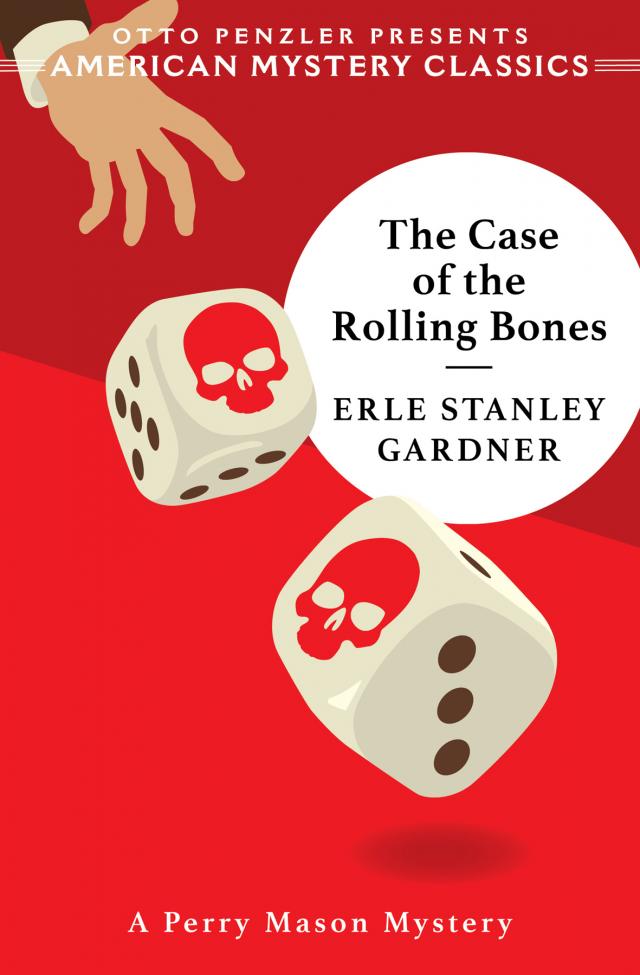
The Case of the Rolling Bones,
p.22


H.F. Heard, A Taste for Honey. The elderly Mr. Mycroft quietly keeps bees in Sussex, where he is approached by the reclusive and somewhat misanthropic Mr. Silchester, whose honey supplier was found dead, stung to death by her bees. Mycroft, who shares many traits with Sherlock Holmes, sets out to find the vicious killer. Rex Stout described it as “sinister … a tale well and truly told.” Introduction by Otto Penzler.
Dolores Hitchens, The Alarm of the Black Cat. Detective fiction aficionado Rachel Murdock has a peculiar meeting with a little girl and a dead toad, sparking her curiosity about a love triangle that has sparked anger. When the girl’s great grandmother is found dead, Rachel and her cat Samantha work with a friend in the Los Angeles Police Department to get to the bottom of things. Introduction by David Handler.
Dolores Hitchens, The Cat Saw Murder. Miss Rachel Murdock, the highly intelligent 70-year-old amateur sleuth, is not entirely heartbroken when her slovenly, unattractive, bridge-cheating niece is murdered. Miss Rachel is happy to help the socially maladroit and somewhat bumbling Detective Lieutenant Stephen Mayhew, retaining her composure when a second brutal murder occurs. Introduction by Joyce Carol Oates.
Dorothy B. Hughes, Dread Journey. A big-shot Hollywood producer has worked on his magnum opus for years, hiring and firing one beautiful starlet after another. But Kitten Agnew’s contract won’t allow her to be fired, so she fears she might be terminated more permanently. Together with the producer on a train journey from Hollywood to Chicago, Kitten becomes more terrified with each passing mile. Introduction by Sarah Weinman.
Dorothy B. Hughes, Ride the Pink Horse. When Sailor met Willis Douglass, he was just a poor kid who Douglass groomed to work as a confidential secretary. As the senator became increasingly corrupt, he knew he could count on Sailor to clean up his messes. No longer a senator, Douglass flees Chicago for Santa Fe, leaving behind a murder rap and Sailor as the prime suspect. Seeking vengeance, Sailor follows. Introduction by Sara Paretsky.
Dorothy B. Hughes, The So Blue Marble. Set in the glamorous world of New York high society, this novel became a suspense classic as twins from Europe try to steal a rare and beautiful gem owned by an aristocrat whose sister is an even more menacing presence. The New Yorker called it “Extraordinary … [Hughes’] brilliant descriptive powers make and unmake reality.” Introduction by Otto Penzler.
W. Bolingbroke Johnson, The Widening Stain. After a cocktail party, the attractive Lucie Coindreau, a “black-eyed, black-haired Frenchwoman” visits the rare books wing of the library and apparently takes a head-first fall from an upper gallery. Dismissed as a horrible accident, it seems dubious when Professor Hyett is strangled while reading a priceless 12th-century manuscript, which has gone missing. Introduction by Nicholas A. Basbanes
Baynard Kendrick, Blind Man’s Bluff. Blinded in World War II, Duncan Maclain forms a successful private detective agency, aided by his two dogs. Here, he is called on to solve the case of a blind man who plummets from the top of an eight-story building, apparently with no one present except his dead-drunk son. Introduction by Otto Penzler.
Baynard Kendrick, The Odor of Violets. Duncan Maclain, a blind former intelligence officer, is asked to investigate the murder of an actor in his Greenwich Village apartment. This would cause a stir at any time but, when the actor possesses secret government plans that then go missing, it’s enough to interest the local police as well as the American government and Maclain, who suspects a German spy plot. Introduction by Otto Penzler.
C. Daly King, Obelists at Sea. On a cruise ship traveling from New York to Paris, the lights of the smoking room briefly go out, a gunshot crashes through the night, and a man is dead. Two detectives are on board but so are four psychiatrists who believe their professional knowledge can solve the case by understanding the psyche of the killer—each with a different theory. Introduction by Martin Edwards.
Jonathan Latimer, Headed for a Hearse. Featuring Bill Crane, the booze-soaked Chicago private detective, this humorous hard-boiled novel was filmed as The Westland Case in 1937 starring Preston Foster. Robert Westland has been framed for the grisly murder of his wife in a room with doors and windows locked from the inside. As the day of his execution nears, he relies on Crane to find the real murderer. Introduction by Max Allan Collins
Lange Lewis, The Birthday Murder. Victoria is a successful novelist and screenwriter and her husband is a movie director so their marriage seems almost too good to be true. Then, on her birthday, her happy new life comes crashing down when her husband is murdered using a method of poisoning that was described in one of her books. She quickly becomes the leading suspect. Introduction by Randal S. Brandt.
Frances and Richard Lockridge, Death on the Aisle. In one of the most beloved books to feature Mr. and Mrs. North, the body of a wealthy backer of a play is found dead in a seat of the 45th Street Theater. Pam is thrilled to engage in her favorite pastime—playing amateur sleuth—much to the annoyance of Jerry, her publisher husband. The Norths inspired a stage play, a film, and long-running radio and TV series. Introduction by Otto Penzler.
John P. Marquand, Your Turn, Mr. Moto. The first novel about Mr. Moto, originally titled No Hero, is the story of a World War I hero pilot who finds himself jobless during the Depression. In Tokyo for a big opportunity that falls apart, he meets a Japanese agent and his Russian colleague and the pilot suddenly finds himself caught in a web of intrigue. Peter Lorre played Mr. Moto in a series of popular films. Introduction by Lawrence Block.
Stuart Palmer, The Penguin Pool Murder. The first adventure of schoolteacher and dedicated amateur sleuth Hildegarde Withers occurs at the New York Aquarium when she and her young students notice a corpse in one of the tanks. It was published in 1931 and filmed the next year, starring Edna May Oliver as the American Miss Marple—though much funnier than her English counterpart. Introduction by Otto Penzler.
Stuart Palmer, The Puzzle of the Happy Hooligan. New York City schoolteacher Hildegarde Withers cannot resist “assisting” homicide detective Oliver Piper. In this novel, she is on vacation in Hollywood and on the set of a movie about Lizzie Borden when the screenwriter is found dead. Six comic films about Withers appeared in the 1930s, most successfully starring Edna May Oliver. Introduction by Otto Penzler.
Otto Penzler, ed., Golden Age Bibliomysteries. Stories of murder, theft, and suspense occur with alarming regularity in the unlikely world of books and bibliophiles, including bookshops, libraries, and private rare book collections, written by such giants of the mystery genre as Ellery Queen, Cornell Woolrich, Lawrence G. Blochman, Vincent Starrett, and Anthony Boucher. Introduction by Otto Penzler.
Otto Penzler, ed., Golden Age Detective Stories. The history of American mystery fiction has its pantheon of authors who have influenced and entertained readers for nearly a century, reaching its peak during the Golden Age, and this collection pays homage to the work of the most acclaimed: Cornell Woolrich, Erle Stanley Gardner, Craig Rice, Ellery Queen, Dorothy B. Hughes, Mary Roberts Rinehart, and more. Introduction by Otto Penzler.
Otto Penzler, ed., Golden Age Locked Room Mysteries. The so-called impossible crime category reached its zenith during the 1920s, 1930s, and 1940s, and this volume includes the greatest of the great authors who mastered the form: John Dickson Carr, Ellery Queen, C. Daly King, Clayton Rawson, and Erle Stanley Gardner. Like great magicians, these literary conjurors will baffle and delight readers. Introduction by Otto Penzler.
Ellery Queen, The Adventures of Ellery Queen. These stories are the earliest short works to feature Queen as a detective and are among the best of the author’s fair-play mysteries. So many of the elements that comprise the gestalt of Queen may be found in these tales: alternate solutions, the dying clue, a bizarre crime, and the author’s ability to find fresh variations of works by other authors. Introduction by Otto Penzler.
Ellery Queen, The American Gun Mystery. A rodeo comes to New York City at the Colosseum. The headliner is Buck Horne, the once popular film cowboy who opens the show leading a charge of forty whooping cowboys until they pull out their guns and fire into the air. Buck falls to the ground, shot dead. The police instantly lock the doors to search everyone but the offending weapon has completely vanished. Introduction by Otto Penzler.
Ellery Queen, The Chinese Orange Mystery. The offices of publisher Donald Kirk have seen strange events but nothing like this. A strange man is found dead with two long spears alongside his back. And, though no one was seen entering or leaving the room, everything has been turned backwards or upside down: pictures face the wall, the victim’s clothes are worn backwards, the rug upside down. Why in the world? Introduction by Otto Penzler.
Ellery Queen, The Dutch Shoe Mystery. Millionaire philanthropist Abagail Doorn falls into a coma and she is rushed to the hospital she funds for an emergency operation by one of the leading surgeons on the East Coast. When she is wheeled into the operating theater, the sheet covering her body is pulled back to reveal her garroted corpse—the first of a series of murders Introduction by Otto Penzler.
Ellery Queen, The Egyptian Cross Mystery. A small-town schoolteacher is found dead, headed, and tied to a T-shaped cross on December 25th, inspiring such sensational headlines as “Crucifixion on Christmas Day.” Amateur sleuth Ellery Queen is so intrigued he travels to Virginia but fails to solve the crime. Then a similar murder takes place on New York’s Long Island—and then another. Introduction by Otto Penzler.
Ellery Queen, The Siamese Twin Mystery. When Ellery and his father encounter a raging forest fire on a mountain, their only hope is to drive up to an isolated hillside manor owned by a secretive surgeon and his strange guests. While playing solitaire in the middle of the night, the doctor is shot. The only clue is a torn playing card. Suspects include a society beauty, a valet, and conjoined twins. Introduction by Otto Penzler.
Ellery Queen, The Spanish Cape Mystery. Amateur detective Ellery Queen arrives in the resort town of Spanish Cape soon after a young woman and her uncle are abducted by a gun-toting, one-eyed giant. The next day, the woman’s somewhat dicey boyfriend is found murdered—totally naked under a black fedora and opera cloak. Introduction by Otto Penzler.
Patrick Quentin, A Puzzle for Fools. Broadway producer Peter Duluth takes to the bottle when his wife dies but enters a sanitarium to dry out. Malevolent events plague the hospital, including when Peter hears his own voice intone, “There will be murder.” And there is. He investigates, aided by a young woman who is also a patient. This is the first of nine mysteries featuring Peter and Iris Duluth. Introduction by Otto Penzler.
Clayton Rawson, Death from a Top Hat. When the New York City Police Department is baffled by an apparently impossible crime, they call on The Great Merlini, a retired stage magician who now runs a Times Square magic shop. In his first case, two occultists have been murdered in a room locked from the inside, their bodies positioned to form a pentagram. Introduction by Otto Penzler.
Craig Rice, Eight Faces at Three. Gin-soaked John J. Malone, defender of the guilty, is notorious for getting his culpable clients off. It’s the innocent ones who are problems. Like Holly Inglehart, accused of piercing the black heart of her well-heeled aunt Alexandria with a lovely Florentine paper cutter. No one who knew the old battle-ax liked her, but Holly’s prints were found on the murder weapon. Introduction by Lisa Lutz.
Craig Rice, Home Sweet Homicide. Known as the Dorothy Parker of mystery fiction for her memorable wit, Craig Rice was the first detective writer to appear on the cover of Time magazine. This comic mystery features two kids who are trying to find a husband for their widowed mother while she’s engaged in sleuthing. Filmed with the same title in 1946 with Peggy Ann Garner and Randolph Scott. Introduction by Otto Penzler.
Mary Roberts Rinehart, The Album. Crescent Place is a quiet enclave of wealthy people in which nothing ever happens—until a bedridden old woman is attacked by an intruder with an ax. The New York Times stated: “All Mary Roberts Rinehart mystery stories are good, but this one is better.” Introduction by Otto Penzler.
Mary Roberts Rinehart, The Haunted Lady. The arsenic in her sugar bowl was wealthy widow Eliza Fairbanks’ first clue that somebody wanted her dead. Nightly visits of bats, birds, and rats, obviously aimed at scaring the dowager to death, was the second. Eliza calls the police, who send nurse Hilda Adams, the amateur sleuth they refer to as “Miss Pinkerton,” to work undercover to discover the culprit. Introduction by Otto Penzler.
Mary Roberts Rinehart, Miss Pinkerton. Hilda Adams is a nurse, not a detective, but she is observant and smart and so it is common for Inspector Patton to call on her for help. Her success results in his calling her “Miss Pinkerton.” The New Republic wrote: “From thousands of hearts and homes the cry will go up: Thank God for Mary Roberts Rinehart.” Introduction by Carolyn Hart.
Mary Roberts Rinehart, The Red Lamp. Professor William Porter refuses to believe that the seaside manor he’s just inherited is haunted but he has to convince his wife to move in. However, he soon sees evidence of the occult phenomena of which the townspeople speak. Whether it is a spirit or a human being, Porter accepts that there is a connection to the rash of murders that have terrorized the countryside. Introduction by Otto Penzler.
Mary Roberts Rinehart, The Wall. For two decades, Mary Roberts Rinehart was the second-best-selling author in America (only Sinclair Lewis outsold her) and was beloved for her tales of suspense. In a magnificent mansion, the ex-wife of one of the owners turns up making demands and is found dead the next day. And there are more dark secrets lying behind the walls of the estate. Introduction by Otto Penzler.
Joel Townsley Rogers, The Red Right Hand. This extraordinary whodunnit that is as puzzling as it is terrifying was identified by crime fiction scholar Jack Adrian as “one of the dozen or so finest mystery novels of the 20th century.” A deranged killer sends a doctor on a quest for the truth—deep into the recesses of his own mind—when he and his bride-to-be elope but pick up a terrifying sharp-toothed hitch-hiker. Introduction by Joe R. Lansdale.
Roger Scarlett, Cat’s Paw. The family of the wealthy old bachelor Martin Greenough cares far more about his money than they do about him. For his birthday, he invites all his potential heirs to his mansion to tell them what they hope to hear. Before he can disburse funds, however, he is murdered, and the Boston Police Department’s big problem is that there are too many suspects. Introduction by Curtis Evans
Vincent Starrett, Dead Man Inside. 1930s Chicago is a tough town but some crimes are more bizarre than others. Customers arrive at a haberdasher to find a corpse in the window and a sign on the door: Dead Man Inside! I am Dead. The store will not open today. This is just one of a series of odd murders that terrorizes the city. Reluctant detective Walter Ghost leaps into action to learn what is behind the plague. Introduction by Otto Penzler.
Vincent Starrett, The Great Hotel Murder. Theater critic and amateur sleuth Riley Blackwood investigates a murder in a Chicago hotel where the dead man had changed rooms with a stranger who had registered under a fake name. The New York Times described it as “an ingenious plot with enough complications to keep the reader guessing.” Introduction by Lyndsay Faye.
Vincent Starrett, Murder on ‘B’ Deck. Walter Ghost, a psychologist, scientist, explorer, and former intelligence officer, is on a cruise ship and his friend novelist Dunsten Mollock, a Nigel Bruce-like Watson whose role is to offer occasional comic relief, accommodates when he fails to leave the ship before it takes off. Although they make mistakes along the way, the amateur sleuths solve the shipboard murders. Introduction by Ray Betzner.
Phoebe Atwood Taylor, The Cape Cod Mystery. Vacationers have flocked to Cape Cod to avoid the heat wave that hit the Northeast and find their holiday unpleasant when the area is flooded with police trying to find the murderer of a muckraking journalist who took a cottage for the season. Finding a solution falls to Asey Mayo, “the Cape Cod Sherlock,” known for his worldly wisdom, folksy humor, and common sense. Introduction by Otto Penzler.
S. S. Van Dine, The Benson Murder Case. The first of 12 novels to feature Philo Vance, the most popular and influential detective character of the early part of the 20th century. When wealthy stockbroker Alvin Benson is found shot to death in a locked room in his mansion, the police are baffled until the erudite flaneur and art collector arrives on the scene. Paramount filmed it in 1930 with William Powell as Vance. Introduction by Ragnar Jónasson.
Cornell Woolrich, The Bride Wore Black. The first suspense novel by one of the greatest of all noir authors opens with a bride and her new husband walking out of the church. A car speeds by, shots ring out, and he falls dead at her feet. Determined to avenge his death, she tracks down everyone in the car, concluding with a shocking surprise. It was filmed by Francois Truffaut in 1968, starring Jeanne Moreau. Introduction by Eddie Muller.
Cornell Woolrich, Deadline at Dawn. Quinn is overcome with guilt about having robbed a stranger’s home. He meets Bricky, a dime-a-dance girl, and they fall for each other. When they return to the crime scene, they discover a dead body. Knowing Quinn will be accused of the crime, they race to find the true killer before he’s arrested. A 1946 film starring Susan Hayward was loosely based on the plot. Introduction by David Gordon.
Cornell Woolrich, Waltz into Darkness. A New Orleans businessman successfully courts a woman through the mail but he is shocked to find when she arrives that she is not the plain brunette whose picture he’d received but a radiant blond beauty. She soon absconds with his fortune. Wracked with disappointment and loneliness, he vows to track her down. When he finds her, the real nightmare begins. Introduction by Wallace Stroby.















