The adventures of paul p.., p.3
The Adventures of Paul Pry - Vol II,
p.3


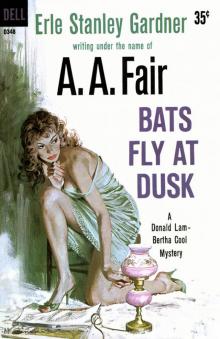
The light which seeped through the window made of her silk sheer night garment a billowy aura which served to mist the outline of her form without concealing it. She slowly made her way toward the bed, her eyes on the bulged covers.
When she came closer she started to croon.
“Dearest, you risked your life for me. Please don’t think me ungrateful. I would do anything for you, anything to get you what you deserve, you—”
And, having tiptoed to within springing distance, she drew a gleaming knife from behind her back, made a leap, and finished the sentence with a burst of foul profanity which accompanied the plunging knife.
For a long moment she straddled the hump in the bed, smothering it in an embrace of death, just as a midnight owl smothers the fugitive mouse with his enfolding wings.
Then the girl jumped back with an oath of surprise. She ripped away the bedcovers.
There was nothing beneath them but a wadded blanket or two and a pillow. The knife had ripped its way into the pillow, and white feathers were sifting over the bed, drifting through the air.
4
“Stop That Woman!”
Paul Pry sat in his apartment, his brows level in concentration. In his hand he held a typewritten copy of a notice which had evidently been prepared and delivered by the Gilvray gang. Pry had taken it from Chick Bender’s wallet.
It related to the arrival of a messenger from a large corporation that had sold an entire bond issue of three hundred and fifty thousand dollars to a local banking concern.
The corporation, it seemed, having issued the bonds in small denominational amounts, having made each one negotiable upon the theory that the issue would find its way into the hands of the small investor, now found that a bank was willing to take the entire amount.
A special messenger, carrying the three hundred and fifty thousand dollars in negotiable bonds, was due to arrive at the Union Depot the next evening at precisely 6:13.
The typewritten instructions showed the utter thoroughness with which the organization of Big Front Gilvray functioned. Not only had all of the facts concerning the shipment of bonds been ascertained, but the spies of the organization had even gone so far as to secure a picture of the messenger.
A copy of that picture was appended to the typewritten statement. It showed a youngish man with alert eyes, a small mouth, and hair that was slicked back in the polished symmetry of perfumed splendor.
But the typewritten statement confined itself to a description of the young man and the suitcase. It said nothing concerning a modus operandi by which the bonds were to be transferred from messenger to gangster.
And Paul Pry was particularly interested in that. For, as has been mentioned, Paul Pry, dapper, debonaire, very fast on his feet, lived entirely by his wits. His living was, strictly speaking, within the law, for he specialized upon the recovery of stolen property for a reward.
The grand total of those rewards during the past twelve months had run into a very pretty figure. And the fact that Big Front Gilvray had been the indirect means of collecting these rewards had caused Paul Pry to regard the “big shot” as the goose who laid his golden eggs, had caused Gilvray to regard Paul Pry as a young man who must be placed upon a hot spot.
So Paul Pry sat and studied the typewritten statement through the calm, still hours of the night. He had certain facts to work upon, and only certain facts.
Maude the Musher, with her penchant for underclothed rescues, was in town. Her man, Charley the Checker, was running the checking stand at the Union Depot. The purchase of that checking stand must have cost a pretty penny, and, in view of the discovery that a young man was bringing three hundred and fifty thousand dollars in negotiable bonds at 6:13 in the evening to the Union Depot, that purchase seemed significant.
Paul Pry smoked several cigarettes over the problem. At the end of that time he went to bed. The solution seemed just out of his mental reach, like a dangling Hallowe’en apple. It was hardly likely that a young man would check a suitcase with three hundred and fifty thousand dollars in bonds at a checking station. On the other hand, it was hardly possible that the gang of Big Front Gilvray would have become interested in that checking station unless it were to be more or less intimately associated with the suitcase containing the bonds.
In the end, Paul Pry drifted off to sleep, determined to play cards as they came to his hand without worrying too much in advance about what plans or what cards the other man might hold. Which is, after all, a pretty good way to gamble, or to live.
The 6:13 Cannonball Express rumbled into the Union Depot exactly on time to the minute. The exit lane for passengers was lined with those who came to meet incoming friends, relatives or sweethearts.
Paul Pry was ensconced atop a girder where he was apparently inspecting a chipped place in the marble pillar. He wore white overalls, held a small trowel in his hand, and was utterly ignored by the stream of human traffic which milled beneath him.
The first of the passengers from the 6:13 began to arrive.
An athletic man, his face beaming in anticipation, strode through the gates, looked at the lined faces of those who waited in parallel rows. A young woman thrust her way out into the passageway. He uttered a choked exclamation, and they clinched each other tightly.
About them swirled other passengers. Groups were formed and swept about. Red-capped porters pushed carts loaded with stacked baggage.
Paul Pry kept his eyes upon the athletic-looking young man who had been the first up the exit lane. For the girl who had met him with such wild affection, who had brought that choked exclamation to his eager lips, was none other than Maude Ambrose, from Chicago, known as Maude the Musher.
She was attired in a fur coat which came a trifle below her knees, yet did not interfere with a vision of silken contours which stretched smoothly from ankle to knee.
They were within a few feet of the checking stand where the gangster known as Charley the Checker, a purple welt across his forehead, his eyes a little cloudy with the after-effects of a concussion, solicited travelers to deposit their suitcases.
Directly behind Charley the Checker, within three feet of the brass-topped counter along which suitcases were slid by those desiring to check them, was a shelf upon which some three dozen suitcases were stacked, side by side. They were each placed on end, their handles to the front, and pasteboard checks dangled from those handles.
Paul Pry noticed that there was one vacant space almost in the center of those suitcases. He watched and waited.
Two men were shaking hands profusely within a few inches of Maude the Musher and her new-found boy friend. A slender chap with cautious eyes and a cleft in his chin, pushed his way through the crowd. His right hand held the handle of a suitcase in a grip that was so tight the skin showed a dead white over the clenched knuckles.
Maude the Musher stepped back from the embrace of the young man. He made a playful grab at her, caught the sleeve of her fur coat. Maude the Musher jerked back.
The fur coat slid from her smoothly polished figure, and the crowded passengers and spectators became rooted to the spot.
There have been rumors of young women who, dressing hurriedly or carelessly for the street, have contented themselves with throwing a fur coat over filmy underthings, donning shoes and stockings and going demurely about their business.
But now the spectators had an opportunity to see for themselves that these rumors were not without their foundation.
Maude the Musher stood in such a position that the curves of her figure showed to the best advantage. The fur coat was on the tiled floor before her. Her pink silken undies were the latest mode, and had the most expensive ornamentation.
And, as though to direct all eyes to her, she screamed.
The traveling public have grown accustomed to colored photographs of beauties in underthings upon the advertising pages of the women’s magazines. They have seen sights in Pullman cars, and, perhaps through hotel windows, that have made the colored photographs seem rather pale. But the sight of a woman in the flesh, clad as Maude the Musher was clad, was enough to root every one in his tracks for a swift instant.
Maude the Musher, after that scream, doubled forward and reached for the fur coat. A man sprang forward to assist her.
Someone was knocked scrambling in that mad rush, and that someone was the youth who was carrying the suitcase in so tight a grip.
In falling he seemed to hit his head. For he lay still, limp. Only Paul Pry’s watching eyes had seen the hissing slungshot. All other eyes had been fastened upon Maude the Musher and the man who was springing to her assistance.
Only the eyes of Paul Pry, of all those spectators, saw exactly what happened to the suitcase which the young man had been carrying. For that suitcase was juggled with the well-trained coordination of a football squad sending the ball into an intricate play.
The suitcase was handed to one of the men who had been shaking hands. That man handed back a similar suitcase, and that similar suitcase sprawled on the floor so that it skidded directly against the prostrate form of the young man.
The suitcase the young man had been carrying passed through the hands of two people and thudded upon the brass-covered counter of the checking stand. Charley the Checker moved with lightning like rapidity. He flipped the suitcase into the vacant space on the shelf, turned his back and faded from sight.
After all, being a known gangster has its disadvantages, and Charley the Checker knew that for the police to recognize him as the man in charge of the checking station might be exceedingly embarrassing. But he could trust no other with the delicate problem of handling the stolen bag.
After the hue and cry should die away, those securities would find their way into financial channels through sources which were divers and devious, yet none the less available.
But, the theft accomplished without a hitch, Charley the Checker “ducked out” and his place was taken by a slender man with very pale skin, but with eyes that were as cold as those of a rattlesnake.
Maude the Musher grabbed her fur coat about her and ran. Someone laughed. A traveling man dropped his suitcase to clap his hands in applause, and half a dozen laughing males joined in the applause. A policeman grinned broadly and shouldered his way through the crowd.
“Keep movin’,” he said, good-naturedly, and then saw the sprawled figure of the young man with the cleft chin. Two sympathetic passengers from the train were picking him up.
The officer thought with chain-lightning efficiency. He blew his whistle, raised his voice.
“Stop that woman!” he yelled.
And the crowd, sensing that all was not as it should have been with Maude the Musher, took up the cry. There was a car waiting at the curb with motor running. The athletic young man unburdened by any baggage, gained this car, jumped behind the wheel. Obviously, it had been left there for that very purpose. Maude the Musher, her running handicapped somewhat by the necessity of keeping the fur about her, was a stride or two later.
But she very wisely rid herself of her impedimenta by tossing the fur coat at the machine, and vaulted into the seat with a flash of well-formed limbs, a glimpse of rounded flesh.
The car was already in motion.
Police whistles shrilled. A traffic officer started tugging at his gun. The automobile violated the traffic rules, saw a hole in the oncoming lie of vehicles, and turned to the left with a great screeching of tires. The rushing land of automobiles closed up the opening, and the car was gone.
The young man with the cleft chin sat up. His eyes were completely glazed. It seemed impossible that he could know what he was doing, but he grasped for the suitcase on the floor beside him, snapped back the catch.
The suitcase was filled with those slips of tinted paper which represent waste cuttings from a printer’s shop, and the young man with the cleft chin raised his voice in an agonized scream.
“I’ve been robbed!” he shouted. “My suitcase! Three hundred and fifty thousand dollars—”
His voice trailed off into a wail, and he slumped back, unconscious once more.
Men ran about aimlessly. The uniformed police threw a cordon about the depot. Near-by traffic officers left their posts. A hurry call brought a squad of reinforcements on the double-quick.
But the police were unable to apprehend the men responsible for the robbery. The young man with the cleft chin regained consciousness. He had remembered the spectacle of the young woman with the fur coat and the pink silk undergarments. Then someone had jostled him, there had been a terrific jar upon his head and he had dropped to the floor.
He had not even seen the faces of those who had been responsible. The blow with the slungshot had come from behind, and that which followed had been done with such well-trained efficiency as to baffle detection.
Paul Pry sat upon his post, listened to all that followed. From time to time, his eyes dropped to the check stand where the pale-faced man took in suitcases and gave them out. And all the time the suitcase with its contents of bonds reposed back of the counter.
It was, as yet, too hot to handle. And what better hiding place could be devised for it than to have it nestled in amongst some two dozen other bags staring the police in the face?
5
Slick and Clean
Paul Pry fastened a bit of cement to the marble, repaired the chipped place, climbed down and took a street car. He didn’t go far, however.
There were stores near the depot that specialized in needs for the traveler. Cheap suitcases, made up to imitate expensive bag-
gage, were displayed in windows with temptingly low prices placarded upon them.
Paul Pry became a customer of one of these stores, and his purchases were most peculiar.
He negotiated for a suitcase, two alarm clocks, a set of dry batteries, some junk radio equipment which loomed imposingly as a mass of tangled, coiled wires, sockets, polished metal, yet which was worth virtually nothing.
The proprietor was rubbing his hands when Paul Pry left.
Paul Pry secured a taxicab, wound up the alarm clocks, placed them inside the suitcase together with his other purchases, set the alarms on the clocks with extreme care, and ordered the cab driver to take him to the Union Depot.
He arrived at a time when trains were leaving and pulling in, when night traffic to the city was just commencing.
There was a vehicle cordon of police about the place, but they were scrutinizing suitcases that went out rather than suitcases that came in, and Paul Pry called a red cap.
“Take this to the checking stand and get me a check on it,” he said.
The porter moved off with the suitcase,
and any noise which might have been made by the noisy ticking of the clocks was entirely drowned out in the tramp of feet, the roar of trains, the blare of automobile horns.
The porter returned with a slip of pasteboard bearing a number, received a generous tip, and promptly forgot about the entire matter. Paul Pry drove to his apartment, changed his clothes, ignored the pessimistic comments of Mugs Magoo, and returned to the Union Depot.
This time he carried a cane, rather a long, slender cane with a hook in the handle. He moved with the alert caution of a cat.
A glance showed him that the suitcase he desired was still in its place. That place was of advantage to the gangster who had flipped it there, because it required only a single sweeping motion with his right arm to transfer it there from the brass-covered counter.
Paul Pry took in the situation with calculating eye, and bided his time.
That time came when the evening trains had pulled out, when comparative silence descended upon the Union Depot. There were still hurrying throngs, but they were swallowed in the vast space of the huge terminal as though they had been but a handful of passing pedestrians.
Sounds became more audible.
Paul Pry looked at his watch, strolled to the curb, summoned a cab, had the driver wait for him.
“I’ll be out in a few minutes. Got to meet the wife on one train and sprint across the city to make a connection at the other depot. She’s bringing me my suitcase. Came away without it this afternoon. You be all ready to go as soon as I get here.”
The cab driver nodded, yawned, pocketed a tip.
“I’ll get you there,” he promised.
Paul Pry strolled back to the station, went to the battery of public telephone booths. Through the glass door of the booth he selected he could see the pasty-faced man on duty at the checking stand.
He was, doubtless, such a man as had no readily available police record. Yet he would hesitate to appeal to the police for protection in an emergency.
Paul Pry deposited a coin and gave the number of the telephone at the checking stand. He saw the pasty-faced man scoop up the telephone to his ear, answer it. Over the wire, to his ear, came the sound of a mechanical voice.
“Yeah, hello. This is the checkin’ ag’ncy Un’n Depot.”
Paul Pry let his voice rasp in raucous warning.
“I’m going to blow up the whole Union Depot,” he said. “There’s a blast going off in exactly three minutes. I want to wreck the building, but I don’t want to kill you. I’ve nothing against you. What I’m fighting is Capitalism. You are just a working man.”
The voice over the wire had lost its mechanical disinterest.
“What’re you talkin’ about?” it demanded.
And Paul Pry could see that the features of the pasty-faced man had become rigid with alarm “I’ve got a bomb planted. It’s in a suitcase I checked with you this afternoon. There are two alarm clocks in it. The first one will go off in five minutes. Then there will be an interval of five minutes and the second one will go off. When that second one goes off it’ll set loose the explosion which will wreck …”
That was as far as he got, for the pasty-faced man had dropped the telephone and was sprinting for the back of the checking stand where long shelves furnished storage space for suitcases.