Vigil, p.11
Vigil,
p.11
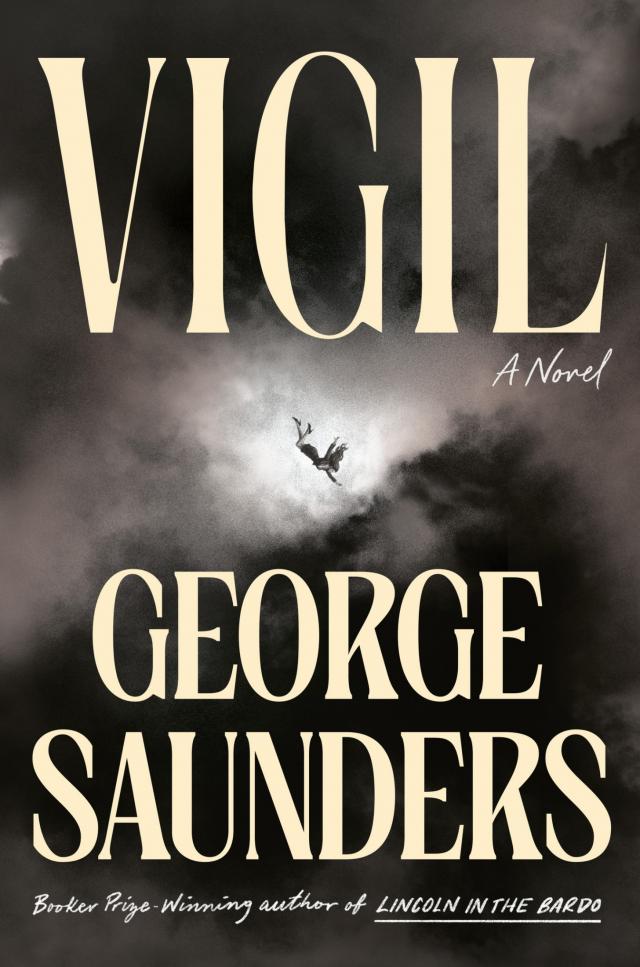


Oh, I felt just sick. I did not want to be THIS THING anymore, this stiff elevated THING, but wanted, instead, to be me, sweet ME again, all the way, and for this whole awful dream (of having been blown up/killed/sent all over the place three hundred and forty-three times in all, so far, to a bunch of dying dopes who didn’t appreciate me at all) to be DONE, so I could be ME again back in that beautiful living body I knew and loved so well and had always so much enjoyed having.
ME, ME again.
With father, mother, friends.
Husband.
Suddenly I knew what I needed to do.
* * *
—
As mentioned, I am vast, unlimited in the range and delicacy of my voice, unrestrained in love, rapid in apprehension, skillful in motion, capable, equally, of traversing, within a few seconds’ time, a mile or ten thousand miles.
So it was no effort at all for me to attain great height and speed east by northeast through the remainder of Texas, then through Oklahoma, Missouri, and Illinois, arriving, in the span of a single breath, at the border of lovely Indiana, commencing, then, to sail out along and above the familiar Wabash, veering eastward where it narrowed and met the Patoka, then following the Patoka (thin, brown, laced with fishing sheds, choppy and white with night-swells) to the village of Stanley.
Gosh, I barely recognized the place.
I hung there above it, taking stock of the many ways in which it had changed.
Hat factory: gone.
River: dammed at its westernmost end.
New mall (Chesterfield Commons): vanished entirely.
The hill down which Lloyd and pals had mud-sledded was still a hill but the Sinclairs’ rental was gone and that whole area over there was now this ugly new subdivision where three floor plans just repeated and repeated and repeated (Cape Cod/ranch/larger Cape Cod), the whole god-awful mess running out west as far as Union and as far east as Brewer’s Launch Lane.
At that wide bend in Sherwood Ave., among that row of scrawny pines was: no Jardine’s.
Sherwood Ave. itself: thrice-widened.
That row of scrawny pines: sacrificed in the widening.
It might have been a different town altogether. If not for the baseball field at St. Thomas Aquinas and the alley behind it, which ran (as always) due west, past Turner Park, I never would have been able to find Crowne Street, where our dear little duplex was.
Inside of which Lloyd and I had been a total love match.
So hot to trot.
All that summer.
Summer of ’76.
That bicentennial summer.
The summer before my untimely—
Wait.
What?
Where was “duplex”? The entire length of “Crowne Street,” including “laundromat,” was now an ugly, block-long “Regional Data Center.”
Whatever that was!
Lloyd, Lloyd, I thought, where are you, dear? Young, beautiful, tan, broad-shouldered, lifting up the couch with one hand when drunk, just to show me that you could? Dancing around the kitchen, in “cop pants,” no shirt, to “Heartsfield” or “Allman Brothers,” sitting patiently beside me as we colored in, with those big honker marker-pens, “Fantasy Forest,” the paint-by-number your mother gave us the day we got engaged.
Speaking of Shirley, Lloyd’s mother, I whisked at once to “Shirley’s house,” i.e., the home of my “mom-in-law,” i.e., Lloyd’s mother, Shirley.
But whisking thoroughly around inside, found: no Shirley, and all the furniture new and different, kind of huge, rather “mod,” and a young couple was in there and some new kind of music was blaring, all wonks and whistles like “robot” might make, in a kitchen that was missing one wall and had gained another, and they were happy, with no memory of any Shirley whatsoever, as they had bought the house not from her, but from the Verhagens, Tom and Kate.
Up in the attic, behind a concealing rafter, I found the one and only item in the place that had the slightest thing to do with me: a box, and inside it, my wedding dress, wrapped in tissue paper, and written on the box, in my handwriting (!), were the words: “J&L wedding, 1975,” plus a cartoon I’d drawn of two smiling hearts holding hands.
That had been such a great day.
Everyone so happy for us and all.
There in “clearing” in “Yankee Woods.”
Beneath “wedding tent” from “Rent-A-Tent.”
I shot out through the wall, landed on “Shirley’s lawn,” where “cute fake well” (with “little clay donkey”) used to be but was no more.
Why had my darling wedding dress been just left up in that dumb musty attic like that?
Where was Lloyd?
Where was he?
* * *
* * *
—
I emitted the shrill repetitive shrieking one of our ilk will emit if wishing to attract others of our ilk for consultation.
A crowd soon gathered.
Some of whom I knew (Jen Ballard, who I used to babysit, all grown up now, albeit dead; Mr. Mendon, the creep from the drugstore, who could sometimes be nice; Lisa Childs, the cheerleader who’d fallen off the Ferris wheel at Melody Lake while tipsy; eight petite gymnasts from Stanley High, whose bus had overturned coming home from “away game,” who had, it seemed, ever since, been holding hands), some I didn’t know (a threadbare fellow with a musket and a pamphlet; four wiry drowned Iroquois toting a canoe with a busted-out bottom; many simple Indiana working folks, hats in their hands, trying, eternally, to loosen the fancy, too-tight dress clothes in which they’d been buried; a short, fat priest with a goatee who rushed from person to person, urging repentance, but he had this very annoying voice and now, as in life, that voice was causing people to turn away from him while trying not to laugh, and hence no one at all was getting saved).
Forward stepped my grandmother, in the faded green housedress she’d worn pretty much constantly there at the end.
Grandma Gust, we’d called her. Because of her late-life farting. She’d been the first to call herself that. After ripping one at dinner. And then we all picked up on it.
It was actually so funny.
Sweetest grandma ever.
Yes, dear? she said.
Lloyd? I said. Lloyd Blaine.
Grandma cocked her head.
As if in thought.
Then rose, and the others fell in behind her, and I behind them.
We flew west across Stanley, to a part of town that used to be its own separate village, Hickum, but then got absorbed into the greater town of Stanley, and was known, in my day, for two bars (Jocko’s and the Maze), both of which would let a high school kid (even one as baby-faced as me, with no ID, not even a fake) just waltz right in.
Behind Jocko’s lay (my heart dropped) the broad expanse of the cemetery.
Sacred Heart of Mary Cemetery. Down we all floated as one.
Beneath a willow, fifteen feet from a stone bench upon which that Slurpee cup rested and had been resting now for the better part of a year, was the same old (disappointingly economical) stone reading: J Blaine, Wife, 1954–1976.
There beside it was (oh dear) a new one, made of marble, not just plain old stone, reading: L Blaine, Husband, 1948–2023.
I dived down underground before I’d really thought it through, and there he—
And shot back out so quick I found myself up on a phone line, sobbing, and though I had zero bodyweight, the phone line was swaying ever so slightly just from the sheer power of my feelings.
Those others of our ilk rose up, forming around me a consoling cloud.
He went, I said.
Yes, Grandma said. Right away. Immediately after. No dilly-dallying.
Without finding me first, I said.
Right, she said.
Without saying goodbye, I said.
And there’s more, Grandma said.
There was.
Over on the far side of Lloyd’s stone was another (of the same ritzy marble), reading: Susan Connor Blaine, Wife & Mother, 1951–2022, and at the base of it lay this bouquet of fresh roses, and propped against the bouquet was an old photo, of her, Susan, when still young, with three little kids, each kid looking, around the eyes, like Lloyd, and Lloyd was in the photo too, super-happy, also young, that is, not all that much older than he’d been when he and I had—
Had parted ways.
Due to me getting blown up and all.
There was one more thing I needed to know.
Go ahead, said Grandma.
Paul Bowman, I said.
What about him? she said.
Jail? I said.
Grandma cocked her head.
No, she said.
Caught? I said.
Never, she said. Still lives in that same old house.
Still alive, I said.
Almost ninety, she said. Not even sorry. Barely remembers doing it. Over the years, he made it okay with himself. In his mind. You know.
Oh, I said.
More or less forgave himself, she said.
Thanks, I said.
Made himself the victim of the story, she said. Rationalized it. The way people tend to—
All right, all right, I said.
Also, look there, said Grandma.
Here were the graves of my mother and father, both of whom had still been alive and sort of young when I’d gotten blown up.
Couldn’t have been easy for them.
Seeing their graves was the hardest blow of all.
I used to come in from school and there they’d be. They used to come in from being out, at dinner maybe, and there I’d be, on the couch, older now, old enough to be left home alone, and I’d jump up and run over, so happy to see them. And we’d do a family hug there by the Jesus in our niche.
Once there’d been no me and then they’d come along and made me and now I was gone and they were too.
It hurt.
Really hurt.
Maybe it’s time, Grandma said, indicating my grave with her cane.
I dived down, had a look at that desiccated brownish-green figure of medium height (length), cleaved in half at approximately the hip-line, left arm disconnected at the shoulder, a fuzz-beard of mold on what was left of its cheekbones, wearing, still, the outfit Lloyd had picked out (beige skirt, pale pink blouse, black pumps, my favorite in life, a fact Lloyd had sweetly remembered even in his grief).
I shot back up.
(No bun in oven.
By the way.)
No, I said.
Why not? Grandma said. What keeps you here, Doll?
What keeps you here? I said.
She leaned forward to answer, as if about to tell me some long-kept secret.
Then did a little fart, like in the old days, so we might part on good terms.
And off she went.
Off they all went, to their various afterlife tasks.
I stood there looking around.
What was I doing?
What was I doing here, in this crappo graveyard, in this ugly little town that could never mean anything to me again?
I’d received the gift of elevation from our great God in Heaven himself.
And this was how I behaved?
Elevation was true. It was. For sure.
Me, elevated? Was real. Realer by a mile, at this point, than “Jill ‘Doll’ Blaine.”
All righty then, I thought.
Gosh, golly, embarrassing.
I must put her behind me forever, that girl who once was, then was no more, and would never be again.
* * *
—
Up I shot and raced back across Illinois and Missouri and then entered Oklahoma.
As I may have mentioned, it was sometimes good, when rattled, to think in the highest possible register. And, by this, regain elevation.
So:
The porch light of a farmhouse outside Tulsa threw a chute of yellow light out across its rough lawn, as if intending the light-chute to be taken for a path to the farm’s white-fenced goat-pen.
But something was off.
I dropped, flew the length of the goat-pen, exciting the goats therein by my presence; heads humbly lowered, they fled to positions against the glowing white fence, propelled there by my strangeness.
Nope, still rattled.
And, as far as elevation: no, not great, pretty subpar.
I felt weird, dual, not quite right.
In my mind was a dispute, like two women were up there competing for, so to say, a certain right, the right to guide the ship of speech.
It was like she (the elevated, more or less hoity-toity part, no offense) kept pushing me (who had actually once lived and all) out of the way, even as we, together, had to admit that she (the elevated part) could, really could, say, more precisely than I could, that which we felt might need expressing.
It seemed I’d somehow damaged myself on that stupid trip to Indiana.
Had become, it felt like, a bit of a freak.
A freak of sorts.
A hybrid.
Part elevated, part Jill “Doll” Blaine.
This had never happened before, not so extremely, and I have to say I didn’t much like it.
And tried again to fix it.
Dropping, I skimmed along the surface of a red-clay stream feeding the Canadian River that, flowing along there in the dark, was rippled by a wheat-stalk-flattening cross-breeze that set four wind-chimes to sounding from the front porch of a creepy hunter’s shack/shed I wouldn’t have set foot inside of if you gave me a million bucks, honestly.
Dang, it was so odd.
To find oneself in this new mixed mode.
What a riot.
Confounding yet intriguing.
Weird as all get-out.
I couldn’t seem to shake Jill “Doll” Blaine (all she’d seen, been, and done) and didn’t want to. But neither could Jill “Doll” Blaine shake me, the elevated part, and didn’t want to, for to be in touch even briefly with elevation is to know the bliss of being one with God.
In any event, I had to get back to it.
Here, now, was Texas, here the neighborhood of my charge.
Every room on the second floor of his house was lit, though only one of them was in use.
* * *
—
I landed softly, in a sitting position, on the base of the statue of the golden dog.
I couldn’t go in.
Just couldn’t somehow.
Needed a minute.
Up the driveway came a man of our ilk, short but densely muscled, shirtless, who looked as if he’d been rolling around in a vat of grease, whose wild white hair was sticking straight up.
Seen my wife? he said. I’m always about ten minutes behind her. Old lady in a rocking chair. Or young gal with her hair down all slutty, about to dash off into the rain. To meet her friends. Also sluts.
Afraid not, I said.
I mean to make it up to her good and proper, he said.
Do you, I said.
Naw, he said. I mean to do what I want with her again, way I used to. I’ll catch her. If you see her? Knock her down, pin her down, and hold her for me, will you?
No, I said.
Maybe I’ll pin you down, he said.
I blasted through him, thinking, as I did, of a huge mound of shit coming out of his rear, with razor blades embedded in it.
When I came out on the other side, he was on the ground, moaning in pain, clutching his ass.
All right, all right, he said. I was just funnin’ you.
Go “fun” someone else, I said. I’m not in the mood.
I guess not, he said.
And he tried to stand but his ass hurt too much.
How’d you do that? he said.
Not sure, I said.
But that wasn’t true.
I had a pretty good idea.
Part of me was eternal and I had those considerable powers at hand (my mind was vast, unlimited, unrestrained, rapid, and skillful), while the other part, which very much longed to be alive again, was making me: desirous, ornery, active, aching to interfere in whatever way I could, in any old thing.
Powerful combo.
* * *
—
Nearby, someone was whistling “La Marseillaise.”
The Frenchman came unsteadily around the side of the house.
Ah, madame, he said. Here you are. Where have you been? You look wonderful, by the way. Disordered, loose. Full of desire and confusion. Rather unhinged. Yet beautiful. In a rough way.
Oh, be quiet, I said.
But it was true: my beige skirt and pale pink blouse had been cleaned and pressed by fresh love for life and also I had self-redone my hair with fondness for ME, and, being decidedly ephemeral yet nevertheless touched by the eternal, I looked, if I may say so, just terrific.
He, on the other hand, looked awful: his head a nearly featureless blob, his hands two vague smears at the ends of sticklike arms, his feet likewise, at the ends of sticklike legs, his formerly white clothing/boots/scarf now dirt-colored and in tatters.
You don’t look so good, I said.
I don’t feel so good, he said.
Suddenly he noticed the fellow whose ass I’d damaged.
What happened to him? he said.
Me, I said. I did.
You are perhaps not yourself? he said.
Which was like the understatement of the century.
The fellow whose ass I’d damaged got to his feet and limped away, one hand reflexively covering his damaged ass.
Have a great night, I said.
Madame, the Frenchman said urgently. I feel I must return at once, to that place to which those of our ilk must retreat when in need of—