Making of americans, p.4
Making of Americans,
p.4
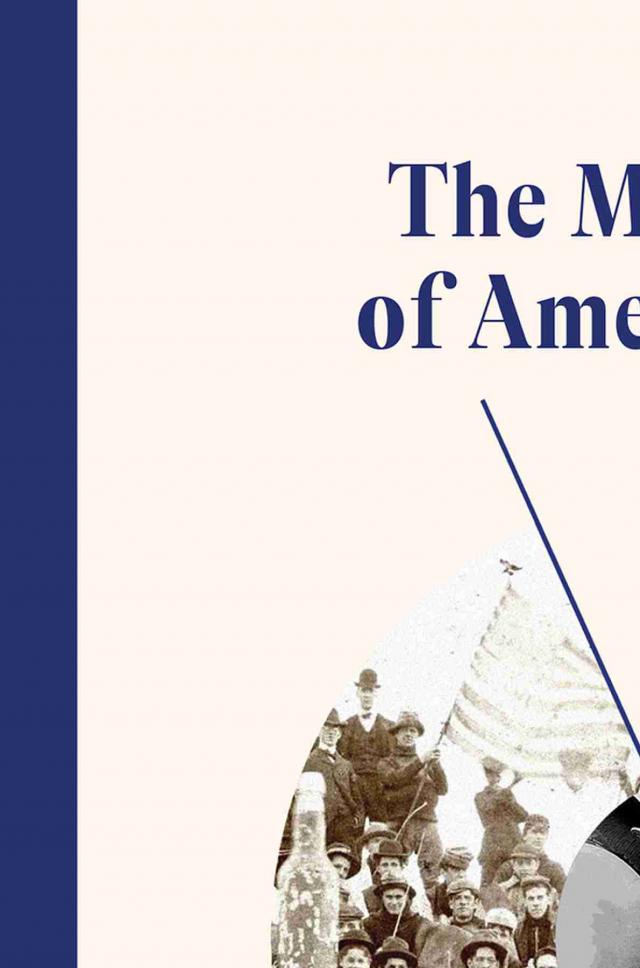


You start in and you take everyone that you know, and then when you see anybody who has a certain expression or turn of the face that reminds you of some one, you find out where he agree[s] or disagrees with the character, until you build up the whole scheme. I got to the place where I didn’t know whether I knew people or not. I made so many charts that when I used to go down the streets of Paris I wondered whether they were people I knew or ones I didn’t.
Stein’s assumption here that facial characteristics reflect character harkens back to an earlier passage in “The Making of Americans” in which the same link is invoked with respect to the family resemblance of the Dehning sisters. “In the eighteenth century that age of manners and of formal morals,” Stein’s narrator proposes,
it was believed that the temper of a woman was determined by the turn of her features; later, in the beginning nineteenth, the period of inner spiritual illumination it was accepted that the features were moulded by the temper of the soul within; still later in the nineteenth century when the science of heredity had decided that everything proves something different, it was discovered that generalisations must be as complicated as the facts and the problem of interrelation was not to be so simply solved. You reader may subscribe to whichever doctrine pleases you best while I picture for you the opposition in resemblance in the Dehning sisters.
In effect, the “history of every kind and of every individual human being” that Stein was composing six years after she wrote these lines was “a history of a family” writ large, with “kinds” understood as a form of “kin” and “the familiar” an extension of “the family.”
This extended family history is not the only history, however, which The Making of Americans contains; the work might with equal justification have been called the “Making of an author / being a / History of one woman and many others.” Even before she began composing Three Lives, Stein jotted down titles for several additional works—among them, the “Making of an author,” alternatively referred to as “The Progress of Jane Sands / being the history of one woman and many others.” (These titles are listed, together with the original title of Three Lives—”Three histories / by Jane Sands”— in a notebook included among the Stein papers in the Yale Collection of American Literature.) Stein ultimately published Three Lives under her own name, yet she did so at the risk of having readers confuse the narrator with herself, a risk compounded in The Making of Americans, where the narrator isn’t just the speaker—“It has always seemed to me a rare privilege, this, of being an American.… The old people in a new world, the new people made out of the old, that is the story that I mean to tell” (3)—but is, quite literally, the writer:
Bear it in your mind my reader, but truly I never feel it that there ever can be for me any such a creature, no it is this scribbled and dirty and lined paper that is really to be to me always my receiver,—but anyhow reader, bear it in your mind … that this that I write down a little each day here on my scraps of paper for you is not just an ordinary kind of novel with a plot and conversations to amuse you, but a record of a decent family progress. (36)
These scraps of paper record “the progress of Jane Sands” as well, the author-narrator who, despite remaining unnamed, is perhaps Stein’s most significant creation in what is certainly no ordinary novel. On page 490 “a Sarah Sands” is referred to—presumably modeled on Sarah Stein, Stein’s sister-inlaw—and the narrator subsequently comments on the phenomenon of individuals “yield[ing] to [their] own weakness”:
Melanctha put it down to that they wanted it and she gave it but she had no responsibility, it was because she was so game that she did it. Sarah Sands puts her yielding down to unsuspiciousness, that is the reason she yields, she is so easy and that’s it. All these things are true as characteristics in each one but they all think that characteristic is the whole of them. It isn’t. They all forget their emotion and so it must have been the other person’s fault it happened. (492)
The narrator of The Making of Americans is as much a creation of Stein’s as is Melanctha; and not only is Sarah Sands on a par with Melanctha, both are on speaking terms with the narrator. Readers are likely to forget this, however, and to attribute “characteristics” belonging to Stein to the narrator: for starters, the name “Gertrude Stein” and an existence outside the confines of the writing. Stein, to be sure, isn’t just an author; yet she has made an author who is just that, and nothing but that, and the moment one confuses actual author and author-narrator, this remarkable achievement is lost. No doubt many, perhaps all, of the narrator’s self-described characteristics and experiences may properly be attributed to Stein. Still, Stein differs from her creation in at least one essential respect: “Jane Sands” has no particular history, no particular family, no particular background. Indeed, in The Making of Americans, she has no particular sex.
The narrator’s story is twofold: there’s the story of the writing—the account of her own “progress” as a writer—and the story she tells, an account that ostensibly has nothing to do with the writing but concerns “the making of Americans” and, more generally, the nature of families and, more generally still, the understanding of human existence. The discrepant halves come together in the narrator’s embodiment of what Stein would later call “the disembodied abstract quality of the american character”—a characterization certainly not meant to refer to anything like a de-materialized realm of spirit. “To some,” one is informed a hundred and fifty pages prior to the close of the dual-track account, “spirituality and idealism have no meaning excepting as meaning completest intensification of any experiencing, any conception of transcending experience has to some not any meaning. To some anything to have meaning must be existing” (859). Such individuals—among whom the narrator counts herself and who would include Stein as well—“have it in them to be certain that everything in a way is made out of real earth the way it was done to make Adam” (600).
The difficulty Stein and her narrator face is how then to account for “what as experience” appears to be “without any condition” (860): an individual’s sense of freedom, for instance, or the experience of thought, or even the phenomenon of life. Can these experiential phenomena be understood without either reductively “leav[ing] out something” (860), or, alternatively, falling back on a Bergsonian notion of Vital Spirit or élan vital, the idea that “be[ing] a live one” requires something “inspiriting” (643). In other words, does a sense that all “things have really ordinary materially existing being,” and consequently have “existing like any dirt in any field or in any road or any place or any garden” (658), condemn one to a crude materialism and the necessity of seeing anything as “mov[ing] against something”—that is, in relation to a fixed background—in order to be certain that it really exists?
“We in America,” Stein observed in her 1934 lecture “Portraits and Repetition,” “have tried to make this thing a real thing, [namely,] if the movement, that is any movement is lively enough, perhaps it is possible to know that it is moving even if it is not moving against anything.” Something “most intensely alive”—possessing what Stein’s narrator calls the “completest intensification of … experiencing”—“would exist so completely that it would not be necessary to see it moving against anything to know that it is moving.” “This,” Stein adds, “is what we mean by life” as distinct from sheer existence, and in her “portrait of the author” in The Making of Americans she creates an emblem for such life: a figure abstracted from “family living” and from all but the most general background of “human kinds,” who nonetheless avoids being rendered lifeless, bloodless, in the process. The narrator may aptly be contrasted with the “utterly unattached” Cora Dounor, “an only child whose parents died just before she entered college,” who is “equally detached by her nature from all affairs of the world.” Despite a passionate love affair with Martha Hersland’s husband—the unfolding of which is recounted in the Farnham episode midway through the book—Miss Dounor “never succeed[s] in really touching any [other] human creature.” This detachment, conflicting as it does with “her deepest desire,” “to partake of all human relations,” is “due,” the narrator notes, “to an abstracted spirit that could not do what it would” (479).
Camerado, Walt Whitman declared in “So Long!,” his 1860 valediction “as one disembodied”: this is no book, / Who touches this touches a man. In a less gendered spirit, the same may be said of the utterly undetached narrator of The Making of Americans. A suite of variations played on the narrator’s credo of disengagement, “I am writing for myself and strangers,” demonstrates this especially graphically:
Often it is very astonishing, it is like seeing something and some one who always has been walking with you and you always have been feeling that one was seeing everything with you and you feel then that they are seeing that thing the way you are seeing it then and you go sometime with that one to a doctor to have that one have their eyes examined and then you find that things you are seeing they cannot see and never have been seeing and it is very astonishing and everything is different and you know then that you are seeing, you are writing completely only for one and that is yourself then and to every other one it is a different thing. (473)
Disillusionment in living is the finding out nobody agrees with you not those that are and were fighting with you. Disillusionment in living is the finding out nobody agrees with you not those that are fighting for you. Complete disillusionment is when you realise that no one can for they can’t change. The amount they agree is important to you until the amount they do not agree with you is completely realised by you. Then you say you will write for yourself and strangers, you will be for yourself and strangers and this then makes an old man or an old woman of you.
This is then one thing, another thing is the perfect joy of finding some one, any one really liking something you are liking, making, doing, being.…
It is a very strange feeling … you write a book and while you write it you are ashamed for every one must think you are a silly or a crazy one and yet you write it.… Then some one says yes to it … and then never again can you have completely such a feeling of being afraid and ashamed that you had then. (535)
I am so certain that I am knowing a very great deal about being being in men and in women that it certainly does seem as if something would be missing if not any one could be coming to know from me all of that everything.… But then I am remembering that every one being ever in living is pretty well used to this thing that some one has it to have knowing realising something and not any one else even later has that thing and so then I will go on writing, and not for myself and not for any other one but because it is a thing I certainly can be earnestly doing with sometimes excited feeling and sometimes happy feeling and sometimes longing feeling and sometimes almost indifferent feeling and always with a little dubious feeling. (781)
Each of these passages varies the terms of the original formulation. In the first, instead of writing for yourself and strangers, “you are writing completely only for one and that is yourself.” In the second, you continue to “write for yourself and strangers,” yet instead of “mostly every one dislik[ing] to hear … that every one looks like some one else,” “some one says yes to it.” Then with the last passage the original formulation is rejected in toto: “I will go on writing, and not for myself and not for any other one.”
The initial statement was concerned exclusively with the content of the narrator’s observations. Because “mostly every one dislikes” being told that they are cut from a mold, and because the narrator has included all her acquaintances as unknowing subjects in her study of human character, she can only expect strangers actually to want to read the finished work. In the first variant, however, the narrator’s attention has shifted from content to the interconnectedness of form and content: to the ways that how one knows determines what one knows—and what one can know—as well as the ways that this differs from person to person. Of the new perspective, the narrator comments: “You know it then yes but you do not really know it as a continuous knowing in you for then in living always you are feeling that some one else is understanding, feeling seeing something the way you are feeling, seeing, understanding that thing, and always it is a shock to you sometime with every one you are ever knowing” (473).
The second variant, which occurs at the beginning of the “Alfred Hersland and Julia Dehning” chapter, returns to the original perspective, although it is inflected by the intervening material. Complete agreement—in the sense of completely agreeing about something—turns out to be impossible precisely because the agreement, or identity, of the means is impossible: “no one can [agree] for they can’t change.” One literally cannot see through another’s eyes. “Then,” Stein’s narrator observes, “you say you will write for yourself and strangers, you will be for yourself and strangers and this then makes an old man or an old woman of you.” Here, in putting so disillusioned a spin on the original formulation, the narrator picks up an earlier train of thought. For the reader had been warned at the outset that “to be old to ourselves in our feeling is a losing of ourselves like just dropping off into sleeping.… To be ourself like an old man or an old woman to our feeling must be a horrid losing-self sense to be having. It must be a horrid feeling, like the hard leaving of our sense when we are forced into sleeping or the coming to it when we are just waking. It must be a horrid feeling to have such a strong sense of losing” (5). So much for writing for oneself and strangers.
Yet, despite the narrator’s incontestably real disillusionment, the original rationale for embracing an apparently inevitable estrangement from one’s readers no longer suffices. Someone, it seems, has said “yes,” “really lik[ing]” what the narrator is “liking, making, doing, being.” For Stein this would have been Alice Toklas, who began typing the work-in-progress around the time Stein wrote this passage in early 1910. “Doing the typing of The Making of Americans,” Toklas recalled, “was a very happy time for me. Gertrude talked over her work of the day, which I typed the following morning. Frequently these were the characters and incidents of the previous day. It was like living history. I hoped it would go on forever.” Toklas’s reasons for liking the writing need not have been identical with Stein’s; it was enough that she liked it. At this stage in the composition of The Making of Americans, then, the narrator’s original assertion has come under siege from two opposed directions: on the one hand, from increasing disillusionment, “a horrid losing-self sense”; on the other hand, from increasing contentment, “the perfect joy of finding someone … really liking something you are doing.”
By the end of the chapter—which like the adjacent chapters is composed of two parts of roughly 100 pages each, in this case allotted to Alfred Hersland and Julia Dehning respectively—the narrator has left the internal division behind along with the intractably divided couple. Instead of conceiving of writing as primarily a means for recording and conveying descriptive knowledge, William James’s “knowledge-about,” the narrator has come to recognize the impossibility of guaranteeing either the accurate transmission of such knowledge or, supposing it has been received without too much damage, the recipient’s “need” for it. “It is like when I was a younger one,” the narrator suggests,
I was for years so sorry about things important in something being lost and some one being a dead one by an accident when he was a young one and then later I was certain I would not be using that thing that was lost and would not be reading something if it had been written and if I did not need that thing, very likely not any one would be really needing that thing, and whatever any one is having is plenty good enough unless they want some other thing and perhaps they will find that other thing. (781)
Writing, in sum, is a form of experience, not simply a way of coming to terms with experience.
Apparently, the writing doesn’t have to be anything aside from the full range of feelings it involves. Yet in the course of the subsequent two-hundredpage “description of being in David Hersland and how men and how women listened to him” (801), the inadequacy of this conclusion becomes clear to the narrator. Like any other human experience, writing cannot be reduced to an aggregation of feelings that exist apart from their expression. Ultimately, even David Hersland’s growing “disillusionment” with life serves to confirm the inseparability of experience and expression in “mak[ing] of each one one … being living”: “certainly the way of experiencing anything and expressing that thing is the being being in each one” (864).
Already in the Alfred Hersland/Julia Dehning chapter, the narrator ceases defining herself wholly as one “loving listening, hearing always all repeating” (320), and starts to identify herself as someone who “likes conversation.” Although she “used not to like conversing at all,” this changes when she realizes that speech provides “completely successful diversion” and therefore “enough stimulation to keep me completely going on being one going on living” (730). Still, before Stein could realistically portray the narrator’s emerging awareness of the connection between expression and “going on being one going on living,” she had to familiarize herself more thoroughly with the mechanisms of expression. To this end, she composed the series of word portraits—beginning with “Ada,” the double portrait of herself and Toklas, and including celebrated portraits of Matisse and Picasso as well—that interrupted the drafting of the Alfred Hersland/Julia Dehning chapter in late 1910 and early 1911.