The land of sweet foreve.., p.11
The Land of Sweet Forever,
p.11


Pickett’s narrative of the sufferings, struggles, and massaores of the early colonists, the gradual opening of the region to commerce, the various wars and alliances of the three greedy powers—Britain, France, and Spain—is one of fascinating detail. We follow the fortunes of the Sieur de Bienville, who must have been appointed governor of the French colony by mistake, because he was a decent, incorruptible and, on the whole, benevolent man. Along the way we meet the English General James Oglethorpe and his philanthropical experiment in Georgia, and incidentally get a glimpse of John and Charles Wesley. We meet schemers, rogues, and vagabonds; scores of minor characters come alive on the pages—one elegant lady on the razzle in the wilderness, claiming to be the Tsar of Russia’s sister-in-law; the valiant Beaudrot, for whom many Southerners are named, but don’t know exactly why; the Jewish trader Abram Mordecai, who spent fifty years in the wilderness and had his ear cut off for amorous dalliance with a married squaw.
Through the years, when the Indians felt too much pressure from the constant encroachments of the Europeans, they always responded to broken promises with savage violence, until there appeared among the Creeks their greatest chieftain, Alexander McGillivray, who led them to the high-watermark of their history. The story of McGillivray and his family should be so familiar to all Alabamians that I shall not repeat it, but say that if the Creeks ever had a chance to survive as a nation, they had it with him. Yet in the seventeen years of his spectacular leadership, McGillivray showed his feet of clay—his intrigues with the brand-new American government and with the Spanish authorities in Florida, for his personal aggrandizement, set the Creeks on a collision course with extinction.
The Indians hated the new Americans even more than they hated the British, French, and Spanish—t here were more of them. The second Yazoo Land Sale (the first was a fizzle) resulted in more settlers coming in as never before—this time under the protection of the American government.
The Americans established outposts and small forts on Alabama’s rivers, cleared the forests, and gradually created a recognizable society in the wilderness, sometimes marrying the descendants of the first settlers who had married Indians. Many of the oldest families in Alabama can proudly point to their Indian heritage.
Now a note of warning—when we think of Alabama history we think of slavery and we should. In 1540 when de Soto arrived with his slaves, he found the Indians enslaving each other; when the French first imported African slaves, the Africans were bought by prosperous Indians or captured as prizes in raids. In 1847 when Pickett began to write his history, slavery was a fact of life and he treats it as such, so don’t be shocked. Slavery, you still remember, is man’s oldest institution, and its abolition is the only fundamental moral change that Western man has yet made.
Well, just when everybody was settling in and government agents were helping manage Indian affairs, the United States and Britain went to war. The Indians had given permission for the new Federal Road to cut through the heart of their territory, which meant even more emigrants, and the Creeks, said Pickett, “with their usual sagacity, foresaw that they would soon be hemmed in by the Georgians on one side and the Tombigbee people on the other.” The Spanish to the south hated the emigrants also. British agents, operating in Canada and as guests of the Spanish in Pensacola, urged the Creeks to come in on their side against the Americans, and from Detroit they sent to Alabama an evangelist I can only describe as a direct ancestor of the Ayatollah Khomeini.
Chief Tecumseh, a Shawnee of national renown as a warrior, and his chief prophet descended upon Creek villages preaching fire and revolution. Pickett’s description of their performance at the Creek capital, Tukabatchee, at a grand council of the Indians, is spine-chilling. Here is a summary of Tecumseh’s remarks: return to your primitive customs; throw away the plough and the loom; become warriors again; stay away from the grasping unprincipled white race; when they’ve cut down your beautiful forests and stained your clear rivers, they will subject you to African servitude; dress again in the skins of beasts, use the war club, the scalping knife, and the bow; drive them out and destroy them.
Tecumseh’s chief prophet was also busy. He established a soothsaying college and turned out local prophets trained in new and potent magic. Although the rank and file drank the magic brew eagerly, the Big Warrior at Tukabatchee was skeptical. Tecumseh said, “You do not mean to fight. I know the reason. You do not believe the Great Spirit has sent me. You shall believe it. . . . I shall go straight to Detroit. When I get there I will stamp my foot upon the ground and shake down every house in Tukabatchee.”
The common Indians, said Pickett, believed every word of Tecumseh’s threat, and they counted the days it took Tecumseh to reach Detroit. “One day,” said Pickett, “a mighty rumbling was heard in the earth, the houses of Tukabatchee reeled and tottered, and reeled again.” As if a fortuitous earthquake were not enough, the British at Pensacola provided a further incentive to war: they offered the Indians $10 a scalp.
The Red Sticks—the war party, the fundamentalists—went on the rampage throughout Alabama. Creek families were divided (not the least of which was the family of Alexander McGillivray) and they fought each other as well as the Americans. It was not until after the massacre at Fort Mims, led by McGillivray’s nephew, William Weatherford, that help came from the north.
Andrew Jackson with his Tennesseans at Talladega and General Claiborne in the south at the Holy Ground—where, incidentally, Alexander McGillivray’s sister was found tied to a stake surrounded by a lightwood fire, and where her nephew, Weatherford, who had put her there, made his famous escape—were engagements that began to spell the end, which came, as we all know, in a few furious hours at Horseshoe Bend in Tallapoosa County.
Tecumseh’s revival meeting at Tukabatchee resulted in the Creeks losing nearly one-half of what is now Alabama, and their eventual removal from the state.
Pickett ended his history with the admission of Alabama to the Union in 1819. “To some other person,” he said, “fonder than we are of the dry details of state legislation and fierce party spirit, we leave the task of bringing the history down to a later period.”
But I wonder if that was his reason. I think Pickett left his heart at Horseshoe Bend. I do not believe that it was in him to write of the eventual fate of the Creek Nation, of the Cherokees, of the Chickasaws and Choctaws which was decided well within his own lifetime.
Pickett’s History of Alabama, this unique treasure, now lies hidden in old family bookcases, has been discarded by libraries, sometimes turns up in rummage sales, and is certainly not used in our schools. In my opinion it should be in every high school library in the state.
I have no idea what today’s historians think of Albert Pickett—very little, I should guess, for Pickett’s history is composed of small dramas within a huge drama, much of it drawn from the memories of those who were there, from individuals whose bravery and sacrifice created the state of Alabama. Modern research techniques and professionally objective evaluations were unknown to Pickett, as they were unknown to his contemporaries Macaulay and Prescott, but then who reads them any more?
A Letter from Harper Lee
O, The Oprah Magazine, July 2006
May 7, 2006
Dear Oprah,
Do you remember when you learned to read, or like me, can you not even remember a time when you didn’t know how? I must have learned from having been read to by my family. My sisters and brother, much older, read aloud to keep me from pestering them; my mother read me a story every day, usually a children’s classic, and my father read from the four newspapers he got through every evening. Then, of course, it was Uncle Wiggily at bedtime.
So I arrived in the first grade, literate, with a curious cultural assimilation of American history, romance, the Rover Boys, Rapunzel, and The Mobile Press. Early signs of genius? Far from it. Reading was an accomplishment I shared with several local contemporaries. Why this endemic precocity? Because in my hometown, a remote village in the early 1930s, youngsters had little to do but read. A movie? Not often—movies weren’t for small children. A park for games? Not a hope. We’re talking unpaved streets here, and the Depression.
Books were scarce. There was nothing you could call a public library, we were a hundred miles away from a department store’s books section, so we children began to circulate reading material among ourselves until each child had read another’s entire stock. There were long dry spells broken by the new Christmas books, which started the rounds again.
As we grew older, we began to realize what our books were worth: Anne of Green Gables was worth two Bobbsey Twins; two Rover Boys were an even swap for two Tom Swifts. Aesthetic frissons ran a poor second to the thrills of acquisition. The goal, a full set of a series, was attained only once by an individual of exceptional greed—he swapped his sister’s doll buggy.
We were privileged. There were children, mostly from rural areas, who had never looked into a book until they went to school. They had to be taught to read in the first grade, and we were impatient with them for having to catch up. We ignored them.
And it wasn’t until we were grown, some of us, that we discovered what had befallen the children of our African-American servants. In some of their schools, pupils learned to read three-to-one—three children to one book, which was more than likely a cast-off primer from a white grammar school. We seldom saw them until, older, they came to work for us.
Now, 75 years later in an abundant society where people have laptops, cell phones, iPods, and minds like empty rooms, I still plod along with books. Instant information is not for me. I prefer to search library stacks because when I work to learn something, I remember it.
And, Oprah, can you imagine curling up in bed to read a computer? Weeping for Anna Karenina and being terrified by Hannibal Lecter, entering the heart of darkness with Mistah Kurtz, having Holden Caulfield ring you up—some things should happen on soft pages, not cold metal.
The village of my childhood is gone, with it most of the book collectors, including the dodgy one who swapped his complete set of Seckatary Hawkinses for a shotgun and kept it until it was retrieved by an irate parent.
Now we are three in number and live hundreds of miles away from each other. We still keep in touch by telephone conversations of recurrent theme: “What is your name again?” followed by “What are you reading?”
We don’t always remember.
Much love,
Harper
Sources for the Essays and Miscellaneous Pieces
“Love—in Other Words,” Vogue, April 15, 1961, 64–5.
“Crackling Bread,” The Artists’ & Writers’ Cookbook, 1961, 251–2.
“Christmas to Me,” McCall’s, December 1961, 63.
Essay on Gregory Peck, special program from the American Film Institute, 1989, 10–11.
“When Children Discover America,” McCall’s, August 1965, 77.
Essay on Truman Capote, newsletter of the Book of the Month Club, January 1966, 6–7.
“Romance and High Adventure,” Clearings in the Thicket: An Alabama Humanities Reader: Essays and Stories from the 1983 Alabama History and Heritage Festival, ed. Jerry Elijah Brown (Mercer University Press, 1985), 13–20.
“A Letter from Harper Lee,” O, The Oprah Magazine, July 2006, 151–3.
About the Author
HARPER LEE was born in 1926 in Monroeville, Alabama. One of America’s most celebrated and influential writers, she is the author of the acclaimed novels To Kill a Mockingbird and Go Set a Watchman. Lee received numerous literary awards and honors including the Pulitzer Prize for Fiction and the Presidential Medal of Freedom. She died in 2016 at the age of eighty-nine.
CASEY CEP is at work on the authorized biography of Harper Lee. A staff writer at The New Yorker, she is the author of the bestselling book Furious Hours: Murder, Fraud, and the Last Trial of Harper Lee. She was born and raised on the Eastern Shore of Maryland, where she still lives with her family.
Discover great authors, exclusive offers, and more at hc.com.
Also by Harper Lee
To Kill a Mockingbird
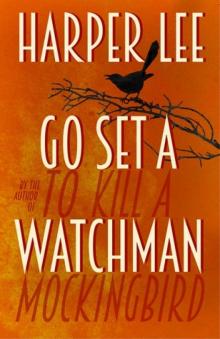
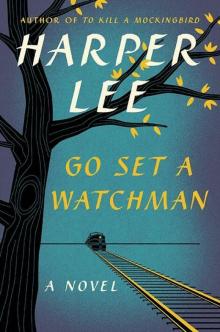
Go Set a Watchman
Copyright
THE LAND OF SWEET FOREVER. Copyright © 2025 by Harper Lee LLC. Introduction copyright © Casey Cep, 2025. All rights reserved under International and Pan-American Copyright Conventions. By payment of the required fees, you have been granted the nonexclusive, nontransferable right to access and read the text of this e-book on-screen. No part of this text may be reproduced, transmitted, downloaded, decompiled, reverse-engineered, or stored in or introduced into any information storage and retrieval system, in any form or by any means, whether electronic or mechanical, now known or hereafter invented, without the express written permission of HarperCollins e-books.
Without limiting the exclusive rights of any author, contributor or the publisher of this publication, any unauthorized use of this publication to train generative artificial intelligence (AI) technologies is expressly prohibited. HarperCollins also exercise their rights under Article 4(3) of the Digital Single Market Directive 2019/790 and expressly reserve this publication from the text and data mining exception.
In preparing this book, the Publisher has made every effort to remain true to the original typewritten texts of the short stories, which had been prepared by the author as ready to present for publication in a periodical. The only changes made were corrections of minor typographical errors or misspellings.
hc.com
FIRST EDITION
Introduction copyright © Casey Cep, 2025.
Cover design and illustration by Robin Bilardello
Digital Edition OCTOBER 2025 ISBN: 978-0-06-346052-2
Version 09222025
Print ISBN: 978-0-06-346051-5
About the Publisher
Australia
HarperCollins Publishers Australia Pty. Ltd.
Level 13, 201 Elizabeth Street
Sydney, NSW 2000, Australia
www.harpercollins.com.au
Canada
HarperCollins Publishers Ltd.
Harlequin Enterprises ULC
www.harlequin.com
Bay Adelaide Centre, East Tower
22 Adelaide Street West, 41st Floor
Toronto, Ontario, M5H 4E3
www.harpercollins.ca
India
HarperCollins India
A 75, Sector 57
Noida
Uttar Pradesh 201 301
www.harpercollins.co.in
Ireland
HarperCollins Publishers
Macken House,
39/40 Mayor Street Upper,
Dublin 1, D01 C9W8, Ireland
www.harpercollins.co.uk
New Zealand
HarperCollins Publishers New Zealand
Unit D1, 63 Apollo Drive
Rosedale 0632
Auckland, New Zealand
www.harpercollins.co.nz
United Kingdom
HarperCollins Publishers Ltd.
1 London Bridge Street
London SE1 9GF, UK
www.harpercollins.co.uk
United States
HarperCollins Publishers Inc.
195 Broadway
New York, NY 10007
www.harpercollins.com
Harper Lee, The Land of Sweet Forever