

Weavingshaw, p.23
Weavingshaw,
p.23
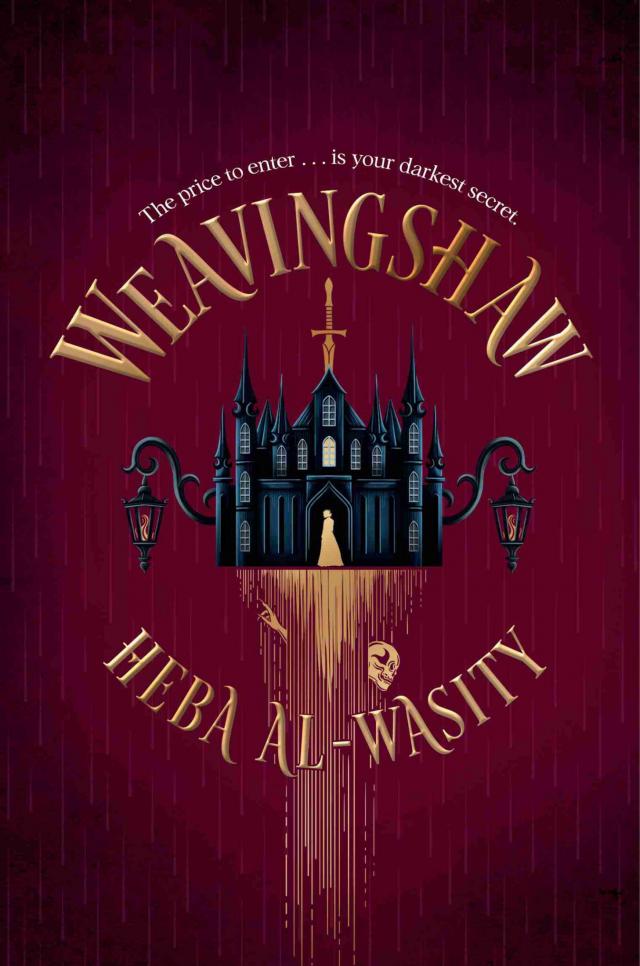


Hargreaves looked at Percy. He knew that the choice was his. If Hargreaves insisted on calling for the soldiers, then that was what they would do. Making up his mind, Hargreaves sighed. “This is the first and last time, do you understand? We take this one prisoner to the underworld, then that is it. No more dealings with the demons.”
It had not been the last time.
The Warden greeted Hargreaves now at the entrance of Newtorn Prison. Twenty odd years had passed, and Hargreaves was a middle-aged viscount. Percy was long dead.
“Your Lordship.” The Warden bowed deeply before ushering him up a flight of stairs and into his own office. It was a comfortable room, with a scarlet carpet to cushion the hard stone floor, but even here the walls vibrated with the ever-revolving assembly lines that existed within the prison.
“I have five prisoners who I think would be suitable for your…ah…purposes,” the Warden said eagerly, his eyes bulging from his thin face.
Hargreaves waved for him to start, a headache building in his temples. It was a grim business, but one Hargreaves didn’t trust to anyone else. Years ago, when the Wake was the only group to be trading in convicts, there was profit to be made. At present the market was saturated with freelance traders who had ventured into the underworld, with the Warden happily taking bribes from any of them who paid in full.
Now Hargreaves only performed this discomfiting task as an act of clemency. While it unsettled him to link himself to these Algaraans, they were still his countrymen, and he now knew how unfairly the law viewed them. It was his personal brand of justice that he took them away from a life sentence here. They could spend only a few years in the demon world before they’d be set free.
Providing they survived it.
Lord Kilworth was the only member of the Wake to have ever opposed the trade of prisoners. He did not view it as an act of mercy, as Hargreaves did, but an unnatural act of human submission to another, lesser being.
“How dare the demons think they could steal from a human? Cow us into compliance, into shells to serve their purposes? Feed on us to grow their own powers, to prolong their lives?” Kilworth’s voice had been laced with abject disgust. “Mark my words, Hargreaves, we ought to shoot ’em before they take the notion into their heads to enslave us.”
It was a tired argument, one born out of fear. The demons could be managed, could be controlled. Hargreaves had told him that he would manage them.
Kilworth had taken a swig of hard liquor, mouth twisting from the taste. “Beings like that can only be managed through strength. Especially that demon who works for the Saint. I guarantee you she’ll know where the Limitless Vessel is. We ought to force the information out of her.”
Hargreaves had not bothered to respond, the foolishness of the suggestion grating on his ears. They’d had this argument before, but Kilworth was stubborn in his certainty. The demon servant did not know; neither Hargreaves nor Percy had ever allowed her to have that information.
No, the only person to know the location of the Limitless Vessel was Percy, now ten years in his crypt.
The first two prisoners the Warden presented now were simple cases of larceny that had been given a disproportionate amount of prison time. Hargreaves gave them both three years in the underworld. If they lived through that, they’d earn their freedom.
The Warden turned to him before leaving to bring in the third prisoner. “The next one is the convict you asked for, the father of the Saint of Silence’s new companion.”
Hargreaves had kept updated on St. Silas. That he had employed a new secretary had not escaped his notice.
“Bring him in,” Hargreaves ordered the Warden.
The prisoner entered in chains, his beard scraggly and gray, his steps shuffling. Oddly, he didn’t give the same fearful half glances as the other convicts. Instead, his gaze was steady.
“What have you been sentenced for?” Hargreaves asked, eyeing the man with distaste.
The prisoner’s Morish was heavily accented. “A lifetime for treason.”
Hargreaves switched to Algaraan effortlessly. It was better this way, away from the Warden’s understanding. “What sort of treason?”
“I attempted to start a union.” The prisoner smiled. “You are Effendi Hargreaves?”
Hargreaves inclined his head.
“My dearest daughter worked for you once.”
Hargreaves raised a brow. “In the kitchens?”
“She was a lady’s companion for your mother. Not for long. Her name is Leena Al-Sayer.”
Hargreaves straightened and stared at the man. A lady’s companion? Who worked for him? He had gone through many lady’s companions with his mother as her memory increasingly deteriorated. The name rang a bell in the recesses of his mind—a young girl who had handed in her notice without any explanation. She was St. Silas’s new companion?
His Lordship studied the prisoner. “You attempted to start a union? For what purpose?”
“For progress, Effendi. For better wages, for safer conditions.”
“Is that it?” Hargreaves’s tone was derisive. “I’ve seen men like you—men who yearn for destruction, for chaos. You were hoping to start the same revolution that occurred in the homeland.”
“Have you called me here to speak of politics?” The prisoner glanced disdainfully at the manacles encircling his wrists. “I used to lecture in history at the Algaraan University. You Morland nobles fear an uprising—and, yes, you are right to fear one. If the Algaraan revolutionaries win the war—”
“They have won. The Malik is soon to hang.”
The man stepped back, shock widening his eyes.
“What did you say that surprised him so?” the Warden asked, but Hargreaves ignored him.
“The war is over?” the prisoner whispered, then let out a booming laugh that ended in a coughing spasm.
Anger stirred in Hargreaves’s chest at the prisoner’s joy. “It is men like you who make orphans. What does Algaraa have to show for its revolution? An unstable country, derided by all. I am trying to set right what you and your kin have done wrong.”
“Your kin as well, my lord,” the man interrupted him. “Do not forget this. We are countrymen. We share a homeland.”
Hargreaves turned to the Warden, speaking in Morish. “Fifteen years in the underworld is fair for this man. That will serve to stabilize his more dangerous sentiments.”
The Warden bowed. Just as the prisoner was dragged from the room, Hargreaves called at him in Algaraan, “Are you aware that your daughter is currently working for the Saint of Silence?”
The man started, his face paling under the layer of dirt. “My daughter? Leena? You must be mistaken, Effendi. I have warned both my children never to have anything to do with that con man.”
Ah, interesting. He indicated to the Warden to take the prisoner away. Hargreaves would keep an eye on him in the underworld until he found a use for him.
As the door shut behind him, Hargreaves leaned back and closed his eyes. His thoughts trailed back to that first prisoner they had traded all those years ago, and the memories that had sunk their teeth into him.
Percy, you fool, Hargreaves thought to himself. If you had stuck with this endeavor, if you had learned to practice economy, if your greed hadn’t corrupted you, then you would have kept Weavingshaw. And the Avon line would not have ended.
Hargreaves was going back to Weavingshaw.
Weavingshaw—where his wife had walked into the ocean. Where he’d met Percy for the last time on that barren field, blade in hand. The same Weavingshaw that had brought them all peace as boys, before taking it back with an unyielding hand.
No, Hargreaves was never to have peace again.
Not after Weavingshaw.
Somewhere far off, he heard a distant scream. It was likely the Warden marking the prisoner with seven brutal letters seared into his forearm: The Wake.
Weavingshaw sat like a wraith upon the moors—an entity that thrived in the dead and decaying season. Leena could not imagine the estate in summertime; likely it would look shell-shocked and glassy-eyed in the growing season. Indeed, from the moment Leena had her first look at the dark house, she had the unsettling feeling that it had fed on its surroundings until it was the last living thing within miles.
Leena felt, rather than saw, when they finally entered Avon land. The earth smelled different on this side. Richer, more iron-clad, like it had soaked in the blood of its defenders for centuries and would not let them go. Even the wind was coarser across her cheeks, as if still carrying with it the remnants of sunken ships.
But most of all, it was the howling that jarred Leena. It was widely known that the north was the only land that still held wolves, and their terrible howls pierced her like arrows.
Leena closed her eyes and tried to ground herself in the present, focusing on the sound of her even breathing and the feel of her skirt beneath her fingers.
Yet, in spite of her best efforts, her mind wouldn’t be quieted.
Their journey had taken five days.
Thanks to Leena’s pleading, St. Silas had allowed Rami to accompany them, as Golborne was crawling with Black Coats who wanted her brother’s blood. It was clear St. Silas was dubious at best about bringing Rami, but she had told him that she’d be useless with worry over her brother while in Weavingshaw, and would likely need to take to her bed with her nerves.
St. Silas had commented drily that Leena’s nerves would likely outlast even him.
It felt like a terrible plan to Leena, knowing they were visiting the estate belonging to the same man who had ordered Rami’s beating. Still, she’d rather he stayed where she could keep an eye on him and try to keep him out of trouble. Leena had additionally forced Rami to promise that he would remain discreet and not further incur Mr. Martin’s wrath. He did so, but the begrudging way he agreed made her uneasy.
The five days of the journey had been uncharacteristically warm, although the sun hid behind a dense sleeve of clouds and mist. Theodore Daye was her companion in the beginning, but the farther north they went, the more he seemed to fade, nearly disappearing entirely by the fourth day, as if the journey had exhausted him. This worried her. She was afraid that he might vanish completely before he had a chance to deliver Lord Avon to them.
Leena spent most of the trip with her nose buried in her books. She distracted herself with linguistics, translating newspaper articles from Morish to Algaraan, using her aged dictionary as a reference. And all the while terribly missing her botany book.
But it was difficult to concentrate on her handwriting when her mind was pulled in a thousand different directions.
Ever since Mrs. Van had revealed her unsettling age, Leena’s nightmares had become disturbed—images of dark creatures with abnormal hands that upset her rest. She’d gone to see St. Silas just after he’d come back from his prolonged trip, but he’d merely laughed at her suspicions.
“Come, Miss Al-Sayer, can anyone be that old?” he’d asked, but the smile had never reached his watchful, half-lidded eyes. “Mrs. Van was jesting at your expense.”
He was lying to her.
Just as he stepped around the truth of his ledgers and his own past, St. Silas carried his secrets close to his chest. He was hiding something rotten, a twisted history—one that Leena was determined to find out.
She watched St. Silas through the window now, riding alongside them on a brown thoroughbred. He was an expert rider, in total control of the temperamental beast, and yet there was no enjoyment on his face as he rode, as if he was being propelled forward to Weavingshaw rather than leading the way there.
It had been a fortnight since the courtyard, and the time had passed for Leena in a whirlpool of morning confessions and preparations for their journey north. She had heard reports from Mrs. Van that the boy brought to them on that dark night was now recovering well at the convalescent home, and would likely be out of bed in another week. Leena was heartily glad to hear that; at least some good had come of that evening.
But since then, something foreign had lain between her and St. Silas. It took all her efforts not to dwell on this; to name it would have been to give power to it. She did not want St. Silas to hold any more of her than he already had. Already he employed her abilities on his behalf. Already her body seemed to react to his presence. She didn’t want him to have command over her thoughts or emotions as well.
They stopped for the nights in various posting inns, where Leena stumbled into the clean sheets, her back aching from the journey. Then, in the mornings, she would sit in the carriage, entirely travel-weary, her hair often still wet and curling from her bath the evening prior. The hours stretched with blinding boredom, and she had begun to miss even Golborne’s dirty but familiar streets.
On what Leena desperately hoped was the last morning of travel, she was surprised to see that St. Silas had elected to sit in the carriage with her, no longer in his riding habit but his normal stiff collar and black suit. Mrs. Van and Rami rode atop the box seat; she knew that Rami didn’t like the claustrophobic interior of a carriage, especially after his accident. Still, he popped his head through the window.
“You okay, Leena?” he asked her, eyeing St. Silas suspiciously.
She merely waved him away.
She tried to ignore St. Silas, keeping her own head bent over her language studies, but sitting so close to him, even in silence, still brought a startling awareness of him.
They did not speak, but more than a few times she was sure she felt his gaze burn into her. She refused to meet it, pretending to be engrossed in her book. In the moments he studied her, what did he see? Did he notice that her hair was particularly untidy this morning? Or that her dress was wrinkled? Or that she had excellent posture, a habit acquired from when she was a lady’s maid?
Still, she ran a discreet hand to smooth the folds of her dress.
* * *
—
The smell of decay thickened the air as they traveled into the moors—the scent of roots rotting, of mildew entrenching itself deep into the frost-ridden soil. Twilight pulled a curtain across the sky, and Leena caught her first sight of Weavingshaw moments before the darkness settled. A single turret—a beacon, a warning. It sent a jolt of fear through Leena’s stomach.
On the maps she studied, Weavingshaw was the last human dwelling this far north before the empty expanse of sea. Only a tiny miners’ town called Lytham bordered it, and it was still widely considered Avon land, despite His Lordship having been dead for a little more than a decade.
They pulled into the town just as the miners finished their shift, trundling past with soot-covered faces and tin lunch pails. As the carriage passed by, it was clear that the Saint’s horses were better fed than the townspeople. The miners stopped to stare at them, their picks and hammers swung over their shoulders, all lined up in a single row. An eerie welcome—but as Leena peered through the dark, she could see that their expressions were not welcoming at all. Their mouths were twisted, their eyes hostile. One spat at the wheels. Another snarled, “Aristo pigs.”
Nearly all of them wore a twine of rope pinned to their lapel. A sign of the Rebels.
“They think we’re nobles,” she said, lurching away from the window, her heart pounding.
St. Silas met the miners’ stares as they wheeled past, his posture unwavering, and for a stark moment he looked like an errant noble from a forbidding fortress.
Leena clutched the copper coins between her fingers, a tremor overtaking her body.
“What if they overturn the carriage?” They’d reach Rami first, and he’d barely survived his last beating. Although the bruises had finally faded from his face, she knew that his ribs still ached with every sharp inhalation. He could not afford to be in another fight so quickly.
“They won’t. Their anger has not yet surpassed their fear,” St. Silas replied, yet he didn’t turn away from the miners until they had passed them.
As they progressed deeper into the town, they saw dilapidated houses sunken from years of rain—the broken shingles, the makeshift patches used to cover the leaks.
St. Silas straightened, an odd anger in his voice. “Martin has been idiotically deficient in his duty to his tenants.”
Leena turned to him sharply. “How so?”
“Simple attention to the safety of the mines and the houses they reside in would have improved their productivity.” His mouth thinned. “And decreased the chances that half these men will end up hanging from a tree for treason.”
“This is why,” she said softly, “my father wanted a union. In the end, the Mr. Martins of the world always win.”
“Victory,” St. Silas replied with an edge to his voice, “comes to those who wait.”
Leena had no doubt that he was not talking about her father, Mr. Martin, or even the Morish King, but she refrained from saying any more.
* * *
—
Although they were only a few miles from Weavingshaw, St. Silas had decided they would stay for the night in the posting inn that bordered the forest between the estate and Lytham. Leena was eager to press on, her mind returning to the snarling faces of the miners, but St. Silas was firm; they would arrive in the morning.
He seemed oddly cautious about riding toward the estate at night.
The posting inn had a lived-in shabbiness, but the floors were swept clean and the fire roared. The innkeeper’s wife met them at reception—a plump lady who spoke in hushed tones, apologizing that her husband was away on business, but promising she would do everything to ensure her guests’ comfort. She told them that a few other attendees of the “master’s hunt” were also staying at the inn. Leena was not eager to make those guests’ acquaintance and hurried past the parlor.


