Enemy of the people, p.1
Enemy of the People,
p.1
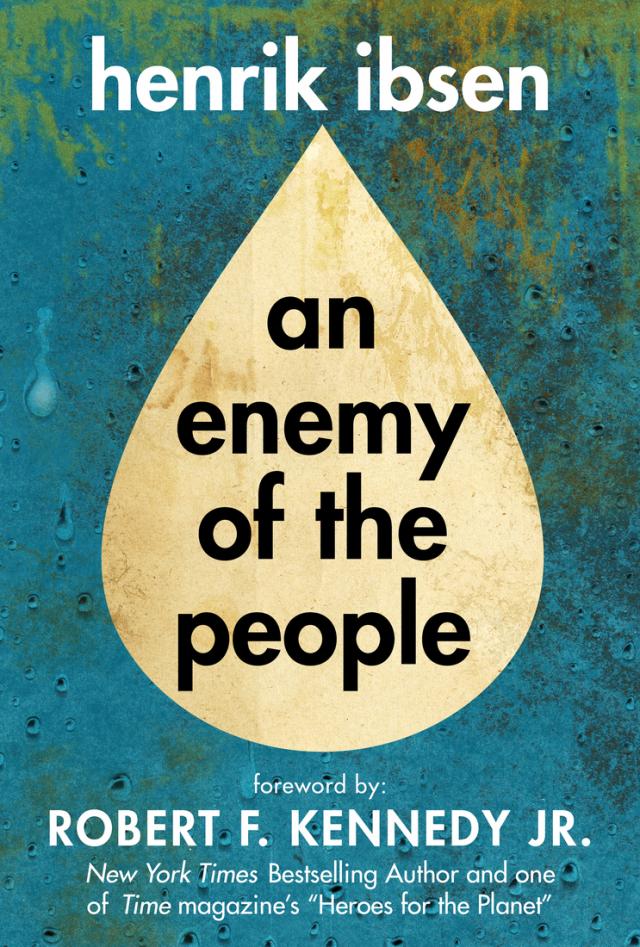


First published as En folkefiende, 1882
English translation by R. Farquharson Sharp
First Skyhorse Publishing edition, 2021
Foreword © 2021 Skyhorse Publishing, Inc.
All rights reserved. No part of this book may be reproduced in any manner without the express written consent of the publisher, except in the case of brief excerpts in critical reviews or articles. All inquiries should be addressed to Skyhorse Publishing, 307 West 36th Street, 11th Floor, New York, NY 10018.
Skyhorse Publishing books may be purchased in bulk at special discounts for sales promotion, corporate gifts, fund-raising, or educational purposes. Special editions can also be created to specifications. For details, contact the Special Sales Department, Skyhorse Publishing, 307 West 36th Street, 11th Floor, New York, NY 10018 or info@skyhorsepublishing.com.
Skyhorse® and Skyhorse Publishing® are registered trademarks of Skyhorse Publishing, Inc.®, a Delaware corporation.
Visit our website at www.skyhorsepublishing.com.
10 9 8 7 6 5 4 3 2 1
Library of Congress Cataloging-in-Publication Data is available on file.
Cover design by Brian Peterson
Print ISBN: 978-1-5107-5723-3
Ebook ISBN: 978-1-5107-5727-1
Printed in the United States of America
Contents
Foreword by Robert F. Kennedy Jr.
Dramatis Personae
Act I
Act II
Act III
Act IV
Act V
Foreword
“And yet, it moves!” Galileo whispered those defiant words in 1615 as he left the Roman Inquisition tribunal before which he repudiated his theory that the earth—the immovable center of the Universe according to contemporary orthodoxy—revolves around the sun. Had he not recanted, his life was forfeit. We like to think of Galileo’s struggles as the quaint artifact of a dark, ignorant, and tyrannical era where individuals challenged government-anointed superstitions only at grave personal risk.
However, the persecution of scientists and doctors who dare to challenge contemporary orthodoxies did not take a rest after Galileo: It has always been and remains today, an occupational hazard. Henrik Ibsen’s 1882 play An Enemy of the People is a parable for the pitfall of scientific integrity. Ibsen tells the story of a doctor in southern Norway who discovers that his town’s popular and lucrative public baths were sickening the visitors who flocked to them for rejuvenation. Discharges from local tanneries had infected the spas with lethal bacteria. When the doctor goes public with the information, local merchants, joined by government officials, their allies in the “liberal-minded independent press,” and other financially interested parties move to muzzle him. The medical establishment pulls his medical license, the townsfolk vilify and brand him “an enemy of the people.”
Ibsen’s fictional doctor experienced what social scientists call the “Semmelweis reflex.” This term describes the knee-jerk revulsion with which the press, the medical and scientific community, and allied financial interests greet new scientific evidence that contradicts an established scientific paradigm. The reflex can be particularly fierce in cases where new scientific information suggests that established medical practices are actually harming public health.
The real-life plight of Ignaz Semmelweis, a Hungarian physician, inspired the term and Ibsen’s play. In 1847, Dr. Semmelweis was an assistant professor at Vienna’s General Hospital maternity clinic, where around 10 percent of women died from puerperal “birth bed” fever. Based on his pet theory that cleanliness could mitigate transmission of disease-causing “particles,” Semmelweis introduced the practice of mandatory handwashing for interns between performing autopsies and delivering babies. The rate of fatal puerperal fever immediately dropped to around 1 percent. Semmelweis published these findings.
Rather than building a statue to Semmelweis, the medical community, unwilling to admit culpability in the injury of so many patients, expelled the doctor from the medical profession. His former colleagues tricked Dr. Semmelweis into visiting a mental institution in 1865, then involuntarily committed him. Semmelweis died mysteriously two weeks later. A decade afterward, Louis Pasteur’s germ theory and Joseph Lister’s work on hospital sanitation vindicated Semmelweis’ ideas.
Modern analogs abound. Herbert Needleman of the University of Pittsburgh endured the Semmelweis reflex when he revealed the brain-killing toxicity of lead in the 1980s. Needleman published a groundbreaking study in 1979 in the New England Journal of Medicine showing that children with high levels of lead in their teeth scored significantly lower than their peers on intelligence tests, on auditory and speech processing, and on attention measurements. Beginning in the early 1980s, the lead and oil industries (leaded gasoline was a lucrative petroleum product) mobilized public relations firms and scientific and medical consultants to lambast Needleman’s research and his credibility. Industry pressured the Environmental Protection Agency, the Office of Scientific Integrity at the National Institutes of Health, and the University of Pittsburgh to launch investigations against Needleman. Ultimately, the federal government and the university vindicated Needleman. But the impact of the industry’s scathing assault ruined Needleman’s academic career and stagnated the field of lead research. The episode offered an enduring demonstration of industry power to disrupt the lives of researchers who dare to question their products’ safety.
Rachel Carson ran the same gauntlet in the early 1960s when she exposed the dangers of Monsanto’s DDT pesticide, which the medical community then promoted as prophylactic against body lice and malaria. Government officials and medical professionals led by the American Medical Association joined Monsanto and other chemical manufacturers, attacking Carson viciously. Trade journals and the popular media disparaged her as a “hysterical woman.” Industry talking points derided Carson as a “spinster,” the contemporary euphemism for lesbian, and for being unscientific. Vicious criticisms of her book appeared in editorial pages of Time, Life, Newsweek, the Saturday Evening Post, US News and World Report, and even Sports Illustrated. I am immensely proud that my uncle, President John F. Kennedy, played a critical role in vindicating Carson. In 1962, he defied his own USDA, a captive agency in league with Monsanto, and appointed a panel of independent scientists who validated every material assertion in Carson’s book Silent Spring.
In the 1940s, British physician and epidemiologist Alice Stewart was one of the rare women in her profession and the youngest fellow ever elected at the time to the Royal College of Physicians. She began investigating the high occurrences of childhood cancers in well-to-do families, a puzzling phenomenon given that disease often correlated with poverty, and seldom with affluence. Stewart published a paper in The Lancet in 1956 offering strong evidence that the common practice of giving X-rays to pregnant women was the culprit in carcinomas that would later afflict their children. According to Margaret Heffernan, author of Willful Blindness, Stewart’s finding “flew in the face of conventional wisdom”—the medical profession’s enthusiasm for the new technology of X-rays—as well as “doctors’ idea of themselves, which was as people who helped patients.” A coalition of government regulators, nuclear promoters, and the nuclear industry joined the US and British medical establishments in launching a brutal attack on Stewart. Stewart, who died in 2002 at the age of ninety-five, never again received another major research grant in England. It took twenty-five years after the publication of Stewart’s paper for the medical establishment to finally acknowledge her findings and abandon the practice of X-raying expectant mothers.
Whereas the people of the Norwegian town in Ibsen’s An Enemy of the People turn against the protagonist Doctor Thomas Stockmann for warning about contaminated water, what happens when the townspeople are the ones raising the alarm? In April 2014, residents of Flint, Michigan, complained to city officials about water coming from their taps that smelled, looked, and tasted foul. Denying for months that there was a serious problem, city and state officials maintained that the water was safe, despite the many community meetings where locals brought bottles and jugs filled with discolored tap water from their homes as evidence. By September 2015, incidences of elevated blood-lead levels in children throughout the city had nearly doubled, and in some neighborhoods, almost tripled.
The EPA limit for lead levels in drinking water is fifteen parts per billion. Independent tests conducted by Virginia Tech researchers found water in some Flint homes at over 100 ppb, and in one case reported lead levels at 13,200 ppb. Water contaminated with 5,000 ppb of lead is classified as hazardous waste.
Until the 1960s, Flint’s main water source was the Flint River, and for the decades that followed, Detroit Water and Sewerage Department (DWSD) treated water from Lake Huron and piped it to the city. In April 2013, under the control of emergency manager Ed Kurtz, the city decided upon a plan to switch its water supplier from DWSD to the Karegnondi Water Authority (KWA). The plan was for Flint to build its own pipeline to connect to KWA, supplying the city with water from Lake Huron that Flint would treat instead of Detroit, at an estimated savings of 200 million dollars over twenty-five years. And until the new pipeline was built, the city would pump water from the Flint River.
However, the city’s water treatment plant, which had not been regularly used for decades, was not equipped for the job. The April 2014 switch triggered the city’s water crisis, leading to deadly bacterial outbreaks that killed at least twelve people, exposing thousands of children to
elevated levels of lead, and damaging hundreds of millions of dollars of infrastructure.
A tragic chain of mistakes and negligence was accompanied by incompetence and hubris. Flint water pipes were made of lead and iron, and not until the EPA—estimating that about ten million lead lines were in service nationwide—enacted the Lead and Copper Rule in 1991 were requirements made for regular monitoring and action to be taken if old lead pipes started becoming dangerous. According to a 2016 American Water Works Association study, more than six million lead lines were still in use.
Ingesting any amount of lead is unsafe for a human but adding anti-corrosion chemicals such as orthophosphates to the water helps form a protective layer inside pipes to prevent leaching. The treated water from Detroit had orthophosphates, whereas Flint did not add this nor any other corrosion inhibitors. In addition, Flint River water contained higher than average levels of chloride—partly due to sodium chloride used as deicer for roads washing into the river—that can also contribute to corrosion.
The discovery of fecal coliform bacteria was another problem after the switch to the river water, so chlorine was added as a disinfectant. However, chlorine disinfectant can react with metals from corroding pipes, especially iron, rendering the disinfectants useless and the bacteria unimpeded. A resulting Legionnaires’ disease outbreak, one of the largest in US history, caused the deaths of twelve people and sickened at least ninety. As if out of a page from Ibsen’s play, even as county and state health departments tracked and recorded numerous cases of Legionnaires’ disease through 2014 and 2015, it wasn’t until January 2016 that they notified the public.
The tragic cascade of chemical reactions continued as the added chlorine reacted with organic chemicals in the river water to form disinfection byproducts called total trihalomethanes that have been linked to liver, kidney, and central nervous system problems, and an increased risk of cancer. In an attempt to thwart the elevation of trihalomethanes that had surpassed the national regulatory limit, ferric chloride was added as a coagulant, thus increasing the level of chloride in the water and intensifying the vicious cycle. Here too, Ibsen comes to mind as testing showed elevated levels of total trihalomethanes almost immediately after the switch was made to the river water. City and state officials failed to notify the public until six months later.
In March 2015, a Flint city council vote to switch back to Detroit water was called “incomprehensible” by the emergency manager Jerry Ambrose, who claimed that costs would skyrocket and that “water from Detroit is no safer than water from Flint.” In June, an EPA memo noted the high level of lead in Flint water. This memo was leaked by the American Civil Liberties Union (ACLU), and in July, Flint Mayor Dayne Walling drank a cup of tap water on live television to show residents that all was safe. This was followed by a Michigan Department of Environmental Quality (MDEQ) spokesperson on Michigan Public Radio saying that “anyone who is concerned about lead in the drinking water in Flint can relax.”
It wasn’t until October 2015 that the state began testing drinking water in schools, and that Michigan Governor Rick Snyder announced the city would discontinue using Flint River water. Finally, in December 2015, Flint declared a state of emergency, followed by Governor Snyder declaring a state of emergency in Genesee County in January 2016.
Science, at its best, is a search for existential truth. Sometimes, however, those truths threaten powerful economic paradigms. Both science and democracy rely on the free flow of accurate information. Greedy corporations and captive government regulators have consistently shown themselves willing to twist, distort, falsify, and corrupt science, hide information, and censor open debate to protect personal power and corporate profits. Censorship is the fatal enemy of both democracy and public health. Dr. Frank Ruscetti often quotes Valery Legasov, the courageous Russian physicist who braved censor, torture, and threats on his life by the KGB to reveal to the world the true cause of the Chernobyl disaster. “To be a scientist is to be naïve. We are so focused on our search for the truth, we fail to consider how few actually want us to find it. But it is always there, whether we see can see it or not, whether we choose to or not. The truth doesn’t care about our needs or our wants. It doesn’t care about our governments, our ideologies, our religions. It will lie in wait for all time.”
These accounts, and Ibsen’s An Enemy of the People, written 139 years ago yet so relevant today, are vitally important both to the health of our children and the vitality of our democracy. My father believed moral courage to be the rarest species of bravery. Rarer even than the physical courage of soldiers in battle or great intelligence. He thought it the one vital quality required to salvage the world.
If we are to continue to enjoy democracy and protect our children from the forces that seek to commoditize humanity, then we need courageous scientists, public officials, and ordinary citizens who are willing to speak truth to power, even at terrible personal cost.
—ROBERT F. KENNEDY JR.
Dramatis Personae
Dr. Thomas Stockmann, Medical Officer of the Municipal Baths.
Mrs. Stockmann, his wife.
Petra (their daughter) a teacher.
Ejlif & Morten (their sons, aged thirteen and ten respectively).
Peter Stockmann (the Doctor’s elder brother), Mayor of the
Town and Chief Constable, Chairman of the Baths’ Committee, etc.
Morten Kiil, a tanner (Mrs. Stockmann’s adoptive father).
Hovstad, editor of the People’s Messenger.
Billing, sub-editor.
Captain Horster.
Aslaksen, a printer.
Men of various conditions and occupations, a few women, and a troop of schoolboys—the audience at a public meeting.
The action takes place in a coastal town in southern Norway.
Act I
(SCENE.—DR. STOCKMANN’S sitting room. It is evening. The room is plainly but neatly appointed and furnished. In the right-hand wall are two doors; the farther leads out to the hall, the nearer to the doctor’s study. In the left-hand wall, opposite the door leading to the hall, is a door leading to the other rooms occupied by the family. In the middle of the same wall stands the stove, and, further forward, a couch with a looking glass hanging over it and an oval table in front of it. On the table, a lighted lamp, with a lampshade. At the back of the room, an open door leads to the dining room. BILLING is seen sitting at the dining table, on which a lamp is burning. He has a napkin tucked under his chin, and MRS. STOCKMANN is standing by the table handing him a large plate full of roast beef. The other places at the table are empty, and the table somewhat in disorder, evidently a meal having recently been finished.)
MRS. STOCKMANN: You see, if you come an hour late, Mr. Billing, you have to put up with cold meat.
BILLING (as he eats): It is uncommonly good, thank you—remarkably good.
MRS. STOCKMANN: My husband makes such a point of having his meals punctually, you know.
BILLING: That doesn’t affect me a bit. Indeed, I almost think I enjoy a meal all the better when I can sit down and eat all by myself, and undisturbed.
MRS. STOCKMANN: Oh well, as long as you are enjoying it—. (Turns to the hall door, listening.) I expect that is Mr. Hovstad coming too.
BILLING: Very likely.
(PETER STOCKMANN comes in. He wears an overcoat and his official hat, and carries a stick.)
PETER STOCKMANN: Good evening, Katherine.
MRS. STOCKMANN (coming forward into the sitting room): Ah, good evening—is it you? How good of you to come up and see us!
PETER STOCKMANN: I happened to be passing, and so—(looks into the dining room). But you have company with you, I see.
MRS. STOCKMANN (a little embarrassed): Oh, no—it was quite by chance he came in. (Hurriedly.) Won’t you come in and have something, too?
PETER STOCKMANN: I! No, thank you. Good gracious—hot meat at night! Not with my digestion.
MRS. STOCKMANN: Oh, but just once in a way—
PETER STOCKMANN: No, no, my dear lady; I stick to my tea and bread and butter. It is much more wholesome in the long run—and a little more economical, too.