Book of night, p.17
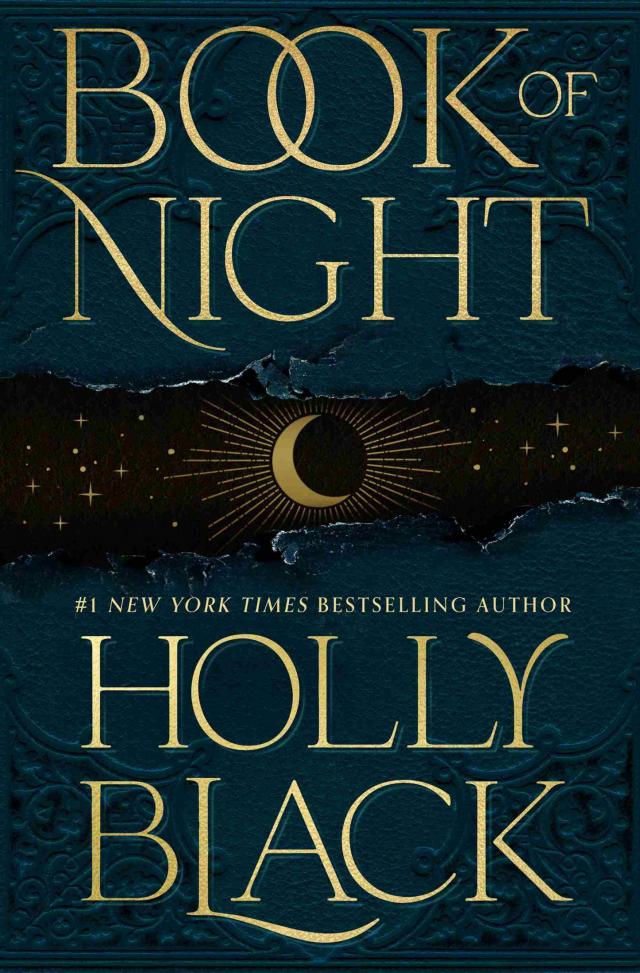
Book of Night,
p.17


Benny snorted. “Five hundred.”
She eyed him, trying to figure how much his cut was. “That doesn’t sound like much. That’s the price of two stolen shadows.”
He shrugged. “Yeah, you should probably stick to something easier.”
She took the job.
* * *
Charlie had always considered herself prickly as a sea urchin, but if she wanted to be the kind of con artist that Rand had been, she was going to have to get better at charm. It was one thing following his cues, and another being responsible for the whole thing.
She practiced with the basics. The short-change con, where you buy a pack of gum with a twenty, then mess around trying to get the cashier to give you a ten for nine dollars while pocketing your change, then “correct” yourself by turning over a ten and getting your twenty back. It was some bullshit, but it required smooth talking and the appearance of honesty.
Then the pig-in-poke, which was particularly effective for a teenager. Charlie pretended to find a ring on a street that looked like gold, or something similarly valuable, then asked a passerby if it was theirs. Lots of times she didn’t even have to suggest they give her a twenty and take the ring off her hands; they were so sure they were scamming her that they’d do it themselves.
It helped her figure out how much to smile, how shy to be, how eager. And she made sixty bucks, which wasn’t nothing.
That Saturday, she got ready to pull her first job without Rand.
A call to the Arthur Thompson House got her the first bit of information that she needed. She discovered which groups were touring the house Monday, then went to the thrift store closest to the Catholic school the museum staffer mentioned. There, she was able to find herself a school uniform. It looked slightly moth-eaten and the skirt had been hemmed extra short by its last owner, but it cost only twelve dollars for the whole thing, including the white shirt.
At home, she experimented with her hair. Pigtails made her feel as though she was wearing a costume, but when she pulled her hair back into a high ponytail, put on black stockings and lip gloss and popped a piece of bubble gum in her mouth, it looked perfect.
It would be easy to get in—it was a museum, after all, and welcomed visitors—but much harder to get into a locked study and then a locked cabinet without anyone noticing. And much harder to cut a page out of a book and leave with it before getting stopped.
On Monday, she put her plan into swing. She told her mother she was sleeping over at Laura’s house, then forged a doctor’s note for school. Then she took the bus to Northampton. From a discreet distance, she watched the kids troop inside, gave them fifteen minutes, and showed up.
“I’m late,” she told the woman at the front desk, looking as panicked as she was able. “I am so sorry. My mom had to drop me off and I am going to be in so much trouble. They’re here, right? Can I go in?”
The woman hesitated, but only for a moment. “Go in. Hurry.”
Charlie dashed past and joined up with them, relieved that the first part was over. She found the class but stayed clear of them until they went into Arthur Thompson’s study. Then she moved into the flood of students and slid inside. This was the important part, because the door was alarmed and only one group was let in at a time.
Their teacher—a rather young-looking priest with an Eastern European accent—cleared his throat. “Now, we’re going to listen with our ears, not with our mouths.”
Charlie slid behind a bookshelf.
A museum staffer began to go into Arthur Thompson’s childhood, the challenges of Harvard in the eighties, how the prototype of the lightning harvesting mechanism shocked him badly enough that he spent six weeks in a hospital.
“Is that when his shadow became magic?” asked one of the girls.
The priest gave her a speaking look, but the museum staffer nodded. “That’s generally thought to be the case, since he pursued shadow magic after that. He joined some of the early message boards and even originated calculations about the energy exchange between the gloamist and their shadow.”
“So what happened to him?” asked a boy in the back.
“Did you not do the reading, Tobias?” the priest demanded.
“No, I mean the shadow,” the kid said. “Rowdy Joss, he called himself once he was a Blight, right? Like, did they hunt him down?”
“Nothing about that was in the reading,” said the priest. “And we don’t need to waste the time of the staff.”
“I saw the video,” the kid said. “Online.”
The staffer smiled, although the smile had become slightly strained. “No one knows what happened to Arthur’s shadow after the Boxford Massacre. There was some speculation that the transfer of energy created memory loss, or that it was confused. But remember that Rowdy Joss wasn’t Arthur. Arthur died at the Boxford Massacre, a victim like everyone else that day.”
Charlie listened to the conversation follow the familiar pattern, as the teacher and staffer valiantly struggled to get it back on track. Fifteen minutes later, the class filed out, leaving Charlie hidden behind the bookshelf. She waited until the room was empty to scoot out and crawl beneath Arthur Thompson’s enormous desk.
She watched feet move back and forth, realizing she should have come in with the last group and not the third-from-last group. But it wasn’t like she had to worry too much about not making noise or moving or something. Sound was all around her, a cacophony of giggling and gum chewing and lectures.
And then the final group filed out. From the other room, she heard the museum staffers—all two of them—talking together. One of them laughed. Then, distressingly, the hum of a vacuum began.
But it wasn’t brought into the study and faded away after a few minutes.
Charlie breathed a sigh of relief.
She listened as the locks were engaged and the alarms set. Outside, night had fallen. Charlie crawled out, more nervous than she thought she’d be. Despite all the houses she’d walked through, this felt different. The slightest sound made her start.
Taking a few steadying breaths, she used her phone to give her enough light that she could pick the lock of the cabinet. It took her three tries before her fingers were finally steady enough to open the door.
Behind it, she found the notebook they wanted—it was one of the ones on display. She flipped through until she found a page marked “Shadow Energy Exchange,” then took a razor out of her backpack.
But as she got ready to slice, she felt guilty. It seemed wrong to hack up a book. When it was Rand doing stuff, she never had to think about morals. He was a bad guy, and they were doing bad stuff, and that was that.
Charlie ate a granola bar from her backpack, looking at the cabinet.
She walked around the room, looking at the photos. Arthur Thompson’s original sketches of the lightning farm. A congratulatory letter from the governor. And in one corner, a letter from someone claiming to be a Blight in a looping, spidery hand.
To A. Thompson in the City of Northampton.
You have been trying to contact me and I urge you to desist. Yes, there are ancient beings in the shadows, but you are better off letting us stay that way.
I have no interest in being studied. My origin may have been with your kind, but I am of you no longer.
Written on the 23rd day of April by Cleophes of York
She frowned at it, wondering if Arthur Thompson’s Blight was still hanging around, writing letters.
Finally, Charlie took out her phone and took a photo of the page from the notebook. It had the same information, and if that’s what they wanted, this ought to be enough. Even as she did it, she had the sinking feeling that she was screwing up, but she couldn’t bring herself to slice out the page.
Then she went to the windows, hoping there was a way out, but they were alarmed. Charlie sat down in the chair, spun it a bit. Played a game on her phone. Crawled back under the desk and napped.
And then she saw something in the window. A shadow in the corner of the room, sliding away from the wall. Charlie curled up more tightly and tried not to breathe.
It moved across the room, pausing at a strip of black tile that crisscrossed the floor. Then the shadow stepped over, becoming more solid as it did. For a moment, it took on features, as though of the gloom controlling it. Then it was past the onyx tiles and to the cabinet. It flooded through the keyhole and the cabinet door swung open.
Then the shadow became solid again, as though someone shaped the night into a human form. It must have to be like that to carry the book. Charlie’s heart thundered and she held her breath again as it passed her by. It left the book tucked into a corner of the room, in a basket of rolled-up architectural plans that might have been reproductions.
As it flooded out the window, Charlie realized why it hadn’t taken the book with it. It couldn’t get it out the window or the door any better than Charlie could. But it could relocate the book so that the gloamist could come in tomorrow and slide it into his bag and leave without anyone the wiser.
It was almost dawn when she decided the shadow wasn’t waiting outside and went over to the basket to look at the book.
And scowled. It was the exact volume she’d been sent to slice the page from. And belatedly, with a sense of wicked glee, she opened the book and took out her razor.
Whoever the gloamist was who was attempting to take the book was going to be very surprised when he got it. She hoped he was furious. She had the sudden, wild urge to sign her work and fought it down.
By the time the first class filed in the next day, Charlie was feeling giddy with victory and desperately in need of a toilet to pee in. As they left, Charlie scrambled out from under the desk and behind the bookshelves. One more class. One more lecture. And then she was out of there.
The next group filed into the study. Charlie smiled at a boy who moved to stand near her. She wiped the edge of her mouth and then frowned at him.
“You have something—” she said.
He knuckled where she’d pointed and she reached out to fix it for him. “There,” she said. “Got it.”
Charlie managed to stay out of sight of the teachers until it was time to leave. Then she tried to file out with the others, head down. Just at the door, she heard a voice.
“Hey,” one of the teachers said. “You’re not with this class.”
She turned around guiltily, lipstick smudged. Watched the teacher’s eye go to the boy, whose mouth she’d smeared with her lipstick.
“Keith!” she said. And then Charlie was out the door, and out of the museum, with what she hoped was a believable excuse for hightailing it out of there.
Benny set up her meeting for later in the day, at the parking lot behind a coffeeshop in the middle of town.
Three twentysomething glooms showed up. One of them had a vape pen in her mouth. Another was carrying a skateboard. They looked at her as though they would never have hired her if they’d realized how young she was.
“Here’s your three hundred,” the gloom with the vape pen said, gesturing airily.
Charlie opened her mouth to object and one of the others interrupted, smirking. “Take it or leave it.”
“Leave it,” Charlie said.
“Where are you going to sell the page, if not to us?” said the boy. “You think anyone else is going to give you a better deal?”
Charlie wondered if it was one of them who’d sent their shadow into the Arthur Thompson House, cutting out the others. Or if it was someone one of them had talked to, trying to snake it out from under them.
She could tell them, she supposed. But she didn’t like them enough. “Six hundred, or I set it on fire. And the price is going up every time you negotiate.”
They looked at one another. “No way.”
“Seven hundred,” Charlie said.
One of them laughed, and she fished a lighter out of the bottom of her bag. Flicked the flint wheel.
“Fuck off,” said the one with the skateboard.
Charlie set the page on fire. It caught fast, burning to cinder in moments as they screamed. The ashes blew around, black shapes circling in the wind like shadows.
She sneered at the glooms, fighting down a wave of exhaustion at the lost night, the frustration at losing when she’d been so sure she’d won, and the certainty that this would have never happened to Rand.
“Do you know what you did?” the one with the vape pen demanded.
“I made sure no one would ever stiff me again,” Charlie said, and walked off, keeping her head high and her shoulders squared.
That night she uploaded the photo she’d taken online. Sometimes she still saw it passed around. She could always tell it was hers because a corner of her finger was visible at the edge.
16
LICK YOUR WOUNDS
By the time Vince got home, Charlie pretended to be asleep, evening out her breaths, tucking her cheek against the pillow, pressing her nose to the cloth. He stood in the doorway, looking at her long enough for the hairs to rise along the back of her neck.
She knew she would have to confront him, but not now. Not when she was exhausted and the anger she should be feeling had somehow drained away, leaving her heavy with sadness. She didn’t want Vince to be Lionel Salt’s grandson, didn’t want to have to wonder how far he’d go to protect his identity. If he’d murdered Hermes for recognizing him as Edmund Carver, did that mean he’d murder her too?
He can’t realize I know, she reminded herself. At least not yet. But she still imagined Vince lying beside her, taking her pillow, and smothering her with it.
Imagined him holding a knife from her own kitchen behind his back as he got closer to the bed. Got distracted by remembering that she’d bought those knives at a TJ Maxx and they always needed sharpening. The last time she cut open a butternut squash, she’d really had to saw her way through. That would be a terrible way to go.
And given how fast he got rid of the last body, he wouldn’t have any trouble getting rid of hers too. She didn’t doubt that he had all the right solvents to clean things up so well that a forensic team would be hard-pressed to find evidence.
A shudder went across her shoulders and she bit her cheek to keep herself still.
That old chestnut about killers occurred to her—a quiet guy, kept to himself. That did describe Vincent.
She stayed still as he folded his pants and put his shirt in the laundry basket. Didn’t move as he set his watch on the dresser, plugged his phone in to the charger.
Maybe she should get out ahead of this. When you lived with someone it ought to be easy enough to incapacitate them. Horse tranquilizers. Food poisoning. Offering to tie him to the bedposts for sex. Then she could interrogate him. Force him to admit everything. Ask him all the questions she’d always wanted to know.
And yet, what she longed for was for him to slide into bed and put his hand on her shoulder, to tell her he knew she was awake. To say that he loved her desperately and wanted to confess all the things he’d kept from her, and all the reasons for them. It was a childish desire, a wish for the world not to be as it was, for people to act in ways they just didn’t. It was the wish of a sucker, ready to be fleeced for everything she had.
Vincent Damiano isn’t a real person. She’d been so busy trying to make sure Vince didn’t see behind her masks that she didn’t notice that he was all mask.
Hole in the head, hole in the heart, or hole in the pocket. The Hall family curse.
Eventually, he left the room, flicking off the overhead light. She lay alone in the dark, eyes open. Outside, the streetlights shone. Behind her neighbors’ houses, the old mill building rose, dark too, with the bright silver coin of the moon above.
It wasn’t until the red light of dawn bled onto the horizon that she finally slept.
* * *
Charlie woke in the early afternoon, alone.
She stumbled out of bed, then poked her head into her sister’s room to make sure that Vince hadn’t gone crazy and chopped her in half or something. Posey was sleeping, one arm flung over her ancient MacBook.
Charlie put on a robe, went to the kitchen, and poured herself a mug of bitter, lukewarm coffee. She slid a steak knife into the pocket of the robe. Then she waited, stomach churning.
It was time to have the real talk.
Twenty minutes later, Vince came back in with two bags of groceries. Charlie couldn’t help seeing the space through his rich-boy eyes. All the worn things. The grease stains. The shabbiness.
He took a look at her expression and set the bags on the counter, making no movement to unpack. “Did something happen?”
“You lied,” Charlie said, meeting his pale eyes.
He didn’t look defensive yet, but he did look wary. “I—”
“Trying to figure out which lie I’m talking about? It must be hard when there are so many,” she snapped. “Edmund Carver.”
“Don’t call me that,” he said.
“Because you prefer Remy? Or because you’re afraid someone will hear?” She’d thought it would feel terrible to confront him, but it felt great to have the nastiness inside her finally spilling out. “Was it hard, to sleep on a mattress on the floor and not between your one-billion-thread-count sheets?”
He shook his head. “I swear to you, it wasn’t like that.”
But when she looked at him, all she saw was the Edmund Vincent Carver of the society pages, disdain in his smoke-colored eyes. Just a little pomade, the tilt of his jaw, and he’d be a stranger. If only she’d observed him more closely, she’d have seen it—picking out that Vacheron Constantin watch at twenty paces, knowing about the vacation homes of the upper class, the fucking love of gossip for fuck’s sake. Not to mention the ability to murder people and believe there would be no consequences.
“Oh, you swear it. Well then, it must be true,” she said, a snarl in her voice.
“I wanted to start over.” Vince’s voice stayed soft. “With no part of my old life. I didn’t want you to see me the way I used to be.”
“That’s a good line. But it doesn’t explain how you’re supposed to be dead,” Charlie told him. “Or how everyone’s looking for a book you stole, including the guy who tried to kill me. Too bad you didn’t keep that in the duffel in the back of our bedroom closet, along with your real license.”