The curse workers, p.74
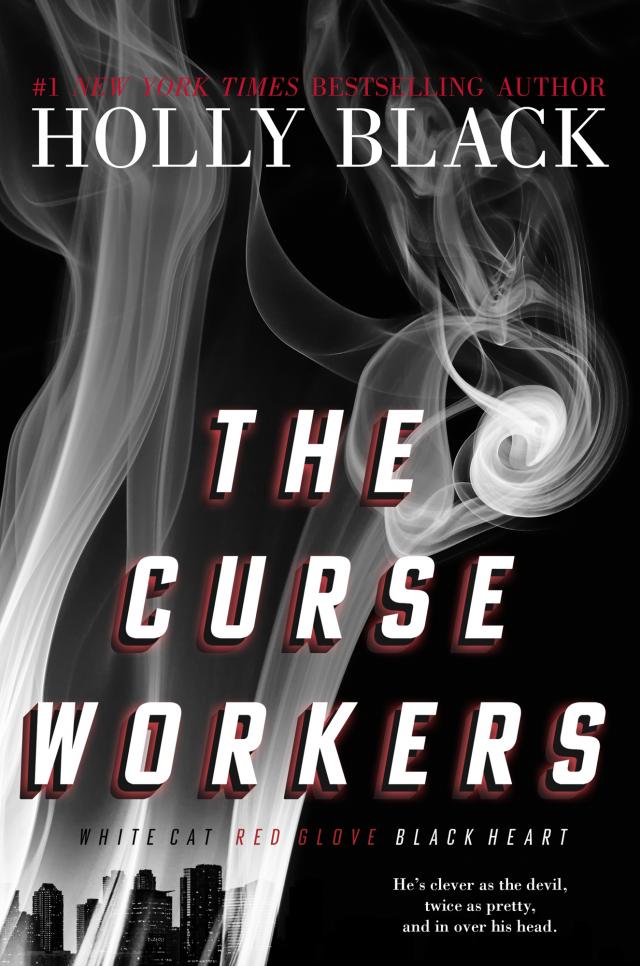
The Curse Workers,
p.74


“I’m a princess,” she told her grandmother, whom she called Babchi. Babchi had lived in the apartment with Lila and Father and Mother ever since Grandpa died. Each night Babchi sat at the end of Lila’s bed, telling her stories about firebirds and white bears, while Mother went out to plays or fancy dinners and Father did business.
“Yes,” said Babchi, coming to stand behind Lila. “My princess. The princess of a land of ice and snow. With icicles as sharp as knives.”
“I’m a fairy,” Lila said, spinning in circles until she tripped on the edge of her mother’s dress and fell.
“Yes,” said Babchi. “My fairy. You aren’t like other girls. You will laugh when others weep. Your heart will be a riddle.”
“Someday, I will fall in love with a boy,” Lila said, pursing her lips. “And he will be a prince.”
“If you fall in love, little one, there is a cure for that,” Babchi told her. “You—and you must do this yourself—you cut out his heart and eat it. Then you won’t love him anymore.”
Lila made a face and stuck out her tongue. Babchi laughed.
“I won’t want to be cured,” Lila insisted. It was her story and she wanted Babchi to understand, to get it right. The fairy princess met a prince and then they were happy. That’s how the story went. Lila had a book to prove it—a book so covered in glitter that flecks of it came off on her hands when she read about their wedding. Her mother had bought it for Lila’s birthday.
“That is very true and that is exactly what makes it so hard,” Babchi said, nodding. “If you wanted to, it would be easy. But you’ll do it anyway. You’re my princess, and when the time comes, you’ll know what you have to do.”
Lila nodded too, because Babchi had that tone in her voice that said that she would be sad if Lila didn’t agree, and if Babchi was sad, she might not want to play anymore. She might go in the other room and watch television.
Lila had lots of other costumes to try on. She wanted Babchi to stay and see them all.
* * *
When Lila was nine, she chopped off all of her hair with nail scissors and let it stick up in tufts as if it were wild grass in a meadow.
“It isn’t your fault we’re getting a divorce,” her mother told her.
The day after, Lila and her mother drove down to Carney, even though it wasn’t summer yet. Lila sat at the kitchen table of her grandmother’s house, drawing black swirls on her hand with a Sharpie. The whorls went up her arm, curling in on themselves.
“Your father is very selfish,” her mother said, drinking her third cup of coffee. After each sip, she set the cup back down on the saucer with a clink. “Always out somewhere with someone. And the women! He never understood what it takes to be married—no less to have a daughter.”
“Mmmmm-hmmm,” Lila said. She was used to making encouraging noises. If she didn’t, her mother would get upset.
“He expects me to be like his mother was—never complaining, working my fingers to the bone in the kitchen, never asking any questions. But that’s just what he saw of his mother—what she showed him! How does he know what happened behind closed doors? Or how miserable she was—just look at the lines on her face! I used to walk the runways of Milan! I order takeout!”
The back door opened and Lila’s grandmother walked in with a grocery bag in each arm. She set them down on the counter. “I could hear you all the way to the driveway, Irina. Tell me your troubles; leave her out of it. What’s the best cure for heartbreak?”
“His heart,” Lila said distractedly. She got to a tricky part by her elbow and wasn’t sure if she could bend her arm quite as far as she needed to draw the snaking circles just right.
Her mother gasped. “What did you say?”
Lila’s grandmother smiled and ruffled Lila’s shorn head with a gloved hand. “I was thinking of a big chocolate cake with chocolate icing and that’s just what I am going to bake.”
“Do you like my tattoos, Babchi?” Lila asked, holding out her arm.
“No she does not,” her mother said, voice rising with irritation. “And you are going to have to scrub yourself raw to get them off. With that hair—you just look ridiculous. Did you draw on your gloves, too? Give me those!”
Lila took off her gloves and set them down in a crumpled pile. Her tattoos didn’t look right anymore. They stopped abruptly at her wrist.
“She looks like a child,” Lila’s grandmother said. “Lila, why don’t you go play and leave us old folks to talk?”
Lila obediently set down the black pen and went outside. It was only when she got there that she realized she didn’t have her gloves on—they were back on the kitchen table. But she didn’t want to go inside again, and the air was cool on the skin of her palms.
She walked around town, kicking a squashed tin can and catching a toad near the stump of a tree. It had golden eyes and smelled like rich, wet earth, and she could hardly believe her luck when her fingers closed around it like the bars of a cage. She liked the way it wriggled in her hand.
She walked over to Mr. Singer’s house. The screen door was open, but she didn’t hear anyone inside. She tapped at the metal with her foot.
“Cassel?” she called. “I caught something.” Even though she and Cassel didn’t see each other during the rest of the year, every summer they were instantly best friends again. But the beginning was always like an indrawn breath, with both of them not sure when they were allowed to let it out.
No one answered. She waited a few more minutes and then walked to the side yard. Mr. Singer—Cassel’s grandfather—was raking in the back. He looked older than she remembered, his hair grayer. Lila tried to wave, but her hands were full with the toad.
He walked over. “Lila Zacharov? I almost didn’t recognize you.”
“Yeah,” she said, braced for him to tell her how bad it looked. “My hair’s different.”
“The boys aren’t here yet—won’t be down for a couple weeks.”
“Oh,” she said, pain stinging the backs of her eyes. She remembered that it wasn’t summer, but she forgot Cassel wasn’t just always there, waiting for her.
Mr. Singer pointed to her hands. “What’s that you’ve got?”
She bent to let go of the toad, smiling with sudden pride. “I never caught one before by myself.”
Mr. Singer grinned. “He’s a real handsome fellow.”
For a moment, the toad stayed very still in the grass, then exploded into motion, hopping toward the hedges in three flashes of brown and green.
Mr. Singer laughed. “Fast, too. When the boys come down, they’ll be real impressed. I’ll tell ’em.”
“Yeah?” she asked hopefully.
“No doubt.” He gave her a considering look. “I like what you’ve done. Short hair’s good for the summer. Keeps you cool. Maybe you want to get some clippers and even it out, though.”
She touched the tufts of it with her bare fingers. “Do you have some?”
“Sure.” He took her inside the house and showed her where they were and how they worked. Then he made her a cup of tea, and they watched Ban of the Banned on the television until her mother came looking for her.
“Is my daughter here?” Lila’s mother asked from the doorway while Lila pretended to be asleep on the couch.
“Sure is,” Mr. Singer said.
“I’m so sorry,” her mother said. Her voice was a little unsteady, like she was afraid. Lila cracked open her eyes.
Mr. Singer was shrugging. “No trouble. Kids are always in and out in the summer.”
Lila got up, and she and her mother walked home together in the early dark. For a long time, they didn’t speak. Lila was braced for shouting.
“You can’t go over there anymore,” Lila’s mother said softly, instead, as they got to the edge of their lawn. She didn’t comment on Lila’s hair or the fact that she was going around gloveless.
“Why not?” Lila asked. “I always play over there.”
“That man works for your father,” her mother said. “None of them are good people and they’re beneath you besides.”
“Cassel’s my friend.”
“He’s not even a worker. He’s nothing. Listen to me—you stay away from Mr. Singer and those Sharpe boys. Things are different now. I don’t want you winding up like your father.”
When Lila got back to her grandmother’s, she took the pen into her bedroom and finished drawing the swirls, covering her fingers in black ink. In the mirror of her room, she could see her hair, military-short and gold with reflected light from her desk lamp.
Things were different now.
She was different.
She was alone.
* * *
After what felt like hours of sitting in silence, someone finally took the hood from over Lila’s head. Cool air started drying the sweat on her brow. She swept back her bangs with one bare hand and tried very hard not to tremble. Tried to seem like the kind of girl who was never afraid.
Three men were standing in front of her—three men she’d known for a long time. Fat Jimmy, Big Louie, Nat the Knife. They were like uncles to her. Wicked uncles who had tutored her in wickedness.
The room was dark, but the shadows seemed to cling to the dusty boards of the wall. The only light in the room came from a candle on a table. Next to it was a cloth, a knife, and a fifth of cheap vodka. She could hear traffic, but distantly. She would bet the building she was in was abandoned. It would be an excellent place to leave a body. She just hoped that body wasn’t going to be hers.
“This is my initiation, right?” she asked.
Nat grinned, but none of them answered.
“Where are my gloves?” she asked.
“Take a shot,” Fat Jimmy said. “And toast to your old life. Say good-bye.”
The scent of old blood rose up, maybe from the floorboards, maybe from the cloth or the knife. Sometimes, when Lila was a little girl, her father would come home smelling like this. She wondered what it would be like to smell the scent on her own skin.
She went to the table, found a small glass hidden behind the wadded-up cloth, and poured vodka in it. Despite feeling nauseous and a little dizzy, she downed the drink. It seared her throat.
Fat Jimmy said something else, something about honor or respect or silence, but Lila couldn’t quite pay attention. She wasn’t done saying good-bye.
* * *
Once upon a time there was a girl with golden hair and no fear. She burned her hands on stoves because she wanted to touch the pretty red coils, she stuck her fingers in sockets and ran with knives. She told her cousins that when she grew up, she would be the boss of them all, and she meant it. There was a girl whose heart was as hard as diamonds.
Until someone locked her in a cage and hid the key.
That was the story Lila told herself, the one that might not have been true, but that she repeated over and over anyway. That was the way she kept herself eating and drinking and pushing at the bars, looking for a way out. That was the fairy tale that sent her off to sleep each night and woke her every morning.
Once upon a time there was a girl with golden hair and no fear. Someone locked her in a cage and hid the key. But the girl would have her revenge.
* * *
“There are dog people and cat people.”
That’s what Anton, Lila’s cousin, told her one afternoon while they sat near the lake in Carney. She was wearing her first ever bikini—a white one that her mother told her wasn’t supposed to get wet. Annoyed, she was sitting on the hot planks of the dock and dipping her feet in the water while the boys swam.
Philip, Anton’s best friend, pulled a cooler out of his car, dumping it on the bank. He was just turning twenty, and the scars on his neck showed his loyalty to her father. A shallow cut, packed with ash so that it darkened, marking him as dead to his old life and born anew as part of the Zacharov family. Sometimes when she looked at his neck, she felt guilty. Other times she felt nothing at all.
“You want a sandwich or something?” Philip asked her. “My grandfather packed up some stuff. There’s peanut butter. And some soda.”
Anton grabbed for a beer.
“Can I have a soda?” Lila asked. When he gave it to her, she pressed it against her forehead and neck, letting its coolness push back some of the muggy heat.
“Guys like you,” Anton told Philip. “Dog people. Dependable. Friendly.”
“Will bite the hand that feeds me,” said Philip.
She looked out at the lake where his youngest brother, Cassel, floated in the middle of the lake, his skin bronzed by the sun. Anton and Lila both had the kind of skin that never tanned. It just turned lobster red and faded back to pale. Already, Anton’s shoulders had gone pink.
Cassel waved to her. His black hair was a messy halo of floating curls. His eyes were as dark as the water.
“You coming in?” he called.
She wanted to explain about her swimsuit, although she wasn’t sure why her mother bought her a suit she couldn’t actually swim in. But if she said that, she was afraid he’d laugh at her. She shook her head instead.
“Which one am I?” she asked, turning back to her cousin.
“Oh come on,” he said. “You know you’re a cat person. Fickle. Finicky. Don’t listen to anyone.” He laughed.
“Lazy.”
Lila kicked the surface of the lake, sending up a spray. “So what are you?”
“We’re family,” he said. “Two of a kind.”
“But cats hate water,” she said and jumped in.
It was a cold shock after the oppressive heat, but it was the feeling of recklessness that made her giddy. She ribboned through the lake, swimming toward Cassel.
“Um,” he said as she bobbed beside him. He had a very strange expression on his face. She couldn’t be sure, but he seemed to be blushing.
“Anton says there’s cat people and dog people,” she said. “What do you think?”
“Right now, I think I’m more of a rat,” he said, glancing down then back up to her eyes. He looked like he was about to start laughing, but there was a joke he was just waiting for her to get, so she could laugh too.
She followed his gaze and finally figured out why her mother told her not to get the suit wet. The white fabric had gone translucent.
A hot flush crept up her neck.
“Get me your T-shirt,” she said. “Go.”
“This is me not saying all the things I could say.” His eyes danced with mirth. “This is me being your knight in shining armor.”
She looked toward the bank, where Anton was watching her, still drinking his beer. She kept treading water.
* * *
Being a dream worker sounded silly. It sounded like crystals and clouds and rainbows. Only babies were afraid of nightmares, after all.
Lila remembered one of her father’s friends, Fat Jimmy, laughing when her father told him what her talent was.
“A cute kinda curse for a kinda cute gal,” he said, chuckling.
She took off her glove and poked him in the arm. That night he had the dream she’d seen wandering around in her father’s head—one of being shot over and over and over again by each one of his friends. The next time she saw Fat Jimmy, he couldn’t quite meet her eyes.
Cursing people was something that you shouldn’t do. It was illegal, for one thing, but since she was a member of the Zacharov family, no one she knew thought breaking the law was a big deal. It was rude though, as her mother reminded her.
But it was also easy. If she could touch someone without them noticing, then she could crawl around in their dreams, learn their fears and their desires. She could give them dreams suggesting things. She could even, she discovered, make people move while they were asleep. Once, she convinced her mother to go to the kitchen and make a cup of cocoa without ever waking.
The bad thing was that it ate away at her sleep. No matter if she gave people nightmares or watched their dreams like television or made them dance around the living room with their eyes closed, the price was insomnia.
She would lie awake for days at a time, until she finally cursed herself to resting. Then, when she woke, she had to pay for that, too.
Once, she made a boy come out of his house and kiss her under the streetlight. It was her first kiss. She thinks it was probably his, too.
She never told him and she never, ever will.
More from this Series
White Cat
Book 1
Red Glove
Book 2
Black Heart
Book 3
More from the Author
Ironside
Tithe
ABOUT THE AUTHOR
HOLLY BLACK is the author of bestselling contemporary fantasy books for kids and teens. Some of her titles include The Spiderwick Chronicles (with Tony DiTerlizzi), the Modern Faerie Tales series, the Curse Workers series, Doll Bones, The Coldest Girl in Coldtown, The Darkest Part of the Forest, the Magisterium series (with Cassandra Clare), and the Folk of the Air series. She has been a finalist for the Mythopoeic Award, a finalist for an Eisner Award, and the recipient of both an Andre Norton Award and a Newbery Honor. She lives in New England with her husband and son in a house with a secret door. Visit her at BlackHolly.com.
Visit us at simonandschuster.com/teen
www.SimonandSchuster.com/Authors/Holly-Black
Margaret K. McElderry Books
Simon & Schuster, New York
ALSO BY HOLLY BLACK
The Modern Faerie Tales
Tithe
Valiant