The blood dimmed tide, p.4
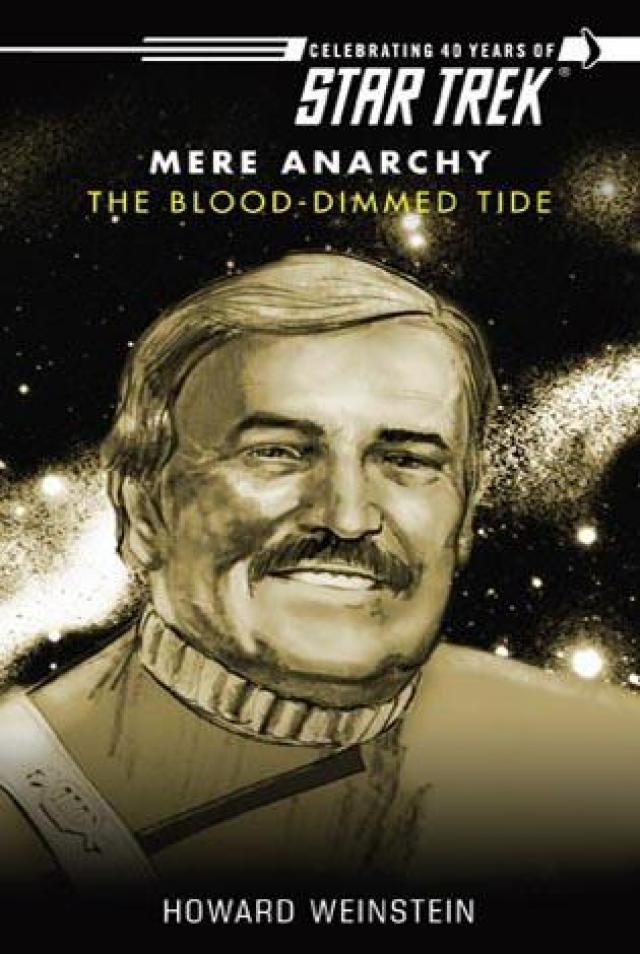
The Blood-Dimmed Tide,
p.4


Kirk frowned. “I see. If this works, you’ll have earned your pay for the week, Scotty.”
“More like the year- plus a bonus,” said Scott. “Dr. elZana’s installed a shielded ‘black box’ for the sensors. If we are attacked, it’ll keep recordin’ no matter what, so at least we’ll have data on how the weapon works- assumin’ we survive.”
“Let’s be optimists. Thank you both. Kirk out.”
Chekov looked up from his old seat at the navigation console. “Captain, we have isolated the intruder’s warp trail. If they stay on course, their projected heading appears to be taking them toward the Neutral Zone… and into Klingon territory.”
Kirk’s jaw clenched. “You’re sure?”
“Captain,” Saavik said from Spock’s usual post at the science console, “we cannot confirm whether or not the ion trail is from a Klingon vessel, but direction is confirmed.”
Kirk opened the intraship comm channel. His voiced echoed throughout the Enterprise. “All hands, this is the captain. Our heading will take us toward the Klingon Neutral Zone. With a little luck, we’ll complete this mission without firing a shot. Maintain yellow alert. Kirk out.” Kirk stood and stepped up to the bridge’s outer ring. “Commander Chekov, lay in that course. Break us out of orbit and go to warp seven. I’m going to brief Councillor elMora.”
McCoy followed the captain into the privacy of the turbolift. Kirk shook his head. “I knew the Klingons had something to do with this.”
“Now, we don’t know that for sure,” McCoy said. “You and the Klingons—”
“This isn’t about David,” Kirk snapped.
McCoy regarded Kirk with probing blue eyes. “You said it, Jim, not me.”
“Bones, I know you well enough.”
“And I know you. Can you honestly say it’s not about David?”
“The Klingons murdered my son. That’s with me as long as I live. But it’s irrelevant to this mission.”
“Is it?”
“Whoever took this weapon,” Kirk said, dodging the question, “whatever they plan to do with it, we have to find them, and stop them… and soon.”
“So we keep going.”
“We do.”
“And if we violate the Neutral Zone, we could trigger a war.”
“And if we don’t go where we have to… do what we have to… we could lose a war.”
Chapter Six
Down on the floor of a small, dim cabin in the ship that took her from the Discovery Center, Theena elMadej contorted her body into the most difficult stretching pose known to practitioners of the ancient Payav discipline of tor’kaat. Roughly translated, tor’kaat meant “defying pain.”
When she’d first tried it during her second university year, it was mostly because she felt fat and ugly, and needed a structured physical regimen to challenge and tone her body, much as her advanced science classes challenged what Raya had playfully dubbed her “big brain.” By the day after her first lesson, with agonizing aches in muscles she wasn’t even aware she had, she knew that “defying pain” didn’t mean avoiding pain.
She could still picture her idiot boyfriend Straik shaking his head reproachfully when she’d insisted on going back for more (and that superior attitude of his definitely contributed to the hasty cessation of their romance). The trick, she eventually learned, was persisting past the pain, using the energy of the pain to fuel the work. She recalled with a smile how her next boyfriend appreciated the benefits of her enhanced flexibility, strength, and stamina. Oh, well… Straik’s loss.
Persisting through pain was something all the people of Mestiko had been forced to do after the Pulse. But Theena believed the time had come to transcend that, and that was why she was on this ship. As she lowered her body to rest from a position most people presumed impossible to attain, she opened her eyes. The view of the stars through the window confirmed that they had slowed down from warp speed. Despite the tor’kaat workout, she still felt a knot in her stomach over the uncertainty of the path she’d chosen.
The door to her cabin slid open, and Terli, a young Payav woman dressed in a crew jumpsuit, stood outside. “Vykul wants to see you.”
Theena nodded, slipped her bare feet into her shoes, and followed Terli down a short cramped corridor, up a ladder to the next deck, through a hatch onto the bridge. Two Payav men and two women sat at the chevron-shaped control console in front of a large viewscreen.
Vykul Marto swiveled the command chair to face Theena. He was compact and muscular, with flashing eyes and a bold, handsome face framed by unusually vivid tattoos- particularly for the Tazokkans, who generally favored very traditional, austere tattoos. Vykul’s, though, covered so much of his neck and bald head that many would have dismissed it as a garish affront to good taste. They drew stares, which, Theena figured, was exactly what Vykul wanted. Even sitting still, he radiated the presence of a person accustomed to being in charge. But when he opened his mouth to speak, Theena angrily cut him off.
“The Torye are supposed to be liberators, not killers! Vykul, you swore to me none of my colleagues would die when you attacked the center.” When Vykul tried to stand up so he could be eye to eye with her, Theena shoved him back into his chair. “I counted at least ten bodies. Those were our people!”
Vykul waited for her to take a breath, then spoke with a stoic serenity in sharp contrast to her roaring temper. “Were some our people? Sure. Were some Dinpayav? Yes. Did you agree it was acceptable to sacrifice some lives to advance our cause? You did.”
“I meant our lives- the lives of people who volunteered to be Torye. We pledged our defiance to free our world from its cycle of dependence, even if that meant dying in the process. But those scientists? They were minding their own business, doing work to help Mestiko. They didn’t deserve to die. They were innocents!”
“When a world is subjugated, there are no innocents,” he murmured.
Theena rolled her eyes and shook her head. “Okay, the next person who spouts a political slogan gets a kick in the neck.” For effect, she glared around at the rest of the bridge crew, all of whom tried rather intently to focus on something- anything- other than the verbal jousting between their two leaders. Theena couldn’t blame them. Somehow, every disagreement with Vykul ended up this way, with her (the ostensible voice of nonviolent scientific reason) snarling, while he (the trained warrior from the Tazokka, the nation with the longest, most militaristic history on the planet) purred in response. Even in mid-argument, she found this behavioral irony maddening, which further fueled her fury at the barrel-chested man now lounging casually in his seat.
“Are you losing sight of the goal, Theena? Maybe. We’ll be sharing your weapon with allies who are also fed up with a government too feeble to seize control over its own destiny. In alliance, we create power. I’m sorry, I hope that’s not another political slogan,” he said with a charming grin.
Although Theena often found herself loathing the magnetism Vykul could wield like a pheromone, she knew that the first and most loyal Torye members he’d recruited were firmly under his spell. Mostly, they came from among the many Tazokkans sick of their world’s dependence on the mercy of outsiders. It was odd, she thought, how such self-styled rebels could be so passively content to follow the man who’d cooked up the Torye out of their dis content. But Vykul was the bolt of energy that ignited this defiance movement- not so different from her own role as the catalyst behind the Discovery Center. Even though he’d created the Torye, and she’d had to join secretly so her career would not be jeopardized, she regarded herself as an equal in leading this mission. If she had to spar with him every step of the way, so be it.
The Torye themselves were anything but secret on Mestiko, where their disapproval of Zamestaad policies was well-known- personified by Vykul in his frequent appearances on news and debate programs. He’d often reiterate how strongly he had been influenced by the life of Traal, the Norbb warlord turned Zamestaad councillor who had been among the most outspoken leaders of the Mestiko-First movement in the years just after the disaster. Vykul portrayed the Torye as the natural and sophisticated evolution of those early dissenters. Where the Payavist and religious fundamentalist parties advocated turning inward and shunning outsiders, the Torye aggressively advocated pushing ever outward in search of more and better alliances and markets- with the specific goal of breaking what they saw as Mestiko’s sickly reliance on the Federation. For years now, Vykul had been a gleeful critic of Raya’s government, ridiculing the Zamestaad for its failure to enhance Mestiko’s stature and independence.
Though Theena knew all of that when Vykul had invited her to a clandestine meeting a year ago, his proposal of a partnership with a purpose came as a surprise. But Theena could no longer deny her reluctant conclusion that her beloved friend and mentor Raya elMora was growing too cautious with age, and too beholden to her subservient association with James Kirk. Raya had served Mestiko admirably, and she would be forever revered by her people. But her time had passed. Mestiko needed bold new leadership, and Theena had to step out of her mentor’s shadow. When Vykul reminded her of the religious opposition’s visceral distrust of science, and warned that the fundamentalists would shut down the Discovery Center if they came to power, she had to listen.
Theena had grown up believing that science and religion were simply different paths toward the same purpose- enlightened understanding. While they might not embrace, they could coexist. But in recent years, it seemed that zealots were bent on hijacking all of Mestiko’s many religions. One by one, they twisted each faith until it was drained of spirituality. Even without Vykul’s prompting, Theena was genuinely afraid of what might happen if the religious fundamentalists once again gained influence.
So, here she was, allied with Vykul, heading for a rendezvous at which they would voluntarily share an overwhelming weapon with a new, unfamiliar partner. If she harbored any lingering doubts about the wisdom of their choices, the time had come to set them aside. There could be no turning back.
“Vykul,” said Fiota, the older of the two women at the central console, “incoming message.”
“Anything on sensors?”
Fiota shook her head. “Nothing, other than a shimmer of interference.”
“All right, then,” Vykul said as he stood and turned toward the viewscreen. “It must be them. Put it through.”
The starfield on the big screen winked out, to be replaced by the image of a warship’s dark, smoky bridge. The swarthy commander sat on his throne, biceps bulging as his arms folded across the chest of his sleeveless body armor. He nodded in greeting. “Vykul, it is good that we meet.”
“Captain Klaa, it is our pleasure to meet a representative of the new Klingon Empire.”
“Together,” Klaa said, looking quite pleased with himself, “we are the future!”
Chapter Seven
As Navok’s bird-of-prey crossed carefully back into Klingon territory, keeping a deliberately low profile, Spock and Morrow reviewed what they’d known before, what they knew now, and what they still needed to find out. Morrow had been sent on what his influential private Federation patrons had hoped would be the beginning of a process reducing tensions, bolstering galactic stability, and promoting peace. If there were indeed Klingons who grasped the limits of conquest as a foreign policy, Spock’s presence was intended to signal them that the Federation Council and Starfleet were amenable to such a process- and that it would be in the empire’s best interest to accept the offer.
But neither man had expected that they were being invited to dance at a Klingon coup d’etat.
According to Starfleet’s unfortunately sketchy intelligence, revealed to both Spock and Morrow at the outset of their mission, the new Klingon mining colony on Tiranax was purportedly a state-of-the-art mechanized operation. Liberated from the archaic and inefficient need for slave labor, Tiranax would soon be producing vast amounts of strategic resources needed to meet the surging appetites of an expanding empire.
The woeful inaccuracy of those reports became instantly clear when General Navok took them to see the facility for themselves. Shortly after his ship landed, they hiked over a hill to a towering industrial building which turned out to be little more than a hollow shell. Navok guided them through a gaping entrance. Shafts of daylight pierced through jagged holes in the walls and roof, illuminating a jumble of abandoned processing equipment- conveyors, giant vats, pipes, catwalks, ore tumbrels, tracks to nowhere, cobwebs everywhere. Spock scanned it all with his tricorder for the official mission log.
Navok spread his arms wide. “Behold! The mighty forge of the empire!” A flock of batlike creatures reacted to the unaccustomed sound of voices in their domain, stirred from their perches in the rafters, and flittered in a mild panic above the heads of their unwelcome visitors.
“Looks like this place hasn’t been used in years,” Morrow said.
“Used? It was never even completed. This is the true condition of the Klingon Empire… decay. Do you need to see more?”
“Not if those records you showed us are accurate,” Morrow said.
“I wish they weren’t.”
“And the High Council is aware that Tiranax and other colonies are not productive?” Spock asked as Navok led them back toward his ship.
“They are.”
“Most irrational. Planning expansive military ventures without the industrial capacity to support them is tantamount to suicide.”
Navok nodded vigorously. “Yes! That is why we must take action, before it’s too late.” He looked at his companions. Morrow chewed on his lower lip, while Spock’s face revealed nothing of his thoughts. “This facility may be a piece of trigak droppings, but Tiranax itself is a treasury of resources. If the Romulans take hold of such planets…”
“That,” Spock said, “would be undesirable. How prevalent among the Klingon officer corps is knowledge of the empire’s infirmity?”
“It is spreading, quietly and deliberately. The idea is to create a unified force, not panic. There are command-rank officers of high repute in all sectors who are carefully recruiting dissidents among their troops. When there are enough of us, and we remove our support, the imperial fleet will collapse like a tent with the poles chopped down.”
“Then what do you need us for?” said Morrow. “Sounds like you’ll be able to incapacitate the Klingon fleet all on your own. And without it, the High Council falls.”
“Unless we have the force to establish a viable new military hierarchy immediately, the Romulans will gut us like a bloated targ. And they will not stop with us. Only a reborn Klingon Empire stands between you and war with the Romulans. Only with Federation backing can we stop the High Council’s march toward a war we will lose. We are trying to rescue our empire, not kill it- and a stable Klingon Empire is good for the Federation. Either you help us, or you throw us to the Romulan jackals. And once they’ve tasted blood, they will tear out your throats, or die trying.”
“Colorful commentary aside, General,” Spock said, “your scenario is not without strategic logic.”
“Spock,” Morrow said, “this is insane. Blowing up the Klingon Empire to save it, and us?”
“Admiral, the current iteration of Klingon leadership is apparently proceeding on a path to self-immolation, with or without us. If Federation involvement enhances the likelihood that a stable alternative will succeed it, then that is beneficial, is it not?”
“So you’re in favor of this?”
“I merely state that General Navok’s case is worth presenting to the Federation and Starfleet Command.”
“Well, that’s your prerogative, Captain. But I came out here to craft a peace, not fire up a war. Navok, you’ve got to understand, the Klingons aren’t going to find a lot of sympathy in the halls of Federation power.”
“I am not counting on their sympathy,” Navok said. “But their enlightened self-interest? Now, that is another bowl of gagh.”
Morrow’s eyes narrowed. “What are you talking about?”
“I’m talking about how a Klingon defeat will make the Romulans an even deadlier foe to the Federation. I will show you.”
Once they were back aboard the bird-of-prey and under way, Navok summoned Spock and Morrow to the bridge science station and called up a classified file. On the screen above the console, he showed them a three-sixty fly-around of an object unlike anything they’d ever seen before. It was an enormous, free-flying delta shape, bristling with oddly juxtaposed angular and geometric surfaces. With no identifiable engines, command or personnel modules, or weapons, it bore no resemblance to any known ship or space station design. Even Spock was stumped.
“What the hell is that?” Morrow said.
“Our newest weapon system, a self-supporting mobile battle base… as big as ten battle cruisers, with the power of fifty. Armored to withstand an attack by a fleet of opponents. One has already been deployed, at the edge of this sector. It was to be the first of a dozen. It would allow us to project Klingon power into new territories without need of outposts on planets or moons.”
Morrow nodded. “Like nautical aircraft carriers on Earth back in the twentieth and twenty-first centuries.”
“Exactly,” Navok said. “I believe the development of this weapon is what tipped the balance in favor of preemptive war. The majority of the High Council thinks that more of these battle bases will be ready soon. I know differently.”
“How?” Morrow asked.
“Because I worked on the development and testing of the first one. Oh, it is potentially as formidable as we hoped. It represents an advance in the technology of warfare you would do well to fear. But we do not have the resources to complete the others.”
Morrow took a deep breath. “But if the Romulans capture this one, and finish the rest…”