The last wife, p.1
The Last Wife,
p.1
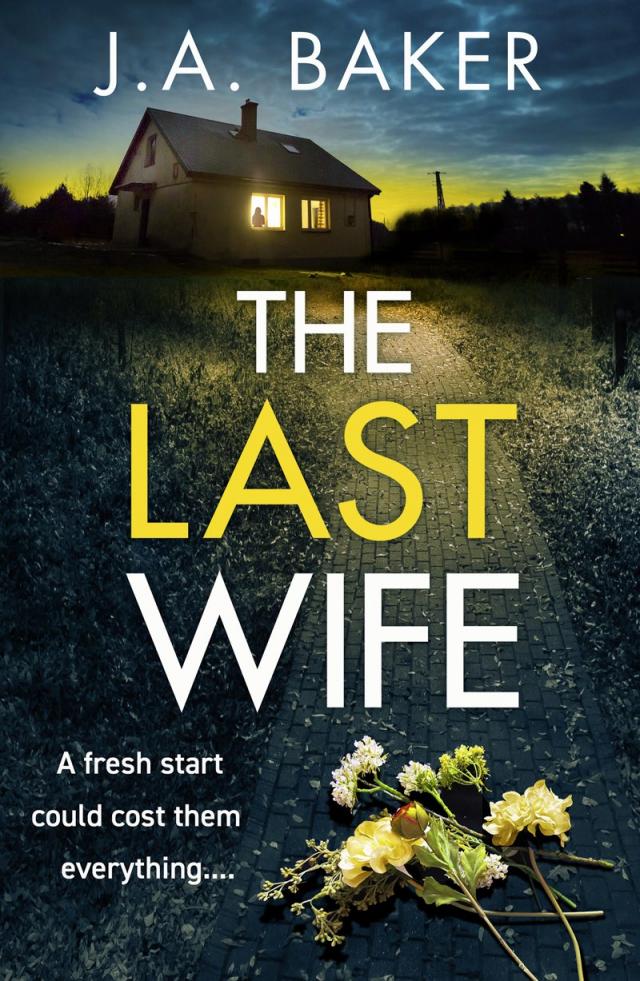


THE LAST WIFE
J. A. BAKER
Faith is the bird that feels the light when the dawn is still dark.
RABINDRANATH TAGORE
To Anita and Valerie. Here’s to the future, ladies. Onwards and upwards.
CONTENTS
Prologue
Part I
Chapter 1
Chapter 2
Chapter 3
Chapter 4
Chapter 5
Chapter 6
Chapter 7
Chapter 8
Chapter 9
Chapter 10
Chapter 11
Chapter 12
Chapter 13
Chapter 14
Chapter 15
Chapter 16
Chapter 17
Part II
Chapter 18
Chapter 19
Chapter 20
Chapter 21
Chapter 22
Chapter 23
Chapter 24
Chapter 25
Chapter 26
Chapter 27
Chapter 28
Chapter 29
Chapter 30
Chapter 31
Chapter 32
Chapter 33
Chapter 34
Chapter 35
Chapter 36
Chapter 37
Chapter 38
Acknowledgments
More from J. A. Baker
About the Author
The Murder List
About Boldwood Books
PROLOGUE
With hindsight, I should have gone with that inescapable gut instinct that gnawed at me on the journey there, the one that I duly ignored, pushing it away every time it reared its head. I should have persuaded Neil we had made a grave error of judgement and persuaded him to stay on the ferry for the return journey back home. So many things we should have done but didn’t. So many things I shouldn’t have done but did. There were too many words unsaid between us, too few conversations. And definitely too many ill-thought-out actions. We should have turned around and gone back home, that was the thing. Not that we had a home to go back to, having sold it, our possessions shipped out four weeks prior after being put into storage for a month. But we didn’t turn around because I didn’t say or do anything.
Instead, I just stood there, mute, fingers clasped around the metal railings, hands numb from the cold, and ignored that small, still voice in my head, the one that continually told me something was amiss with this whole venture, that something was about to go horribly wrong. Sometimes it’s easier, isn’t it? To ignore the subtle signs, to quell those nuanced voices inside your head and be carried along with the original planned agenda. Having to endure the upheaval of suddenly refusing to align to a prearranged schedule takes courage. Nobody likes upsetting the apple cart, least of all me. I was also feeling weak, shattered actually. I didn’t have it in me to tell Neil that I’d changed my mind, that we were making a big mistake. I had no reasons to give, no tangible evidence to present to him. Just that low rumbling of discontent that swirled about in my gut making me feel queasy and out of kilter.
And yet, despite my misgivings, despite the turmoil that whirled in my head, I had to admit that it looked so beautiful that night as we sailed towards our new home: the dark water, the rugged coastline, the neat rows of rooftops in the distance, the twinkling line of street lights that flanked the roadside next to the ferry point. They were mesmerising. How intriguing it all was. How magical and exciting. How utterly terrifying and frighteningly deceptive.
Would we have stayed had we known what lay ahead? Probably not. Our first reaction would have been to turn around and head back to the place we knew so well, back to the town where we both grew up. The same place where we made our terrible mistake. Do we regret making the decision to sell our lovely home and move to a remote island off the north-east coast of England? Strangely enough, no. Why? Because we survived what took place on Winters End island and we both lived to tell the tale. We’re still here, living and breathing. What doesn’t kill us makes us stronger; isn’t that how the old adage goes?
Living on Winters End changed us. Whether that’s for the better or not, I guess only time will tell…
PART I
1
‘Christ, it’s so cold here. What happened to the summer?’ Neil stared up at the sky, shoulders hunched, eyes narrowed against the strong north-easterly breeze that lapped around our faces. It was freezing; there was no denying it. I wondered if Neil was also having second thoughts, voicing his innermost doubts to me, skirting as we always did around the edges of the problem without saying what we actually meant. Perhaps I should have taken more notice, seized the opportunity to tell him how I was feeling, reassured him that to be reticent and frightened was okay, that it wasn’t a sign of weakness and that I was feeling it too.
‘It’s not so bad,’ I replied, trying to mask my own fears and angst, thinking that living on an island out in the middle of the North Sea was probably going to test the pair of us both physically and mentally. I knew then that speaking openly about what was burrowing deep within my brain wouldn’t work at that point. It had been my idea, moving here. I had seen the cottage for sale online and was immediately attracted to it, the longing to escape from events of late pushing me on, giving me the impetus to run away from everything I knew and loved. I wanted to draw a line under it all, start afresh. I wasn’t running away. I was simply starting again. That’s what I told myself. Everyone deserves a second chance, don’t they? Even me. Especially me.
And yet as we stood there discussing the weather, wondering where the late-summer heat had gone to, something in the pit of my stomach continued to flap about whenever I thought about what we were doing. What we were about to take on. I squashed down those feelings, told myself that everything was too far down the line to make any major changes. I needed this new venture, was unable to go back to my old life, to face my family and friends after what I had done. Putting some distance between us was important to me if only to save face and help keep my dignity intact. Their memories of me might fade. What I did would always be there, a stark reminder of how a few minutes of stupidity and being driven by fear and desperation could alter the trajectory of our entire lives.
I slipped my hand into Neil’s, his fingers dry and cold against mine. ‘Come on,’ I said, trying to inject some levity into my tone, ‘let’s get back inside, get a coffee. If we’re lucky they might even have some cake on offer.’ I sounded positive. I didn’t feel it but, then again, lying had become my default mode. I was practically an expert.
We walked back inside the ferry through the automatic doors, away from the rough, dark water outside, away from the biting cold that stung at our exposed hands and faces, and back into the relative warmth of the old vessel that would transport us to our new lives.
We sat at a table that had seen better days. Brown tea ring stains littered its surface, the corners of the laminate top curled up at the edges, but it didn’t matter. Nothing mattered at that point except arriving. We were almost there, almost at Winters End where everything would be better. Brighter. It had to be. It certainly couldn’t be any worse than the life we had left behind. The life that I had ruined.
‘I’ll get them,’ Neil said as he stood up and walked towards the small serving area where a young lad stood staring out into the vast blackness outside, boredom oozing from him in bucketloads. He had probably done this trip a hundred times before and was counting down the hours and minutes until he was on dry land again, home safe and sound and away from the whirring of the engine. Away from the bland, needy faces of demanding customers and the inescapable, lingering smell of stale food.
Neil returned minutes later carrying two large cups of coffee, tendrils of steam misting his face as he walked towards me. I thought about how patient he had been throughout all of this, adapting without question, sticking by me. Forgiving me. Just as I had forgiven him. We were made for one another, the two of us locked together in our vast pit of transgressions.
‘A flat white for you and a cappuccino for me.’
We both managed a small laugh. Before us sat two large mugs of pale brown liquid that could barely pass as coffee at all. A gathering of creamy foam clung to the sides of my cup. My stomach roiled as a large wave caught us unawares, sending my drink sliding away from us. I grabbed at it and watched as brown splashes of liquid spread across the table. Neil pulled a tissue out of his pocket and mopped up the spots of coffee. Always helpful, always uncomplaining. But then, what I had done wasn’t completely down to me. He played his part as well. We were in this thing together. For better for worse. For richer, for poorer. I sighed. The irony of those words wasn’t lost on me.
‘Everything okay?’ He caught my eye, gave me a sly wink, his smile slightly lopsided.
Even after everything we’d been through, all the trauma we had endured, an event that would have pushed many couples apart, he still had the ability to stop me in my tracks, make my heart flutter ever so slightly, his turquoise eyes, his clear chestnut-brown complexion erasing my worries. Until I looked away, stared out at the never-ending expanse of sea, that is, and then they returned: the tumult of emotions that ballooned in my head day after day, week after week. I was feeling fragile and needed him by my side to steady me, to remind me to get up every day and put one foot in front of another. To just keep going, to keep on keeping on.
I closed my eyes for a second, told myself to stop it, that I should embrace this moment, remember it as a turning point, the c
atalyst that would help repair our broken lives. It was a positive, constructive thing we were doing, moving to the island. It had to be. All other avenues were closed off to us, our options severely limited. If we didn’t make a go of this then we would be right back where we started – with nothing, all eyes feasting on the wreckage of our lives like vultures picking over a carcass. And I refused to let that happen, to be the talk of the area, shuffling around the place, wearing our misfortune like some sort of leper’s bell. My dignity was important to me. To lose face would mean losing everything.
‘Look,’ Neil said softly, his finger pointing beyond my shoulder. ‘The lights are getting closer. We’re almost there.’
I spun around, my heart beginning to speed up, and stared out at the sprinkling of neon lights amidst the surrounding black water and starless dark sky. I needed this new beginning. It held such promise for me. For us. And yet, my gut was continually telling me that something wasn’t quite right. Maybe it was the sense of isolation that was getting to me, trying to tear me down, my brain refusing to let me feel anything other than fear and trepidation. They had become an intrinsic part of me and I struggled to shake them off. Winters End was a small island in the middle of the North Sea. It was different to anywhere I had ever lived before, different even to the coastline on the north-east, to the town I had loved so well. The town we were now leaving behind. Deep down, I knew that it wasn’t the idea of being on an island in the middle of the sea that was getting to me. I had no idea what it was that was making me feel unsettled, but I did know that I had to suppress those fears and try to forge a new life for ourselves, make new friends. Be a part of the community. Be a happy couple once again.
The judgemental faces of my family and friends sprang into my mind, the stricken expression of my parents as I explained to them what had happened. What I had done. How, with their help, I could escape without getting a criminal record. Moving to Winters End was our chance to put all that behind us, all those dark memories. A chance for Neil and me to reinvent ourselves, be the best that we could be. Not the miserable, despondent couple that we had inadvertently morphed into.
‘Let’s head down to the car, shall we? Don’t want to hold anybody up behind us, make ourselves the most unpopular people on the island before we’ve even begun, eh?’ His eyes sparkled and I knew he was trying to settle my doubts and reservations with his effervescent wit and charm. It wasn’t working. Besides, the ferry was almost empty, just a handful of people who looked tired and weary. Hardly a throng of locals. And anyway, most of them looked like holidaymakers with their backpacks, off to spend the weekend in a remote cottage somewhere on the island. Off to lose their problems and leave the rest of the world behind them, if only for a couple of days. It didn’t work like that. Problems rarely, if ever, disappear. They mount up, increasing a hundredfold until they’re tackled head-on. I should know.
I took a final sip of my coffee and nodded. We stood up and headed out of the canteen area towards the stairs, my stomach doing somersaults as we descended into the bowels of the ferry where our car sat, its bright red paintwork a refreshing sight amidst the gloom and darkness. The place stank of exhaust fumes, poisonous gases trapped within the confines of the lower deck. A tension of opposites tugged at me – I couldn’t wait to disembark and yet something within me screamed to stay put.
A handful of people began to filter towards their vehicles, everyone looking tired and mildly nauseated as the sea continued to buffet us about. This was the tail end of summer on Winters End, the vestiges of the warmest and kindest season of the year still hanging around and yet the weather appeared to be doing its damnedest to punish us. I didn’t want to think about how gruelling the winters would be on this small island, focusing instead on what lay ahead, convincing myself of how exciting it could all be, how beautiful our little cottage would be once we settled in there, how making new friends would be such a challenging yet exhilarating experience.
New start, new life.
That was my mantra, the thing I would use to help me though this major upheaval. I mean, how many people had suffered greater changes than this in their lives and survived? We would do the same. I thought about my great-grandmother who had lived through two world wars, my grandparents and parents who had all grown up in abject poverty, living hand to mouth for most of their childhoods. I had been lucky. No wars, enough to eat, loved always. I had had a blessed existence thus far.
But you ruined it, didn’t you?
I swallowed and turned to smile at Neil. He pointed the key fob towards our car and pressed it, our vehicle responding, its elongated beep echoing around us with an eerie howl.
‘We’re lucky in so many ways, Fiona,’ he said huskily as we clambered into our seats, me shivering against the cold of the leather upholstery, my breath misting in front of me. ‘We’ve got a nice warm, dry house waiting for us, a car to drive us there and enough money to be able to eat. We’ll be just fine.’
Even though his saccharine-sweet attitude often irritated me, I hoped he was right. We didn’t ever speak openly about the huge risks we had taken to get to this point, the friends we had lost. The family who had ostracised us. So many sacrifices. So many mistakes. All we had was each other. We had to make it work.
His flesh felt warm against mine when I reached over and placed my fingers over his hand, the solidity of it a reassuring presence. I needed it, that sense of comfort, and because I needed to convince myself that everything would be fine, I believed him, fervently hoping that things would turn out for the best. My self-esteem was flagging, trailing down in the dirt, events of late continually reminding me of what a bad wife I was. A bad sister and daughter. A terrible employee. The worst.
‘Come on, let’s get that heater whacked up. This place is bloody Baltic. God knows what life is going to be like here in winter.’ He finished his sentence with a smile, making sure I noticed it, saw that he was being sardonic and humorous. I’d forgotten what it felt like: the sensation of spontaneous laughter as it emerged unbidden; that spark of unprompted happiness exploding into the world around me. Maybe we would reach that point again, maybe we would relax and find our feet and just be ourselves, our behaviour reflexive and effortless, not the contrived and strained actions of a couple who had dodged a bullet. We could once again become the couple that we once were: trouble-free, untethered, and soft in the middle. Some might even say naïve. Regardless, I wanted to be that person again, to act without having to think it through beforehand, my motions unrehearsed and natural.
The flow of traffic off the ferry was smooth and unchallenging and we were on the road within five minutes of docking up, the tiny lanes of Winters End a far cry from what we were used to. We weren’t big city slickers – far from it – but this tiny island was different to anything we had ever encountered before, everything smaller and less frenetic. A sleepy outlier, that’s what it was. Separate from the rest of the country. Exactly how I wanted to be.
‘The satnav says we’re only six minutes away,’ I said, thinking how unfamiliar it all looked in the darkness, the towering hedgerows like eerie spectres, hemming us in on all sides.
‘I think I know the route there actually,’ Neil said, his driving steady and effortless as we manoeuvred our way through the snaking lanes and onto a wider road that, although bigger, was still very narrow and shrouded in darkness. ‘I studied it on Google Maps and anyway, it’s not as if this place is big enough to get lost on, is it?’