The perfect parents, p.1
The Perfect Parents,
p.1
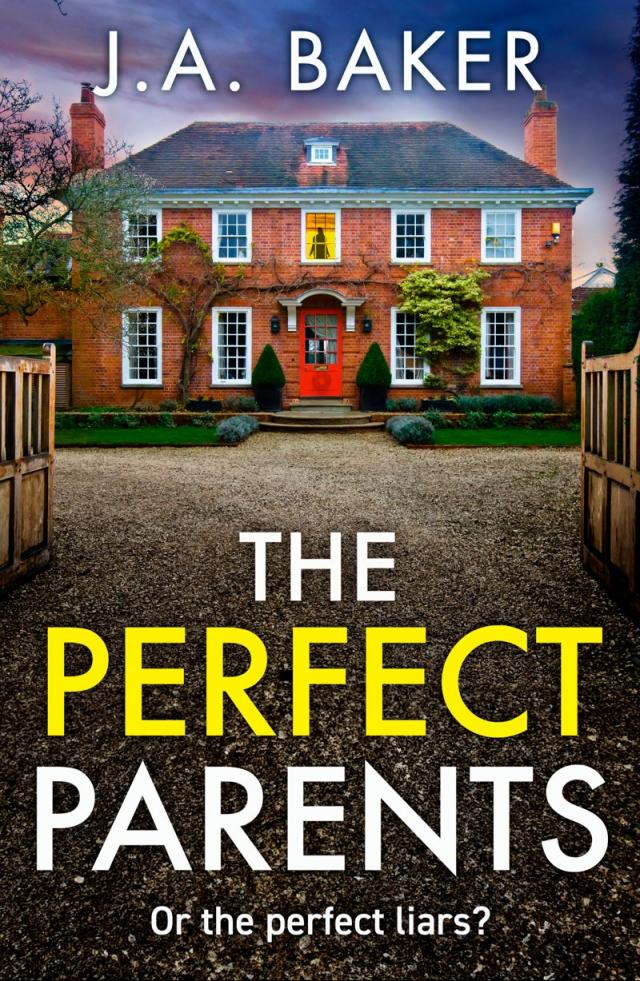


THE PERFECT PARENTS
J. A. BAKER
For Ruth P. Such a wonderful lady and philanthropist who enriched the lives of so many local children, including me. Your name and legacy will always live on. You were nothing like the characters in this book which is an absolute blessing.
Children begin by loving their parents; after a time, they judge them; rarely, if ever, do they forgive them.
OSCAR WILDE
Parents wonder why the streams are bitter, when they themselves have poisoned the fountain.
JOHN LOCKE
CONTENTS
Prologue
Chapter 1
Chapter 2
Chapter 3
Chapter 4
Chapter 5
Chapter 6
Chapter 7
Chapter 8
Chapter 9
Chapter 10
Chapter 11
Chapter 12
Chapter 13
Chapter 14
Chapter 15
Chapter 16
Chapter 17
Chapter 18
Chapter 19
Chapter 20
Chapter 21
Chapter 22
Chapter 23
Chapter 24
Chapter 25
Chapter 26
Chapter 27
Chapter 28
Chapter 29
Chapter 30
Chapter 31
Chapter 32
Chapter 33
Chapter 34
Chapter 35
Chapter 36
Chapter 37
Chapter 38
Chapter 39
Chapter 40
Chapter 41
Chapter 42
Chapter 43
Chapter 44
Chapter 45
Chapter 46
Chapter 47
Chapter 48
More from J. A. Baker
Acknowledgements
About the Author
Also by J. A. Baker
The Murder List
About Boldwood Books
PROLOGUE
BEFORE
Everything was wrong. Messed up and out of kilter. It wasn’t meant to turn out like this. She had made a mistake. A bad one. The worst. She had thought that he cared for her, that they had something special, but that had been a grave error of judgement on her part. The worst error she would ever make. And now she was dying. She could tell by the blood – so much of it. A thick, crimson smear on the floor, spreading and pooling as it seeped from her head. The meaty smell of it filling her nostrils. She gagged at the stench, her fingers covering her mouth to stem the rise of vomit that threatened to spill from her, rushing up her gullet and burning her throat like molten lava.
The wound was bad. She didn’t have to touch it to feel how damaged she was. How broken she was, both inside and out. The sickness and wooziness told her everything she needed to know. The way her thoughts were fogged up, how the floor tilted and swayed beneath her; that was enough. She visualised a gaping hole at the back of her skull. She was in pieces, a wreck of a thing. And now she was going to bleed to death here on his bedroom floor. All because of that one terrible, terrible mistake. The mistake of thinking that he loved her, that they had a future together and she was more than just a passing fancy. A mere dalliance.
There wasn’t any point in trying to move. Her body was leaden, her veins slowly emptying. She didn’t have much time left. Thoughts of her family filled her mind: warm, halcyon days, picnics on the lawn, her mother’s loving embrace, her father’s laughter. And her brother. Her wonderful, caring brother. If she could move, get out of this place, she would be able to see them again, hear their sweet voices, listen to the honeyed sound of her name being called. She would once again be able to smell the sweet scent of the flowers in their garden and stare in wonder at the ivy that slowly snaked its way up the side of the house and the pale-pink peonies that sat in clusters along the wide borders.
Suddenly imbued with a need to escape, a deep longing to see her family once more, she tried to slither along the floor, dragging herself out of the pool of sticky, foul-smelling blood. If she could inch along just a little more, slide under the bed and wait a while, then perhaps she stood a chance, but no matter how much effort she put in, her limbs refused to work as they should, her body inert and wooden. Even breathing was a monumental effort.
So she remained still, storing up what little energy she had left and concentrating only on the next few seconds, on surviving them. That was all it would take to escape this place, to get out of this house and get help. Just a few vital seconds.
Then, as if her prayers had been answered, the pain in her head began to ease. She let out a small gasp, tears threatening to fall. Perhaps she was going to be okay after all. Her arms and legs felt lighter, full of air. She was made of silk, everything fluid and effortless. Except her eyes. Leaden, they drooped, as heavy as stone, gravity forcing them downwards. Sleep, that was the answer. She would take a short nap, restore some strength into her ailing body, gather her thoughts and then rise, and flee this godforsaken place forever.
It only took a second or two for her to fall into the deepest of slumbers. One from which she would never wake…
1
THE PARENTS
He takes off his jacket and shoes and lays them on the floor next to where he is standing. She does the same, watching him, mimicking his movements. He has no idea why they’re removing items of clothing. It’s a pointless task. Once they take those few steps forward, make that leap into the darkness of the night and sink below the surface of the water, it won’t matter what they’re wearing. He visited the river earlier in the day before the sun made its sluggish descent below the line of hills, and could see how strong the current was. How perilous it was. It’s fast down there. And deep. Weeks of rain has turned the river into a dangerous deluge. Still, leaving items of clothing behind is a sign. It shows everyone they’ve actually done it, that they have taken that jump and left their troubles far behind them. If their bodies aren’t found, their garments will be there as evidence. He doesn’t want to think about the aftermath: their bloated carcasses, their grey, distorted feature as their bodies get hauled out of the water. He doesn’t want to consider his lack of control after it’s all over. That was always his thing – being in charge. But it couldn’t last forever. Nothing ever does. Better to end it now while he is ahead.
It’s dark out there. He stares ahead, squinting into the night, wishing it hadn’t come to this. And yet it has, and no matter how hard he tries, he can’t see any other way out of it. They’ve made the decision. A macabre pact. There’s no turning back, no route back to how things used to be. It’s just the two of them, locked together for all eternity. Whether that’s a comfort or an affliction is up for debate.
The breeze picks up, gathering in strength: a strong squall that pushes at their backs. ‘Come on,’ he says, his voice just loud enough to be heard above the rush of the river and the howling of the wind that whips at their bodies. ‘It’s time.’
She doesn’t reply. He takes her hand but she snatches it away and turns to look at him, the moon silvering her features, accentuating every contour and crease, her once smooth, unblemished skin now an atlas of laughter and worry lines. Life has done that to her. To them. He didn’t want it to end like this but at least it will save everybody from having to endure what would have come next had they not decided to take this unorthodox step. Sometimes, life takes a sharp turn, catching everyone by surprise, and people have to adapt and accept what comes next.
‘I’m ready,’ he says, watching her closely. She stares at him and nods, her eyes dark, her mouth a thin, tight line. God, he loved her. They loved each other. That was before. Before it all went wrong and their world began to disintegrate, crumbling away to nothing. She blames him, and perhaps she’s right to do so. He made mistakes. Many of them. But in the end, it was her mistake, her refusal to do the right thing, that pushed them into the darkest of corners with no way out. This – the cold, raging water – is the only thing left for them. The only escape they have from the brutal truth of their damaged lives. They used to be somebody, the pair of them together, their names spoken with love and reverence. In time, their deaths will be forgotten. People will move on. This time next year, they will be nobody. A pair of forgotten lost souls. Probably better that way. Better to be forgotten than talked about with hostility and bitterness.
She shows no emotion, her eyes narrowed against the howling gusts, her face expressionless as they both climb the metal barrier, their legs dangling over the edge. Is she nervous? He can’t tell. She was silent on the journey here, his questions and inane talk met with blank stares. Hardly surprising given what they had been through. What they are about to do. And now they’re here, she is still silent. Distant and impassive. Life and their actions and the decisions they made have pushed them apart. At least now, they will do this thing as one. Divided for a period of time, but together at the end. That thought buoys him up, driving away the fears that have begun to niggle at him, small threads of anxiety burrowing beneath his skin. Fear is a hindrance, a thing to be banished. It’s an alien experience for him and an unwelcome one at that. Confidence had always come easily to him. It’s suddenly vanished when he needs it the most, leaving him feeling lost and bewildered. He clings onto the handrail and closes his eyes.
Behind them, all is quiet. Hardly any traffic. It’s the early hours, everybody at home tucked up safe and warm i
n their beds while they’re both out here facing the storm, perched high above a fast-flowing river, ready to do what needs to be done. Brave. That’s what they are. That’s how he wants them to be remembered: as a brave couple who did this because it was the right thing to do. Not as people who made a terrible mistake. Not as a man who led a debauched existence or a woman who tried to stop him. People don’t speak ill of the dead, do they? He hopes not. He hopes that their secrets will be buried with them. As they should be.
‘I’m going to count to three. Then we’re going to do it, okay?’
He opens his eyes and watches her. She nods, refusing to look at him, still refusing to speak. He gets that. She’s upset and angry and probably very frightened. She has every right to be. This is not normal. What they are about to do is absurd and terrifying and utterly abnormal. It isn’t how they wanted their future to be. But it’s here now. No turning around.
The metal grid of the barrier is cold to the touch, his fingers curled around its icy surface. He stares down and swallows hard, listening to the roar of the dark water beneath. She does the same.
‘One, two, three…’
He removes his fingers from the metal and touches her shoulder, slowly pushing the top half of her body forwards, then lowers his hand until his fingers are firmly pressed into the small of her back. She flinches but he doesn’t move away. There isn’t anywhere for her to go. Besides, they need to do this. She knows it. It’s what they agreed. He gives her a firm push before letting himself go, the wind buffeting his body, the feeling of weightlessness a thing to behold. His shuts his eyes. He doesn’t need to see the raging river beneath. He doesn’t need to see the frothing, foaming current and the endless depths of the freezing water. He knows what comes next, is ready to embrace it, and instead prepares himself, holding his breath, saying a few words to a God he doesn’t believe in as he waits for that wave of iciness to swallow him.
It’s like a sharp pain, a knife slicing across his abdomen, when he does hit the water, the small rocks tucked into his pockets dragging him lower and lower. And the cold, it’s all-encompassing, slowing his movements, muddying his thinking. He takes a sudden gulp, his chest convulsing, and then counts to three, stars bursting behind his eyes as he waits for death to take him.
2
FLO
The church is full. Packed to the rafters. So many people. So many friends and neighbours and hangers-on, and then there are the ghouls who have come along for the ride. I suspect the guy at the back dressed in a white shirt and ill-fitting trousers is from the press. I don’t recognise him. He’ll be after a story, a snippet of information that he can turn into something newsworthy. My parents were the closest thing this town had to landed gentry. Except they weren’t. Landed gentry, that is. We lived in a very big house, which although large, isn’t quite as grand as some of the more salubrious stately homes dotted around North Yorkshire. It’s a six-bedroomed, Palladian-style structure that was built in 1720 and rumour has it that my great-great-great-grandfather won it in a game of brag. I don’t suppose we will ever know the truth of that particular story, especially now that both of my parents are dead. Or presumed dead. My father is in that coffin, that much I do know as I was the one who identified him, the make-up applied by the mortician doing little to disguise his grey pallor, but my mother’s body has never been recovered. She’s probably halfway out to sea by now, the thought of which makes me feel quite ill. I suppress a shiver, pulling up my collar against the chill of the badly heated church, and stare down at the pamphlet on my lap.
In Loving Memory of Jackson & Lydia Hemsworth
Two young, smiling people stare out at me, their faces full of happiness and hope. When did it disappear, that happiness? I place a kiss on my finger and rest it over my mother’s mouth, so much love and need behind the sentiment. I didn’t get to say goodbye and miss her so much. I miss that last farewell. It sits inside me like a yawning abyss. A cavity that will never be filled. She ripped a hole in my life that day when I found out. They both did. It will never leave me, the memory of that time. The sight of two police officers standing at my door, asking if they could come inside, ushering me to a chair before breaking it to me: the news that my parents had jumped to their deaths from the Newport Bridge into the freezing water below. Everything after being told that piece of news is a blur. I think I may have screamed. Or let out a guttural roar. One of the officers shuffled off into my kitchen, coming back with a glass of water, handing it to me with trained precision and compassion, that much I do recall. I think perhaps I swore and made a dash to the bathroom to be sick. Even the memory of it stirs up another visceral reaction, my stomach clenching in revulsion, as if a hundred knives are in there, slowly slicing at my innards. I swallow and push the thought away.
Behind me, somebody sniffs and clears their throat. The sound of rustling as they rummage for a handkerchief drags me back to the present, back to a point in my life I never thought possible. Or maybe I did. Maybe my siblings and I blocked it out, the possibility of what could happen once we all left home. Things were never easy. They clearly worsened after we all moved out and got our own houses. I try to not think about it, about how much our mother had to endure in our absence.
We’ve called it a memorial service rather than a funeral even though the body of my father is lying in his coffin atop a plinth right next to where I am seated. It seemed more fitting. How could we have a funeral for one and not the other? They died together and their lives should be remembered as they were – a couple. Not separate. Even though they had tremendous differences. I shut out that thought as well. My head seems to be full of them – dark, festering memories. Sitting here at their funeral, focusing on how disparate they were, doesn’t feel right. The least we can do is to look as if we are trying to bring them together, even though the drama of them ending their lives in such an inexplicably awful way almost tore the rest of us apart.
The noise in the church lowers when the priest approaches the lectern. We should have had a humanist service. I have no idea why we chose this church. I guess it was because it’s so close by and many people thought of my parents as pillars of the community, the charitable couple who for many decades, like their parents before them, lived at Armett House, and it was expected that Ezra, Jessica and I would give them a decent send off, the sort of memorable funeral that befits such well thought of people. To some, however. Not all. My parents had a knack of helping and upsetting people in equal measure. Or at least, my father did. It was his defining feature. His forte. All Mother did was try to cancel his squalid ways by always being there, and doling out as much kindness as she could in a bid to counterbalance his challenging behaviour.
The organ begins its thunderous pitch, the notes echoing around us in a swirling, melodic roar. I inhale sharply and listen to the voices nearby as they sing ‘Amazing Grace’, our mother’s favourite hymn. We didn’t choose one of Father’s favourite hymns. I’m not even sure he had one. Our father danced to his own tune.
Ezra stands to the left of me, his eyes fixed ahead on a point beyond the pulpit. Jessica is on the other side of me. None of us sing. I think we’re beyond caring whether people think it odd and disrespectful that we don’t join in. Funerals don’t come with sets of rules. We can do or say whatever we want. We could have agreed to sing ‘Knees Up Mother Brown’ if we had wanted and nobody could have stopped us. This is our time to grieve and grieving comes in all shapes and sizes, covering a wide spectrum of emotions. If Ezra and Jessica and I want to shout and scream, then so be it, and if we prefer to stand, shoulders hunched, expressionless, then that’s perfectly acceptable as well. I think, given the circumstances, we’re all doing remarkably well to have remained upright and not be in a crumpled heap somewhere at the back of the vestry with an exasperated priest stood close by, wringing his hands in desperation as he tries to work out how best to untangle us and lead us back into the church where he can conduct a half-decent service. But I digress.