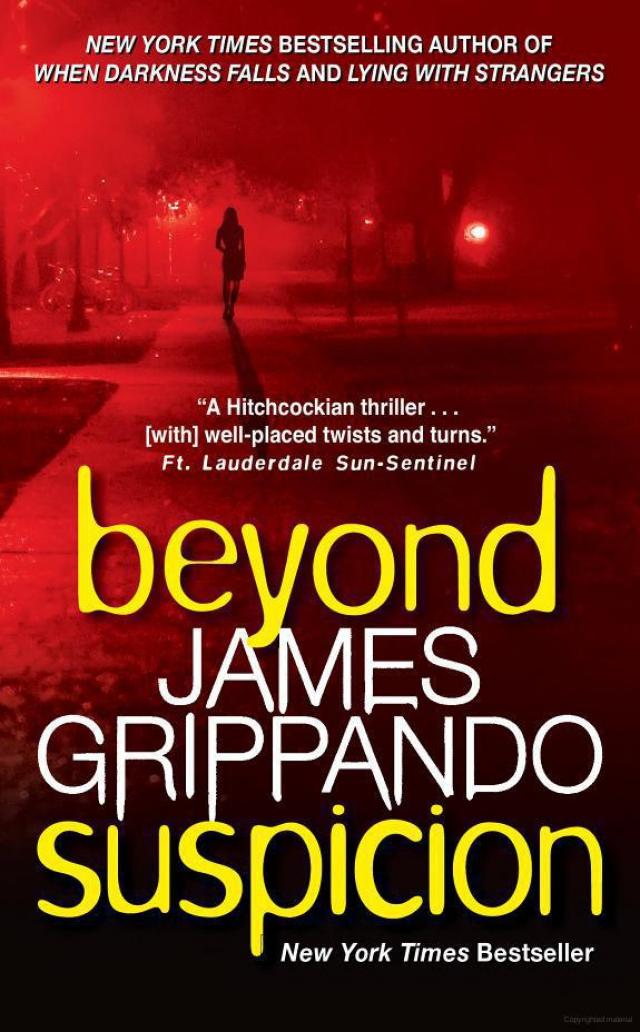
Beyond suspicion, p.15
Beyond Suspicion,
p.15


An urgent message from a medical-legal investigator didn’t usually spell “natural.”
Dr. Chastan made a quick right at the end of the hall, knocked once, and entered the investigator’s office. “You paged me?”
Eddy Johnson looked up from the papers on his desk. “It’s about the Falder case.”
“Falder?” he said, straining to recall.
“The woman you did yesterday. The one with AIDS.”
“Yeah, yeah. Her medical history painted a bleak picture. By all accounts, she was on borrowed time. Full autopsy didn’t seem necessary. I did an external and sent some tissue and blood samples to the lab.”
“Got the report right here,” Johnson said as he pulled a file out from under two empty coffee cups and the sports section.
“Something give you concern?” He smiled impishly, but realized that he was in a medical-legal investigator’s office, and answered his own question. “Obviously, something gives you concern.”
Johnson was deadpan. “Plate’s under the microscope. Have a look-see for yourself.”
Chastan maneuvered around the swollen folders on the floor and stepped up to the microscope that was resting on the countertop, right beside Gray’s Anatomy. He closed one eye, brought the other to the eyepiece, and adjusted the lens. He twisted it to the left and then to the right, but something didn’t seem quite right. He stood up, scratched his head, then gave another look. Finally, he faced Johnson and asked, “What the hell is that?”
“It’s the blood you drew from Ms. Falder.”
He blinked, confused. “It’s like nothing I’ve ever seen before.”
“That’s why I have the file,” he said with a wink. Johnson was known around the office as a strange-case specialist.
“What do you think it is?”
“I couldn’t even guess. Some kind of virus, maybe.”
“We need to send it off to the Center for Disease Control right away.”
“I already did, this morning. But there’s more to this case that troubles me.”
“Such as?”
“She came here with just over two liters of blood in her body.”
“I took only three vials.”
“That’s my point. Where are the other three and a half liters?”
“I don’t know. I looked at the photos. No blood at the scene of her death.”
“That’s right.”
“She couldn’t have donated it before she died. AIDS aside, nobody walks around with sixty percent of the blood in their body missing.”
“Right again,” said Johnson.
“Which means what? Somebody took it?”
He gave the doctor a serious look. “I think you and I are now on the same page.”
“She had multiple injection marks all over her body. I didn’t think anything of it. She had AIDS. She was getting injections almost every other day.”
“Looks like one of those holes was used to siphon out her blood.”
“That changes everything. If that much blood was drawn while she was alive, it would have sent her into cardiac arrest.”
“Which means the cause of death was anything but natural.”
“I need that body back,” said Chastan. “We need a full medical-legal autopsy. I can get on it this morning.”
“Go to it.”
He started for the door, then stopped. “Ed, why do you think someone might have wanted this woman’s blood?”
“Don’t know. But I have a feeling we’ll have a better idea when we hear back from disease control.”
“You think someone out there is into collecting blood infected with strange organisms?”
“Collecting. Or harvesting.”
With all that he’d seen over the years-dismembered bodies, charred babies-it took a lot to get a reaction from Dr. Chastan. But the thought of someone cultivating disease in human hosts was up there. “This could be one sick son of a bitch.”
“You got that right.” Johnson switched off the light on the microscope and put the blood plate back in the file. “I’ll put homicide on notice.”
“Sure,” he answered. “The sooner the better.”
28
•
Jack couldn’t get The Beatles’ “Tax Man” out of his head. It reminded him of Sam Drayton-an old, annoying song that he didn’t like in the least, but it was embedded in his brain.
After the meeting, Jack stopped to collect his thoughts at an open-air café on Miami Avenue. Just down the street from the old federal courthouse, it had been one of his favorite coffee spots during his years as a prosecutor. The smell of arroz con pollo, today’s lunch special, wafted from the noisy kitchen in back. A guy with no shirt, no shoes, and practically no teeth was selling bags of limas from a stolen shopping cart at curbside. A largely Spanish-speaking crowd sipped espresso at the stand-up counter along the sidewalk. Jack found a stool inside and ordered a café con leche, a big mug of coffee that was half milk. The woman behind the bar remembered him from his days as a prosecutor. She smiled and worked her old magic, frothing up the milk with the steamer just the way Jack liked it.
“Muchas gracias,” he said.
“You’re welcome,” she replied.
It was the same routine they’d followed for eight years, Jack’s wooden Spanish evoking a reply in English. The story of his barely Cuban life.
Jack’s meeting had gone even worse than he’d feared, but he tried to shake it off. He needed a contingency plan, but he had other things to deal with, too. Things more important. He needed to talk to Cindy.
He took his cell phone from his pocket, flipped it open, and froze.
What the hell?
He hadn’t noticed anything unusual at five A.M. when he’d called Cindy. It had been dark then, and he was too incoherent to have noticed. But now it was broad daylight. His head was no longer swirling. It was obvious to him.
The cell phone wasn’t his.
He sipped his café con leche and took a closer look. The phone looked exactly like his, a black Motorola issued by Sprint. He and Cindy used to have the exact same model, until they’d tired of getting them mixed up. He’d ended up buying Cindy a Nokia that looked completely different. It was just too easy to grab the wrong phone when you were racing out of the house in morning.
Someone, it seemed, had made the same mistake last night.
Jack flipped open the Motorola. He was familiar with all of the functions; they were the same as his own phone. He checked the message center. Nine voice mails were stored in the memory. He hit the play button. “Message one,” the recorded voice said. “Yesterday, eleven-thirty-two A.M.”
The message was in a man’s voice. The language was foreign. It sounded like a cross between Boris Yeltsin and Robin Williams in Moscow on the Hudson. Jack skipped to the next one. “Message two, yesterday, ten-twenty-one A.M.” A different voice but the same language.
The messages seemed bizarre now, just minutes after hearing that Viatical Solutions was controlled by some “criminal element” that was involved in money laundering. Until now, he’d had little recollection of his attacker’s voice, having been pounded so mercilessly. He couldn’t say the messages were in the same voice, but he was at least beginning to recall an accent that he’d been too groggy to discern last night. He skipped through the third and fourth messages, the fifth, and on and on. All nine were in the same language.
Russian.
In his mind’s eye, he saw himself walking to his car from his grandmother’s townhouse last night. A punishing blow from behind sends his cell phone flying out of his hand. In the ensuing fracas, his attacker’s cell phone is yanked from her pocket or belt clip. A final blow to his head, and Jack is out cold, leaving the rest to conjecture-perhaps his attacker searching frantically in the darkness until she finds a phone that looks just like hers.
But it wasn’t hers. It was Jack’s.
Ho-lee shit. He smiled, then chuckled out loud. It was about damn time something had cut his way. We swapped phones!
“Señora,” he said to the hostess. In his best Spanish, he asked for bread and cream cheese. It was a heart attack in the making, but Abuela had sold him on the pleasures of slathering Cuban bread with cream cheese and dunking it into his café con leche.
She handed him two long strips on wax paper. “Enjoy.”
Jack was dunking at a near-frenzied pace, his mind awhirl. When they’d talked that morning, Cindy had told him that she’d called him on his cell but got no answer. It made sense that his attacker wouldn’t have answered before five A.M. But just as soon as someone dialed his number at a decent hour, she would answer, and then she’d realize that they’d swapped phones. If she were smart, she’d cancel her cell service and erase the messages.
He dropped his bread and cream cheese, hurried to the pay phone and dialed his office voice mail. He replayed each message onto the recording, then relaxed, suddenly feeling in control. She could cancel away, but Jack would forever have her messages.
Now what? he thought as he returned to his seat.
The fact that she hadn’t canceled her service and erased the messages told him that she wasn’t onto the swap just yet. He could call the cops, but they couldn’t trace the phone until she used it. Unless she tried to use it in the same battered and confused state that Jack had found himself in earlier that morning, she’d realize that the phone wasn’t hers, and she’d pitch it in the Dumpster, for sure. This might be his last chance to call and open up a dialogue. He grasped his attacker’s phone and dialed his own number. It rang twice before connecting.
“Hello.”
His heart was in his throat. The voice on the other end of the line was one of the voices he’d heard last night-the woman’s. “Good morning. This is Jack Swyteck. Remember me?”
She didn’t answer. Jack was feeling pretty smug, imagining her shooting a confused look at the phone in her hand.
He said, “I think you have something of mine. And if you check the number on this incoming call on your Caller ID, you’ll see that I have something of yours.”
She took a moment, and Jack was certain she was checking. Finally, she said, “Well, now. Isn’t this interesting.”
“Yours is especially interesting. The messages in your voice mail, all in Russian. I don’t speak the language, but I’m sure the FBI or vice squad downtown would be happy to translate for me.”
There was a brief but tense silence on the line. “What do you want?” she asked in a low, serious tone.
“I want to talk to you.”
“We’re already talking.”
“No. Unlike you, I’m not stupid enough to transact business over nonsecure airwaves. I want to meet.”
“That would be a mistake.”
“Perfect. I’d say it’s about time I made one of my own. I’m tired of paying for everyone else’s.”
“I’m not kidding. A meeting would be a terrible mistake.”
“It would be an even bigger mistake if you stood me up. So, listen good. You know where the Metro-Dade Government Center is?”
“The tall building downtown next to the museum.”
“Right. At four o’clock go into the lobby. Right in the middle, there’s a planter with a bronze plaque in memory of a man named Armando Alejandre. Wait for me there. Or I’m going straight to the FBI, and your phone comes with me.”
“How do I know you’re not going to have me arrested if I show up?”
“Because I want to find out who’s trying to hide what really happened to Jessie Merrill. And if I have you arrested, you’re not going to tell me a thing, now are you?”
More silence. Finally, her answer came: “You sure this is what you want?”
“Yes. Oh, and one other thing.”
“What?”
“When I was a prosecutor, this was my favorite place to meet reluctant witnesses, snitches, the like. It works very well because at least a dozen security guards are always wandering around. So leave your steel-toed boots at home. If you try anything, you’ll never make it out of the building.” He hit the end button, put the phone in his pocket, and finished off his coffee.
“You like something more?” asked the woman behind the counter.
“No, gracias. Todo está perfecto.” He handed over a five-dollar bill.
“Thank you. Have nice day.”
Have nice day, he thought, smiling to himself. Once again, bad Spanish begat bad English. Why do I even try?
“Thank you, ma’am. It already is a nice day.”
29
•
Her work didn’t require a visit to the studio that morning, but Cindy went anyway. Jessie’s death had rendered her own house unlivable, and her mother’s house was feeling none-too-cozy after the raid at sunrise by federal marshals. She was running out of places to hide from the rest of the world. Not even her dreams offered any solace. The studio seemed like her only sanctuary.
Her portrait work was strictly by appointment, but she had nothing scheduled today. She’d driven into the South Miami looking forward to a solid eight hours alone, a day to herself. There was always work to do, but she wasn’t in the mood for anything challenging. She opted for organizing her office, the perfect mindless task for a woman who wasn’t sure if she was married to a cheater.
She started with the mound of mail in her in-box, which was no small assignment. She actually had four in-boxes, each created at a different stage of procrastination. There was “Current,” then “Aging,” followed by “I’ll Get to It on a Rainy Day,” and finally, “I’ll Build the Ark Before I Sort Through This Crap.” She was only a third of way through the “Aging” stack when a knock at the door interrupted her.
She double-checked, and sure enough, the sign in the window said closed. She stayed put, hoping that whoever it was would just go away. But the first knock was followed by a second, then another. She finally got up and was about to say There’s no one here, but then she recognized the face on the other side of the glass. It was Jack’s abuela. She unlocked the door and let her inside. The little bell on the door startled the old woman as she entered.
“Ooh. Angel got his wings.”
Cindy smiled as she recalled that it was two years ago, Christmas, when Abuela had come over from Cuba, and her first lesson in English was the movie It’s a Wonderful Life-over and over again.
“How are you?” said Cindy as they embraced warmly.
“Bueno. Y tú?” she answered in Spanish, though Cindy’s ear for the language was even worse than Jack’s.
“Fine. Come in, please.”
Abuela followed her zigzag path through canvas backdrops and lighting equipment, stopping at a small and cramped office area. Cindy cleared the stacks of old photo-proofs from a chair and offered her a seat. She would have offered coffee, but Abuela had tasted hers before, and it had just about sent her back to Havana.
“I hope you not too busy,” said Abuela.
“No, not at all. What brings you here?”
“Well, sorry, but I not here to get picture taken.”
“Oh, what a pity.”
She smiled, then turned serious. “You know why I here.”
Cindy lowered her eyes. “Abuela, I love you, but this is between your grandson and me.”
“Claro. But this just take a minute.” She opened her purse and removed a stack of opened envelopes.
“What are those?” asked Cindy.
“Letters. From Jack. He wrote these when I live in Cuba.”
“To you?”
“Sí. This is before I come to Miami.”
“Jack wrote all those?”
“Sí, sí. Is how Jack and I got to know each other. Is also how I got to know you.”
“Me?”
Abuela paused as if to catch her breath, then continued in a voice that quaked. “These letters. They are all about you.”
Cindy again checked the size of the stack. Her heart swelled, then ached. “Abuela, I can’t-”
“Por favor. I want you to see. My Jack-our Jack-maybe is no so good at saying things in words. If his mother lived, things would be different. She was loving person. Give love, receive love. But Jack, as un niño, no have her love. In his home, love was inside. Comprendes?”
“Yes. I think I understand.”
“If you are Swyteck, sometimes only when heart is broken can love get out.”
“That I do understand.”
Abuela sifted through the stack of letters in her lap, her hands shaking with emotion. “This is mi favorito. Is when he asked you to marry. And this one, too, is very good. About your wedding, with pictures.”
“Abuela, please. These letters were written for you, not me.”
She laid the stack aside, clutching one to her bosom. “I wouldn’t ask you to read them. I just want you to know they exist.”
“Thank you.”
“But there is one you must see. Es especial.” She fumbled for her reading glasses and dug the letter from the last envelope. “Is the oldest. Very different from others. See the top? Jack wrote the time. Two-thirty A.M. What make a man write a letter at this crazy hour?”
Cindy felt that this should stop, but she couldn’t bring herself to say it. She just listened.
Abuela read slowly, trying hard to make her English perfect, though her accent was still thick. “’Dear Abuela. It’s late, and I’m tired, so I will keep this short and sweet. Do you remember the letter you wrote me last June? It would have been your fiftieth wedding anniversary, and you told me the story of how you and Abuelo met. It was a picnic, and a friend introduced you to her older brother. He ended up walking you home. You said you didn’t know how you knew it, but by the time you got home you knew he was the one.
“’I went back and re-read that letter tonight. I don’t know why. I just did. That’s not true. I do know why. I had a date tonight. Cindy is her name. Cindy Paige. I don’t really know her that well, but I have that same feeling you described in your letter. It’s weird, Abuela. But I think she’s the one.’”