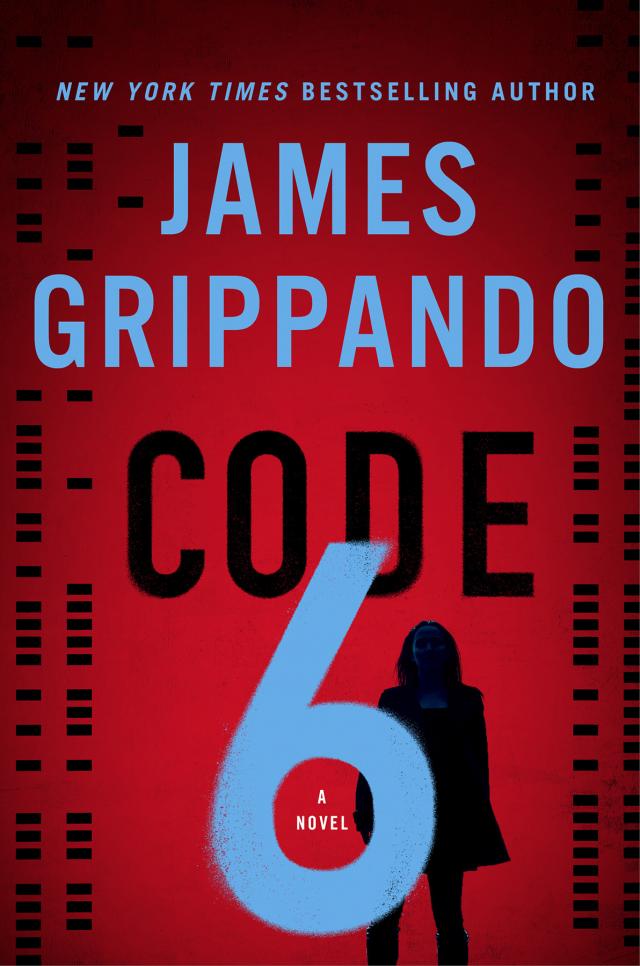
Code 6, p.15
Code 6,
p.15


Finally, the car stopped. An amber glow appeared in the rusted-out hole, which moments later turned red. It confused Patrick at first, and then he almost laughed at the realization: even ex-FARC bandits slowed for yellow and stopped for red to avoid getting pulled over by police when they had a valuable hostage in the trunk.
Red turned to green, and the car lurched forward. Patrick was regaining his bearings. He heard the sound of other vehicles around him, the blast of a car horn in the distance, the rumble of a passing motorcycle. They were in a city. Based on the brief lesson in Colombian geography that Olga, the trainee, had given him in the mountains, he made his best guess:
Medellín, if they’d taken him north. Cali, if they’d gone south.
Patrick heard the car doors open and slam shut. He prepared himself for the opening of the trunk lid. He’d run through the options in his head a dozen times. If he heard no voices and had reason to believe the man popping the trunk was alone, he would attack. If there was talking—clearly more than one of them—he’d obey and take his shot later.
He heard the men talking in Spanish. There were at least three of them.
Patrick stuffed his “weapon” inside his pants. Rifling through the tool box in the pitch darkness hadn’t been easy, but he’d found a suitable tool. It was made of iron and had a claw on one end for removing nails, but it wasn’t a hammer, and it was too small to be a crowbar. It was a whatchamacallit.
The trunk popped open, and the laser-like glare of a flashlight immediately blinded him. His Plan A—attack—would have failed miserably.
“Out,” one of the men said in English.
Patrick complied, trying not to bang the metal whatchamacallit on the bumper as he climbed out of the trunk. One of the men slipped a blindfold over his eyes and tied it tightly behind his head. Another man grabbed him by the elbow and led him forward.
“Where are we going?” asked Patrick.
“Hostage Hotel,” said the man who spoke English, and he quickly translated for the amusement of his friends. They laughed, as if terrorizing the gringo was one big joke.
Patrick put one foot in front of the other, keeping pace with his captors. His blindfold was so tight that it had risen up on the ridge of his nose, giving him a narrow line of sight beneath the hem. As best he could tell, they were in an alley, which accounted for the lingering odor, a foul combination of raw sewage and uncollected garbage. The Hostage Hotel may have been a joke, but not entirely. They were at the rear entrance to an apartment building of some sort; it could well have been an old hotel. Patrick let his head roll back slightly, not too much, but just enough to peer up from beneath the blindfold and see all the way up to the third-story floor. The hotel had windows, but they were boarded over with graffiti-covered plywood.
One of the men shoved Patrick’s head forward, forcing his chin to his chest. A sudden glow from somewhere revealed that they were standing outside a metal door. The light was from a cellphone, and Patrick overheard and understood enough to know what the phone conversation was about.
Delivery.
“Delivery of what?” Patrick asked in decent Spanish.
“Shut up, gringo. This is where we find out if you are worth more alive or dead.”
The metal door opened, and someone from behind shoved Patrick inside. He stumbled over the threshold but caught his balance. He heard more Spanish—too many conversations at once for him to discern what was being said, but he’d already heard enough to realize the danger he was in. His value “dead” had been vaguely established by Javier’s roadside offer that morning: Kill him. I’ll make it well worth your while. His value alive would surely be measured in ransom.
“I can pay,” said Patrick, though truthfully he had no idea how much money was in his bank account.
“Silencio!”
That voice didn’t belong to any of the men who’d brought him from the mountains. The “hotel” manager, Patrick presumed, or maybe just the bellboy.
They led him to the end of the hallway, opened the door to the last room on the left, and forced him into a chair. One of the men cuffed his hands to the back of the chair and then, from the footfalls on the floor, it sounded like several people left the room. But he was not alone.
“Don’t move,” he was told, and the voice was a woman’s.
She tugged at his blindfold and removed it. Patrick blinked a few times, and things came into focus. She was wearing a blue baseball cap that read Los Dodgers, which covered everything above her eyes, and a hospital mask that hid everything below, the combined effect of which was to keep the hostage from being able to identify her.
“Hold still and look straight at the wall,” she said.
With a handheld camera, she scanned his face up and down, left to right, right to left.
“Turn your head to the left,” she said, and she scanned his profile, first the right side and then, with another turn of his head, the left. She laid the camera aside, and her fingers danced across the keyboard.
Patrick couldn’t contain his fascination with the sophistication of this group of mountain bandits and their Hostage Hotel. He had expected an interrogation—name, employer, relatives—but he had no identification on him, and he could have told her his name was Mickey Mouse. His captors had a workaround for lying hostages.
“Are you using Façade?” he asked, meaning the face-recognition software.
She ignored him, hit enter, and waited. Patrick couldn’t see the LCD screen from where he was sitting, but his captor and her computer software had converted his face into the technological equivalent of a Google search on steroids. She typed in a few key words to narrow the results, and in short order the internet delivered the kind of personal information that the FARC kidnappers of old could only beat out of their hostages.
“You work for Buck Technologies in Virginia?” she asked, though it wasn’t really a question.
“No, that’s actually Lucas Hedges. My movie-star good looks must have thrown off your software.”
“Bad jokes can get a person killed here, Mr. Patrick Battle.”
He took her point, but his disavowal of any connection to Buck was anything but a joke. It was his employer who’d sent him on this adventure in the Andes in the first place, and it still wasn’t clear to him who was giving orders to Javier, the knife-wielding, cliff-hanging psychopath.
She switched off the LCD screen. Her work was apparently finished, which made Patrick’s heart race. Her job, after all, was to decide whether he was worth more alive or dead.
“What’s the verdict?” asked Patrick.
“I’m sure a company like Buck Technologies will pay mucho dinero for your return.”
“So there’s room for me here?”
“Sí. There’s room.”
He was tempted to request a pool view, but he’d already been warned once. “What now?”
She went to the door, opened it, and called down the hallway for the bellboy or whoever it was who’d delivered Patrick to her. Patrick kept an eye on the doorway as she crossed the room, collected his blindfold, and refolded it afresh. She was doing a better job than the punks who’d blindfolded him outside, and he held little hope that she would leave any openings. Patrick cut one last glance toward the doorway, and he did a double take.
“Don’t move,” she said, annoyed.
His reflex-like reaction had made her drop the blindfold. As she refolded it, he peered more deeply into the dimly lit hallway. His eyes had not deceived him.
It was Olga.
Patrick’s eyes widened and, before he could show any further reaction, Olga raised her index finger to her lips, shushing him, as if to tell him that she wasn’t really one of them and that he was going to get them both killed if he didn’t play it cool.
The cloth slipped over his eyes and all went dark, not a slit of light above or below the blindfold made perfect.
Chapter 27
Wednesday was Kate’s Groundhog Day, a repeat of Tuesday morning. At 8:00 a.m. she was at Lover’s Lane, the pathway to Dumbarton Oaks Park, just as Noah had predicted.
“I see you read every word of Justice Roberts’ opinion,” said Noah.
At the sound of his voice she turned and said, “The operative wording being ‘naïveté.’”
“Walk with me,” he said.
They continued down the path, toward a stand of towering sycamore trees as old as the republic. It was possible that one or two leaves had taken on a hint more fall color overnight, but it was not enough to counter the sense of déjà vu. Kate picked up where they’d left off the day before.
“I’m sure it would get me nowhere to ask what the U.S. attorney sees as the connection between Justice Roberts’ opinion and Project Naïveté.”
“A total nonstarter,” said Noah.
A squirrel scurried across the path in front of them. Another chased after it, screeching, as if the faster one were making off with the last nut in the forest. Noah kept talking.
“Let me guess what you did after we spoke yesterday. You got yourself a Mesco Blend—one Splenda, a little cream—sat down with your pink highlighter, and started reading.”
Kate didn’t see the need to bring in Sean and her meeting with Irving Bass. “Pretty close. But I haven’t used pink since I was an undergraduate.”
“Somewhere around the penultimate page of the opinion, you started cursing me again for killing trees, thinking this has absolutely nothing to do with Buck Technologies. There’s an interesting historical triangle involving your play, the opinion, and the first use of technology by the Census Bureau. But not a damn thing to do with your father’s company.”
Kate didn’t answer, still choosing to leave Sean out of it.
“Then you got to the last page,” said Noah, “and Justice Roberts’ turn of a phrase.”
“Justice Roberts was actually quoting forty-year-old language from Judge Friendly, who, by the way, has one of my favorite names ever for a judge, second only to Justice Story.”
“Let’s keep our eye on the ball here, all right?”
“Sorry,” said Kate.
He was smiling, but it faded. “Then you went to see you father.”
“You get zero points for that guess. Of course I went to him.”
“And he told you there’s nothing illegal about mining and collecting data on citizenship.”
He knew her father well—perhaps even better than she’d thought. “I’m not going to tell you what my father said.”
“No need. The truth is, Kate, the government already has ways to collect citizenship data. Much better ways than a census.”
She held firm on her position, offering him nothing her father had told her about the efficacy of existing data.
“But let me cut to the quick of it,” said Noah. “Do you think Patrick Battle went missing over the collection of citizenship data?”
She stopped. “I wasn’t aware he went missing over anything. All I know is that he’s missing.”
“Forget I said that.”
“Forget, hell. Patrick is like a little brother to me. You can’t make a statement like that and expect me to skip over it. Are you saying he ran away? Or are you saying somebody”—she swallowed hard, not even wanting to think it, let alone say it—“that somebody made him disappear?”
“I’m not saying either of those things. Not yet. But here’s the way I see it. The problem for guys like Patrick is that this project has morphed into something very different since the company named it Project Naïveté.”
“Why is that a problem for Patrick? Why is that a problem for anyone? Some of the best inventions in the world are the result of scrapping the original concept and going back to square one.”
“Kate, you’re asking me questions I can’t answer. The bottom line is that it’s really important that I talk to someone knowledgeable about Project Naïveté.”
“I wasn’t lying to you yesterday,” she said. “If you’re looking for information about Project Naïveté, I’m not your source.”
“I know you’re not. Patrick Battle is. That’s why he was so high on my list of people I wanted to interview.”
“I have no idea where Patrick is, if that’s what you’re asking me. None.”
“My question is a little different: If you were in my shoes and couldn’t talk to Patrick, who would you talk to?”
“Honestly, I have no idea.”
“Your answer doesn’t surprise me. There’s a pretty thick emotional barrier between you and the obvious answer.”
“You mean my father?”
“Nope.”
“Then who?”
He looked away, then back. “Sandra Levy.”
The name took Kate’s breath away. “If you’re talking to me to get to her, you’re really barking up the wrong tree.”
“I think you’re the only shot I’ve got.”
“Sandra Levy hasn’t said a word to anyone since the FBI arrested her and took her out of the building in handcuffs. I’ve never spoken to her.”
“At the very least, she owed your mother an apology. Your mother is gone. Now she owes it to you. With a full explanation.”
“An explanation of what?”
He was clearly struggling, and it was Kate’s sense that he wished he could say more. But she was no mind reader.
“Kate, if this conversation is going to continue, I need a firm commitment from you up front.”
“What kind of commitment?”
“That you will speak to Sandra Levy. I can’t lay my cards on the table only to have you say you’ll think about it or you need to check with your father. I have to know now: Are you in or out?”
Kate drew a deep breath. “I can’t believe you’re going to make me visit that woman in prison.”
“Is that a yes?”
Those two crazy squirrels were back on the jogging path, their chase resuming but the roles reversed, the pursuer having become the pursued.
“Noah, I’m saying yes because you’ve led me to believe that Patrick is in serious danger and this will help him. If it turns out you’re playing me—if you’re stringing me along just to get something the U.S. attorney needs from Sandra Levy—I will never speak to you again. Do we understand each other?”
Their eyes locked, and Kate was determined not to be the first to blink. Finally, Noah nodded. He started walking slowly down the path. Kate went with him.
For the next ten minutes, Noah did all the talking. Kate just listened.
Chapter 28
At noon Christian Gamble and his bodyguard climbed out of the limousine near Ford’s Theatre. Across the street was Lincoln’s Waffle Shop, not far from Abe’s Café and Gifts, which was around the block from Petersen House, where the sixteenth president expired from his gunshot wound. A busload of tourists, oblivious to the irony, were eagerly picking over the colorful “I ♥ DC” T-shirts on sale—“Two-4-One”—on the sidewalk racks outside the historic house. To the west, in Abe’s day, would have been a clear view down a muddy trail all the way to the White House grounds. Gamble walked east, toward the FBI headquarters, which he hadn’t visited since the Sandra Levy investigation. Right around the corner, he entered the restaurant he’d chosen for his lunch meeting with Irving Bass.
“Have a seat at the bar,” he told his bodyguard, and the maître d’ led Gamble to the only open table, where the director was waiting for him.
Gamble had patronized fine restaurants all over the world, but Succotash on F Street was the only place to get soulful Southern dishes reinvented by a Korean American chef. His first visit had been with Kate, years earlier, when he’d taken her to see A Raisin in the Sun at Ford’s Theatre. She couldn’t stop talking about the play, and while he would have sooner seen her as president of the United States than a playwright, there he was, having lunch with her director.
“Another bourbon on the rocks,” said Bass the moment Gamble was seated.
The maître d’ took his empty glass. “I’ll let your waiter know.”
The alcohol confused Gamble. “Kate said you were in rehab. You’re drinking again?”
“Oh, I don’t drink. I just want to smell it.”
“Yeah? How did that last one smell?”
Bass smiled in a way that said, “Touché.”
The waiter brought menus, told them about the fried chicken and waffles special, and left them alone. Bass seemed eager for the smell of his second bourbon.
“Thank you for meeting on short notice,” said Gamble.
“No problem. I’m giving your daughter the opportunity of a lifetime, so I guess I’m entitled to a free lunch.”
It was probably a joke, but Gamble couldn’t tell for sure.
“Kate has no clue about this meeting. I’d like to keep it that way.”
A server set up Bass’s glass of bourbon and disappeared. “Sure. As long as she hears nothing of how I enjoy certain olfactory pleasures with my Southern cuisine.”
Bass opened his menu. Gamble left his on the table.
“What’s your story, Mr. Bass?”
“Excuse me?”
Gamble had said some unflattering things about the director on the squash court with Kate. Those were hunches, not facts. But if he was lying to Kate about his drinking, it was a hunch worth testing.
“What if someone were to say that you’re stringing Kate along, and that it won’t be long before you come calling on her father to write a check in order to present her play? How would you respond?”
Bass laid his menu aside. “How cynical of you.”
“Is it?”
“Your daughter is writing a very important play. To be clear, the idea was completely mine, not hers. Do you even know what it’s about?”
“I understand it has something to do with the census.”
“It’s the story of Thomas J. Watson, Sr., and the Nazis’ use of the old IBM punch-card technology for the systematic extermination of Jews.”
“You mean misuse. I hardly think the founder of what was then the most powerful tech company in the world was knowingly supporting genocide.”