

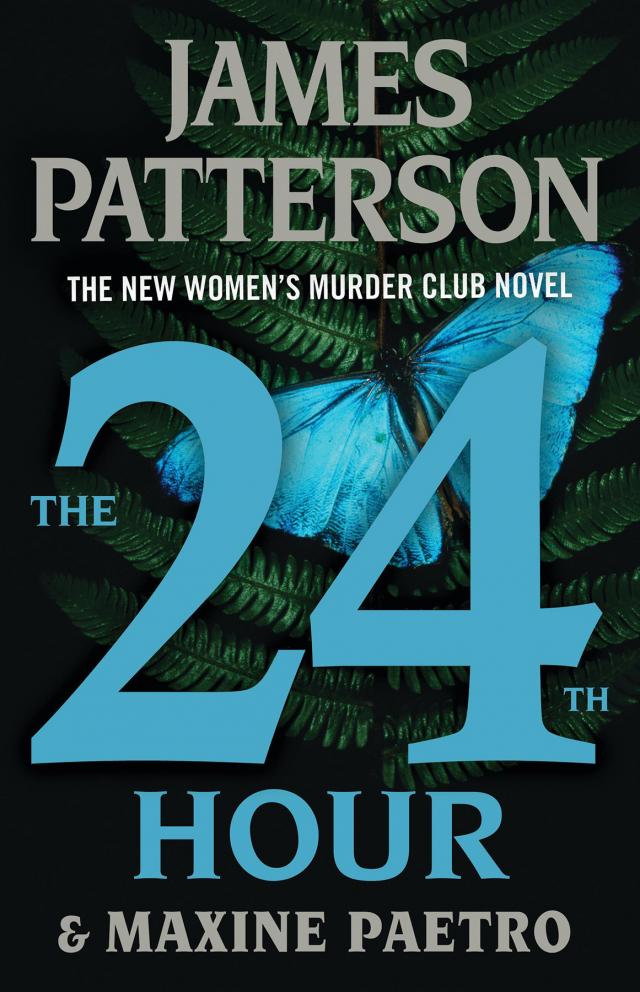
The 24th hour, p.3
The 24th Hour,
p.3


“Noooo. I remember going up to the ladies’ room. I remember being on the floor. I remember hurting. But I don’t remember talking with Sergeant Boxer.”
“So, it was a different personality—Loretta—who was attacked by Cates? Where was the personality called Olivia? Did either one of them tell Cates that you have dissociative identity disorder?”
“I don’t know. Do you understand, if an alter comes out, she is protecting me? I don’t know what happened when Olivia or Loretta were fronting. But I knew from the pain that I had been raped and beaten. And that had happened. Do you understand that?”
CHAPTER 6
THE ATMOSPHERE IN the room was still quivering in the wake of Mary Elena’s anguished protest. Yuki tried to signal Nick Gaines to take the intensity down, but he didn’t see her. His eyes were fixed on Mary Elena and he kept talking at her.
“Schneider is going to try to trip you up, Mary Elena. You said, ‘He raped us.’ Forgive me for saying so, but while your body bore the physical evidence of rape, you don’t remember a thing about that attack, who said what to whom, if another person was present, if that person was a facet of you, or even if Cates got Olivia’s okay. You don’t remember what happened in that room, isn’t that right?”
Yuki was as transfixed as Mary Elena, who stared at Gaines with her mouth hanging open. She pushed up against the back of her chair, pulled her legs up to her chest, gripped them hard with her forearms—and then blasted Gaines.
“Who are you?”
Shockingly, her voice had changed. To Yuki, she sounded like a very young girl.
Yuki said, “Mary Elena?”
Without looking at Yuki, Mary Elena shouted at Gaines. “You’re baddddd. Mama and I don’t like you.”
Gaines put out his hand to stop Yuki from interfering.
“Who are you?” he asked Mary Elena.
“I’m Lily. You know I’m Lily. Don’t talk to my mama like that.”
Yuki said, “Nick, I’ll stay with Lily.”
Gaines gave Yuki a look like I’ve got this, but Yuki said his name again, louder. He stood up and left the room, closing the door behind him.
Yuki turned back to the formerly composed woman of twenty-eight, now crouched in a desk chair, panting like a frightened child.
“Lily, I want to help. What can I do for you?”
“Go away. Leave me alone.”
“Okay. I’ll be right outside the door.”
Lily didn’t answer. Yuki didn’t want to leave Lily alone, but witnessing Mary Elena assume a new persona while sitting across from her was unnerving. She needed a plan.
Hesitating, Yuki left Lily in her office and closed the door. She startled when she saw Gaines standing only feet away.
He said, “That wasn’t pretty, but we know a lot more about Mary Elena now, don’t we?”
“Yep. If she freaks on the stand…”
“Our case flames out of control.”
CHAPTER 7
YUKI’S MOTHER HAD once said, “Yuki-eh, you have three trains of thought at same time.”
It was true enough. At the moment, those three trains were on parallel tracks, converging on a one-track tunnel. Yuki told Gaines she’d get back to him in a while, then slid into an empty cubicle. Phone in hand, she took her best shot. She called Mary Elena’s psychiatrist, Dr. Stuart Aronson.
By the fourth unanswered ring, Yuki prepared herself for a useless, leave-a-message recording, but before that happened, a masculine voice growled in her ear, “Stu Aronson.”
Yuki said, “Doctor, this is ADA Yuki Castellano—”
“I’ve got a patient in the waiting room,” Dr. Aronson said. “I’ll call you back—”
“I’ve got an emergency here and need direction,” Yuki cut him off.
“Make it fast,” said the doctor.
Yuki explained Mary Elena’s immediate condition quickly and finished with “What should I do?”
“Put her on the phone. Has to be quick,” Dr. Aronson said. “I can only give her five, six minutes.”
Mary Elena was still curled up in the side chair, but she looked more relaxed. Her eyes were closed and one foot touched the floor.
Yuki said, “Mary Elena?”
She opened her eyes. “Did I fall asleep?”
“Yes and that’s okay. But I was worried about you so I called Dr. Aronson—”
“You called my shrink?”
“Yep. He’s here on my phone right now.”
Mary Elena unfolded her limbs and sat up in the chair.
“But why? He’s very busy.”
“He’s free now for a few minutes.”
Mary Elena said, “I’ve never spoken with him on the phone before. Why did you call him? I’m okay.”
Yuki said, “If I say you were speaking as Lily, do you know who I mean?”
“Oh. Lily. She thinks of me as her mother. Did something happen?”
“I think so. I want to be sure you can go through this trial without harm. I’m on your side entirely, and so is Nick. Do you remember Nick?”
“I don’t think so.”
“Please take the phone. Speak with your doctor.”
“And say what?”
Yuki said into the phone, “Dr. Aronson, Mary Elena is here. Please ask her to hand you off to me before you go. I would appreciate it.”
She passed her phone to Mary Elena, and leaving her office, Yuki went back to the empty cubicle. Gaines peered over the top of the partition, and said, “Hey.”
Yuki looked up and said, “She’s talking to Dr. Aronson. She doesn’t remember you, so probably best if you…”
“Got it.”
Gaines was back in his office when Mary Elena appeared and said to Yuki, “Dr. Aronson didn’t have time to talk with you, but he says he sent you something by email. A video. I told him it was okay.”
After Yuki had walked Mary Elena to the elevator, she stopped off at Gaines’s office, saying, “I need you, Nicky. We’ve got work to do.”
Yuki woke her computer and clicked on the email from Dr. Aronson.
“It’s a therapy session,” Yuki said as Gaines pulled up a chair. “Dated a month ago.”
“Aronson sent this to you?”
“With Mary Elena’s permission.”
Yuki opened the attachment and a video began playing. Dr. Stuart Aronson sat in an easy chair. Mary Elena was in a chair across from him, talking.
Yuki and Gaines watched as the session streamed.
CHAPTER 8
CONKLIN’S FOOT WAS heavy on the gas as we sped to the scene of a fatality on Pacific Avenue. The victim had been identified as James Fricke III: well-known billionaire, middleweight philanthropist, sole owner of a Belgian soccer team, and a narcissistic SOB. The man in his early sixties was now a deceased SOB, shot in the street a block away from where his wife, former Olympic gymnast Holly Bergen Fricke, had been killed six months before.
We still had no leads in Holly Fricke’s murder investigation, and I was willing to bet that soon we’d be looking at another no-clue homicide—the kind of crime that would go unsolved for years, then become a cold case that haunted good cops and turned them into humorless drunks.
Conklin’s mood mirrored mine, but he was expressing his frustration out loud, ranting that Jamie Fricke, the most likely suspect in his wife’s death, had gotten himself killed “on purpose.” Richie’s uncharacteristic outburst shifted into overdrive when traffic suddenly stopped, boxing us in at the intersection of Franklin Street and Geary Boulevard.
My partner swore, got out of the car, and took off at a run toward the bottleneck. I stayed in place with the radio and thought about Holly Fricke. I’d been a fan. I’d cheered her on when I was in high school and she was in the Summer Olympics, picking up the gold medal in gymnastics for Team USA.
I’d followed her when she founded Spike, a women’s sports magazine, and became a familiar face on late-night talk shows. Then Holly married Jamie Fricke. He was a large man, square-faced, dark-eyed. He exuded power the way Holly radiated goodness. They’d looked happy together. And although they hadn’t had any children, babies were named after Holly and deserving high schoolers went to college on her dime.
But now we still didn’t know why Holly Fricke had been killed or by whom, though Medical Examiner Claire Washburn had told us how. Holly’s cause of death was an onslaught of .40-caliber rounds from an unregistered handgun, every shot fatally precise. Neither her new Bentley nor the jewelry she’d been wearing, estimated to be worth a low seven figures, had been recovered.
Unofficially, we’d chalked up Holly Fricke’s murder to armed robbery, but privately none of us really bought that. It was excessive. Holly had been shot in broad daylight. No witnesses. Nothing from her husband or friends. Now that Jamie had been killed the same way, I knew we’d missed all of it: means, motive, opportunity—and suspect.
On day one, Holly’s case had been assigned to senior Homicide team sergeants Cappy McNeil and Paul Chi.
Cappy is a wise old hand, a walking chronicle of murders in San Francisco over the last twenty years. His partner, Paul Chi, is as thorough and obsessively detailed an investigator as is humanly possible. It’s said he can find a hair in a haystack. Yet a thousand cop-hours spent working her homicide had yielded zip, not even a theory. If Cappy still had hair, by now he’d have torn it all out. Chi had gone dark and quiet, as though in some fathomless funk.
Conklin and I had been brought in to back up this first-class team, but all we’d been able to surmise was that Holly’s killer knew her movements, had a strategic mind, titanium nerves, and perhaps, a cloak of invisibility.
When questioned, Jamie Fricke had told us as little as possible. He didn’t like cops, which he made clear with his clipped answers and negative attitude. He’d previously been accused of sports crimes, but had skirted the law with handshake deals and payoffs. He brought in his squadron of high-priced lawyers and threatened to hire private investigators.
Somehow, Cappy and Chi had kept the PI threat at bay. But Fricke had offered a quarter of a million dollars as a reward for evidence leading to the arrest and conviction of Holly’s killer, which opened our hotline to an unending plague of useless tips.
My thoughts were derailed as horns blew behind the squad car. Conklin came back to the car and got behind the wheel, released the brake, and I called dispatch to say we would be at the crime scene in ten minutes.
I hit the switch that loosed the lights and siren.
CHAPTER 9
CONKLIN PULLED OUR car over on Steiner Street, at the intersection of Steiner Street and Pacific Avenue. The smart, well-kept homes and small businesses in this upscale neighborhood were now penned in by cruisers with flashing lights, the ME’s stolid van, and the CSU mobile with its panel doors wide-open.
“Ready?” Conklin asked me.
Ready or not, I opened my door.
Walking toward the barrier tape, I saw CSU investigators in hazmat suits pitching an evidence tent and placing halogen lights around the perimeter for the night shift. Techs put out markers, snapped shots of shell casings, close-ups of the deceased, and of faces in the gathering crowd.
It was only nine thirty in the morning, but from the amount of manpower working in and around the scene, it was clear to me that CSU would be here throughout the night.
Jackson Brady glanced up when Conklin and I ducked under the tape and became part of the too-real crime scene. Conklin and I stepped gingerly around the inner perimeter until we were a few feet from the bloody corpse of James Fricke III.
Claire stood up from where she’d been crouched beside the victim.
She said, “In my professional opinion, he’s dead.”
I said, “Duly noted.”
She went on, “The shooting was called in by a bystander about an hour ago, so that’s our approximate time of death. I count five bullet wounds, one each to head, heart, liver, back, groin. The head shot was probably the kill shot. I’ll let you know after I’ve done the post. Brady has Fricke’s wallet, but his watch and wedding ring are missing. His car wasn’t here when we arrived. The shooter may have driven it off.”
Same as Holly’s car, confirming my earlier thoughts that Holly and Jamie Fricke’s murders were virtually identical. Both had been shot on Pacific Avenue, both robbed, both murders were overkill. Since Holly and Jamie were married, and both shot to hell, it made me wonder if these had been crimes of passion. But we hadn’t heard even a whisper about anyone wanting to kill either of them, let alone both.
Brady’s shadow fell across me. He said, “Here ya go,” and handed me a man’s slim wallet inside a plastic evidence bag.
“Boxer. You’re the lead. You and Conklin assemble a task force that includes McNeil and Chi. I know I don’t have to say this…”
So, I said it. “Don’t blow it.”
“Please, don’t blow it,” he said.
Crime Scene Unit director Gene Hallows made his way over to me. He is astute, salty, and after decades of science-based crime-busting in our forensics lab, was recently elevated to the top job when former CSU director Charles Clapper was promoted to chief of police.
“Tell me something good,” I said to Hallows.
My guess, CSU had found shell casings at this crime scene of the same caliber bullets as those that had killed Holly.
Reading indignation on my face, Hallows said, “I know you’d like me to say I found Fricke’s signed confession in his breast pocket along with a suicide note.”
“Good one, Gene.”
“Have faith, Boxer. We’ve been here for under an hour.”
Car doors slammed to my right along Pacific Avenue. Reporters exited their vehicles and headed toward the crime scene. More vehicles arrived, more press joining the swarm that soon filled Pacific Avenue from side to side. Uniforms formed a cordon outside the yellow ribbon of tape and held back the crowd shouting questions at Brady.
“Is that Jamie Fricke?” “How did this happen?” “Do you have a suspect?” “Lieutenant. Say a few words to our viewers…”
Brady turned and scanned the crowd. I saw what he saw: cameras held high, mics and phones pushed forward, a sound truck that had parked halfway on the sidewalk. Brady shouted back, his voice colored with a southern twang he’d picked up during his earlier years with Miami PD.
“Listen up, y’all. You, Mr. Clancy, Ms. Blume. You know I’m not gonna feed you reporters guesswork while the case is ongoing. Soon as we can clear the area we can open a lane to traffic. You get any verifiable leads, call Homicide, SFPD. You know our number.”
A man’s voice came at us from the back of the crowd. “I saw it happen. I live right over there.”
I snapped my head around until I located the tall, bearded white man pointing to a three-story, white stucco house with bay windows down the street.
He was saying, “I’m Dan Fields. I’m the one who called the police. I was looking at the view when I saw a guy on foot jump out in front of Jamie Fricke’s car. Fricke gets out of his Jaguar. Late model. Black. I recognized him from TV. I heard shots and he dropped. The shooter was on foot with his back to me. The whole thing happened so damn fast. Shooter got into Fricke’s car and took it east on Pacific.”
Brady said, “Thanks for coming forward, Mr. Fields. We’ll be needing you to come to the station to make a statement.”
I stepped toward the witness, introduced myself and Conklin, and, after escorting Mr. Fields home to lock his doors, we drove him back to the Hall for a long interview—which went nowhere.
CHAPTER 10
I ARRIVED HOME at just after 7:00 p.m. I parked in my usual spot on Eleventh and Lake, took the elevator up, then paused at our front door before letting myself inside.
My mind was still swimming with fresh images of Jamie Fricke’s bloody corpse face down on the street, followed by his unveiling on the table in Claire’s autopsy suite. I didn’t want to carry those images into my home. I’ve taught myself a little trick that often works: Before I turn the key in the lock, I roll my shoulders forward a couple of times, then back. And last, I shake myself like a wet dog. Then, I go inside.
Tonight it worked.
I walked into a place that was warm and alive with Dean Martin singing “Volare,” his voice filling the loft-sized room, accompanied by my husband’s glorious baritone. Martha, my elderly border collie and pal since before I met and married Joe Molinari, woofed at the sound of the door opening and welcomed me inside.
I shouted, “Mommy’s home!” as I stowed and locked my gun in the case in the foyer. Then I stooped to gather my five-year-old daughter, Julie, and Martha together into a noisy hug before walking to the kitchen area where Joe was making something with pesto sauce. We hugged and kissed, and after I took a peek inside the pot on the stove, he put a glass of Cabernet in my hand and we all headed to the sofa at the far side of the room.
The next few hours went by way too fast.
We talked, laughed, ate. If dinner had been only half as good, it would have gotten five stars. Julie had made cookies with Mrs. Rose, our neighbor and part-time nanny. Once the cookies had turned into a plate of chocolate crumbs, I took our little girl into her bedroom.
I read to her and then she told me a story that she made up as she went along. Allie the Alligator had a toothache, and he had to go to the dentist.
I asked, “So what happens?”
Julie said, “Allie might eat the dentist, maybe.”
Joe was listening at the doorway. He said to Julie, “If Allie does eat the dentist, does he have an escape plan?”
“Oooh,” said Julie. “Escape plan? I know. He grows wings!”
Joe said, “Really good, Julie Bug.” He walked into the room and we both kissed Julie good night and Joe said he’d take Martha for a walk.
Good. Great. I wanted a shower and I was going to have one.
When Joe came back with Martha, he woke me up. I’d fallen asleep on the bed, still wearing my clothes.
“I just lay down for a second,” I mumbled to Joe.


