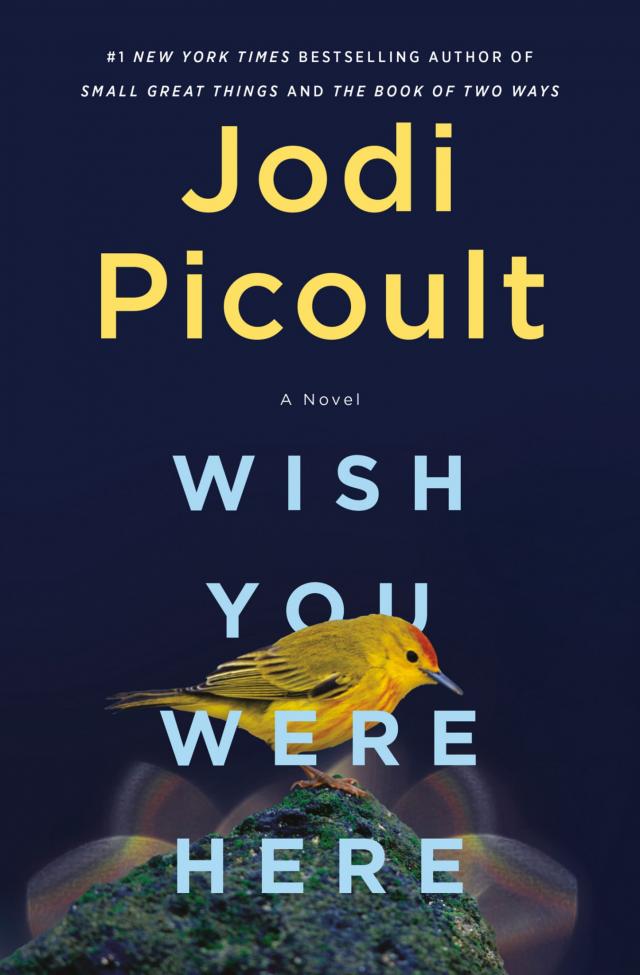
Wish you were here, p.9
Wish You Were Here,
p.9


We finally got a new shipment of PPE. But it turns out that instead of N95 masks, which is what we really need, they sent gloves. Thousands and thousands of gloves. The guy who accepted the delivery is the chief of surgery and every resident I know is terrified of him because he is so intimidating, but today, I saw him break down and cry like a baby.
We have a new trick: proning. It’s tummy time, for adults. Its mortality benefit has been around in studies since 2013, but it’s never been used as much as it is now. We do it for hours, if the patient can take it. The way your lungs work, when you’re on your belly they have more room to expand and the blood flow and airflow are equilibrated enough to hold off intubation for a while. We’ve learned that patients can seem to tolerate a huge decrease in air exchange so now instead of only looking at the numbers for gas exchange, we look to see which patients are worn out from breathing, and they’re the ones who get intubated. That’s the good thing. The bad thing is that if someone decompensates, and needs intubation after a trial of no intubation, they will certainly die, because when lungs are already damaged by quick breathing, by the time they’re ventilated, it’s too late. We are basically playing Russian roulette with people’s lives.
One of the three patients of mine that died today was a nun. She wanted last rites and we couldn’t find a priest who was willing to come into the room and administer them.
Sorry if there are typos—I keep my phone in a Ziploc bag when I’m at the hospital. I’m wiping down the bills that come in the mail. A nurse told me she washed her broccoli with soap and hot water. I can’t remember the last time I ate a cooked meal.
I wish I knew for sure that this was getting through to you.
And I wish you’d answer back.
Dear Finn,
I wish I could tell you how badly I’m trying to reach you, although the fact that I can’t is sort of the point. Remember how we thought it would be so romantic to be shut away from the outside world? It doesn’t feel that way when I’m alone on the outside, banging to be let back in.
It makes for some pretty weird self-reflection. It’s like I am in some parallel universe where I am aware of other things going on, but I can’t respond or comment or even be affected by them. LOL, is the world even turning, if I’m not really a part of it?
The girl I told you about, she says that being here feels like moving backward. I know I should be grateful to be safe and healthy and in a gorgeous bucket list destination. I know this was the perfect time for this to happen, with my job in limbo and you stuck at the hospital. I also know that when you’re in the thick of living your life, you don’t often get to push pause and reflect on it. It’s just really hard to sit in the moment, and not worry if pause is going to turn into stop.
Jesus, I am bad at having downtime. I need to find a way to keep myself occupied.
Or I need to find a plane. A plane would be good, too.
Love, Diana
* * *
—
After I’ve been on the island for a little over a week, Abuela invites me to lunch.
I have not been inside her home before now. It is bright and cozy, with a tangle of plants on the windowsills and yellow walls and a crocheted afghan on the couch. There is a ceramic cross hanging over the television set, and the entire space smells delicious. On the stove is a pan; she walks to it and moves the contents around with a spatula before lifting the utensil and pointing at the kitchen table so I will sit down.
“Tigrillo,” she says a moment later, when she sets a plate down in front of me. Plantains, cheese, green pepper, onions, and eggs. She motions for me to take a bite, and I do—it’s delicious—and then with satisfaction, Abuela turns back to the stove and loads a second plate. I think she is going to join me, but instead she calls out, “Beatriz!”
Beatriz is here? I haven’t seen her for four days, not since we built the sandcastle together.
I wonder if she ran away from her dad’s farm again.
From behind a closed door on the other side of the living room comes a flurry of angry response I cannot understand. Abuela mutters something, setting the plate on the table and resting her hands on her hips in frustration.
“Let me try,” I say.
I pick up the plate and walk to the door; knock. The response is another muffled stream of Spanish. “Beatriz?” I say, leaning closer. “It’s Diana.”
When she doesn’t answer, I turn the knob. She is lying on a bed that’s covered by a plain white cotton blanket. She is staring up at the ceiling fan, while tears stream from the corners of her eyes into her hair. It is almost as if she doesn’t realize she is crying. Immediately I set the plate on a dresser and sit next to her. “Talk to me,” I beg. “Let me help you.”
She turns onto her side, presenting her back to me. “Just leave me alone,” she says, crying harder.
After a moment, I stand up and close the door behind me again. Abuela looks at me, her heart in her eyes. “I think she needs help,” I say softly, but Abuela just cocks her head, and my worry is lost in translation.
Suddenly the front door opens and Beatriz’s father stalks in. “Ella no puede seguir haciendo esto,” he says. Abuela steps forward, putting a hand on his arm.
He makes a beeline for the bedroom door. Without thinking twice, I step directly in his path. “Leave her be,” I say.
Gabriel startles, and I realize he has been too furious and single-minded to clock my presence. “Porqué está ella aquí?” he asks Abuela, and then looks at me. “What are you doing here?”
“Can we talk?” I say. “Privately?”
He stares at me. “I’m busy,” he grunts, trying to dodge around me for the doorknob.
I realize I’m not going to be able to divert him, so I pitch my voice lower, assuming that Abuela cannot understand English any better than I can understand Spanish. “Do you know that your daughter cuts herself?” I murmur.
His eyes, already nearly black, manage to darken. “This is none of your business,” he says.
“I just want to help. She’s so…sad. Lost. She misses her school. Her friends. She feels like there’s nothing for her here.”
“I’m here,” Gabriel says.
I don’t respond, because what if that’s the problem?
A muscle tics in his jaw; he is fighting for patience. “What makes you think I would listen to a Colorada?”
I have no idea what that is, but it can’t be a compliment.
Because I was a kid once, I think. Because I had a mother who abandoned me, too.
Instead, I say, “I guess you’re an expert on teenage girls?”
My words do exactly what my physical interception didn’t: all the anger leaches from him. The light goes out of his eyes, his fists go slack at his sides. “I am an expert on nothing,” he admits, and while I am still turning this confession over in my mind, he reaches past me for the doorknob.
I do not know what I expect Gabriel to do, but it’s not what he actually does: He goes into the room and sits gingerly on the bed. He brushes Beatriz’s hair back from her face until she rolls over and looks up at him with her swollen, red eyes.
I feel a shadow at my back, and Abuela walks into the bedroom. She stands behind Gabriel, her hand on his shoulder, completing the circuit of family.
I feel like I am in the middle of a play, but nobody has given me a script. Silently, I back away and slip out the front door.
Isolation, I think, is the worst thing in the world.
To: DOToole@gmail.com
From: FColson@nyp.org
Before the mayor closed all nonessential businesses in the city today, I went to Starbucks on my way to work. I was in my scrubs, and I was masked, of course. I don’t go anywhere without a mask. The barista was joking around. She said, I sure hope you don’t work with Covid patients. I told her I did. She literally fell back three feet. Just…fell back. If that’s how I’m being treated—and I’m not even sick—imagine how it feels to be one of those patients, alone in a room with nothing but stigma to keep you company. You aren’t a person anymore. You’re a statistic.
The Covid ICU, which used to be the surgical ICU, is just a long line of patients on ventilators. When you walk into the ward it’s like a sci-fi movie; like these very still bodies are just pods incubating something terrifying. Which is kind of the truth.
We’re trying to be more careful about intubating because based on our experience, once a person’s on a vent he’s less likely to get off it. By now, I could identify the lungs of a Covid patient in my sleep (and some days, it kind of feels like that’s what I’m doing). It’s this vicious cycle—if you can’t breathe deeply, you breathe fast. You can only breathe 30 times a minute for so long before you exhaust yourself. If you can’t breathe, you can’t stay conscious. If you can’t stay conscious, you can’t protect your airway, so you might aspirate. And that’s how you wind up being intubated.
We give etomidate and succinylcholine before we put the GlideScope down the throat and bag the patient, because there’s a slight delay before getting hooked up to a ventilator. Ideally, you want to keep the patient comfortable but able to open his eyes and follow basic commands. The problem is that Covid patients have such low oxygen levels they are delirious—and we have to sedate them deeper in order to control their breathing and make sure they’re not fighting the ventilator. So that means doses of propofol or Precedex or midazolam, some kind of ketamine for sedation—plus analgesics like Dilaudid or fentanyl for pain—and on top of that, if they’re restless, we will paralyze them with rocuronium or cisatracurium so they aren’t trying to overbreathe the vent, and inadvertently damaging themselves. They’re on a whole cocktail of drugs…and not a single one actually treats Covid.
Man. What I’d give to know what your day was like. What you’re thinking. If you miss me as much as I miss you.
I hope you don’t. I hope wherever you are right now, it’s better than this.
* * *
—
The next morning, I open the sliding glass door for my morning run down the beach and nearly collide with Gabriel. He is carrying a big cardboard box that is overflowing with vegetables and fruits, some of which I don’t even recognize. I am certain I am dreaming this, until he reaches out one hand, steadying me so we do not crash. “These are for you,” he says.
I’m not sure what to say, but I take the box from him.
He runs a hand through his hair, making it stand on end. “I am trying to say I’m sorry.”
“How’s it going for you so far?”
Two bright burns of color stain his cheeks. “I should not have…treated you as I did yesterday.”
“I only wanted to help Beatriz,” I say.
“I don’t know what to do for her,” he says quietly. “I didn’t know she was hurting herself…until you said so. I don’t know what’s worse—that she’s doing it, or that I didn’t even notice.”
“She hides it,” I tell him. “She doesn’t want anyone to know.”
“But…you do.”
“I’m not a psychologist,” I say. “Is there someone here she could talk to?”
He shakes his head. “On the mainland, maybe. We don’t even have a hospital on island.”
“Then you could talk to her.”
He swallows, turning away. “What if talking about it makes her do more than just…cut?”
“I don’t think that’s how it works,” I say slowly. “I knew a girl who did this, back when I was younger. I wanted to help. A school counselor told me that if I reached out to her, it wouldn’t make her do it more, or do something more…permanent…but it might make her take steps to stop.”
“Beatriz won’t talk to me,” Gabriel says. “Everything I say makes her angry.”
“I don’t think she’s angry at you. I think she’s angry at…” I wave my hand. “This. Circumstances.”
He tilts his head. “She told me about the sandcastle. About people who make art…out of garbage.” Gabriel clears his throat. “She hasn’t given me more than two or three words at a time since she got back to the island a week ago, but last night, she wouldn’t stop defending you.” He catches my gaze. “I’ve missed hearing my daughter’s voice.”
As an apology goes, that one hits the target. He is staring at me fiercely, as if there is more to say, but he does not know how. I break away, glancing down at the box in my arms. “This is too much,” I tell him.
“They’re from my farm,” he says, and then adds, with a hint of a grin, “since I couldn’t get you an ATM.”
That surprises a laugh out of me. “Does everyone know everyone’s business here?”
“Pretty much.” He shrugs. “You won’t want to leave those in the heat,” he says, then reaches behind me and pulls open the slider, so I can carry the box inside. I set it on the kitchen table gingerly, wondering if I should broach the topic of Beatriz again. Last night, I had thought maybe the girl was running away from her overbearing father; now I am not so sure. Either Gabriel is the world’s greatest actor, or he is just as lost as his daughter is.
He looks at the box of blank postcards on the kitchen table. “What are you doing with those?”
“Basically, they’re my paper supply. I’ve been writing to my boyfriend.”
Gabriel nods. “Well. At least they’re still good for something.”
“Oh!” I say. “Wait.” I whirl around, dart into the bedroom, and return with the neatly folded pile of very soft T-shirts I’d co-opted. “I wouldn’t have borrowed them if I knew they were yours.”
“They’re not.” He makes no move to take them from me. “Burn them, if you want.” He looks at my face, then sighs. “My wife used to sleep in them. I wasn’t upset because you borrowed them. It just…was like having a ghost walk over your grave.”
He says the word wife like it is a blade.
Suddenly he bends down, manipulating the wobbly leg of the table. “I should have fixed this before you moved in.”
“You didn’t know I was moving in,” I reply. “And you weren’t particularly thrilled by the idea, as I recall.”
“It is possible I judged—how do you say it?—the book by its jacket.”
I smile faintly. “By its cover.” I think about him sneering at me for being a tourist, for being an American. I start to feel indignation percolating inside me, but then I remember that every time our paths have crossed, I’ve made poor assumptions about him, too.
He rips off a piece of the cardboard box, folds it, and uses it to balance the table. “I’ll come back this afternoon and fix it properly,” he says.
“Maybe Beatriz could join you,” I offer. “I mean, if she wants to.”
He nods. “I will ask.”
Something blossoms between us, delicate and discomfiting—a silent second start, a willingness to give the benefit of the doubt, instead of expecting the worst.
Gabriel inclines his head. “I leave you to your morning, then,” he says, and he turns.
“Wait,” I call out, as his hand grasps the sliding door. “If you’re a tour guide, why do you hate tourists so much?”
Slowly, he turns. “I’m not a tour guide anymore,” he says.
“Well, since the island is closed,” I reply, “technically…I’m not a tourist.”
He smiles, and it is transformative. It’s like the first time you see a falling star. Every night after that, you find yourself searching again, and if you don’t see one, you feel crestfallen. “Maybe, then, one day, I can show you my island,” Gabriel offers.
I lean against the table. It is, for the first time in a week, sturdy. “I’d like that,” I say.
Four
A lot of people would think a vacation alone with nothing to do is heaven.
I am not one of those people.
I do not go to movies by myself. If I walk in Central Park, it’s usually in the company of Finn or Rodney. If I travel for work, and stay overnight at a hotel, I will always choose room service over eating alone at a restaurant.
The idea of being by yourself on a desert island has a romantic cachet to it, but the reality is less attractive. I find myself looking forward to my mornings on the beach, because Beatriz meets me there almost every day, and then follows me home to collect my daily postcard to Finn. I find reasons to hover around the front door of Abuela’s place, so that we can have our odd conversation made of charades, and because it almost always ends in a dinner invitation. I engage Gabriel in discussions about when the island might reopen, when the ferry will return to take me back to the mainland.
Twice I’ve found enough of a cell signal to call Finn, but he hasn’t answered. Once, a flood of texts and emails came through, but they were garbled, symbols and gibberish instead of sentences. When I can, I send responses back into the void. I shouldn’t have gone. I miss you. I love you. Here, too, I might as well be shouting into a canyon, and hearing only an echo.
There are some days when I don’t speak a single word out loud, and I restlessly move from the apartment to the beach or go for a run just to stop myself from having to think about Finn, about how long it’s been since I heard his voice, about my job, about my future. With every passing hour, all of that feels hazier, as if the pandemic is a fog that’s rolled in from nowhere and nothing looks quite the way it used to.
When I have no alternative, I sit by myself and wonder how far I’ve been blown off course.
Dear Finn,
I’ve been thinking about how I left things at work. If the situation is really bad in the city, then maybe Kitomi was right to hold off on the private auction. But then again, if it’s really bad there, Sotheby’s is going to need that sale more than ever.